
A Praying Mantis Perched On Your North Carolina Tomato Stakes May Signal Available Structure, Not a Balanced Garden
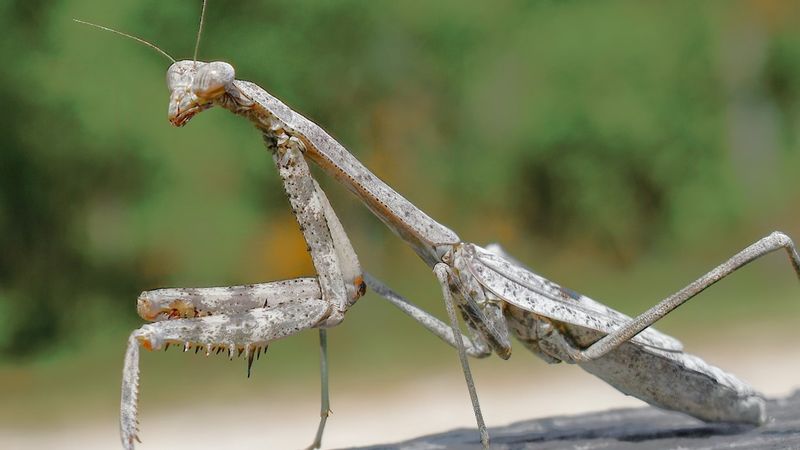
Spotting a praying mantis clinging to your tomato stakes on a warm August afternoon is one of those backyard moments that stops you in your tracks. Many North Carolina gardeners take it as a sign that their garden is thriving and pest-free, but the real story is more complicated and more interesting than that.
Understanding what the sighting actually tells you, and what it cannot, helps you make smarter decisions for your tomatoes and the insects your yard depends on.
A late-season sighting may fit one mantis species’ normal life cycle
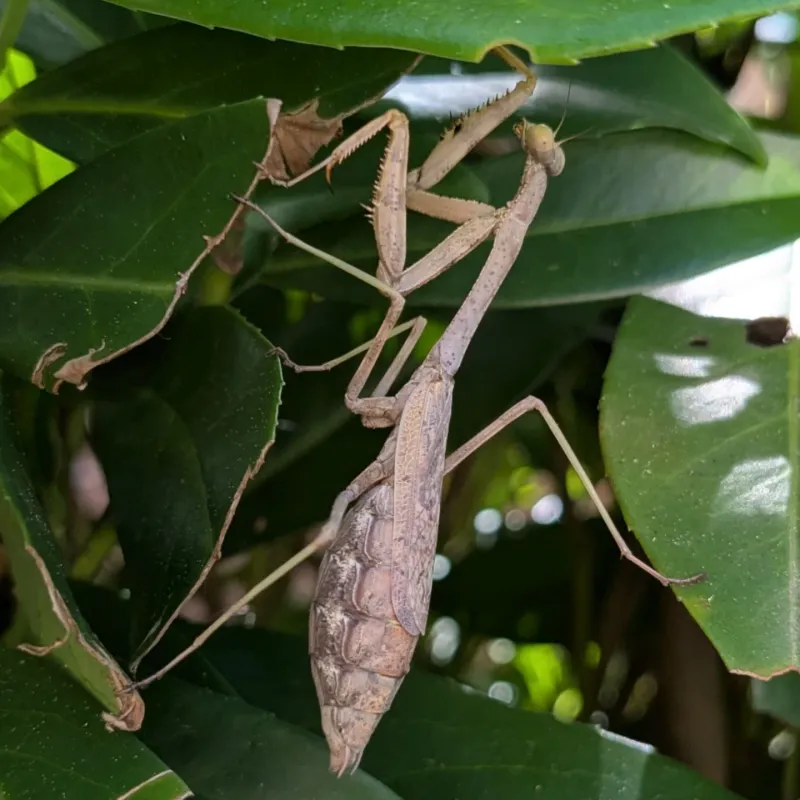
Walk past your tomato bed in late August or early September and a praying mantis perched on a stake can feel like a discovery, but it does not tell you that your garden has reached some kind of insect equilibrium. That kind of diagnosis requires far more information than a single sighting can provide.
What the timing may tell you, under the right conditions, is something more straightforward: you may be looking at an adult completing a predictable seasonal schedule.
The key word there is “may,” because the explanation depends entirely on which species you are looking at. North Carolina is home to more than one mantis.
The Carolina mantis, Stagmomantis carolina, is native to North America and completes one generation per year, with adults typically appearing in late summer or fall after spending most of the warm months developing through nymph stages. Seeing one in late season fits that documented life cycle without implying anything unusual is happening in your yard.
North Carolina also has introduced species, most notably the Chinese mantis, Tenodera sinensis, which appears in many parts of the state. Without a clear photograph and a confident identification, you cannot reliably apply the Carolina mantis’s seasonal biology to whatever is standing on your stake.
The broader point is this: a late-summer mantis sighting in North Carolina may simply reflect normal adult activity for a species that becomes more visible as the season winds down, not a new arrival responding to a pest outbreak or a sign that something unusual has changed in your yard.
The stake may be a convenient ambush perch
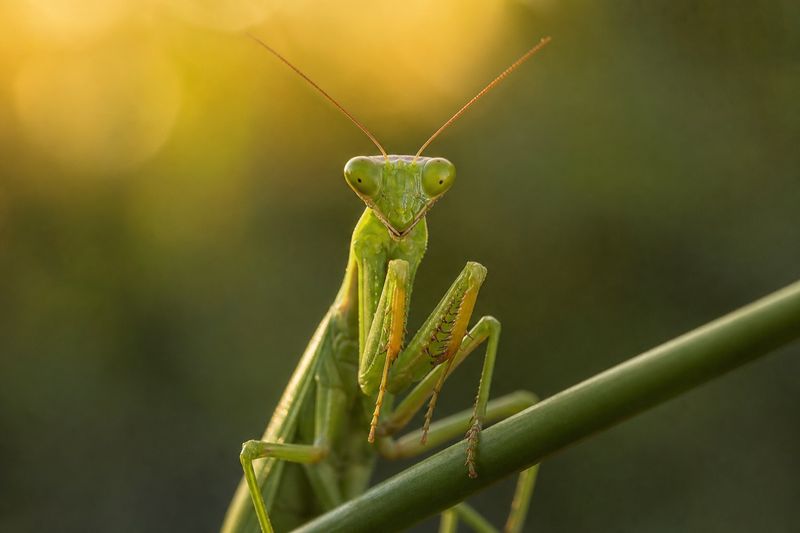
Mantises are sit-and-wait hunters. Rather than patrolling a garden the way a ground beetle might, a mantis picks a spot, holds still, and strikes at whatever insect moves within reach of its forelegs.
That behavioral strategy, described in detail in Animal Diversity Web’s account of Stagmomantis carolina, helps explain why an elevated structure like a tomato stake could be a useful place to wait. From a higher vantage point, a mantis has a broader field of view and can intercept insects flying past or landing nearby.
Calling the stake a “convenient perch” is a reasonable behavioral inference, not a proven fact about what draws mantises to tomato beds specifically. The sighting confirms one thing cleanly: the mantis was present on that stake at that moment.
It does not confirm that the stake itself attracted the mantis, that prey insects are especially abundant near your tomatoes, or that your plants are facing any particular pest pressure. Any elevated, stable surface in a yard with sufficient insect activity could serve the same purpose.
Resist the temptation to read extra meaning into the location. A mantis on a fence post, a shrub branch, or a tomato stake is doing the same thing: waiting.
The stake happens to be where you noticed it, which says more about where you were looking than about what the mantis chose for a specific reason. Treat the location as incidental rather than diagnostic, and you will avoid drawing conclusions that the sighting simply cannot support.
A generalist predator cannot certify tomato pest control
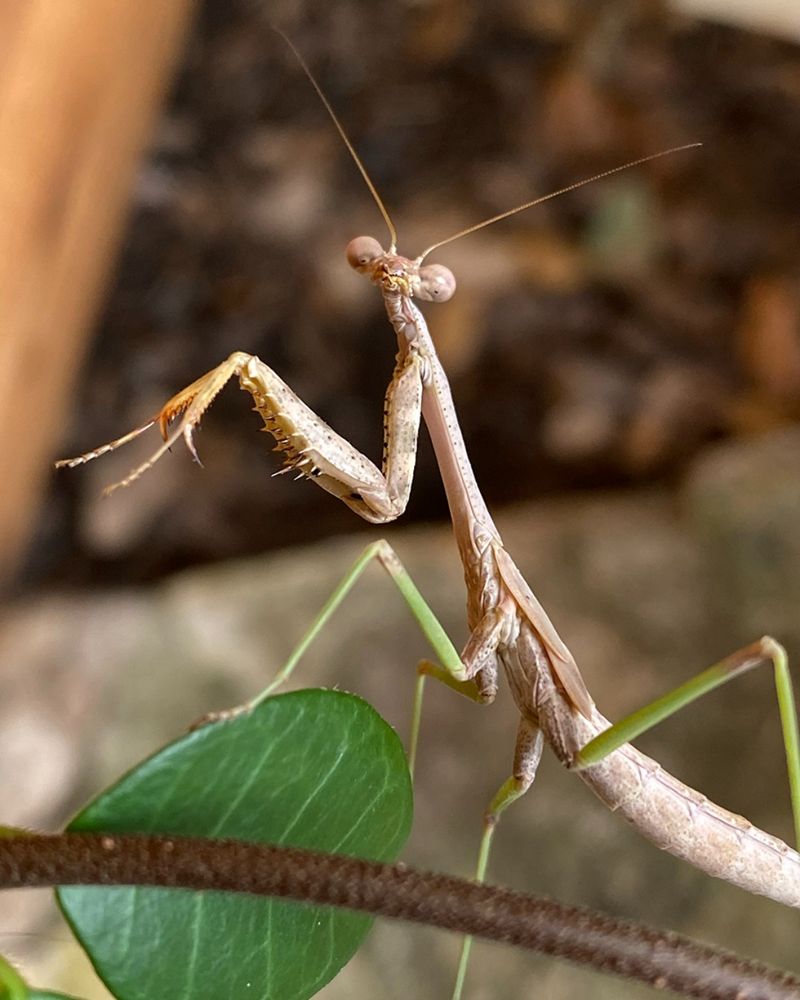
One of the most common assumptions gardeners make is that a mantis on the tomatoes is specifically hunting the insects harming the crop. Mantises do not work that way.
They are generalist predators that eat whatever comes within striking range, including grasshoppers, moths, flies, caterpillars, bees, butterflies, parasitic wasps, and lady beetles. NC State Extension’s guidance on biological control is direct on this point: commercially released mantises are generally not effective for home-garden pest control precisely because they eat beneficial insects along with pests, without any preference for the organisms causing crop damage.
A reliable biological control agent is one that targets a specific pest consistently enough to reduce its population below a damaging level. A mantis does not meet that standard.
It may occasionally eat a hornworm or an aphid-feeding fly, but it can just as easily take a pollinator or a parasitic wasp that was already working against your pest problem. Counting on one mantis to manage your tomato pests is the equivalent of hoping a random visitor will fix a specific problem in your house without knowing what the problem is.
Research on Carolina mantis populations adds important context. A peer-reviewed study on Stagmomantis carolina life history and population characteristics found that field densities were low and that the mantises produced no significant measurable effects on total arthropod abundance, biomass, or the abundance and biomass of any arthropod order in the study plots.
Those results apply specifically to the conditions of that study and should not be read as proof that no individual mantis ever affects any local insect. What they do show is that one mantis, or even a natural population of them, is not a dependable pest-management program for your tomato bed.
Appreciating a mantis as a predator that belongs in your yard is entirely reasonable. Treating its presence as certification that your tomato pests are handled is a different claim, and one the biology does not support.
Identify the mantis before drawing species-level conclusions
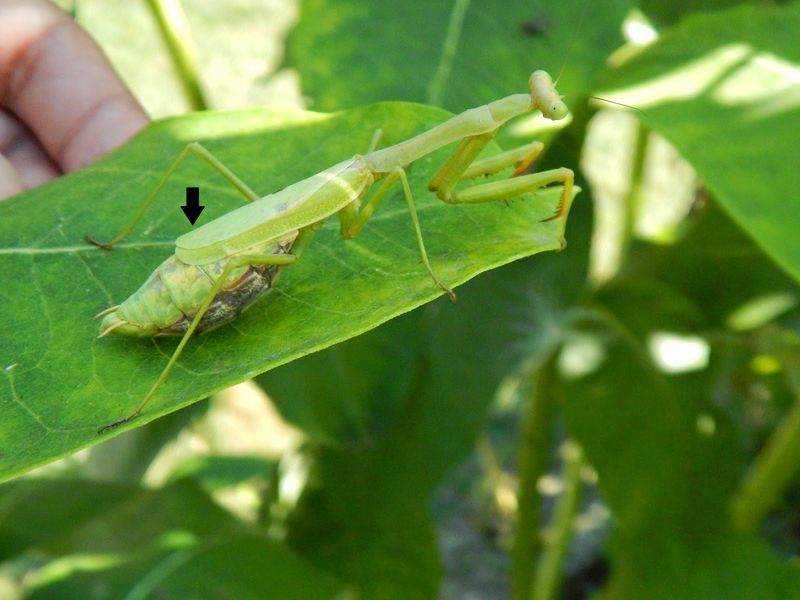
Before you say much about what a mantis in your yard means, it helps to know which mantis you are actually looking at. North Carolina has both native and introduced species, and they differ in ways that matter for understanding what you are seeing.
The Carolina mantis is native to North America and is the species most likely to match the late-summer life-cycle timing described in this article. The Chinese mantis, Tenodera sinensis, is an introduced species recorded across much of the eastern United States, including North Carolina, and it grows considerably larger than the Carolina mantis.
Getting a confident identification usually requires a clear photograph. Resources like iNaturalist’s praying mantis guide for the United States and BugGuide’s Carolina mantis species page can help you compare what you photographed against documented specimens.
Size, wing pattern, and body shape are the most useful features to examine. A phone camera held steady in good light is usually enough to get a usable image for comparison.
Finding out that a mantis in your yard is an introduced species does not automatically call for action. The more important management guidance applies to both native and introduced mantises: do not buy or release mantis egg cases as a method of controlling tomato pests.
NC State Extension is clear that released mantises are not effective for home gardeners, and adding more generalist predators to your yard does not selectively address the insects causing crop damage. Identification improves your understanding of what you are observing, but species identity alone is not a trigger for removal or intervention.
Let the tomato plant provide the pest evidence
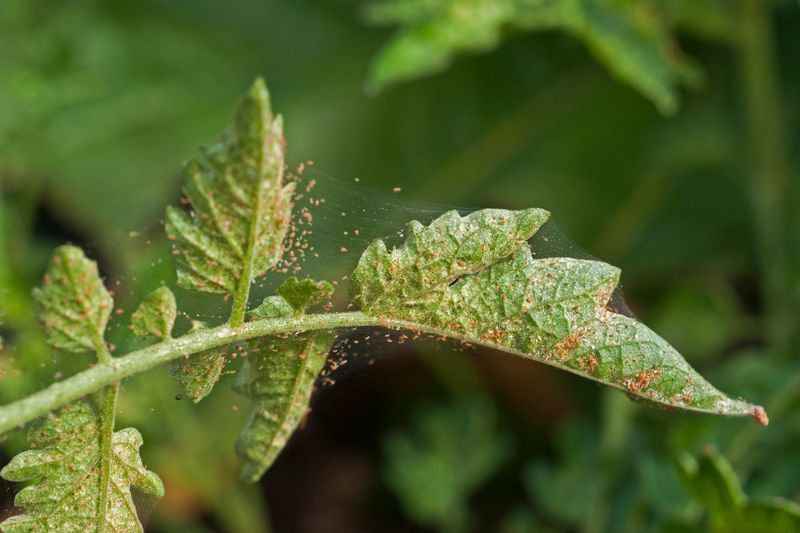
Once you have noted the mantis and moved on, the most productive thing you can do is turn your attention to the tomatoes themselves. The plant will tell you far more about what is actually happening in your garden than any predator perched nearby.
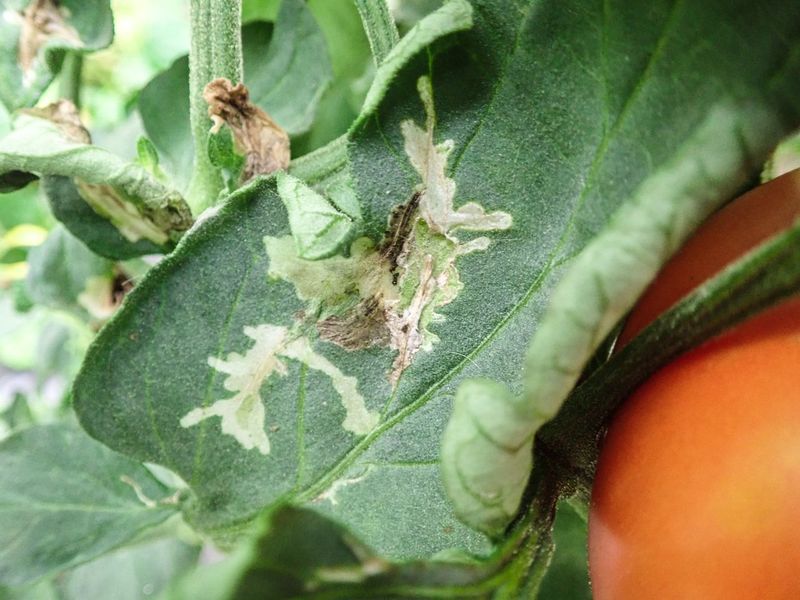
Check the upper and lower surfaces of leaves, along stems, at the base of the plant, and across any developing fruit. Look for chewed edges, stippling, sticky residue, wilting that does not match the weather, discolored patches, or anything that looks like it was not there last week.
That inspection is the foundation of integrated pest management. NC State Extension’s IPM guidance lays out the sequence clearly: monitor your plants regularly, accurately identify whatever pest or disease is causing damage, decide whether the damage has reached a level that actually warrants treatment, and then choose the least disruptive effective response.
Skipping the monitoring step and treating based on assumption wastes resources and can cause more harm than the original problem.
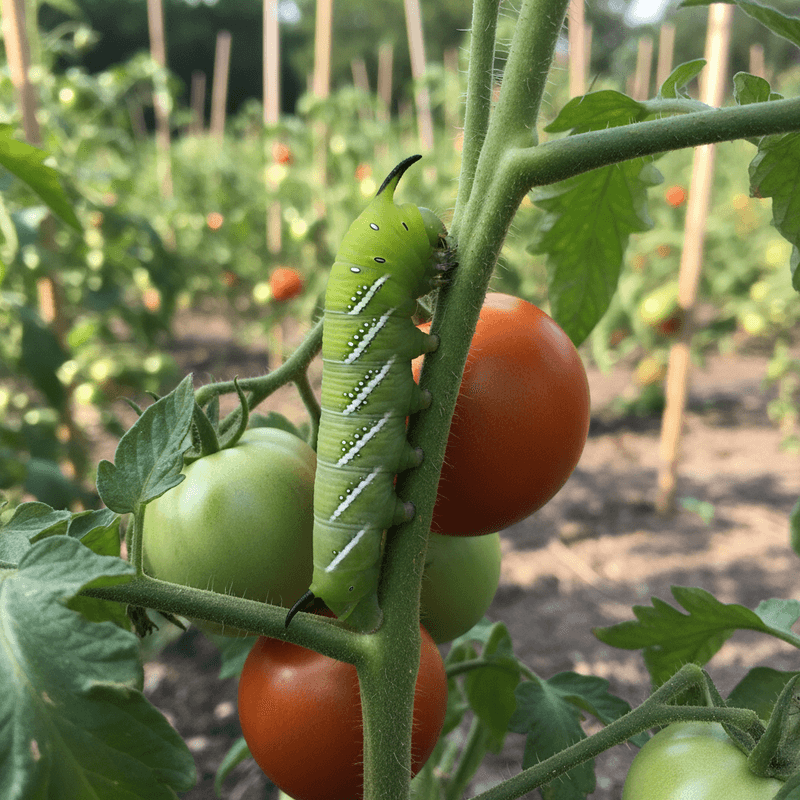
For common tomato pests, practical first responses often require no products at all. Large caterpillars like tomato hornworms can be hand-picked from the plant and dropped into soapy water.
Badly affected leaves or stems can sometimes be removed to slow the spread of a problem. Keeping plants well-watered and properly fertilized improves their ability to tolerate moderate pest pressure without collapsing.
NC State’s tomato-growing guidance also notes that many serious tomato problems in North Carolina are fungal, bacterial, viral, or related to soil and watering practices rather than insect feeding, which means that a mantis cannot address the majority of what goes wrong with a tomato crop.
Scout weekly during the growing season rather than waiting until damage is severe. Early identification gives you more options and usually requires less intervention to correct the problem.
Protect the mantis without spraying the whole food web
A mantis sitting on your tomato stake is doing no harm and deserves to be left alone. There is no reason to relocate it, disturb it, or spray anything near it.
Beyond simple courtesy to a native predator, there is a practical reason to keep your hands off it: the same pesticides that might target a pest insect will also kill mantises, pollinators, and the parasitic wasps and predatory beetles that are already working in your garden. Spraying broadly to protect the tomatoes can dismantle the food web you are trying to support.
NC State Extension’s pesticide safety guidance is explicit about the risks of broad-spectrum treatments: they are nonselective, meaning they kill whatever they contact, and their effects extend well beyond the target pest. Pollinators, natural enemies, and other nontarget organisms can all be reduced by a single poorly timed application, which can then trigger secondary pest outbreaks as the insects that were keeping those pests in check disappear.
If you have scouted your tomatoes, confirmed actual pest damage that exceeds what the plant can tolerate, and decided that a treatment is genuinely necessary, follow these precautions carefully. Read the entire product label before you open the container, and follow it exactly.
Avoid spraying on windy days to prevent drift onto neighboring plants, water features, or adjacent yards. Do not apply any insecticide to plants that are actively blooming, and time any necessary application for early morning or evening after pollinators have finished foraging for the day.
NC State’s biological control guidance also recommends choosing the most targeted, lower-risk product that will address the confirmed pest, rather than defaulting to a broad-spectrum option because it seems more thorough. When effective alternatives exist, use them.
Keep mantis egg cases outdoors
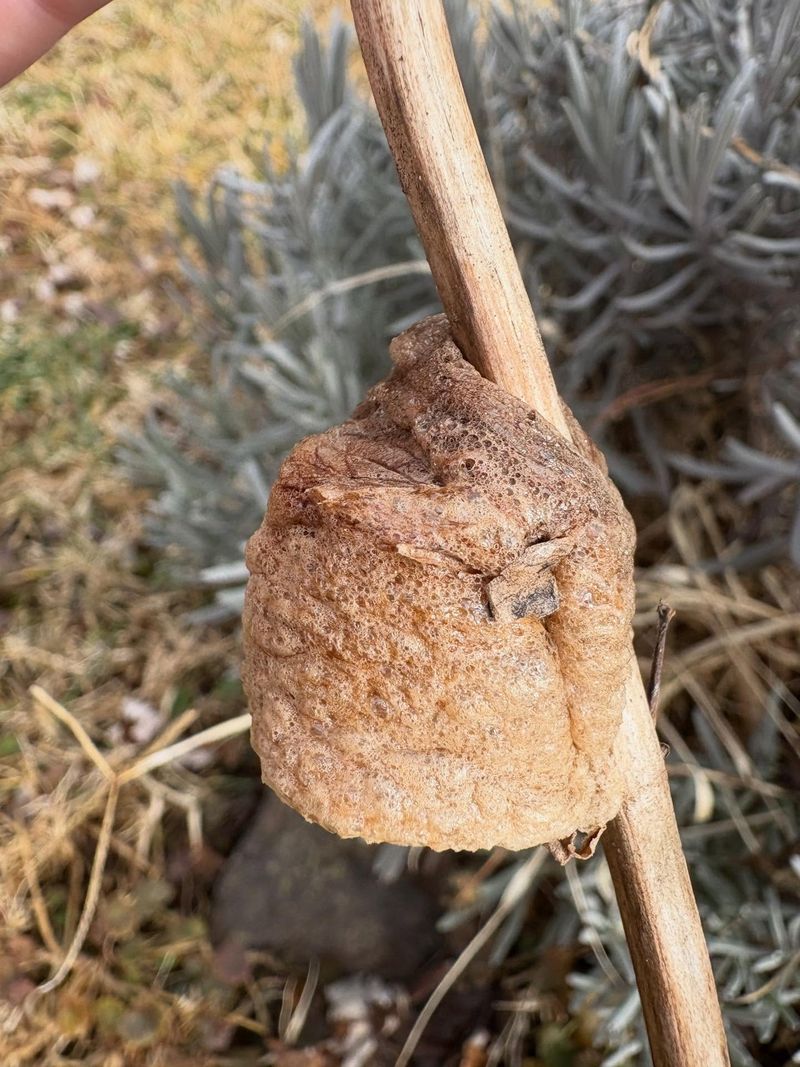
After spotting an adult mantis in late summer or fall, some gardeners start noticing egg cases on pruning debris, cut stems, or shrub branches. A mantis egg case, called an ootheca, looks like a small tan or brown foam mass attached firmly to a surface.
Finding one is worth noting, but it does not require any intervention beyond leaving it where it is.
University of Maryland Extension’s fall gardening guidance advises keeping mantis egg cases outdoors in a sheltered location rather than bringing them inside. The reason is practical: egg cases brought indoors are exposed to indoor warmth and may hatch weeks or months ahead of schedule.
The nymphs that emerge are tiny and need live prey immediately, and a house in January offers them nothing to eat. Placing the egg case in a garage, a covered porch, or a protected spot against a fence or wall outdoors allows it to hatch on a natural schedule in spring when small insects are available.
If you find an egg case on a branch you are planning to prune, cut the branch a few inches below the case and secure it to a nearby shrub or fence post outdoors. Avoid disturbing the foam structure itself, as it protects the eggs from cold and moisture through winter.
One other point worth stating clearly: do not purchase mantis egg cases from a garden center or online retailer as a method of controlling tomato pests. NC State Extension’s IPM guidance identifies released mantises as ineffective for home gardeners, and the reasoning connects directly to their generalist diet.
Releasing egg cases adds more nonselective predators to your yard without meaningfully reducing the specific pests affecting your crop. The egg cases you find naturally on your property are welcome; buying and releasing them as a pest-control strategy is not a reliable approach.
Treat the mantis as a clue, not a garden report card
Stepping back from the moment, here is what a mantis on your tomato stake actually tells you: it was there. That is the confirmed fact.
From that single observation, you can reasonably infer that the mantis found a usable elevated perch and that some insect activity in the area made the spot worth occupying. If you can identify it as a Carolina mantis, its presence in late summer or fall fits that species’ documented one-generation life cycle.
The sighting may also be consistent with a yard that has not been heavily disrupted by harsh pesticide use, since broad-spectrum treatments tend to reduce the insect populations that predators depend on. University of Maryland Extension’s IPM guidance notes that mantis presence may be consistent with limited pesticide pressure, though it cannot establish what products have or have not been used in a yard.
The mantis cannot tell you whether your tomatoes are facing pest pressure, whether insects are in balance, whether your harvest will be good, or whether any disease or tick concern in the yard has been addressed.
The action sequence that follows from a mantis sighting is simple. Leave the mantis alone.
Walk over to your tomatoes and scout them carefully, checking leaves, stems, and fruit for actual damage. If you find something, identify it before you treat it.
NC State’s IPM framework guides you from that identification to the least disruptive treatment that will actually address the confirmed problem. A mantis perched on a stake is a yard creature doing its job.
Your job is to do yours, which starts with looking at the plants.