
Holiday Cacti Trace Their Origins to Humid Brazilian Mountain Forests, and Your Care Routine Should Reflect It
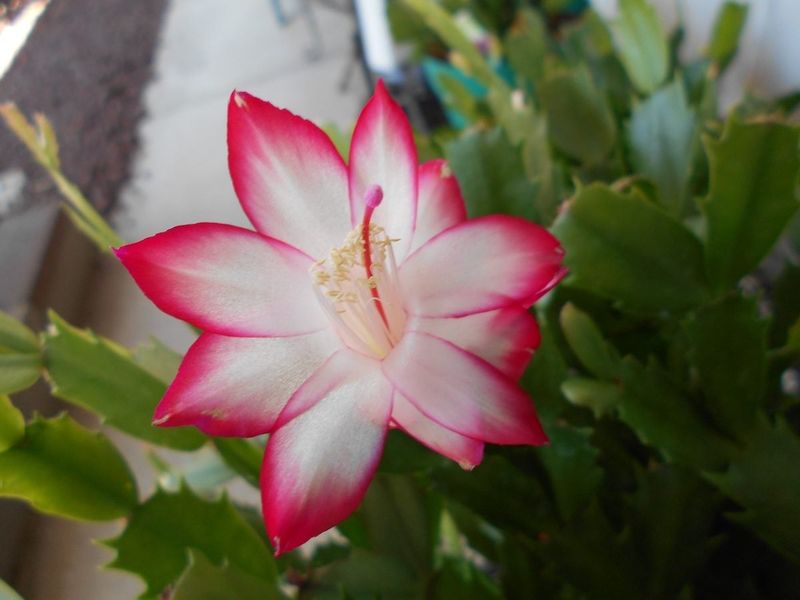
That holiday cactus blooming on your windowsill has a very different family history than a spiky desert cactus. Its wild relatives grow in humid mountain forests in southeastern Brazil, and that setting explains a lot about the care it likes.
If your plant has dropped buds, gone limp, or looks scorched, the habitat clues can help you fix it. Here is how to turn a forest story into simple, practical care.
The plant labeled “Christmas cactus” may be another holiday cactus
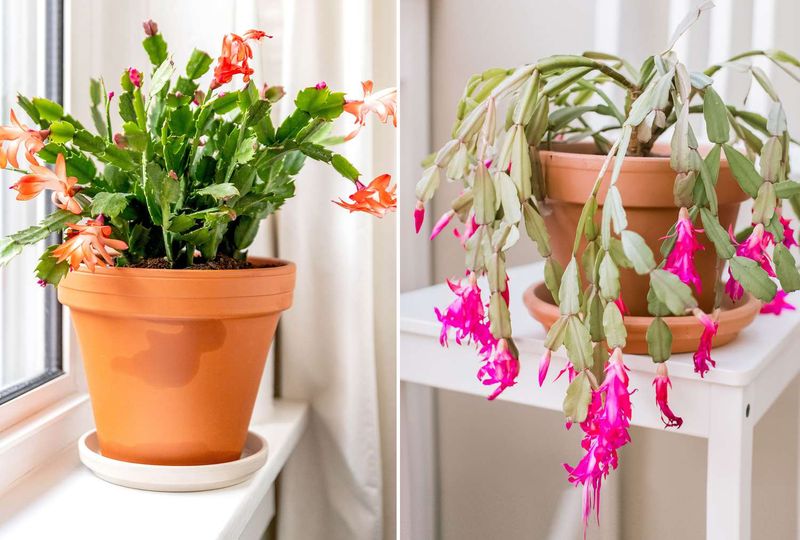
Walk into any garden center in late autumn and the tag will probably say Christmas cactus. Look closer, though, and the plant may be something else.
Iowa State Extension points out that many plants sold under that name are actually Thanksgiving cacti or hybrids.
The true Christmas cactus is Schlumbergera x buckleyi, a cultivated hybrid of two wild species, S. russelliana and S. truncata. Thanksgiving cacti and other hybrids belong to the same plant group, and they look alike to most of us.
Their care overlaps so much that a mix-up rarely causes trouble.
Because of that loose labeling, this article uses the terms holiday cactus and Schlumbergera when talking about habitat and care in general. That keeps the advice accurate whether your plant is a true Christmas cactus, a Thanksgiving type, or a hybrid with no clear label.
If you are not sure what you own, you can still follow everything below.
Think of the name on the tag as a nickname for the whole group. The habits of the group, not the exact label, are what shape a good care routine.
Wild Schlumbergera cacti trace their origins to Brazilian mountain forests
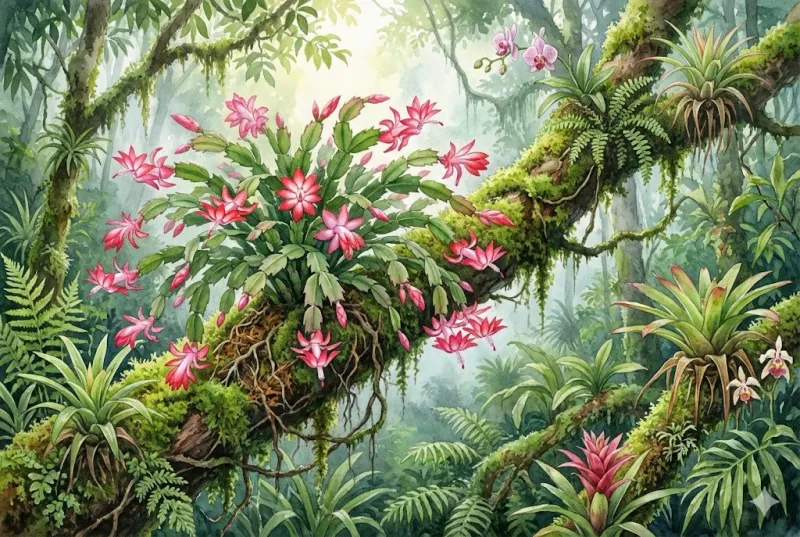
Picture cool, damp mountain slopes in southeastern Brazil, where fog drifts through the trees. According to Iowa State Extension, holiday cacti are native to humid tropical and subtropical mountain forests in that part of Brazil.
That is the broad home of the group, and it looks nothing like a sunbaked desert.
For one species, the record is more specific. Brazil’s CNCFlora entry for S. truncata lists it in montane, upper-montane and cloud forests, growing on tree trunks and branches and sometimes on rocks.
So the phrase misty treetops is a fair shorthand for the wild plants, and cloud forest is a claim we can safely tie to S. truncata.
Here is the part that keeps us honest. All of this describes wild plants and their ancestry.
Your own plant was almost certainly propagated in a greenhouse from cuttings, so it never lived in a treetop.
Still, the ancestry is a useful guide. Plants tend to keep the preferences of their wild relatives, which is why a holiday cactus is happier with gentle light and a well-drained mix than with the harsh conditions a desert cactus enjoys.
The next sections turn that background into steps you can take today.
An epiphyte needs drainage, not a permanently soggy pot
Epiphytes grow on other plants for support without harming them. They are not parasites.
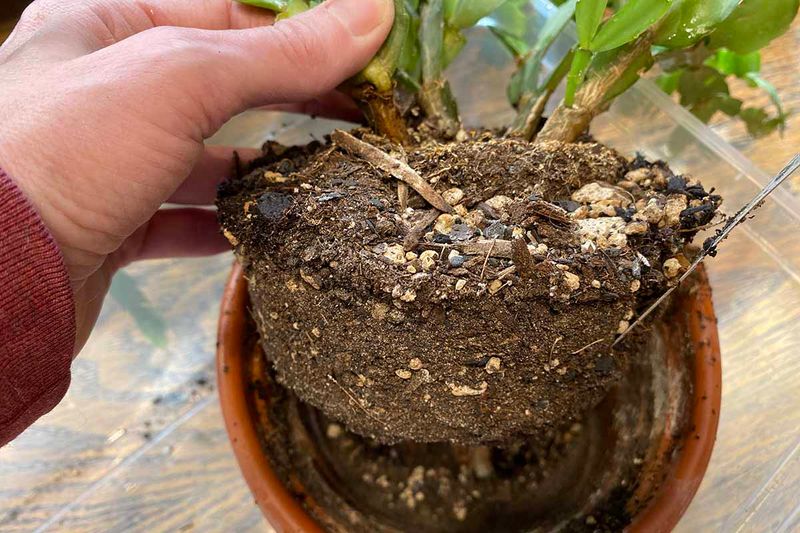
Holiday cacti perch on trees and root into small pockets of organic debris, where rain runs through quickly, as Iowa State Extension explains.
Notice what that means for a pot. The roots are used to airy material that drains fast, not to dense ground soil that stays heavy and wet.
A humid forest is not the same thing as a soggy root zone.
So choose a well-drained potting mix and a container with drainage holes. University of Florida IFAS Extension covers preparing a holiday cactus with this kind of mix in mind.
A pot with no hole at the bottom is a common reason water lingers around the roots.
The nickname rainforest cactus can mislead people into keeping the pot wet all the time. A Maryland Extension answer on Ask Extension gives the safer view: overly wet mix and standing water can contribute to root rot and other moisture problems.
If your plant looks limp while the soil feels wet, check the roots and the drainage before adding more water.
Choose bright, indirect light over prolonged harsh sun
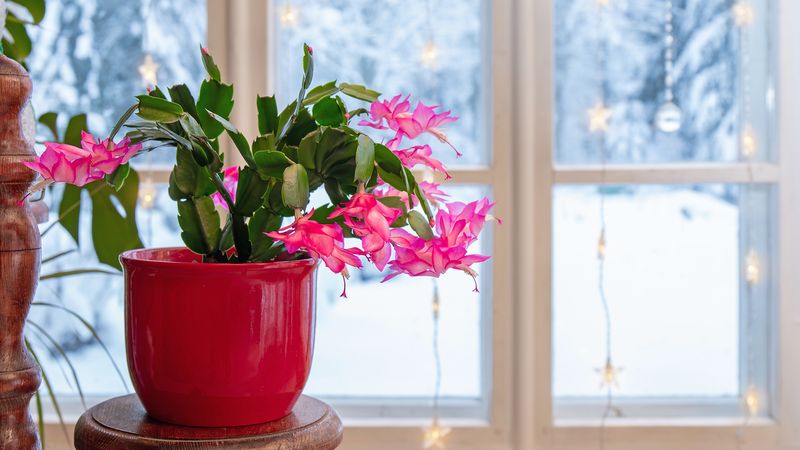
Light is where the forest story becomes easy to use. Under a tree canopy, plants get brightness that has been filtered by leaves.
A windowsill with a sheer curtain can copy that effect nicely.
Start with bright, indirect light. University of Wisconsin-Madison Extension recommends this kind of light and advises against prolonged strong sun, and it notes that some morning sun may be suitable.
Hot midday or summer sun through glass is the situation to watch, since prolonged intense sun can scorch the stems.
That does not mean your plant wants a dim corner. University of New Hampshire Extension also points to bright light, and too little light can slow growth.
Shade is not a stand-in for brightness.
Every window is different, so treat these as starting points. A south window in July is a much harsher spot than an east window in November.
If the stems look bleached or scorched, slide the pot back from the glass or add a sheer curtain, then watch how the plant responds over the following weeks.
Water when the mix has dried somewhat, not by a fixed calendar
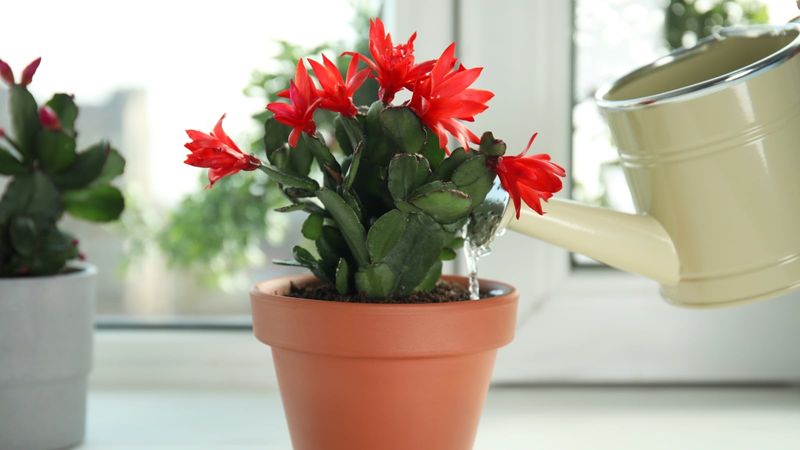
Forget the weekly watering schedule. A pot in a warm, bright room dries faster than one in a cool, dim room, and a small pot dries faster than a large one.
Season, mix and light all change the timing.
A flexible routine works better. Check the mix with your finger, and water when it has dried somewhat.
Then let the excess drain away and do not leave the pot standing in runoff, since that puts the roots back into a wet situation.
Experts do not agree on exactly how dry the mix should get. University of New Hampshire Extension discusses how often to water, while University of Wisconsin-Madison Extension gives its own guidance, and the two are not identical.
Because of that, no single dryness rule fits every home.
What they share is a warning about the two extremes. Prolonged drought is a problem, and so are waterlogged roots.
A Maryland Extension answer on Ask Extension also cautions against keeping the mix continuously wet.
If you are nervous about getting it wrong, aim for the middle. Do not treat the plant like a desert cactus that can go for ages without a drink, and do not baby it with constant moisture.
Adjust as the seasons change, and let the mix, not the calendar, tell you when to water.
Consider indoor humidity, but do not treat misting as essential
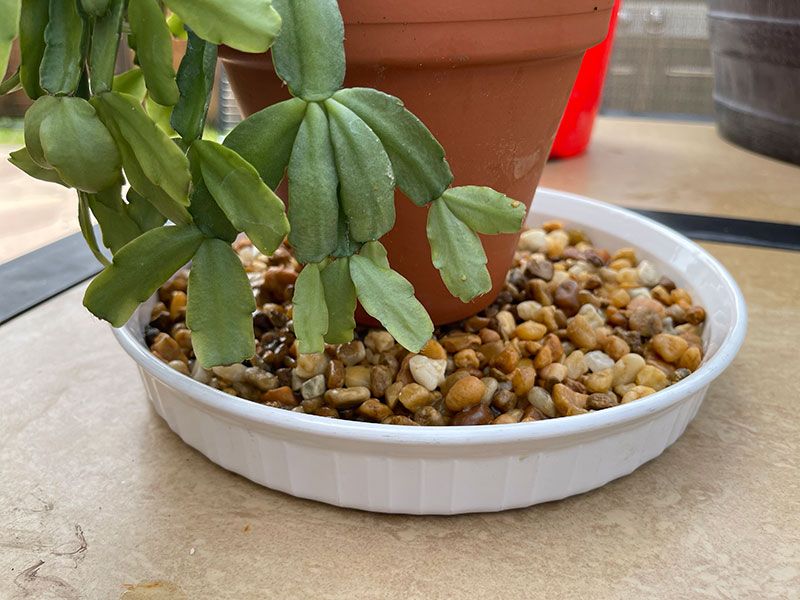
Winter heating can leave indoor air very dry, so humidity is worth a thought. One option cited by horticulture sources is a humidity tray.
North Carolina State Extension Plant Toolbox and University of Wisconsin-Madison Extension both touch on humidity for these plants.
If you try a tray, keep the pot above the water on pebbles rather than sitting in it. Otherwise you create the soggy roots you worked to avoid.
Misting is a different story. The guidance gathered here does not show that routine misting is necessary, and sources differ on recommending it, as seen in a University of California Agriculture and Natural Resources article.
You can skip it and put your effort elsewhere.
You do not need to rebuild a Brazilian forest in your living room. Bright, indirect light, a well-drained mix, and watering based on how the mix feels cover the big priorities.
Humidity is a bonus, not a rescue plan.
A plant with wild cousins in the clouds still does best when you read the pot in front of you.