
Check Sun, Soil, and Season Before Watering Your Mandevilla
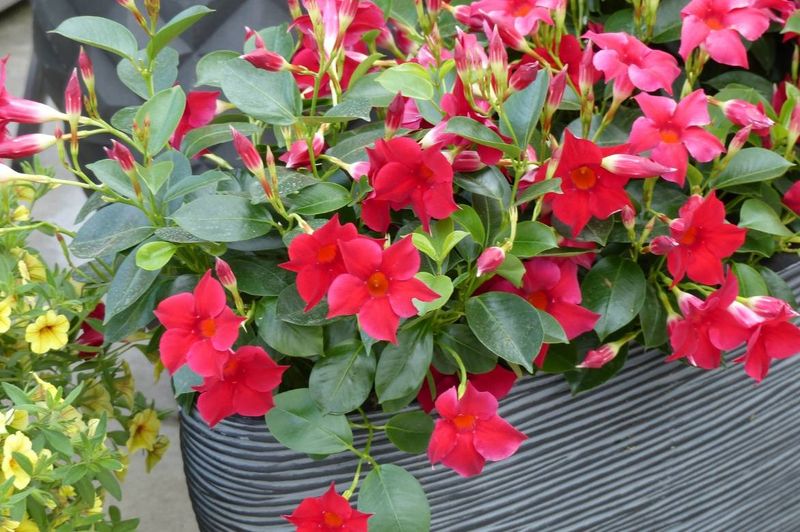
Your mandevilla was covered in big, glossy blooms all summer, and now the flowers have thinned out or stopped. It is easy to grab the watering can and hope for the best.
But a bloom pause can have more than one cause, and extra water is not always the answer. A few quick checks on sun, soil, and timing can tell you what your plant needs right now.
A bloom pause does not prove your mandevilla needs more water
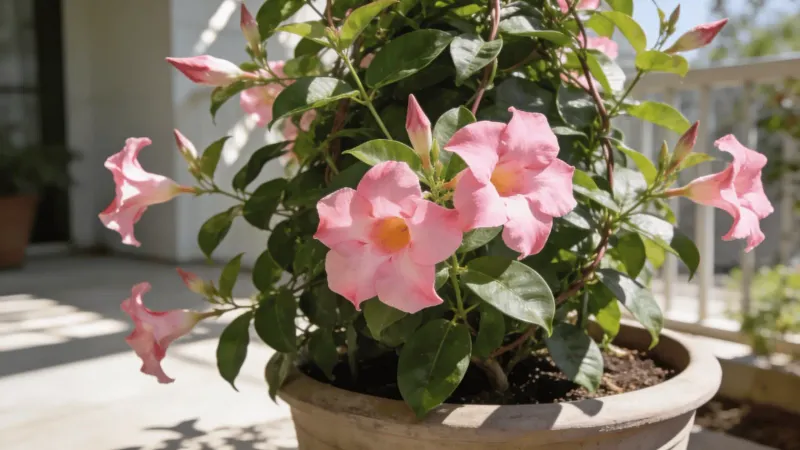
Fewer flowers on a patio mandevilla can feel alarming, especially when it was blooming nonstop a few weeks ago. The natural reaction is to assume the plant is thirsty and pour on more water.
That guess is common, but a missing flower tells you very little about what is happening at the roots.
No single fix applies to every mandevilla that slows down. Flowering can be affected by light, seasonal conditions, the condition of the plant, and whether its roots are stressed.
Even the experts who write extension guides do not point to one cause for every bloom pause, so it helps to look at your own plant instead of following a rule of thumb.
Here is the good news: you can check three things today without buying anything. First, look at how much direct sun the plant gets.
Second, feel the soil and look at the pot’s drainage. Third, think about where you are on the calendar and how close frost might be.
Start with what you can see. University of Florida IFAS Extension describes mandevilla as a plant that flowers best in full sun.
It also prefers soil that stays moist but drains well, and Ask Extension horticulturists note that it is sensitive to overwatering. So adding water because flowers are missing could make things worse, not better.
None of these checks guarantees more blooms, and that is okay. They help you care for the plant well, which is the part you can control.
Treat the watering can as one tool, and use it only after the plant gives you a reason.
How much direct sun reaches it now?
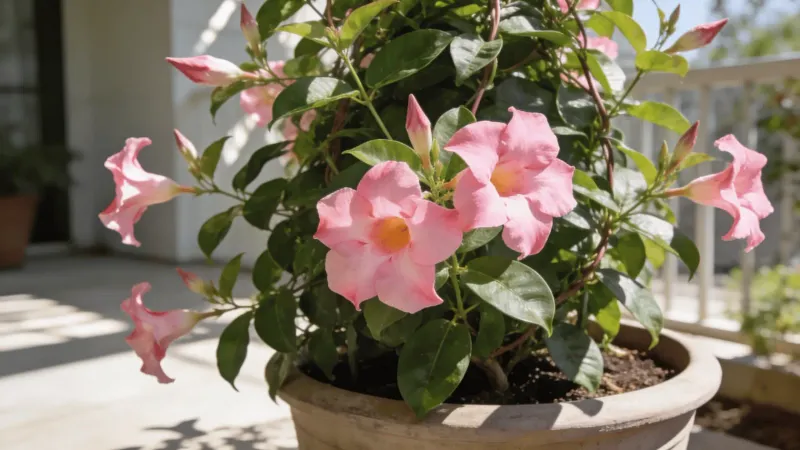
Sun is the first thing worth measuring. Pick a clear day and note when the light hits your mandevilla and when it leaves.
Setting a phone reminder every couple of hours makes this easy.
Full sun is the usual goal for good flowering, and it is often described as about six hours or more of direct sunlight. That is a helpful guideline, not a rule for every plant.
Cultivar, climate, and exposure all matter, and some compact forms tolerate more shade than big climbing types.
Now think about what changed since summer. The sun sits lower in early fall, so a fence, roofline, or tree that never blocked the pot in July may shade it by mid-afternoon now.
Nearby plants may have also grown taller, casting new shadows over the vine. If your pot sits in a spot that lost light, you may find it is getting far fewer sunny hours than you assumed.
Heat deserves a look too. In hot climates, afternoon shade may help prevent scorched leaves, so the best spot is not always the brightest one.
Watch for pale, crispy patches on the leaves as a sign that the sun is too intense for that location.
The University of Florida IFAS Extension guide covers these light needs and the differences between mandevilla types. If you find the plant is short on sun, moving it to a brighter spot is a reasonable step.
Just keep your expectations realistic, because more sun is a practical first check and not a guaranteed cure for missing blooms.
Let soil moisture—not a schedule—guide watering
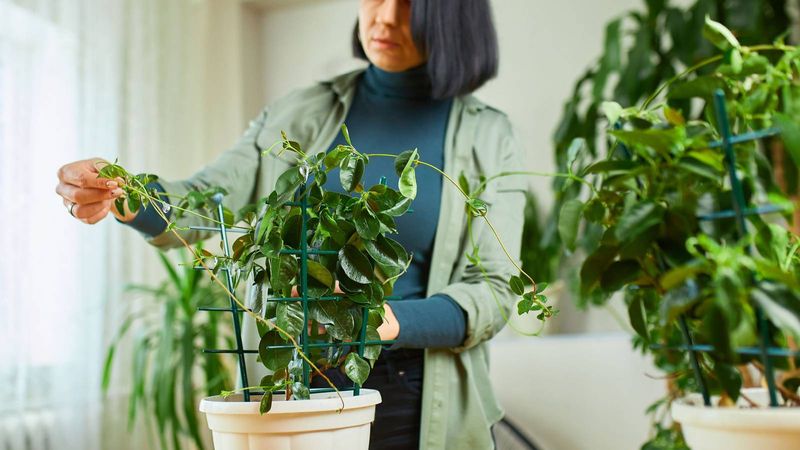
Push a finger about two inches into the soil. That simple test is more useful than any watering calendar.
If the soil feels dry, water thoroughly until water runs out of the bottom of the pot. If it still feels damp, wait and check again in a day or so.
Mandevilla likes moisture and good drainage together. According to Ask Extension horticulturists, it prefers moist, well-drained soil and is sensitive to overwatering.
That means the goal is not constantly wet soil. Roots sitting in soggy mix can struggle, and a stressed root system is one possible reason a plant stops blooming.
Container drainage matters a great deal. Lift the pot and look underneath, since a clogged drainage hole or a saucer full of standing water keeps the mix wet long after the surface dries.
Tipping out the saucer after watering is a small habit that can prevent trouble. A decorative outer pot with no holes can trap water in the same way.
Very hot weather can mean the soil dries out faster, so you may need to water more often during a heat wave. Even then, checking the soil beats guessing.
Watering because flowers slowed down is not the same as watering because the plant is dry.
Signs of a truly thirsty plant include limp leaves and a pot that feels light with dry, pulled-away soil. Signs of too much water include yellowing leaves and soil that stays wet for days.
If you see the second set of clues, hold back and let the pot dry a bit.
A fall slowdown can be seasonal, not a care failure
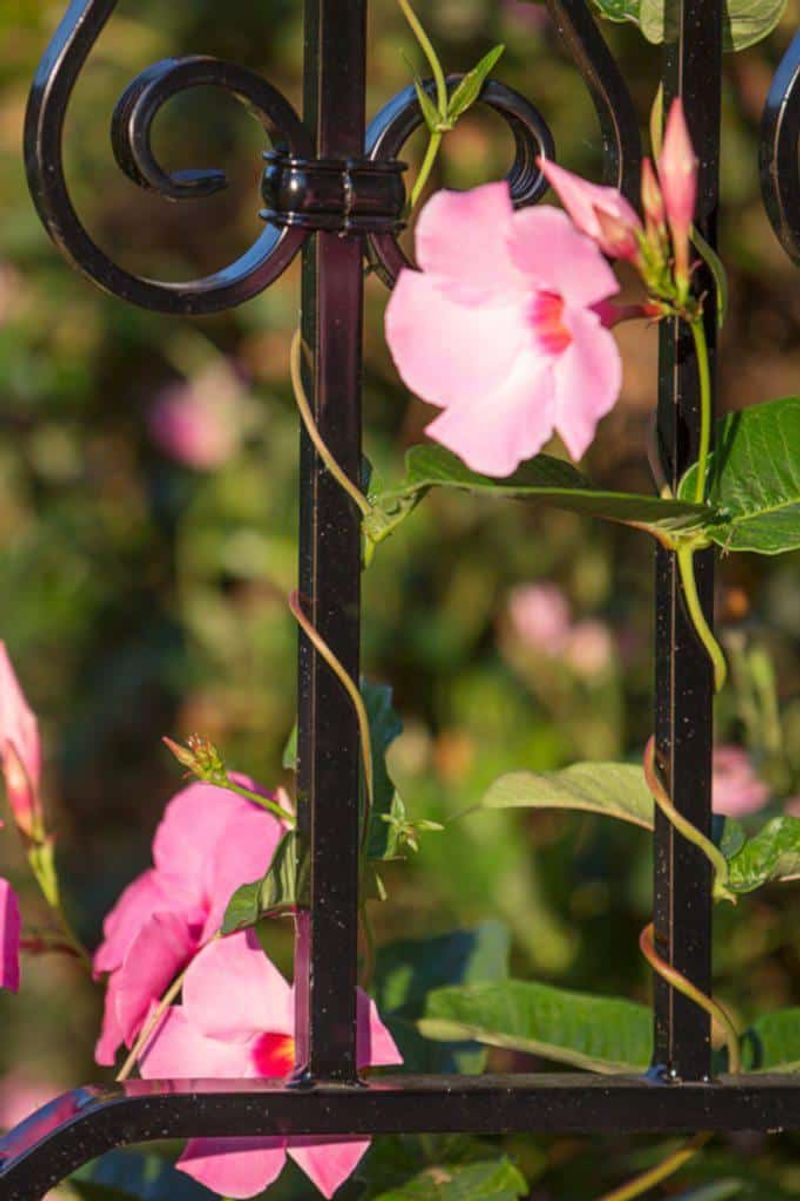
Sometimes the plant is not doing anything wrong at all. Mandevilla is a warm-season vine, and outdoor flowering is described as continuing through fall until frost.
As the season winds down, blooms often thin out, and that can be part of the natural rhythm.
The Mississippi State University Extension Service describes mandevilla flowering through the season until fall frost. In many outdoor settings, that flowering season ends around frost, and a late slowdown may not be reversible.
So if your calendar says fall, a pause may simply mean the plant is winding down.
That does not mean every pause has the same cause. A shady spot or a waterlogged pot can slow flowering at any time, which is why the sun and soil checks still matter.
The difference is that in late fall, a plant with good light and healthy soil may just be finishing its season.
Look for clues to tell the two apart. If the leaves are green, the growth looks firm, and the soil dries out normally, a quiet vine is probably not in trouble.
If leaves are yellowing, dropping, or the stems look mushy, something else may be going on, and it is worth checking the roots and drainage.
Keep this fall slowdown separate from what happens indoors in winter. Indoor conditions are a different situation with their own challenges, and they do not explain an outdoor plant that pauses in October.
Before frost, shift from chasing blooms to protecting the plant
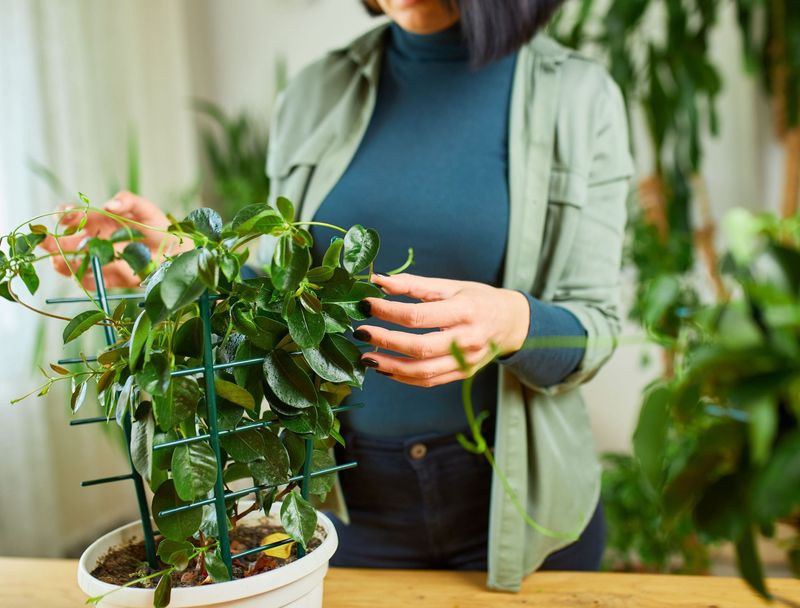
If you want to keep your mandevilla, plan to bring it indoors before frost arrives. Extension sources advise this for plants that will be kept over winter.
Exact cold-tolerance guidance differs among sources and cultivars, so do not rely on one temperature number. Watching your local forecast and moving the pot early is the safer habit.
Think of the move as a change in growing conditions. According to University of Illinois Extension, shorter winter days can mean no flowering indoors without supplemental lighting.
Moving a plant inside can also cause flower or leaf drop as it adjusts. Seeing some leaves fall after the move is not necessarily a sign that you did something wrong.
Before the pot comes inside, inspect the plant carefully. Check under leaves and along stems for insects, and look at the soil surface too.
The same check applies if you prune the vine to make it easier to handle, since pests can hitch a ride indoors and spread to other houseplants.
Handle the plant with care. University of Florida IFAS Extension notes that the milky sap can irritate skin and may be toxic if ingested.
Wear gloves when pruning, wash your hands afterward, and keep clippings away from children and pets.
Once inside, place the plant in your brightest spot and water only when the soil feels dry. The aim for now is a healthy plant, and blooms are a bonus if they come.
Check first, then choose the next move
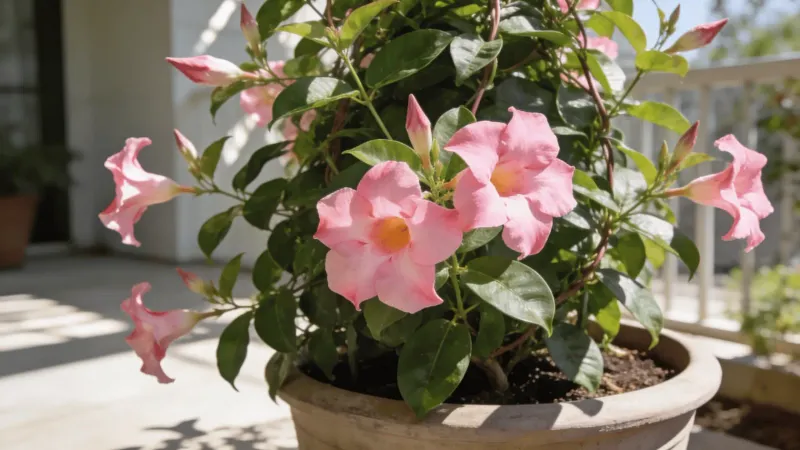
Run the checks in order. Count the hours of direct sun, then feel the soil and look at the drainage before you reach for water.
Finally, look at the forecast and think about how close frost is.
Fix what is truly off, then protect the plant. Flowers cannot be ordered on demand, but a healthy vine is ready for next year.
Sometimes the kindest care is knowing when to let a good season end.