
Coral Honeysuckle in North Carolina: A Native Vine for Hummingbirds, Not a Feeder Replacement or a Vine That Stays Put
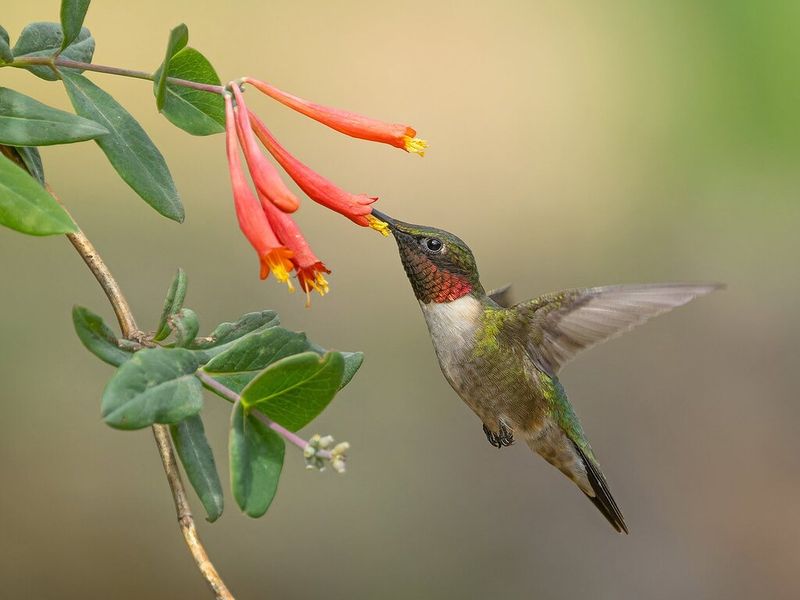
A red, trumpet-shaped flower on a fence in March can tell you a lot about what your yard offers wildlife. Coral honeysuckle is a North Carolina native vine that Ruby-throated Hummingbirds visit, and it can stand in for the invasive honeysuckle many of us grew up with.
But it is not a magic plant. It will not out-feed every feeder, and it needs some management to stay where you put it.
Meet North Carolina’s coral honeysuckle
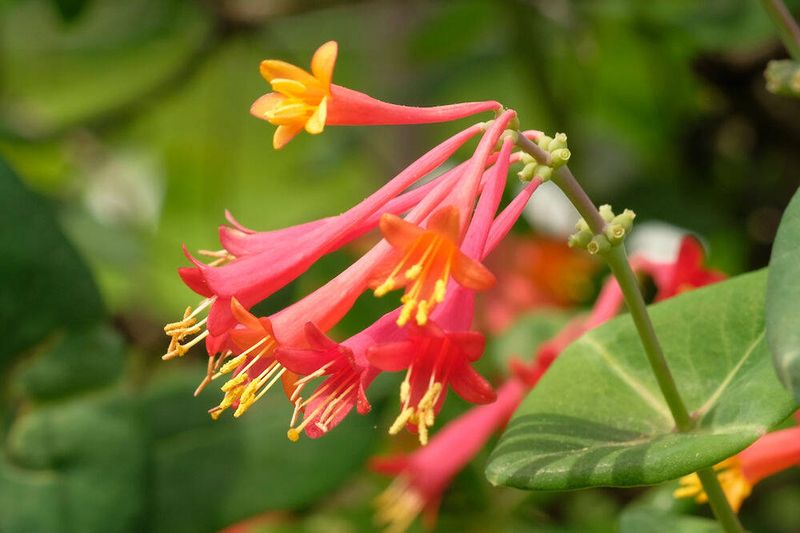
Picture a vine with clusters of narrow red-orange trumpets, yellow inside, climbing a fence post. That is coral honeysuckle, also called trumpet honeysuckle (Lonicera sempervirens), and it is the vine at the center of this guide.
NC State Extension lists it as native to North Carolina. The Vascular Plants of North Carolina records it across the Coastal Plain and Piedmont and at lower mountain elevations, so most home gardeners in the state are within its natural range.
The word honeysuckle alone does not tell you whether a plant is a problem. Japanese honeysuckle (Lonicera japonica) is the troublemaker.
The NC Forest Service lists it among invasive vines and recommends native plants instead. Coral honeysuckle is one of those native choices, and it grows alongside the wildlife that evolved with it.
The title of this article promised more than the evidence allows, so let us fix that up front. No proof shows that one vine feeds more hummingbirds than any feeder, and no vine is guaranteed to stay put.
Native is a good start, and it still calls for planning, which the next sections cover.
Think of coral honeysuckle as a useful piece of a wildlife-friendly yard. It is a swap for the invasive vine, not a cure-all.
Its flowers provide seasonal nectar
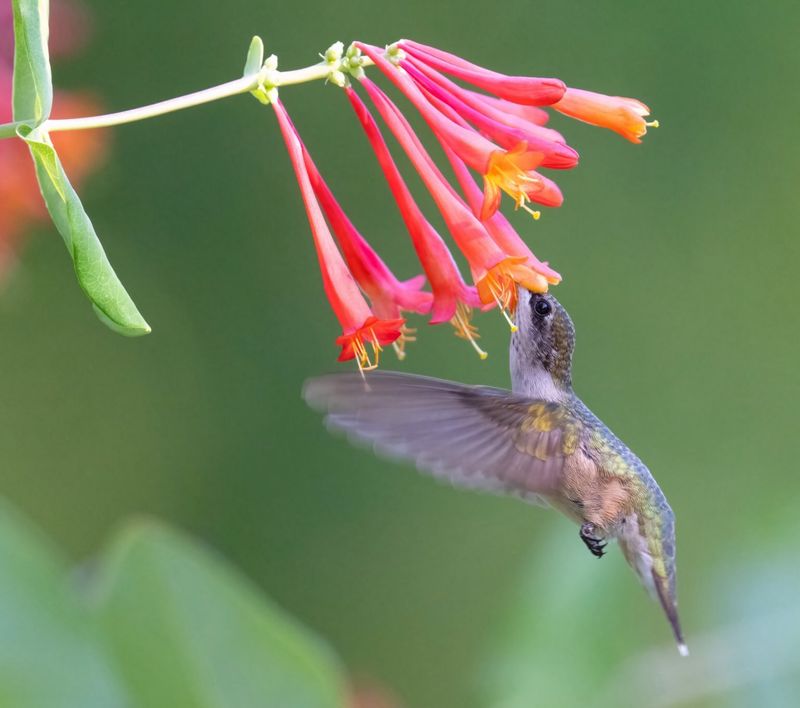
Bees hum, butterflies drift in, and a Ruby-throated Hummingbird may hover at the blooms. According to the NC State plant profile, the tubular flowers attract hummingbirds, bees, butterflies, and some moths.
The show does not end with the flowers. Small red berries follow, and songbirds eat them.
That gives one vine a role in more than one season of a backyard food web.
Timing matters for setting expectations. North Carolina flora records show flowering mainly from March through July, with occasional blooms in late summer or fall.
Spring hummingbirds arriving in April can find flowers waiting, but the peak fades by midsummer.
So this is a seasonal nectar source, not a year-round supply. If you want hummingbird food in August and September, you will need other blooming plants in the mix.
It also does not guarantee visitors. Hummingbirds pick yards based on nearby habitat, other flowers, perches, and what neighbors offer.
Plant it, watch for a season or two, and treat any visit as a bonus rather than a promise.
The evidence does not show it beats every feeder
Nobody has shown that one coral honeysuckle vine feeds more hummingbirds than any feeder. No study has set the two against each other, so that headline claim does not hold up.
One broad North American study, Interacting with hummingbirds at home, found that hummingbird sightings were linked to both feeder presence and the number of nectar-providing plant types. That is an association.
It does not prove that feeders or plants caused more visits, and it did not test this vine.
The useful takeaway is that variety seems to go along with more sightings. A yard with several nectar plants and a well-kept feeder may do better than a yard relying on one thing.
Audubon’s feeding FAQs call native flowering plants the best nectar source and describe feeders as supplemental. That fits the way hummingbirds live, since flowers offer nectar in a natural setting and sit alongside the insects the birds also need.
So coral honeysuckle earns a spot, and so does a clean feeder. Neither one replaces a diverse planting.
Plan for a long, twining vine
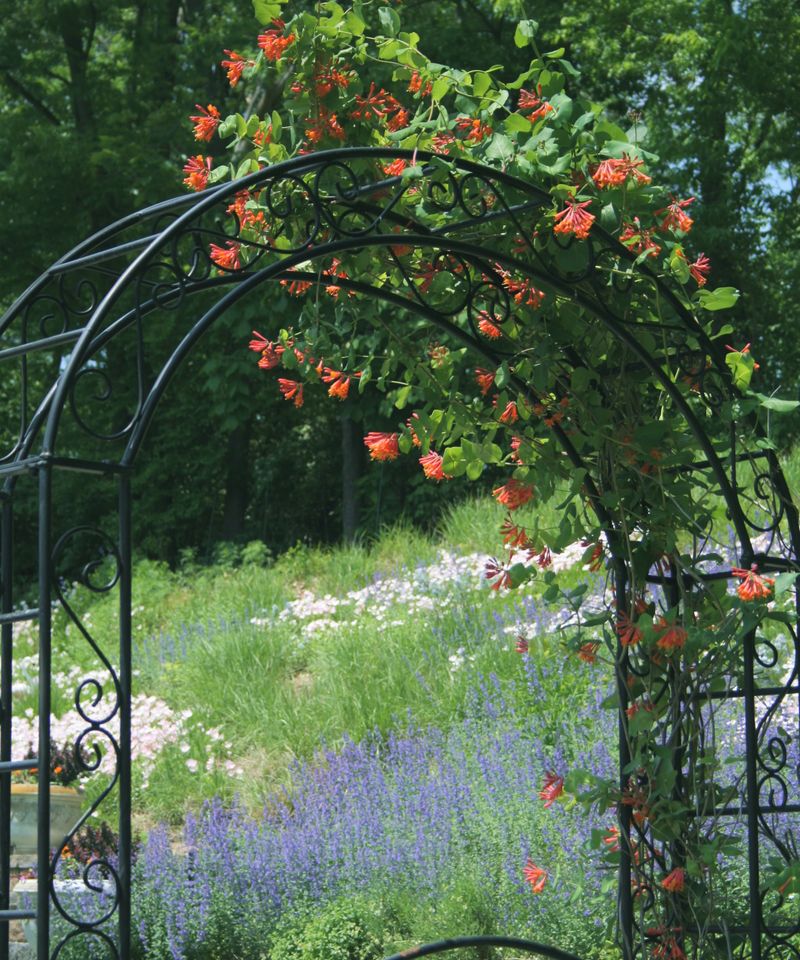
Before you buy one, measure the space. NC State describes a twining vine that can reach 10 to 20 feet, and it needs support such as a trellis, arbor, or fence.
A sturdy wire trellis on a sunny fence line works well. A flimsy tomato cage will not last a season.
Light matters for flowers. The vine grows in full sun to partial shade, but it blooms best in full sun.
A shady spot may give you leaves and few of the red trumpets you planted it for.
Soil is the next check. It prefers medium moisture, good drainage, and soil that is neutral to acidic, which suits much of the Piedmont and Coastal Plain.
If your yard holds standing water after rain, pick a higher spot or build a mound.
Pruning comes down to timing. The vine flowers on new growth, and NC State advises pruning after flowering if you want to preserve blooms.
Cutting hard in late winter can remove buds, so wait until the flush of flowers is done, then trim back stems that wander.
A quick weekend plan: pick a sunny site, set the support first, plant, and mark a calendar reminder for a summer trim.
Native does not mean contained or fire-safe everywhere
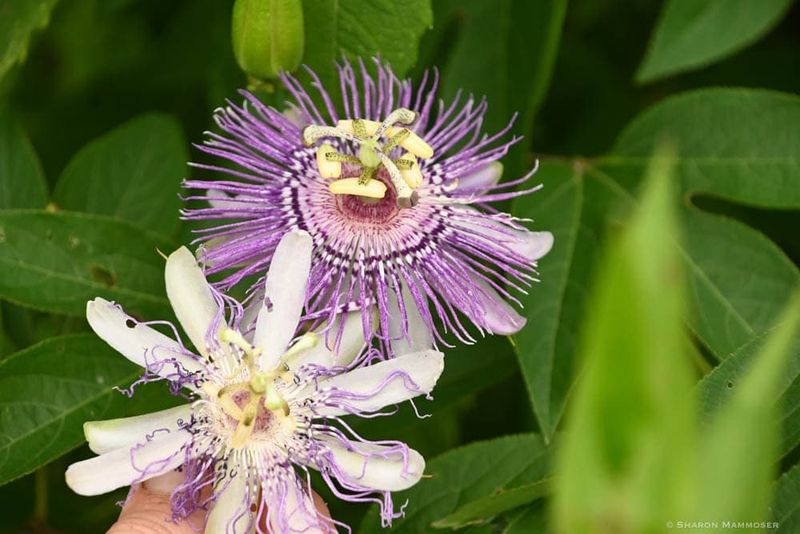
Here is where the promise of a vine that never runs wild falls apart. NC State calls coral honeysuckle vigorous and says it can sprawl as groundcover.
Native status helps in one way. It is a sound alternative to Japanese honeysuckle, which the NC Forest Service lists as invasive.
But native does not mean small, and it does not mean maintenance-free.
Plan for its full reach from day one. Give it a structure that fits 10 to 20 feet, then check it a few times each growing season.
Snip stems that creep across paths, into shrubs, or up small trees.
Fire safety is the other catch. NC State gives coral honeysuckle a high flammability rating and advises against planting it within a home’s defensible space.
No setback distance is given, so do not guess one. Check local wildfire guidance, especially if your home borders woods.
In practice, that means a vine on the wall of your house is a poor idea. A fence far from the structure, or a spot outside the defensible space, is a smarter choice.
Use a clean feeder as an optional supplement
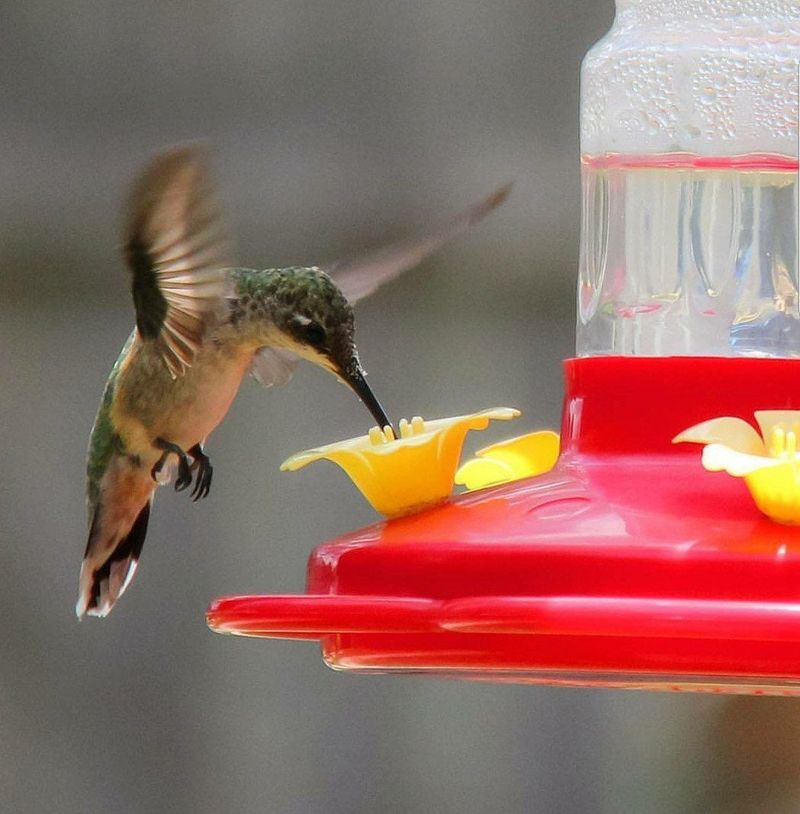
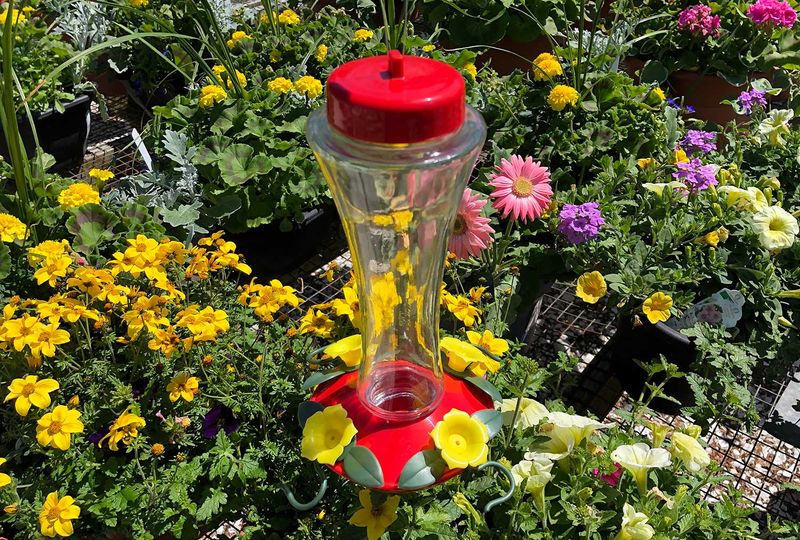
If you like watching hummingbirds up close, a feeder can sit alongside your vine. Audubon recommends one part refined white sugar to four parts water, with no red dye.
The clear mix is enough, and dye adds nothing helpful.
Freshness is the real safety issue. Sugar water spoils, and mold and bacteria can build up fast in summer.
Audubon advises cleaning and refilling more often in hot weather.
Cornell Lab’s All About Birds says to change sugar water at least every 3 to 5 days, and more often when it is hot. It also says to clean feeders at least weekly.
A simple routine helps. Mix a small batch, fill the feeder halfway, and scrub with a bottle brush on cleaning day.
In July heat on the Coastal Plain, expect to swap it out sooner.
Keep in mind that sugar water is not a full diet. Hummingbirds also eat small insects, which is another reason to keep flowers and a bit of leafy cover in your yard.
Make the choice that fits your yard
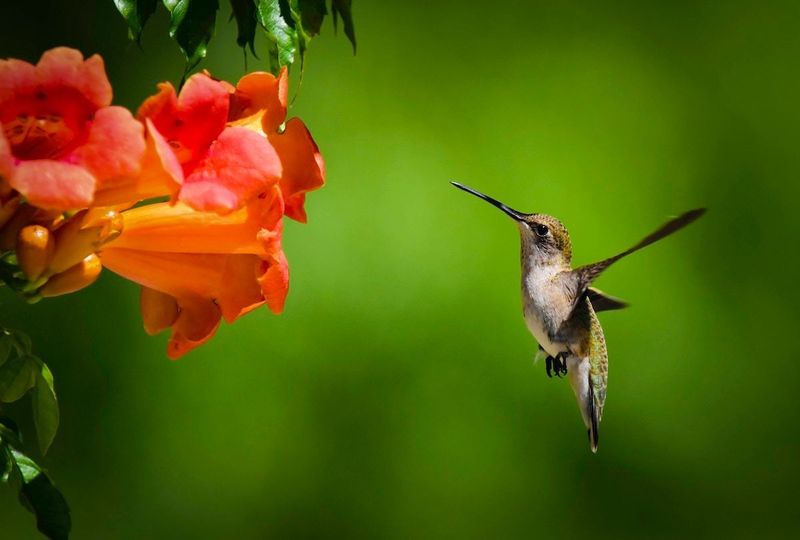
Coral honeysuckle can add seasonal nectar, berries, and native character to a yard that has room and a safe spot for it. A clean feeder can stay on as a small extra.
Match the plant to your fence, your sun, and your fire-safety needs, and it becomes a reliable neighbor rather than a headache.
A good yard does not rely on one star performer, it keeps the whole cast of flowers and birds going.