
Overwintering Leggy Geraniums Indoors: How To Keep Your Plant Healthy Until Spring
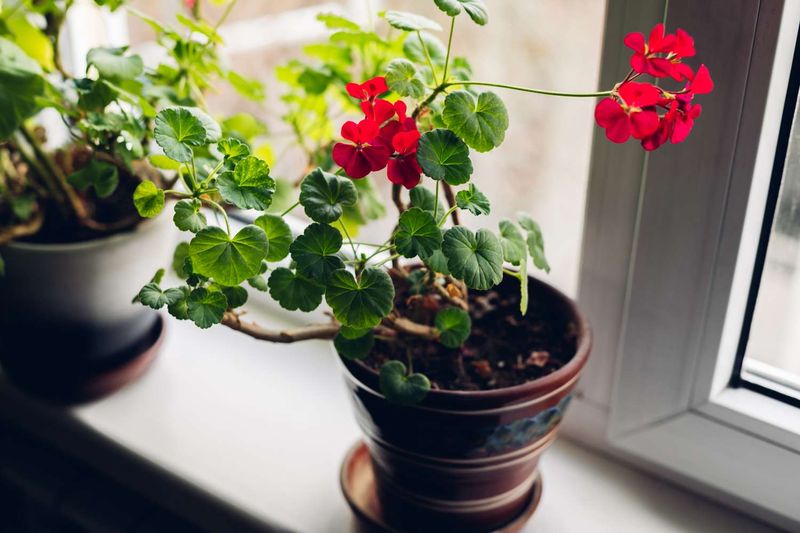
Your geranium looked great all summer, and now it is tall, stringy, and bare at the bottom. That does not mean you did something wrong, and it does not mean the plant is done.
Often the plant is simply reaching for light in a warm room. Here is how to decide what to save and how to give it a fair shot at making it to spring.
Why a geranium can turn leggy indoors
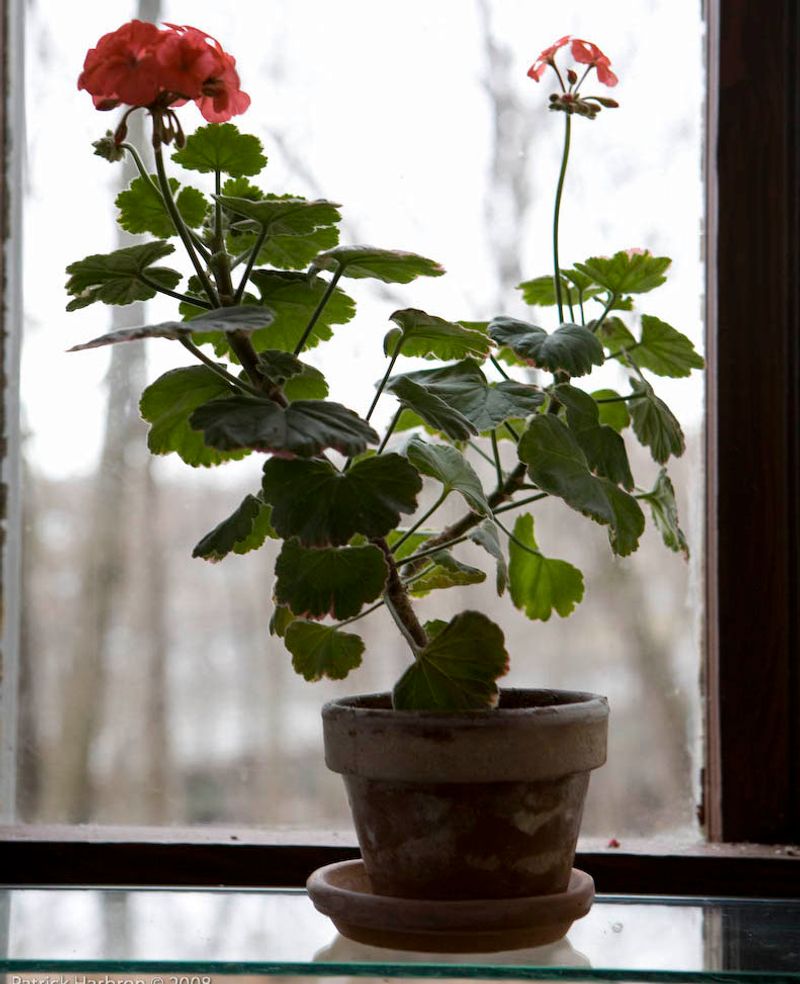
Picture a geranium in a cozy, warm living room with a dim window. The plant is getting plenty of warmth but not much light, so it stretches toward the glass.
The result is long stems, wide gaps between leaves, and a bare, lanky look. University of Illinois Extension points to a bright, sunny window or supplemental light, plus cooler conditions, as ways to help prevent more lanky growth.
Here is the reassuring part. Legginess alone does not prove your plant is failing.
It is a common response to the indoor setup, and it is something you can often improve by changing the conditions, not by blaming yourself.
That said, stretched growth is not the only reason a geranium can look sparse. Look closely at the leaves and stems.
Spots, yellowing or brown discoloration, wilting, shriveled stems, mushy or rotting areas, or insects all call for a closer inspection. Those signs point to something other than a simple light problem.
Keep one distinction in mind as you read on. Fixing the light and temperature changes the growing environment, which is the cause of the stretching.
Pruning changes only the plant’s shape. Both have a place, but they do different jobs, and trimming will not make up for a dark window.
This advice is about common bedding geraniums, which are botanically Pelargonium. If your plant came through a few weeks of cool nights and still looks tired, you still have options, and the next sections walk through them step by step.
Bring tender geraniums in before frost
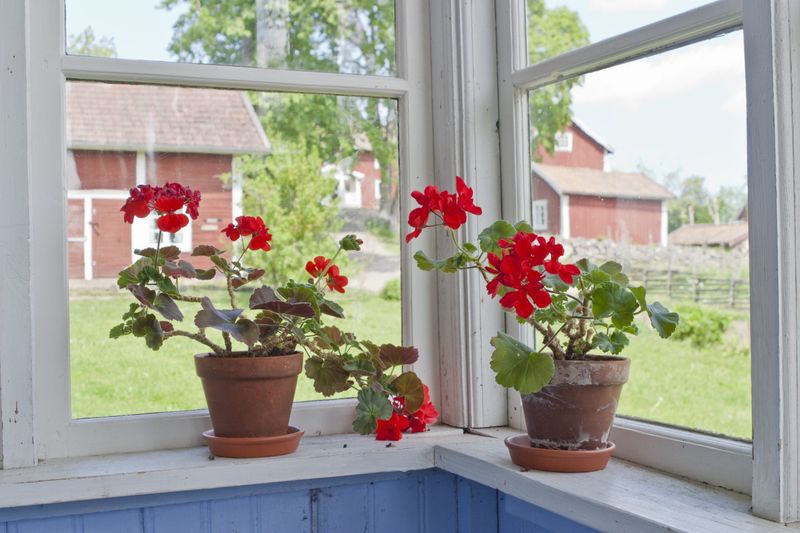
October is a handy time to plan, but it is not a deadline for the whole country. Frost arrives on different dates depending on where you live, so watch your local forecast.
Tender geraniums should come indoors before frost reaches them, whether that is early autumn in one place or much later in another.
It also helps to know what you are holding. The plants sold as geraniums for pots and beds are Pelargonium, which are tender.
Hardy true geraniums, often called cranesbills, belong to a different genus, as University of Illinois Extension’s cranesbill page explains. Do not automatically treat those garden perennials the same way.
Before any plant crosses your threshold, give it a careful once-over. Illinois Extension advises discarding plants with leaf or stem discoloration, wilting, shriveling, rot, or insect infestations.
Here is a simple checklist to use:
Turn leaves over and look for tiny insects or sticky residue. Check stems near the soil line for softness or rot.
Note any spotted, discolored, wilted, or shriveled growth. Look at the soil surface for pests that might hitchhike.
If a plant looks visibly diseased or infested, leave it outside. Bringing it in can spread trouble to your other houseplants.
Healthy plants get the indoor spot, and that keeps winter care simpler for everyone.
Choose a winter-saving method
You have more than one way to carry a geranium through winter, and the right one depends on what you want from it. If you would like a plant that keeps growing indoors, the potted-houseplant method is the one to choose.
You dig or lift the plant, pot it in a container with drainage holes, and care for it like a houseplant until spring. Details on light, temperature, and watering come next.
Two other approaches are about preserving the plant rather than growing it all winter. Taking cuttings lets you save a smaller piece of a favorite plant, which is handy when space is tight.
Storing a plant bare-root in a cool, dry place is another option, described by Iowa State University Extension.
Bare-root storage deserves a clear label. It is a dormant-saving method.
The plant rests through winter, and it is not a way to keep a geranium flowering indoors.
So how do you pick? If you have a bright window and want greenery, go with pots.
If you are short on room, cuttings or bare-root storage may fit better. Either way, start with a healthy plant, because only one that passed your inspection is worth the effort.
The Illinois Extension guidance centers on the potted approach, so the next sections focus on it.
Provide bright light, cooler nights, and careful watering
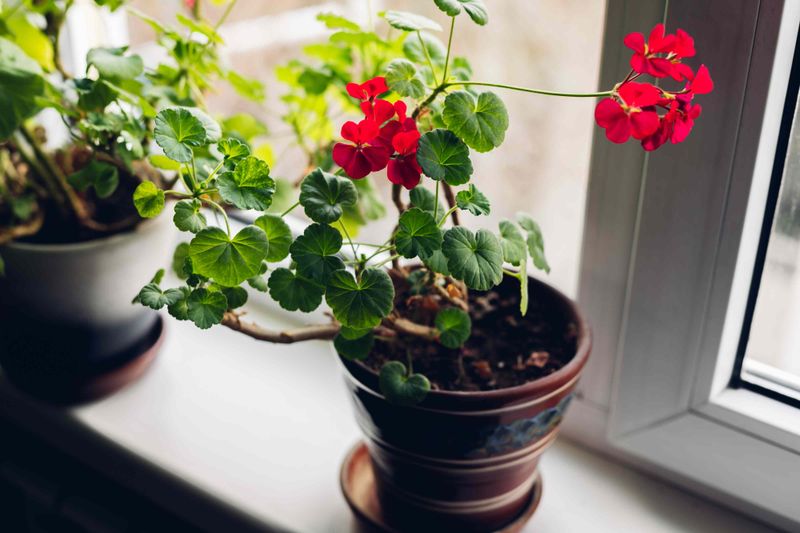
Start with the pot. Use a container with drainage holes so extra water can escape.
Then choose your brightest spot, ideally a sunny window, or add a supplemental grow light if your window is weak.
For temperature, Illinois Extension suggests about 65°F by day with cooler nights. A spot near the window, away from heating vents, often feels cooler than the middle of a room.
Bright light and moderate temperatures work together to limit further lanky growth, but they will not guarantee flowers.
Watering is where many people worry, so keep it simple. Water when the growing medium has become dry, not on a fixed calendar.
Push a finger into the soil, and if it is still damp, wait. When it is dry, water thoroughly and let the extra drain away.
You may notice some leaves yellowing or dropping during the first couple of weeks. That does not by itself mean the plant is failing.
Penn State Extension notes that moving plants indoors can cause leaf yellowing or drop as they adjust.
Give the plant a few weeks to settle in. Meanwhile, keep checking for the warning signs from earlier: rot, wilting, shriveling, spots, or insects.
Steady light, cooler nights, and patient watering are the habits that matter most.
Prune for shape, not as a substitute for light
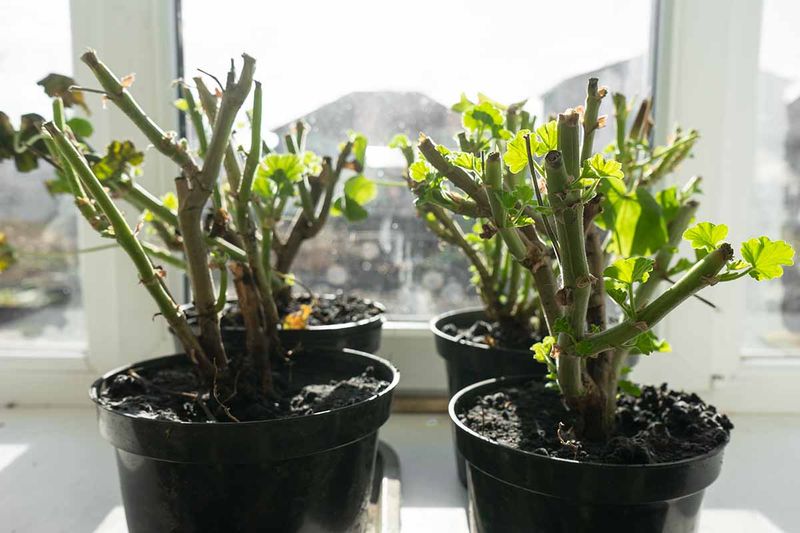
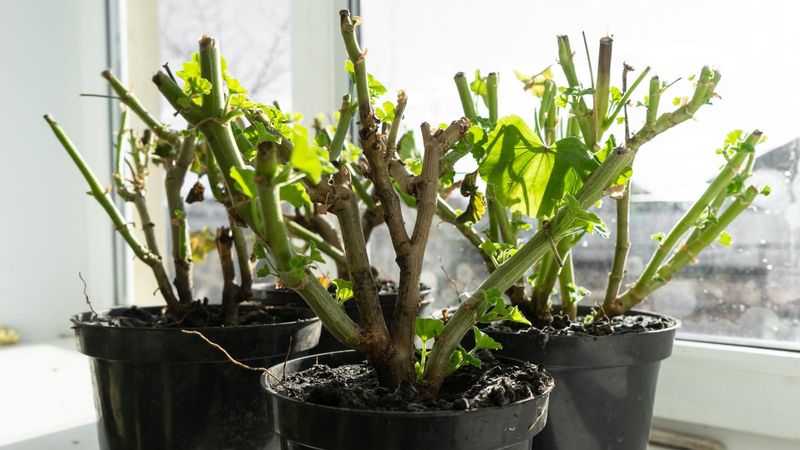
A good trim can make a stretched geranium look much better. University of Illinois Extension recommends cutting plants back by one-third to one-half when you bring them in.
After that, pinch as needed to encourage branching.
Pinching just means removing the soft tip of a stem with your fingers. The plant then tends to send out side shoots, which can fill in gaps over time.
Use clean shears for the bigger cuts so you do not carry trouble from one stem to the next.
Here is a practical picture. Say your geranium has three long stems with leaves only at the top.
Cutting each one back by a third to a half shortens the plant and gives it a chance to branch below the cut. Pinching new growth later keeps that bushier habit going.
Now the honest limit. Pruning shapes the plant, but it cannot fix a dim window.
If the light stays poor, new growth can stretch again, and trimming cannot guarantee recovery.
Think of pruning as a helper for your light setup, not a replacement. Trim for shape, then let the brighter window or grow light do the heavy lifting.
If new stems still look pale and stretched after a few weeks, nudge the pot closer to the light before you reach for the shears again.
Winter flowers are possible, not promised
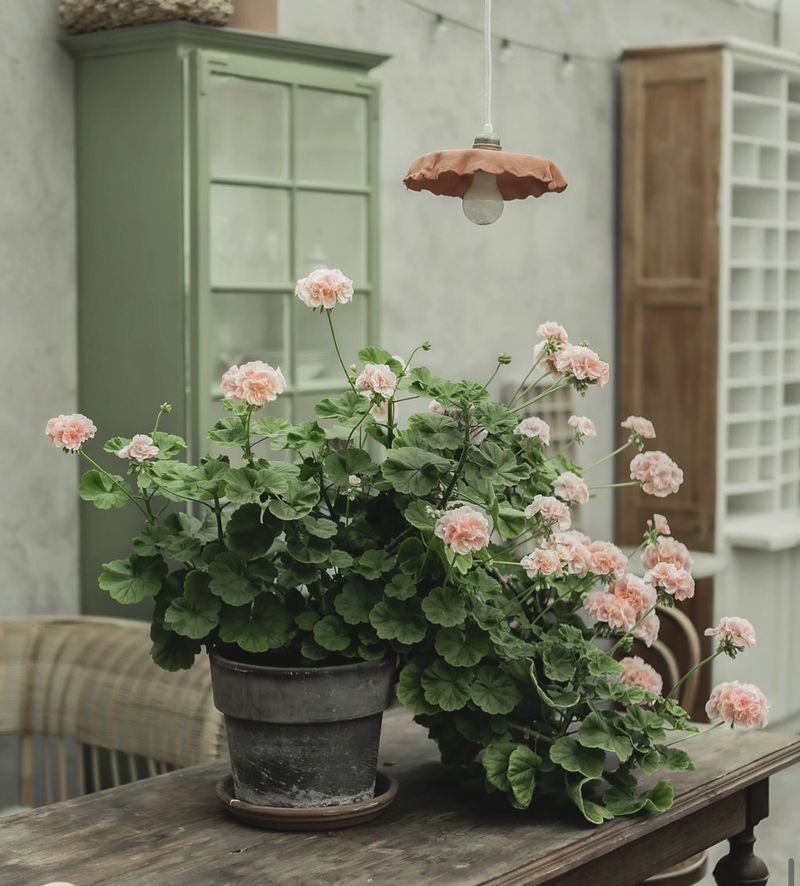
Can your geranium bloom in winter? Sometimes.
Clemson Cooperative Extension says geraniums may flower year-round if they get enough light. The key word is enough, and a typical home window may fall short.
So treat blooms as a maybe. Plenty of healthy plants spend winter growing quietly, with few or no flowers, and then flower well once spring light returns.
That still counts as a win.
Plant type matters too. Martha Washington, also called regal, geraniums are harder to rebloom.
University of Illinois Extension says they need roughly six weeks at 40 to 50°F to start flower buds, a condition that may be hard to provide in many homes.
If you grow one of those, try not to be discouraged by a lack of flowers. It may be doing exactly what you would expect given indoor conditions.
It helps to separate two goals. Keeping a plant in bloom all winter is a stretch for most households.
Keeping a healthy plant alive until spring is realistic and worth celebrating. If a few flowers show up along the way, enjoy them as a bonus.
Judge your success by the plant’s overall health: firm stems, healthy leaves, and steady new growth, not by how many blossoms appear in January.
Make a healthy plant the winter goal
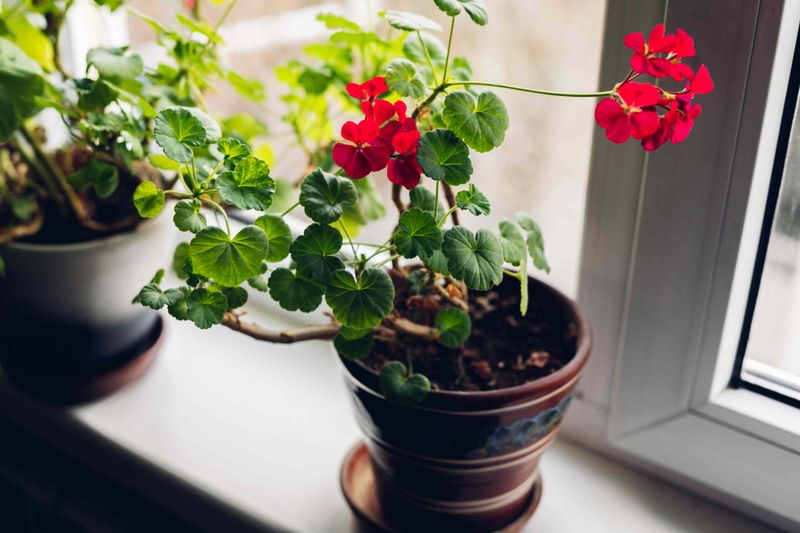
Here is the short version. Inspect before you move the plant, give it bright light and cooler conditions, and water when the soil has dried out.
Pruning, as Illinois Extension describes, can improve shape but cannot stand in for light.
As Clemson Extension suggests, flowers depend on enough light, so count them as a bonus. A geranium that waits out winter and wakes up in spring has done its job.