
Why You Should Avoid Moving a Toad Out of Your North Carolina Garden Beds This Fall
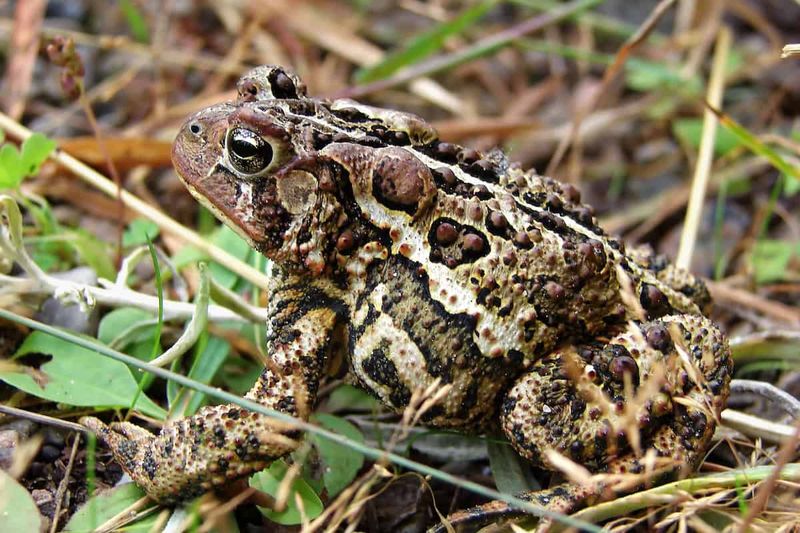
You lift a pot or pull back some mulch in October, and a plump toad blinks up at you. Your first thought might be to scoop it up and set it somewhere safer.
In most cases, a better move is to pause and let it be. Here is how to handle fall bed work in a way that keeps the toads in your North Carolina yard in good shape.
A garden bed can offer suitable winter habitat
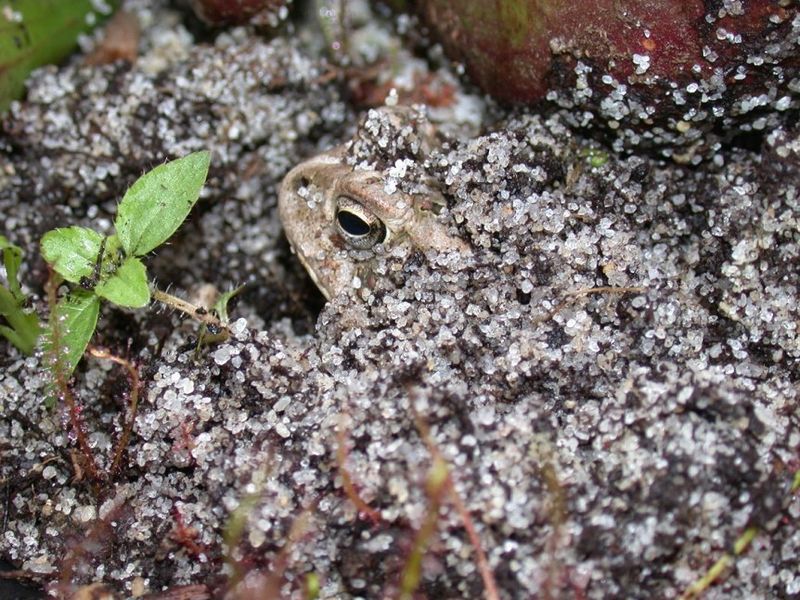
Dusk in a fall garden is when toads tend to show up, tucked beside a stone or under a rotting board. A bed can work well for them when it has cover, moisture, and loose soil.
That is not true of every bed, though, and a toad in yours is not proof that it picked your yard as its permanent address.
According to the North Carolina Biodiversity Project account of the American toad, these animals spend the winter on land. They move underground as the weather cools and need friable soil, meaning soil crumbly enough to dig into, deep enough to stay below freezing temperatures.
Coarse woody debris and damp, shaded conditions are described as favorable, and suburban areas can support toads when those conditions and a nearby breeding site exist.
That is why a mulched, shady bed with soft soil can look so inviting. Leaf litter, logs, and stones add the ground-level cover toads like.
Moisture matters too, since toads dry out quickly.
There is a limit to what this tells us. The same account notes that toads on land are not known to be territorial, so there is no sign that one toad claims one bed as its own.
Toads use many kinds of ground, and a different spot may work just as well for them.
Still, NC State Extension suggests offering shady shelters and letting amphibians arrive on their own. Keeping a few good features in your beds is an easy, low-risk way to do that.
When do North Carolina toads go underground?
Anyone hoping for a single calendar date to stop worrying about toads will be disappointed. North Carolina stretches from the coast to peaks over 6,000 feet, and the cold arrives at very different times along the way.
Toads respond to local conditions, not to a statewide deadline.
The North Carolina amphibian account reports that Piedmont toads can stay active on the surface into November. In the mountains, populations generally head underground from October into early November, depending on elevation and the conditions at a particular site.
Those are general patterns, not guarantees. A warm, wet stretch in late fall may keep some toads moving, while an early cold snap at higher elevation may send them down sooner.
A south-facing yard in Greensboro and a shaded cove near Boone can behave quite differently.
A good habit is to watch your own yard. If you are still seeing toads in the evening or after rain, assume some may be nearby.
If you have not seen one for a few weeks, that does not prove the ground is empty, because a buried toad is simply out of sight.
Records of American toads are concentrated in the Piedmont and western mountains, with fewer in parts of the Coastal Plain. Coastal gardeners may also share their beds with other toad species, so local observation matters more than any rule of thumb.
Pause unnecessary soil work where a toad may be settling
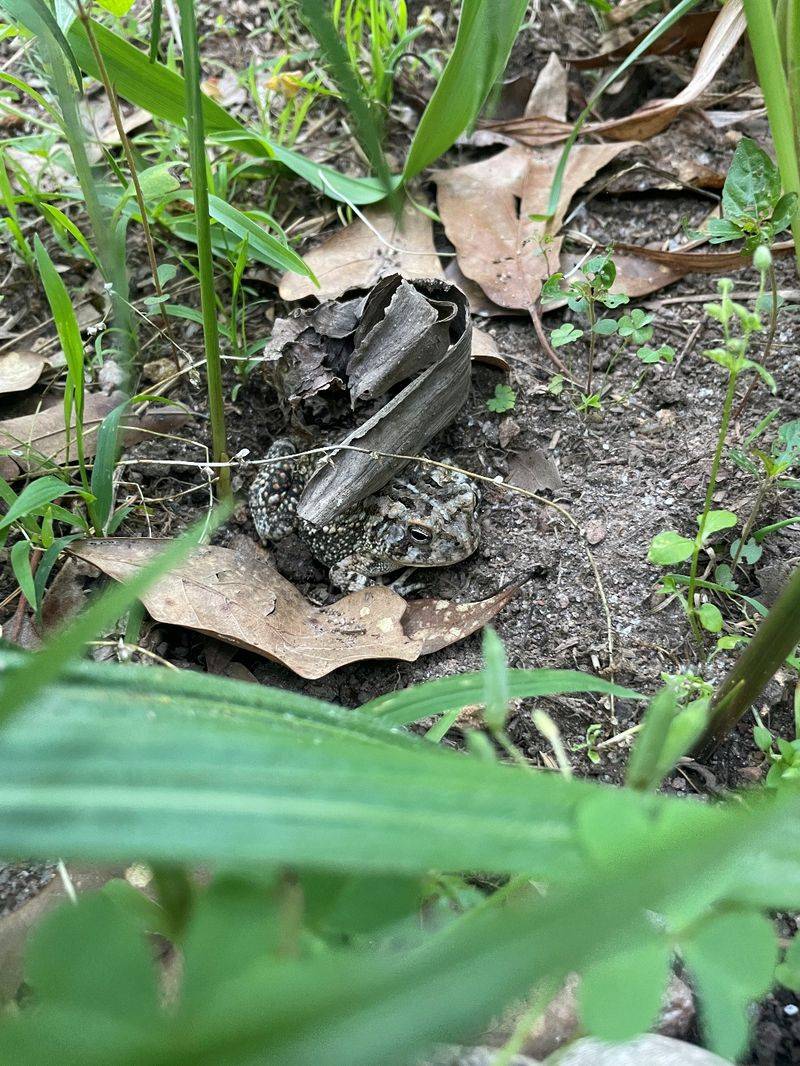
Garden chores like turning beds, tilling in compost, or clearing every last leaf feel like proper fall prep. Where a toad may be settling in, though, they can be worth delaying.
Toads burrow into soil to get through winter, so loosening or flipping that soil is the most direct way to run into one.
Treat this as a precaution. The sources reviewed do not measure how risky any particular tool or tilling depth is, and they do not show that every tilling job harms toads.
It is simply a cautious choice based on how toads use the ground.
Here is how it looks in practice. If you see a toad in a bed, or watch one push into the soil, skip deep digging and tilling in that spot for now.
Work on other beds first, or save that corner for late winter or early spring when you would plan the work anyway.
Leave nearby leaf litter, a log, or a flat stone in place if you can. According to NC State Extension, shady shelter helps amphibians, and a stack of leaves is free.
This does not mean one bed is indispensable to the animal. A toad can find other suitable ground.
You are simply avoiding unneeded disturbance while the option is easy.
If you see a toad, leave it in suitable habitat when possible
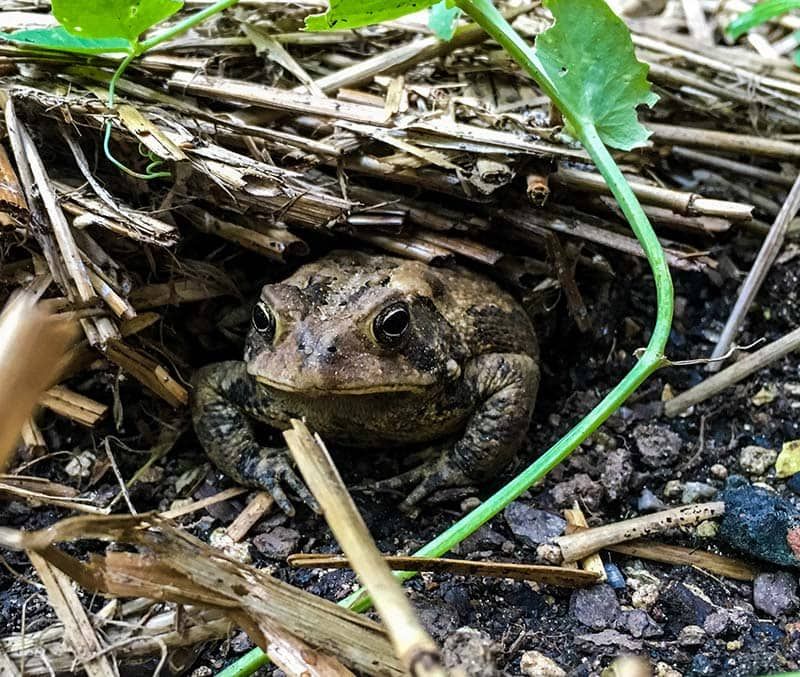
Spotting a toad mid-task can trigger a rescue instinct. Usually the best response is the quietest one: step back, work elsewhere, and let it stay if the spot has cover and moisture.
Picking it up and carrying it across the yard is not a routine fix.
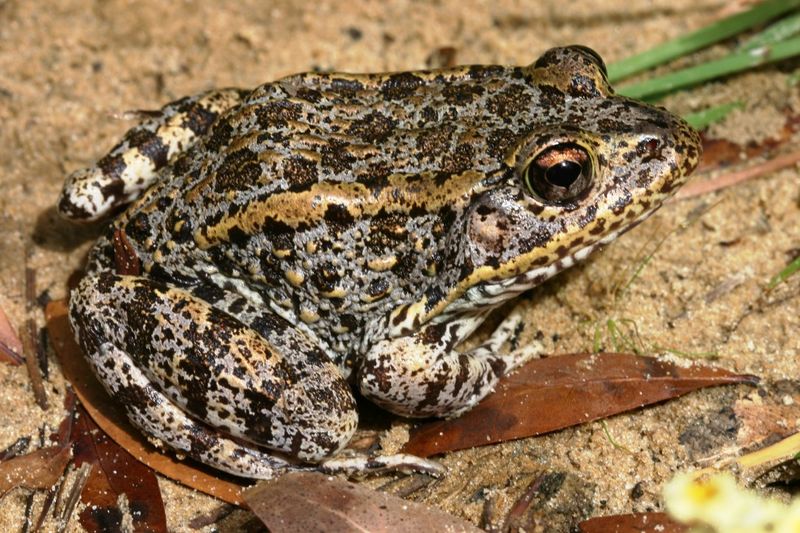
It also helps to stay humble about what you are looking at. American toads can resemble Fowler’s and southern toads, and the features that separate them are hard to judge in a quick look.
Calling it a toad is accurate enough.
If you do need contact, keep it minimal. The NC Wildlife Resources Commission advises proper hand protection when handling wildlife, and washing your hands and any exposed areas afterward.
Never dig up a burrowed toad to check on it.
Rules matter here too, though the picture is nuanced. The state’s possession and collection guidance says live wildlife generally requires a permit, with an exception for fewer than 25 amphibians not on specified protected lists.
That means you should not assume every brief move is illegal, and you should not assume it is always fine either. Check the rules if you plan to keep or transport animals.
NC State Extension also recommends letting amphibians come to your yard on their own instead of relocating them in. Leaving a toad where it is fits that approach.
Slug eating is a possible bonus, not a pest-control plan
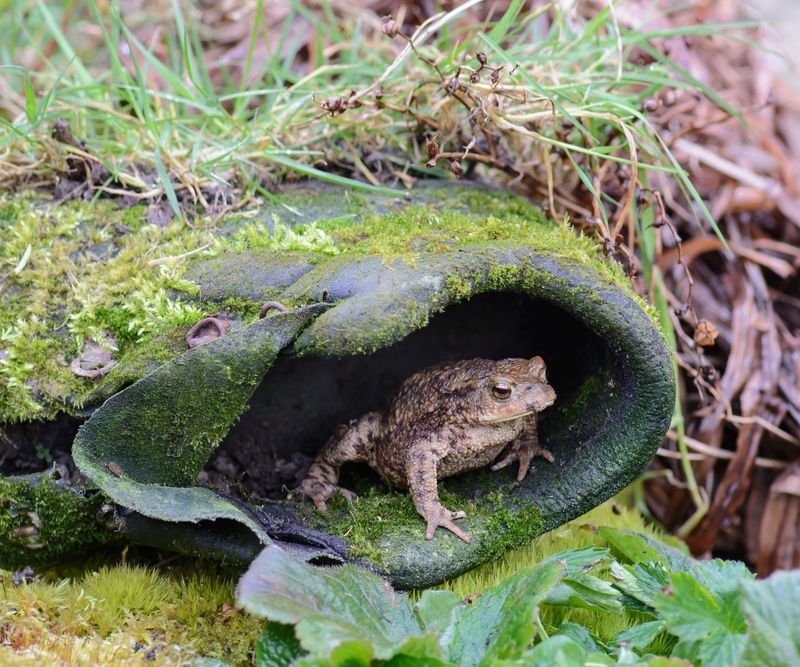
Toads do eat slugs. Extension guidance from the University of Wisconsin-Madison lists them among the animals that naturally feed on slugs, so having one around may take a few off your hostas.
Expecting a dependable slug fix is another matter. Toads eat a wide range of small animals, and slugs are only one item on the menu.
Consider a 2026 study from Pennsylvania. It was done on a farm, not in North Carolina home gardens.
Stomach samples from American toads were dominated by rove beetles, ants, ground beetles, and spiders.
In small field mesocosms, which are contained outdoor test plots, toads reduced ants and ground beetles. The researchers found no detectable effect on pest damage or kale productivity.
That does not mean toads are useless in a garden. It means the slug payoff is uncertain, and a different setting could give different results.
No one has shown that a toad overwintering in your bed will clear out next spring’s slugs.
If slugs are chewing your plants, you will still need your usual tools, like removing hiding spots and hand-picking at dusk. Think of any toad help as a modest extra.
Choose the least disruptive option when you can
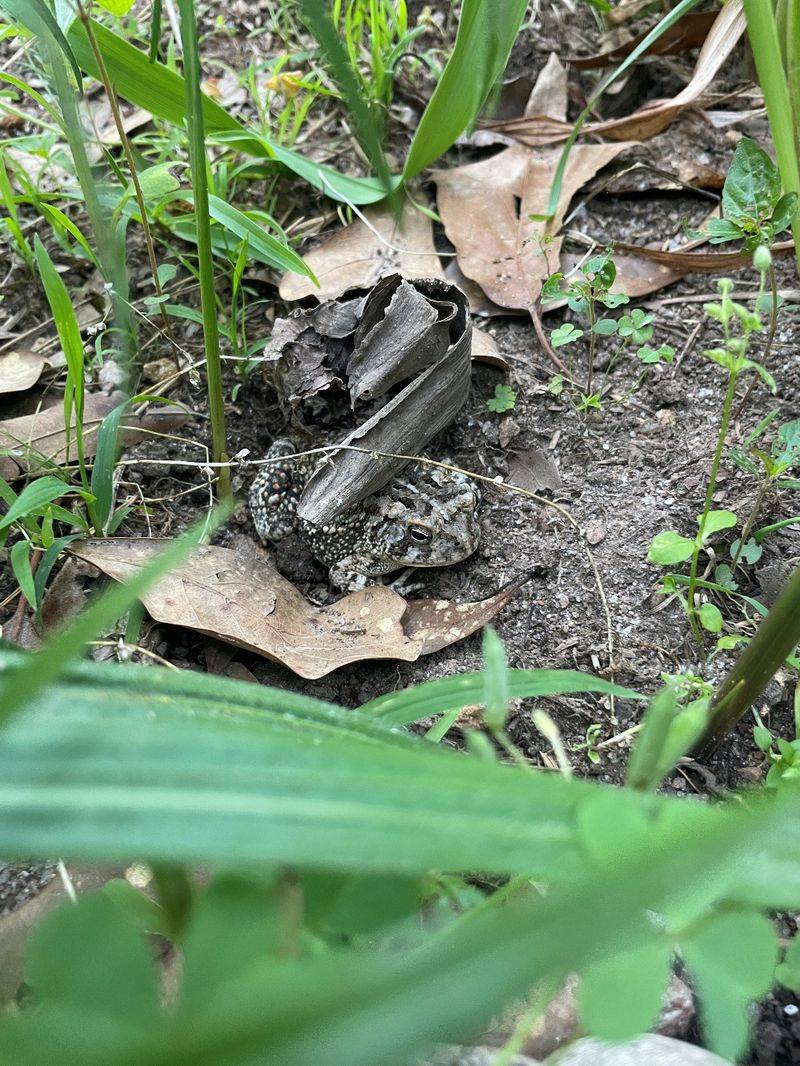
When a toad may be settling into a bed, hold off on unnecessary digging and tilling there, keep the leaf litter and shelter, and skip routine handling or relocation. It is a small, practical stewardship choice.
It does not mean every toad needs your bed or that spring slugs will vanish.
Sometimes the best fall project is the one you leave for March. A quiet corner may be doing more good than a perfectly turned bed.