
If Your Hydrangea Looks Worn Out This Fall, It May Be Normal: Here’s How to Check and Care for It
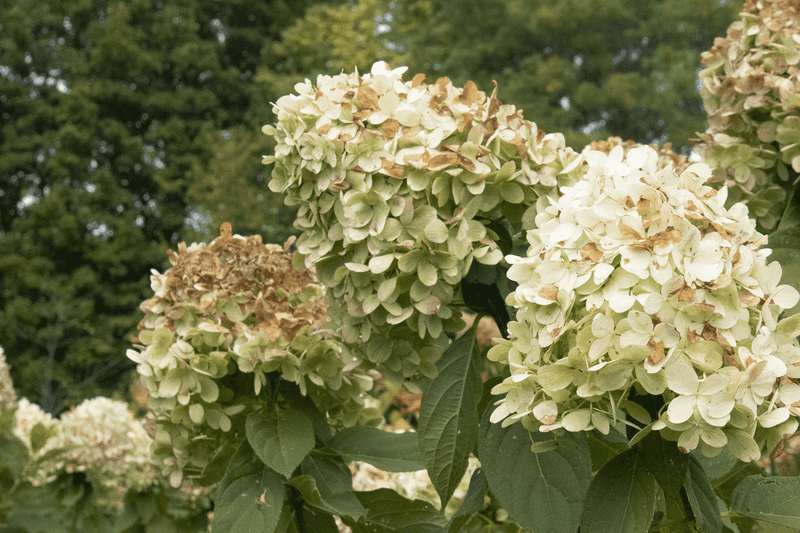
Your hydrangea has gone brown, droopy, and a little sad, and now you are wondering what you did wrong. Fall changes can look alarming, but they are often just part of the plant’s yearly cycle.
Still, looks alone can’t tell you if the shrub is fine or struggling. A few simple checks will help you sort out which one you are seeing.
Fall wear may be normal, but it is not a diagnosis
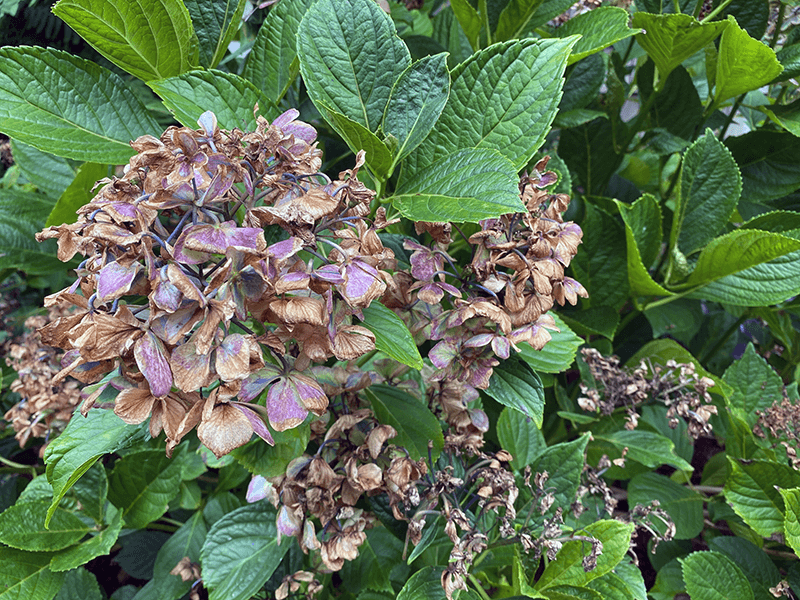
Walk out to the garden in October and your hydrangea may look like it has seen better days. Leaves turn yellow or tan, a few drop to the ground, and the big flower heads fade to dusty shades of green, pink, or brown.
Hydrangeas are deciduous, which means they are built to lose their leaves as the season winds down, and University of Vermont Extension guidance treats fall color change and leaf drop as part of that normal cycle.
The pattern is not the same for every plant. Oakleaf hydrangeas can turn rich red-purple in autumn, while other types may simply go yellow and drop their leaves.
UConn’s hydrangea fact sheet notes this kind of variety, so what looks normal on your neighbor’s shrub may not match yours.
Here is the honest middle ground. Fading blooms and falling leaves in fall are often nothing to fear, but a tired look cannot prove the plant is healthy.
It also cannot prove it is in trouble. Think of the appearance as a clue, not a verdict.
Not every brown pattern belongs in the normal pile, either. Leaves that brown early in summer, stems that stay limp, or a shrub that looks worse each week deserve a closer look.
The next sections show how to tell the difference and what low-risk care makes sense while you watch.
Know which symptoms deserve a closer look
Seasonal change tends to look even and gradual. Leaves yellow or brown across the whole plant at about the same time that neighboring deciduous shrubs are changing, and then they drop.
That is very different from a plant that keeps wilting day after day or has branches dying one after another.
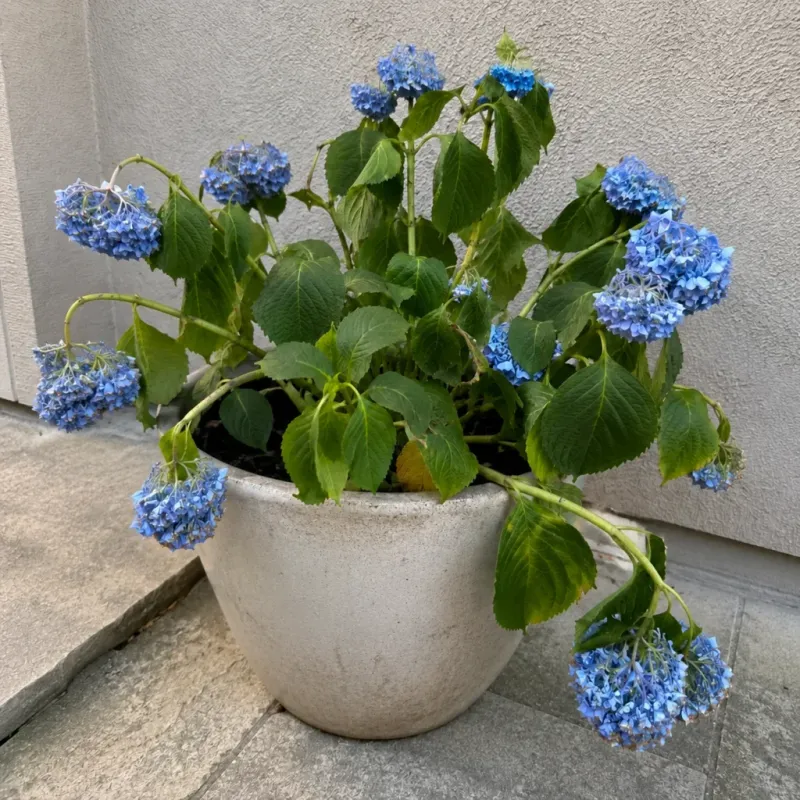
Persistent wilting is a reason to investigate, not a reason to shrug and call it dormancy. UConn Extension describes root rot as something that can start as wilting on one or more shoots and keep progressing even when the plant gets water.
Dieback that spreads along shoots belongs in the same category.
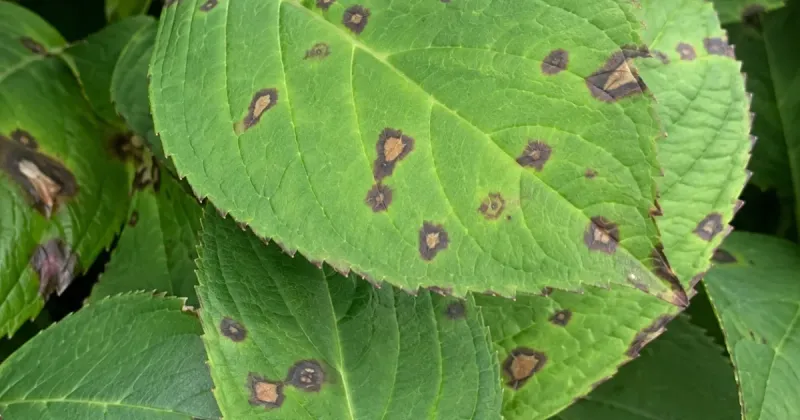
Leaf spots are another thing to look at closely. Distinct tan or gray spots surrounded by dark purple halos can be consistent with Cercospora leaf spot, although a quick description cannot confirm it.
University of Maryland Extension says fall fungal leaf spot damage is not fatal and rarely calls for treatment.
Plain brown leaves with no clear pattern do not add up to a diagnosis. If you are unsure, take clear photos of the whole shrub, a few leaves, and the base of the stems.
Your local extension office can help narrow things down, and there is no need to reach for fungicide or other chemicals for ordinary fall browning.
Check soil moisture before watering
Before the hose comes out, poke a finger a few inches into the soil near the root zone. Dry and crumbly soil tells a different story than cool, soggy soil.
Take a quick look at recent rain too, and at whether water pools around the shrub after a storm.
Hydrangeas like moist, well-drained soil, and they do not do well in soil that stays wet. Standing water can set the stage for root disease, according to Iowa State University Extension.
That is why watering is not a universal cure for a droopy plant. Both drought and soggy soil can make leaves wilt.
If the soil is dry during a dry spell, a good soak makes sense. There is no set fall schedule that fits every yard, so adjust to what is happening around you.
A shrub in full sun, one competing with tree roots, or one planted this year may dry out faster than an established hydrangea in a shady, open bed.
Aim the water at the soil or root zone when you can. Maryland Extension notes that keeping leaves dry helps limit leaf-spot disease, though wet foliage is not the cause of every leaf problem.
If the soil is already wet and the plant still wilts, hold off on the watering can. Poor drainage may be the real issue, and that is worth investigating.
Mulch around the roots, not against the stems
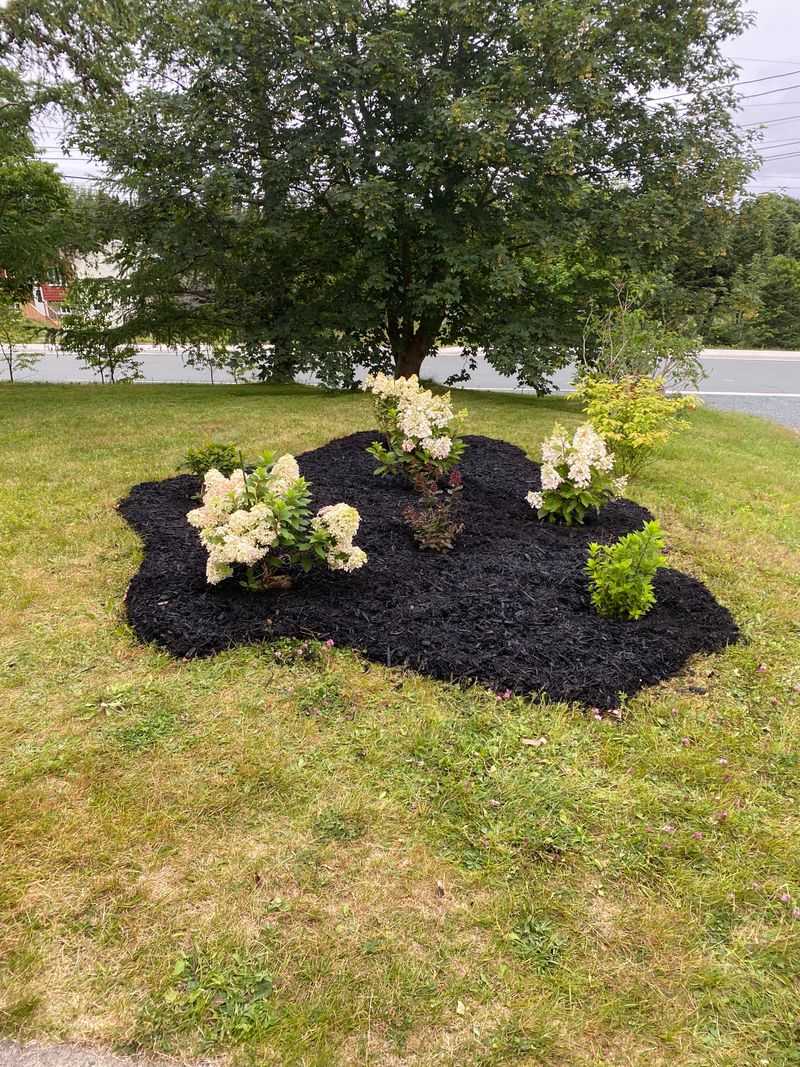
Mulch is one of the easier jobs on the fall list. A layer over the root area helps the soil hold moisture and keeps soil temperatures from swinging as widely from day to night.
You do not need to buy anything fancy, since shredded bark, chopped leaves, or similar material from your yard can work.
Spread it out past the dripline if you can, so the whole root zone is covered. Then pull it back from the stems.
Mulch piled against the stems or heaped over the base of the shrub can hold dampness against the plant, so leave a small ring of open soil around the center.
You may see Penn State Extension’s advice to use 3 to 4 inches of mulch on landscape plants in general. That is a broad planting guideline, not a rule written just for hydrangeas in fall, so a modest, even layer is a sensible approach.
Mulch is a support step, not a fix for a plant that is already in trouble. If the shrub keeps wilting or shoots keep dying back, look at drainage and the roots rather than adding more mulch.
Wait to prune until you know your hydrangea type
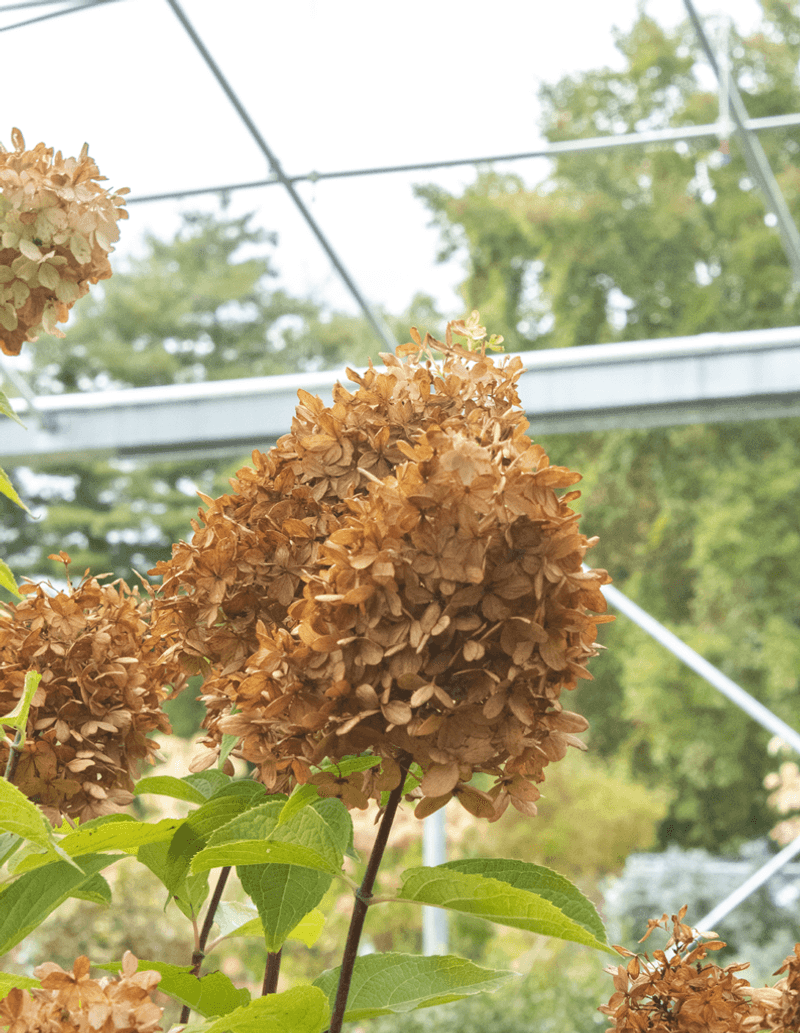
Cutting back a hydrangea in fall can feel like tidy housekeeping, but it is risky if you are not sure what kind you have. Pruning at the wrong time can remove the buds that would have become next year’s flowers.
According to University of Maryland Extension, bigleaf, mountain, and oakleaf hydrangeas generally bloom on old wood, which means stems that grew last year. Smooth and panicle types bloom on new wood that grows in spring.
Some bigleaf and mountain cultivars rebloom on both old and new wood, so even within a group the details can differ. Check the plant tag, your records, or photos of the flowers to work out the type.
Until you know, leaving the shrub uncut is the safer fall choice.
Those faded flower heads can stay put. Deadheading is optional and not needed for plant health, so skip it if you like the papery look in the garden.
Fertilizer is not a recovery treatment either. Excess nitrogen can push leafy growth instead of flowers, and UConn advises against feeding hydrangeas after August 15.
Iowa State points to spring as the time to fertilize, if the plant needs it at all.
Support the shrub without expecting guaranteed blooms
The routine is short. Read the symptoms, check the soil and drainage, water only when conditions call for it, mulch the roots, and hold off on pruning and feeding until you know your plant’s type and timing.
These steps can support the shrub, but none of them can promise flowers next summer.
Blooms also depend on the hydrangea type, pruning history, winter or late-frost injury, light, and other growing conditions. Even a well-cared-for plant can lose buds to a hard freeze.
The guidance from Maryland Extension and Iowa State points to the same idea of steady, modest care.
If wilting keeps going or shoots keep dying back, treat it as something to investigate, as UConn’s disease guide suggests, not as ordinary fall wear. A tired hydrangea is often just resting, and a patient look now is the kindest thing you can give it.