
Taro Plants With Giant Elephant-Ear Leaves Can Grow a Harvestable Corm, but Identification Comes First
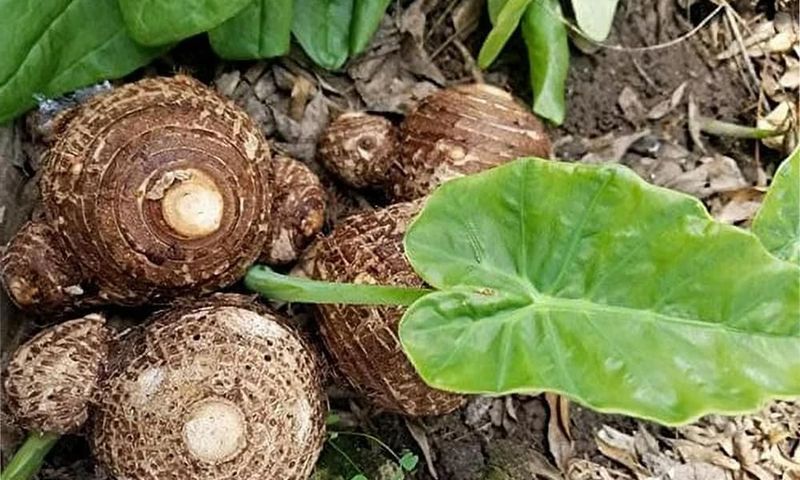
You have probably seen those huge, heart-shaped leaves that look like elephant ears. One of the plants behind that look, taro, grows a starchy underground part that people harvest and eat in many places.
But the name “elephant ear” covers several different plants, and not all of them belong on a dinner plate. Here is how to tell what you are dealing with, when a harvest might be ready, and how to stay safe.
The underground harvest is a corm, often called taro root
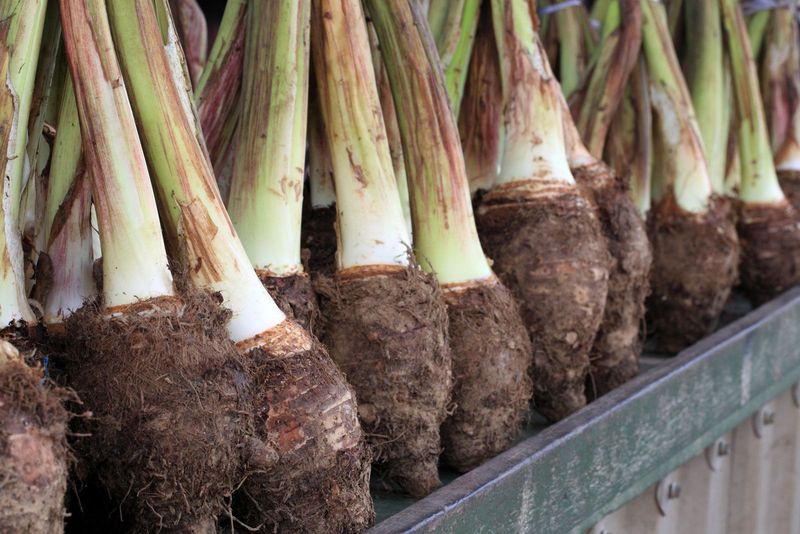
Under those big leaves, taro (Colocasia esculenta) builds a starchy underground corm. Cooks and grocery stores call it taro root, and that name is perfectly fine in the kitchen.
Botanically, though, it is not a true root. A University of Texas plant description treats the harvested part as a corm, which is a swollen underground stem that stores food for the plant.
Think of it as the plant’s pantry, packed away beneath the soil.
A taro harvest means growing the plant for a season or more, then digging up that swollen corm. Texas A&M AgriLife Extension describes taro as a vegetable crop grown for exactly this firm, starchy part.
Gardeners who grow it for food are treating it the same way they would potatoes or sweet potatoes: as something to dig, clean, and cook.
Here is the catch. Growing giant leaves does not mean a plant has an edible crop underneath.
Many elephant-ear plants in yards were chosen for looks, and some are different plants altogether.
So the real curiosity here is not that every elephant ear hides dinner. It is that one specific plant, taro, has long been grown as food, and its leaves just happen to look a lot like the ornamental ones many of us already know.
“Elephant ear” does not identify an edible plant
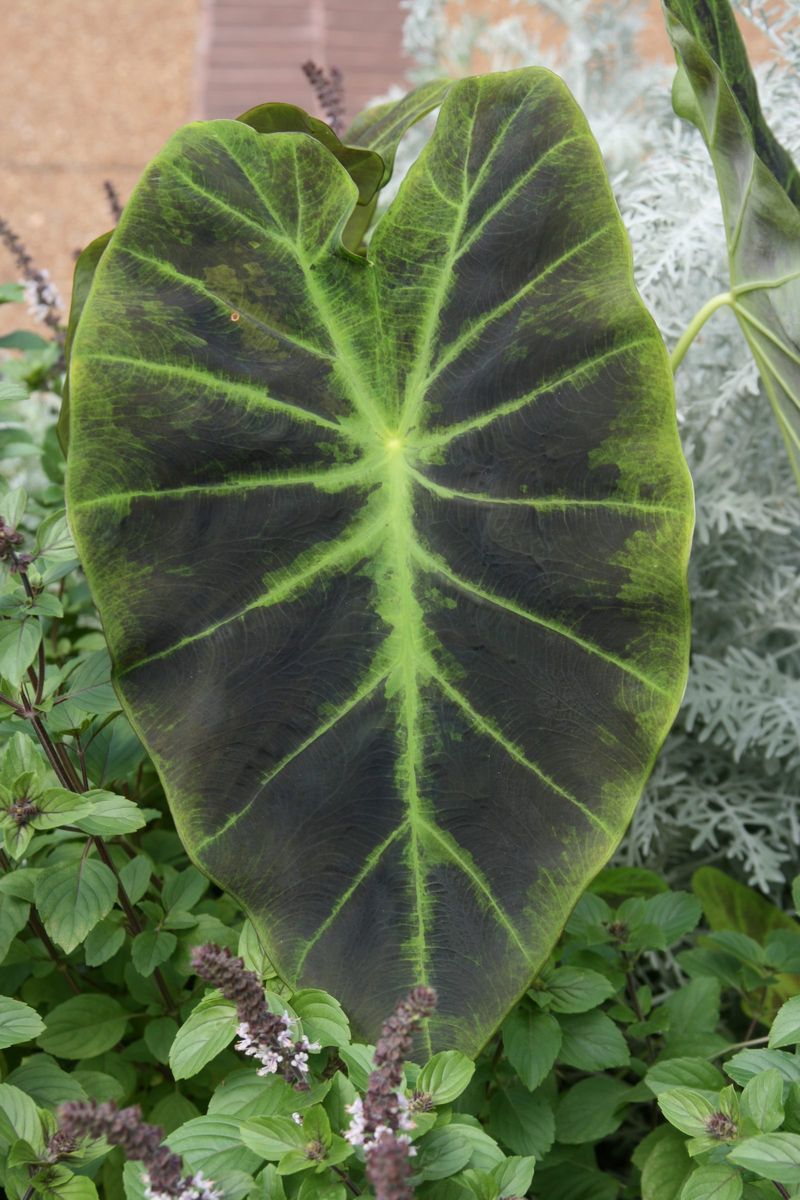
Walk through any garden center and you will find several plants sold as elephant ears. They can be Colocasia, Alocasia, or Xanthosoma, and the leaves can look alike from across the yard.
UW-Madison Extension explains that these plants have been selected for either culinary or ornamental traits. That means even a plant correctly named Colocasia esculenta may have been bred and sold for its looks, not for the table.
Leaf details can offer a clue. UF/IFAS Extension in Pinellas County notes that a Colocasia leaf stalk attaches to the underside of the blade, while an Alocasia stalk attaches at or near the base of the leaf.
Leaf shapes vary, though, and lookalikes exist, so treat this as one hint and never as proof.
The stakes are real. The same UF/IFAS source describes all parts of Alocasia as toxic if eaten.
A better plan is simple. Start with taro that you know was grown as food, from a source that says so.
Leaf size, a plant tag, or a name on a label should never be the deciding factor, and a plant of unknown origin in your flower bed should stay a flower-bed plant.
Judge harvest timing by the crop, not a universal calendar
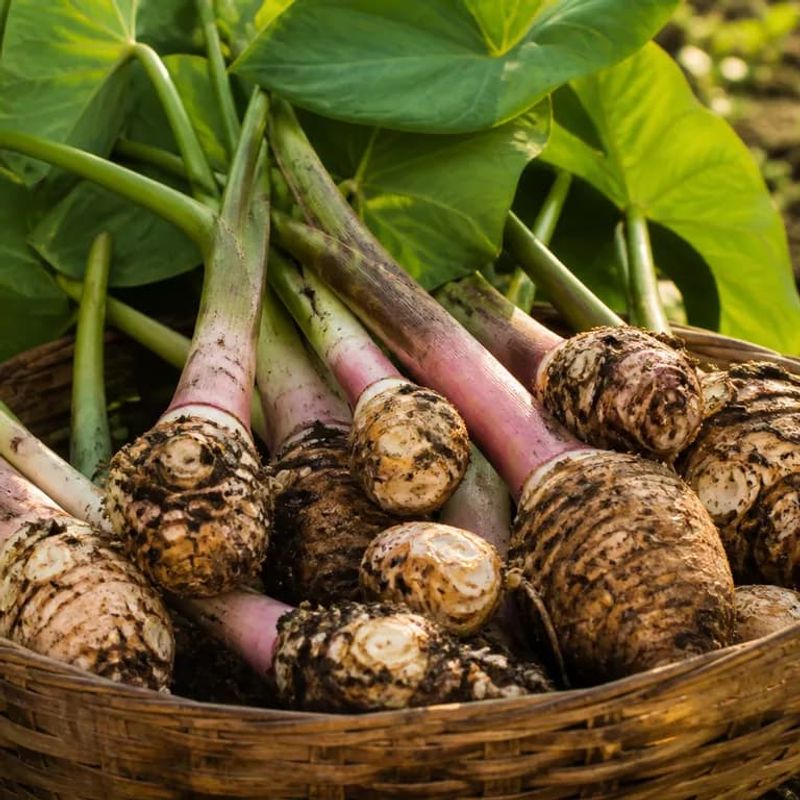
Gardeners love a simple date on the calendar, but taro does not offer one. Timing depends on the crop you actually have in the ground.
Texas A&M AgriLife Extension advises harvesting taro after the foliage dies back in fall. It also describes a firm corm as the goal, so the plant itself is your best guide.
A second number you may see is 8 to 10 months. That comes from a University of Hawaii home garden guide, and it applies to upland taro in that guide.
The same guide says maturity varies with location, variety, soil fertility, and water.
In practice, a gardener in a cool climate and a gardener in a tropical one may be working on very different schedules. Two varieties planted the same day may not be ready together either.
One more caution: a frost that blackens the leaves is not proof that a food corm is mature. Dying foliage in fall is a useful sign for taro grown as a crop, but it should be read alongside how long the plant has grown and how it was grown.
When in doubt, check your variety’s own growing notes and your local extension office.
Harvesting food and saving a plant are different jobs
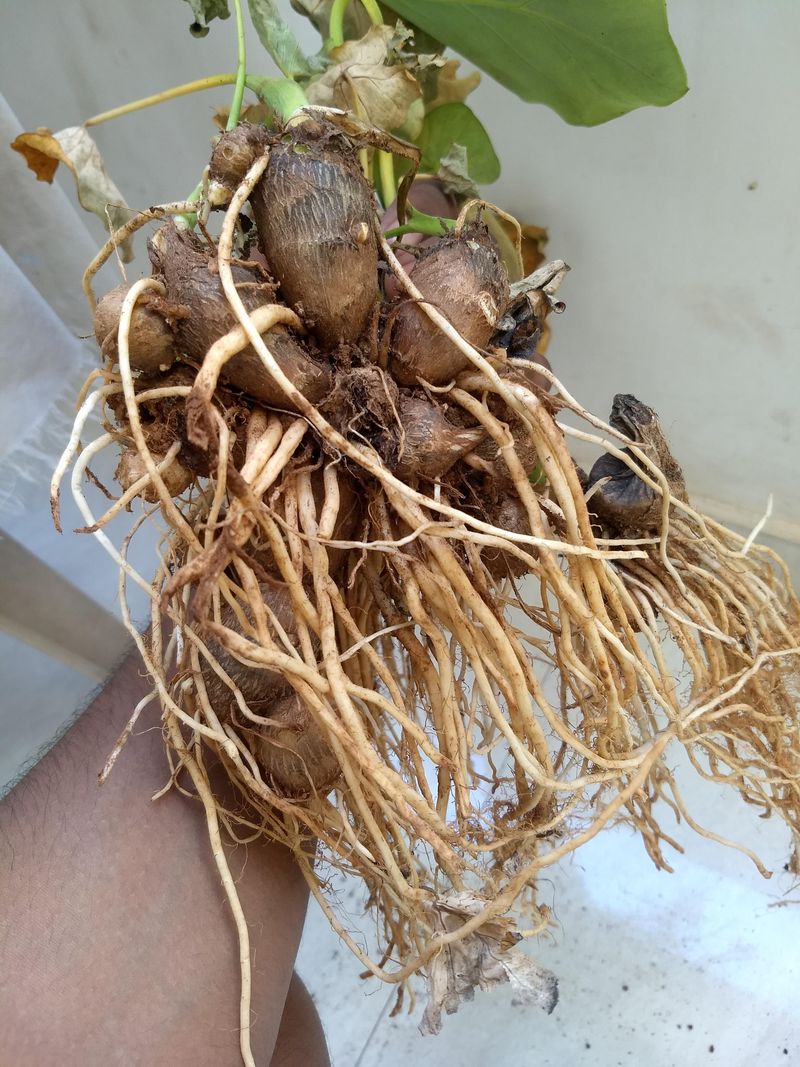
Digging taro to eat and digging an elephant ear to save for next year are two separate tasks. They sound alike but have different goals.
For a food crop, you are after a mature, firm corm. Texas A&M AgriLife Extension suggests saving small offsets if you harvest most of the main corm for food.
Those little side corms can become your next planting.
Saving an ornamental plant works differently. UW-Madison Extension says corm-forming elephant ears can be dug and stored after frost kills the foliage.
That advice is about keeping the plant alive over winter, not about picking a moment to eat it.
Here is a practical example. If you grow a bed of known food-grown taro, you might dig most corms for the kitchen and replant a few offsets.
If you have a decorative elephant ear in a pot or border, lifting and storing it is simply plant care, and nothing in that advice says the corm is safe to cook.
Keep the two goals apart in your head, and in your garden notes, and you will avoid treating a storage tip as a harvest rule.
Cook correctly identified taro thoroughly
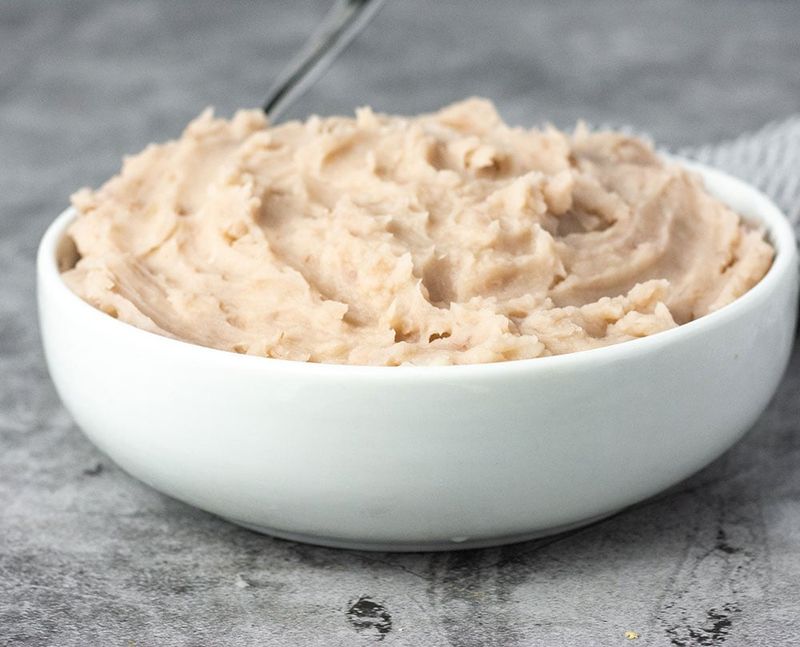
Raw taro is not a snack. It can cause intense irritation in the mouth and throat, so never taste a bit to see what happens.
NC State Extension links this problem to calcium oxalate crystals and calls the plant poisonous until it is cooked. Taro should be eaten only after thorough cooking.
A review of taro research also reports that the raw corm is toxic and describes boiling as a way to reduce oxalate and the irritation it causes. That is why taro dishes around the world rely on proper cooking, not a quick warm-through.
This warning belongs to taro, but it has a flip side that matters just as much. Cooking does not tell you what a plant is, and it does not make an unknown elephant ear safe.
As the UW-Madison guidance on elephant ears shows, several different plants share the name, and some are grown only for show.
So the order matters. Confirm that you have food-grown taro first, then cook it thoroughly.
Boiling a mystery corm is never a safety test.
Make certainty the first step in any harvest
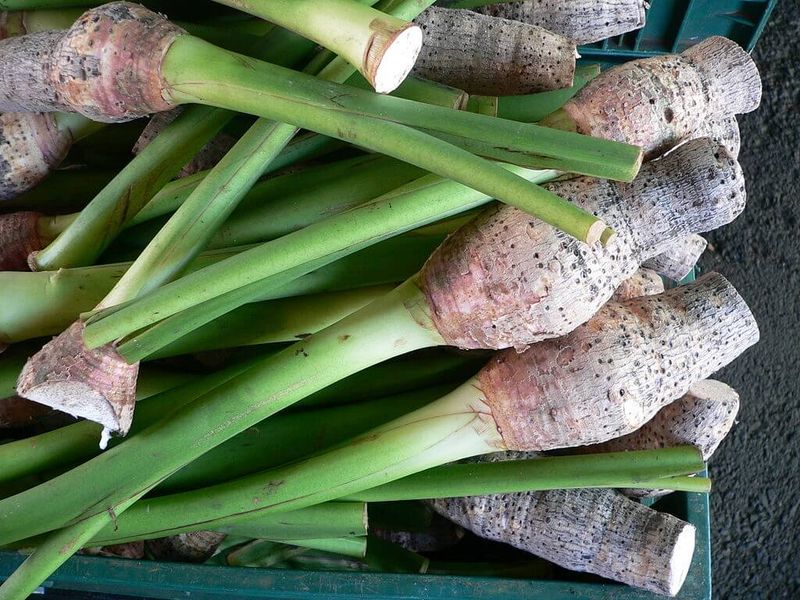
Before you dig, run through three checks. Confirm the plant is food-grown taro, not just a big-leaved plant that looks the part, as UW-Madison Extension cautions.
Next, judge timing by your own growing conditions and the plant’s condition, using guidance like Texas A&M’s taro notes. Finally, cook the corm thoroughly, in line with NC State Extension.
A garden plant’s looks are never enough to go on. Big leaves make a great story, but certainty is what makes a harvest.