
Before You Mow This Fall, Check for Box Turtles and Don’t Scalp Your North Carolina Lawn

A box turtle can look just like a brown stone in the grass, and a mower will not slow down for a stone. In North Carolina, eastern box turtles may still be out and about as fall settles in.
A quick walk across the yard before you start the engine takes only a couple of minutes. Here is how to mow smart, keep your grass healthy, and give turtles a fair chance.
Fall activity does not follow a yard-by-yard calendar

Ask ten turtle watchers when box turtles disappear for the year and you may get ten different answers. That is because the animals do not run on a printed schedule.
According to the North Carolina Wildlife Resources Commission species profile, eastern box turtles can be active throughout the day in spring and fall.
In summer, they tend to be most active in the morning and after rain. Come winter, they typically bury themselves in soil or leaf litter and become dormant.
Even so, turtles have been observed in every month of the year in North Carolina, so dormancy is a general pattern and not a hard rule.
What does that mean for your lawn? It means a fall check makes sense, especially on mild days or after a rain.
A warm afternoon in October or November could find a turtle poking around the yard edges, while a cold snap might keep it tucked away.
It does not mean turtles are marching across suburban lawns toward winter burrows on a set date. Nobody has mapped that kind of yard-level route, and there is no statewide cutoff date for when to stop looking.
Your yard might host a turtle regularly, once in a while, or never.
The takeaway is simple. Treat fall as a season when a turtle could be above ground, and let the weather and what you actually see guide you instead of a calendar.
Mower injuries are documented, but home-lawn risk is not quantified
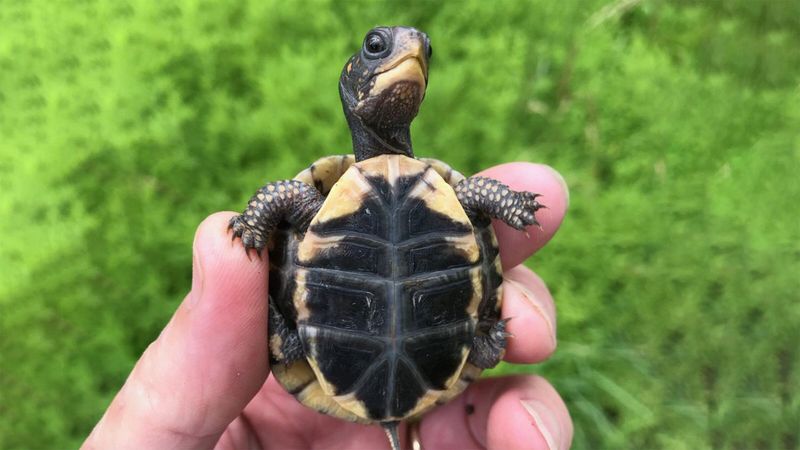
Mowers can and do hurt turtles. A peer-reviewed study, Rautsaw and colleagues’ mortality study, tracked three-toed box turtles at two Missouri sites and recorded mower strikes among the causes of death at both.
That is solid proof the hazard exists.
It is also a limited piece of evidence. Those were three-toed box turtles in Missouri, not eastern box turtles in North Carolina home lawns.
The study cannot tell us how often mowers injure turtles in Piedmont, Coastal Plain, or mountain yards.
There is also guidance aimed at land managers. A set of mowing guidelines for box turtle conservation covers grasslands, meadows, pastures, and hayfields, and suggests avoiding mowing those areas while turtles are using them.
Ordinary residential lawns are a different setting, and that guide does not hand homeowners a calendar date.
Nothing here shows that a low mowing pass is a specific cause of injury in North Carolina backyards. What we can say is that the danger is real, the home-lawn numbers are unknown, and a few careful habits cost very little.
That is reason enough to take care without panic.
Set the mower for your grass, not a turtle-safe number
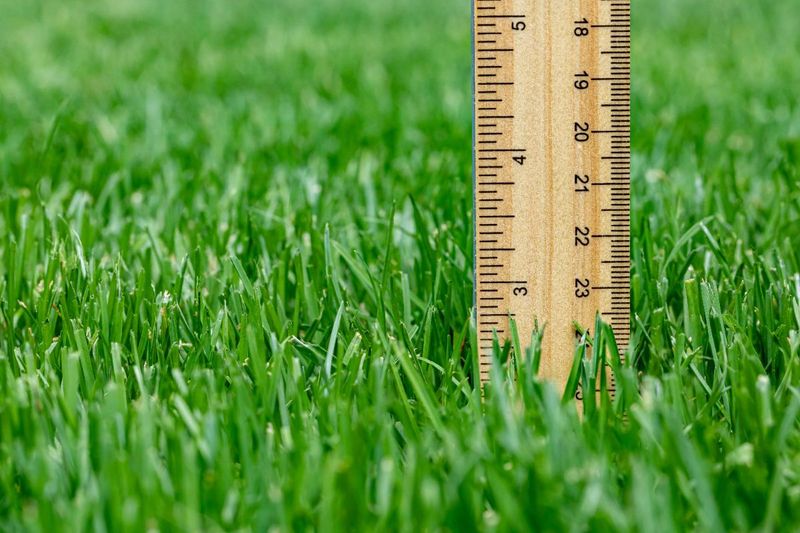
No one has shown that a particular blade height is safe for turtles, so skip any magic number. Pick the height your grass needs instead.
For tall fescue, fine fescue, and Kentucky bluegrass, the NC State Extension home lawn calendar recommends mowing at 2.5 to 3 inches in fall.
That figure is lawn-care advice for those cool-season grasses. It is not a proven turtle-protection threshold, and it does not apply to every yard.
If you have bermudagrass, zoysia, centipedegrass, or another species, your target height is different, and Carolina Lawns from NC State Extension lists species-specific mowing heights.
The practical rule is to avoid scalping. Cutting well below the recommended height stresses turf, thins the lawn, and invites weeds.
Staying within the range for your grass keeps the lawn healthy.
Before you set the deck, find out which grass you actually have. A quick look at the extension guide, or a call to your county extension office, can settle it.
Then use that one height consistently rather than guessing.
Check the lawn before starting the mower
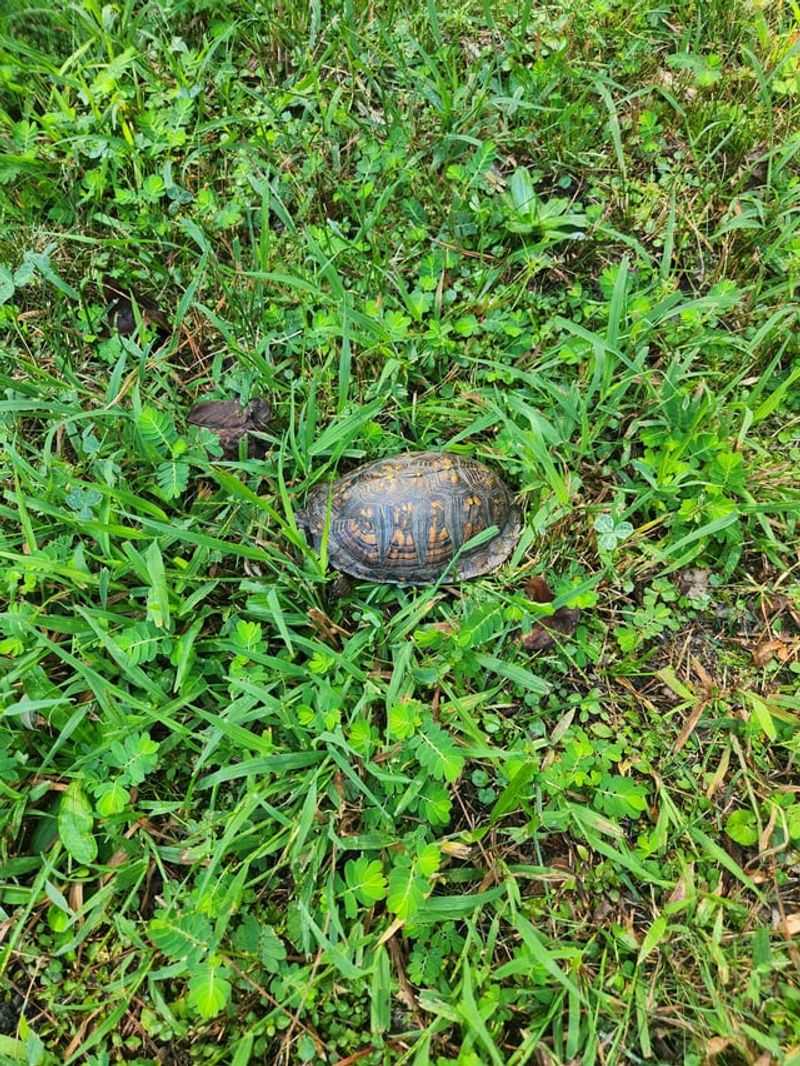
Take two minutes with a slow lap of the yard before the engine roars. Walk the lawn and peek along fence lines, shrub edges, woodpiles, leaf drifts, and tall clumps of grass.
A box turtle’s domed, patterned shell can blend right into dry leaves.
Because the NC Wildlife species profile notes fall activity and says turtles have been seen in every month, a check is reasonable even late in the season. Mild or damp days are good times to look extra carefully.
Keep your eyes open while you mow, too. If you spot a turtle, stop the mower, turn off the blades, and let it be for a moment.
Mowing a bit slower around cover and edges gives you more time to notice something.
Think of this as a sensible precaution, not a tested protocol. Mower strikes have been documented as a cause of death in a Missouri box turtle study, but nobody has measured how much a pre-mow walk lowers risk in a home yard.
Also, finding no turtle today does not prove your yard never hosts one.
Consider leaving some cover less managed
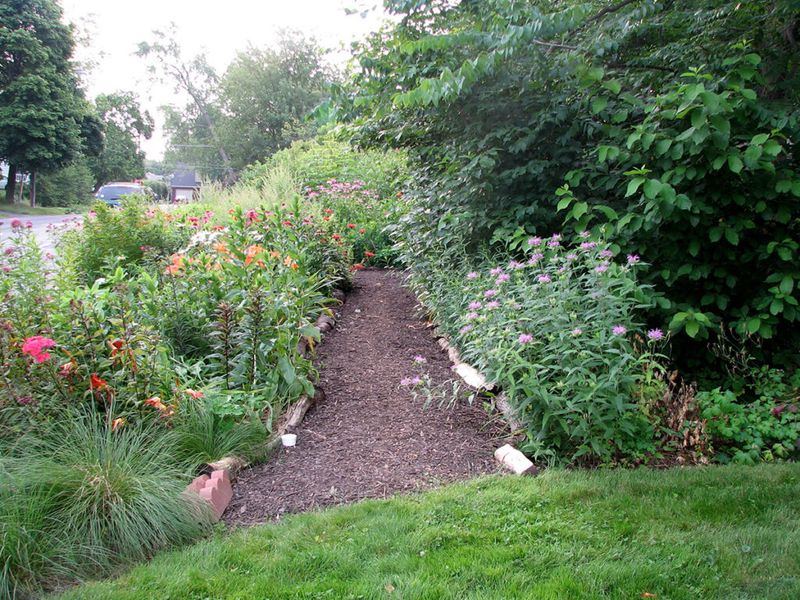
Not every square foot of a yard needs a crisp trim. If you have a back corner, a fence edge, or a slope that nobody walks on, letting it stay a little shaggy is a reasonable choice.
It is optional, and it should fit your own space and neighborhood rules.
The reasoning comes from how turtles live. The NC Wildlife species profile says box turtles bury in soil or leaf litter, so leaves and low vegetation are part of their habitat.
A patch of that cover gives a turtle somewhere to settle that is not under your mower deck.
Be realistic about what this does. Added cover will not guarantee that a mower never meets a turtle, and no one has measured a safety benefit for home lawns.
Think of it as a modest, low-cost courtesy.
Easy ways to try it: rake fall leaves into a loose pile along a back border instead of bagging every one, let native groundcovers and grasses fill a corner, or skip mowing a strip next to the woods. Keep tidy edges near the house and walkways so the yard still looks cared for.
If a turtle is in immediate danger, keep any move short
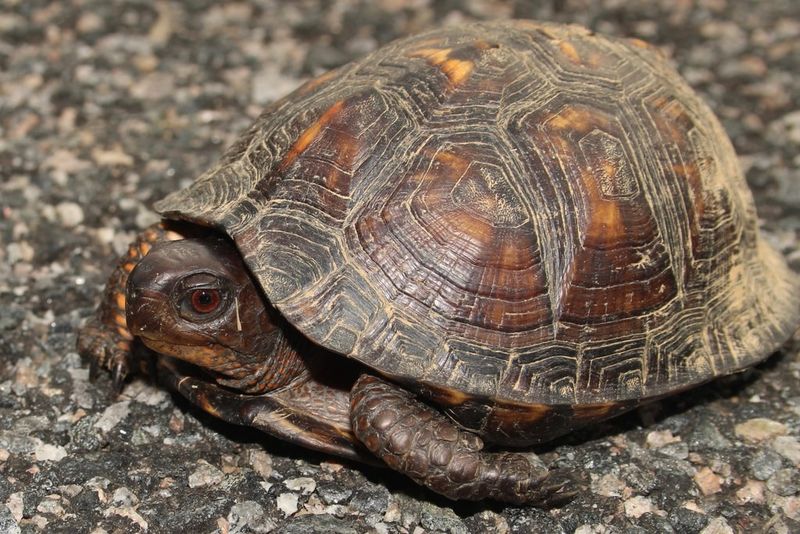
When a turtle turns up in the mowing path, shut off the mower first. Most of the time the best move is no move at all.
You can simply mow around it, or come back to that patch later.
If the turtle is truly in immediate danger, such as sitting in a driveway or right in the mower’s path, NC Wildlife guidance says to move it only the shortest distance needed, ideally under 50 feet. Place it in the direction it was already heading, in a sheltered spot out of harm’s way.
Do not carry it to a park, a patch of woods down the road, or a neighbor’s property. Box turtles know their home ranges, and a turtle dropped somewhere new may wander for a long time trying to get back.
Never relocate a box turtle to a different area.
If the turtle is hurt, with a cracked shell, bleeding, or another visible injury, do not assume it will heal by itself. Contact a licensed reptile rehabilitator for advice.
Keeping the turtle in a quiet, secure container while you call is a sensible step.
Use a careful routine, not a fixed cutoff date
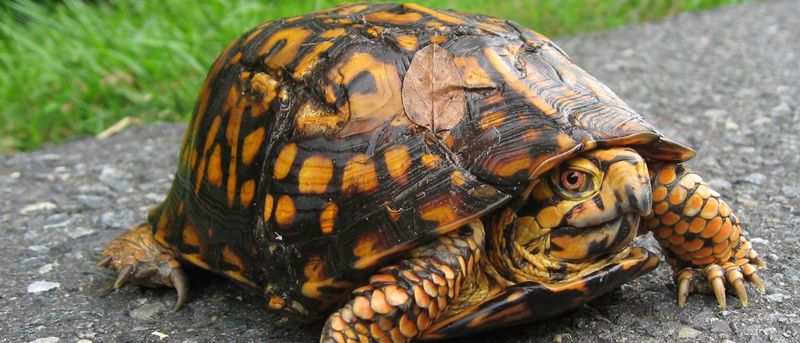
Skip the calendar and go with a routine: look over the lawn, stop for any turtle you find, and mow at the height that suits your grass, as laid out in Carolina Lawns. Neither a date nor a blade setting can promise a turtle’s safety.
Since the species profile shows turtles seen in every month, let the weather and your own observations guide you.
A shell is a good reason to cut the engine.