
Your Roses Look Stiff On Their Own – 13 Looser Companions That Soften The Whole Bed
Roses are gorgeous up top, but down below they can look like a row of bare sticks standing at attention. If your rose bed feels stiff, the fix is not a new rose.
It is a few relaxed, flowing plants tucked around them. The right companions hide bare canes, fill gaps, and may even help keep some pests away, all while sharing the sunny spot your roses already love.
1. Catmint (Nepeta)
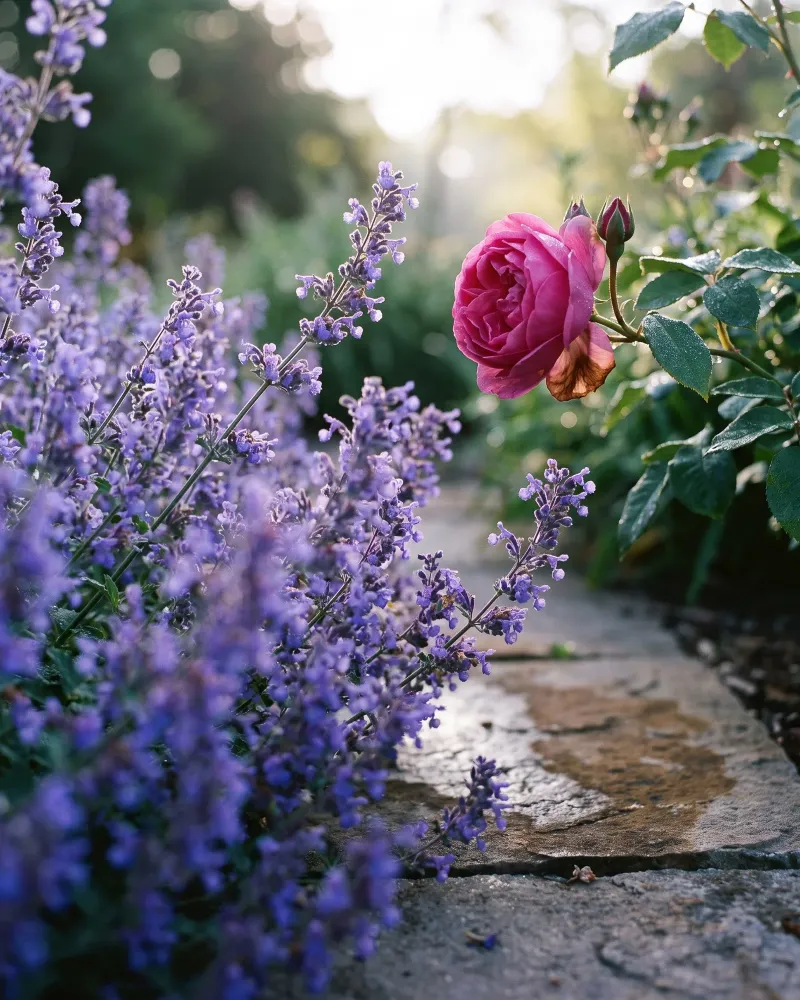
Picture a soft blue cloud rolling right up to your rose canes. Catmint does exactly that, mounding into a loose pillow that hides the woody, leggy bottoms of mature roses.
Its gray-green leaves smell minty when brushed, and some gardeners find the scent may help deter aphids and Japanese beetles. Bees adore the flowers, so your bed starts buzzing by early summer.
Here is the easy trick: when the first flush fades, shear it back by about a third. Within a few weeks it reblooms, lining up nicely with your roses’ second round.
Plant it 18 inches from the rose crown so air still moves around the base.
2. Lady’s Mantle
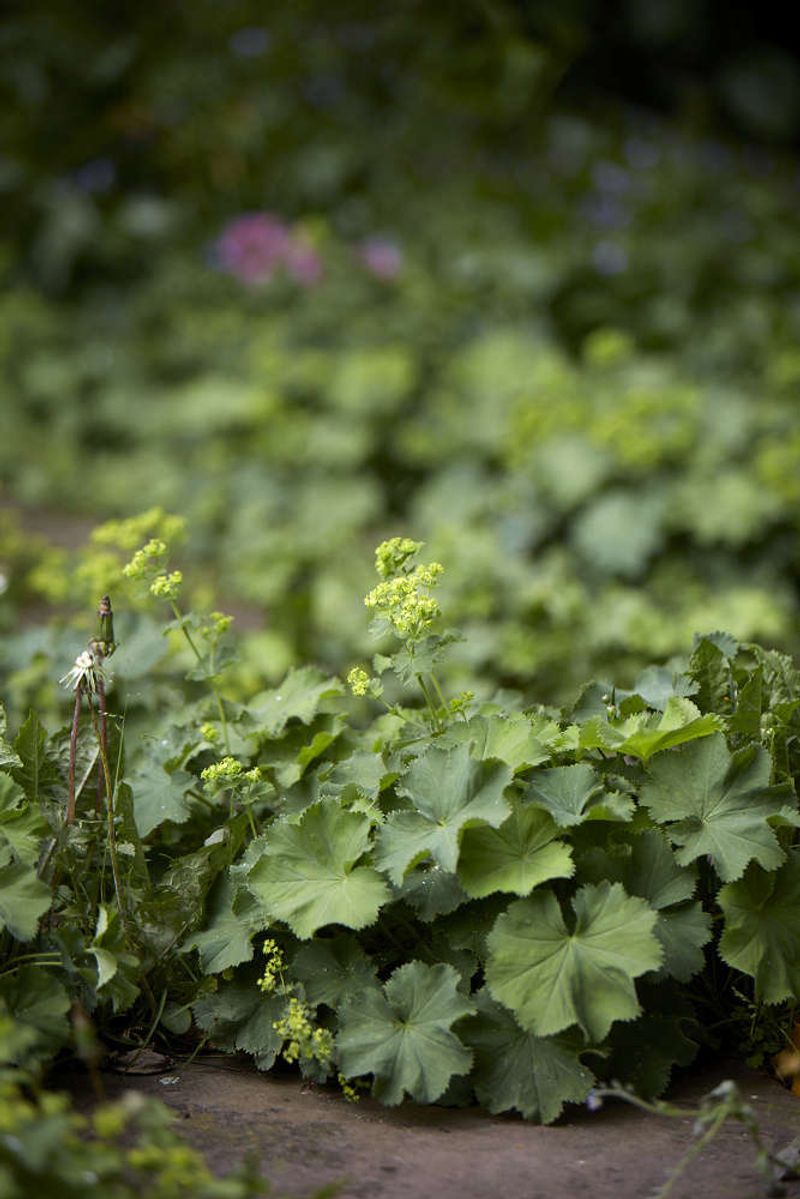
After a morning rain, lady’s mantle leaves hold perfect beads of water like tiny glass marbles. It is one of those small garden moments that makes you stop on the way to the car.
The scalloped, velvety foliage stays low and lush, covering bare stems without crowding them. Airy sprays of chartreuse flowers float above, making almost any rose color look richer next to them.
It prefers a bit of afternoon shade in hot Southern summers, so tuck it on the east side of your roses there. Snip spent flower heads to stop heavy self-seeding.
3. Russian Sage
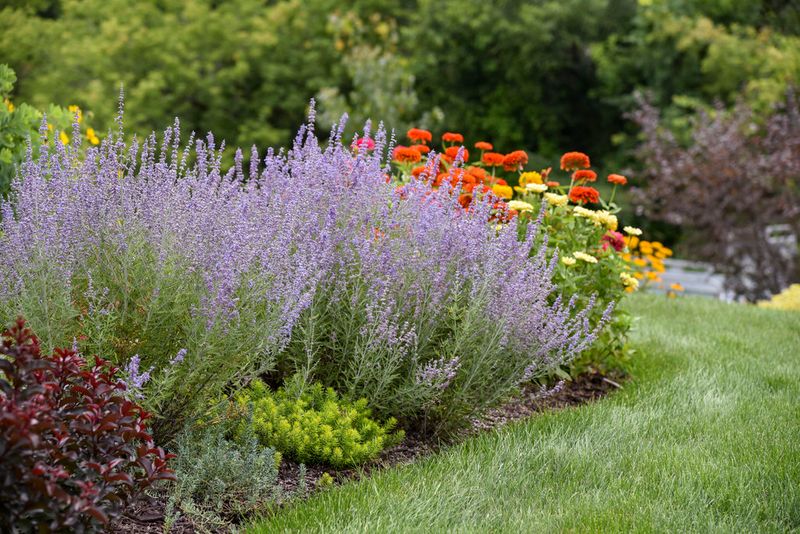
Wind is your friend with this one. Russian sage sends up wispy, silvery stems topped with a haze of lavender that sways with every breeze, adding motion your upright roses simply cannot.
It shrugs off heat and drought, which makes it a lifesaver for rose beds baking in full summer sun. Once established, it rarely needs extra water.
Give it room, since it can reach three to four feet. Place it behind or between roses, and cut it down to about a foot tall in early spring to keep it from flopping.
4. Lavender
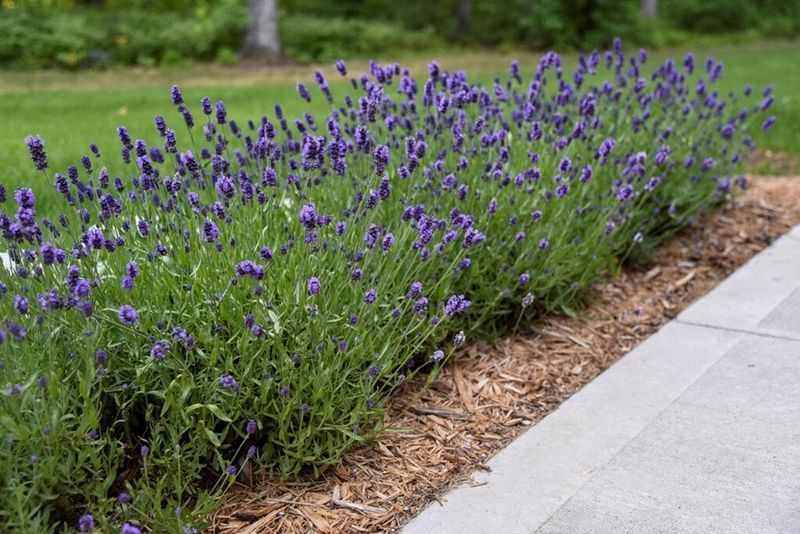
Grandmothers knew what they were doing when they paired lavender with roses. The combination smells like summer in a jar, and the purple spikes make rose blooms pop.
Both love full sun, but lavender wants drier soil than roses. The fix is simple: plant lavender at the bed’s edge where it gets less of the rose watering, and add a little gravel to its planting hole.
Deer and rabbits tend to avoid the strong scent, which may help protect nearby rose buds. Trim lightly after flowering, never cutting into old bare wood.
5. Feverfew
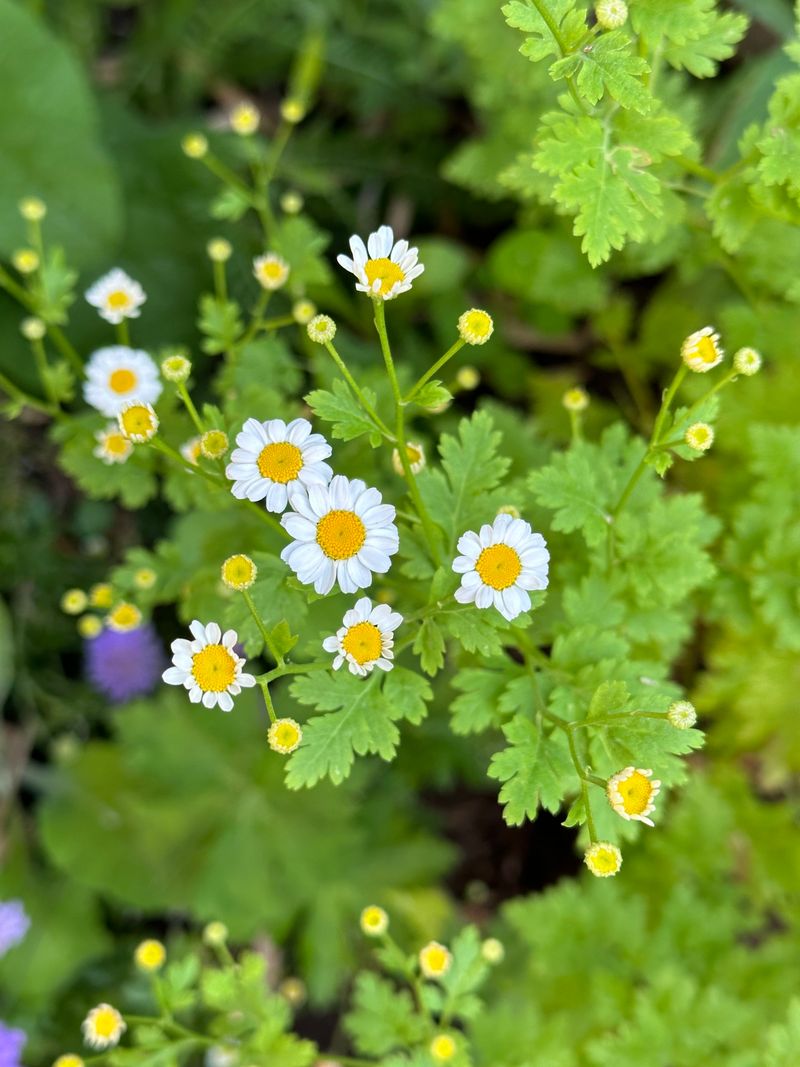
Cheerful little buttons of white with sunny yellow centers, feverfew looks like someone sprinkled confetti through your rose bed. It is old-fashioned, unfussy, and wonderfully loose.
The feathery, aromatic foliage brings fine texture against glossy rose leaves. Many gardeners use it because it may help discourage aphids and spider mites while drawing in beneficial insects.
Fun fact: feverfew was grown for centuries as a folk remedy for headaches. In your yard, just know it self-seeds, so pull extras in spring.
6. Lamb’s Ear
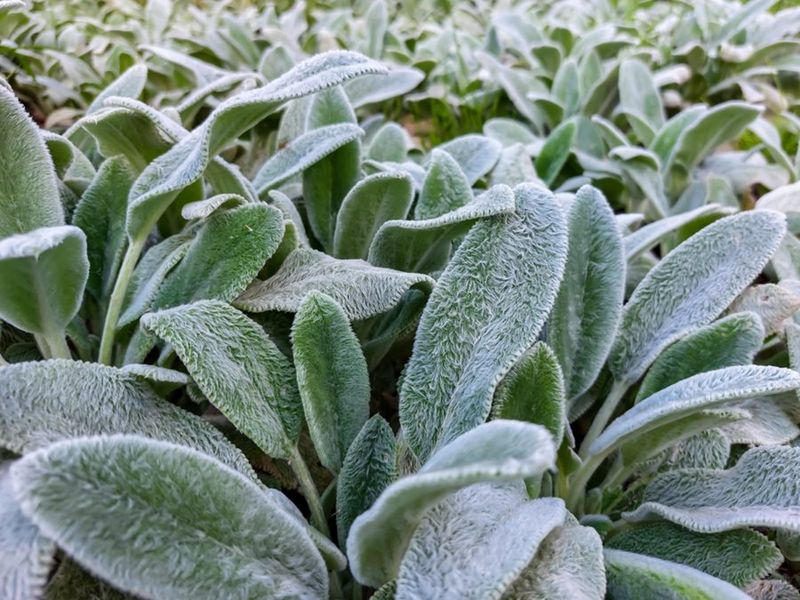
Kids cannot walk past it without petting it. Lamb’s ear has thick, fuzzy silver leaves that feel like flannel and soften a bed in the most literal way.
That silvery mat makes deep red and hot pink roses glow. It spreads slowly into a low carpet, filling front-of-bed gaps where weeds would otherwise move in.
Watch for one problem: soggy soil can rot the fuzzy leaves. Keep it at the drier front edge and pull off mushy leaves after summer storms.
7. Yarrow
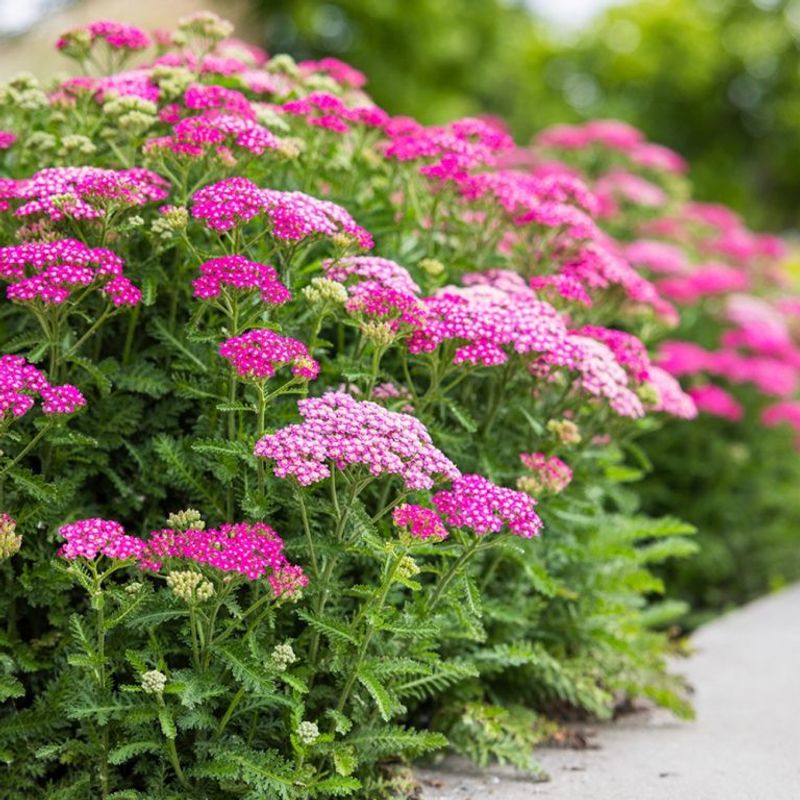
Round rose blooms meet their opposite here. Yarrow carries flat, plate-shaped flower clusters that give the eye a different shape to rest on.
Varieties run from creeping ground covers to two-foot stems, in shades of butter yellow, coral, and soft pink. The ferny leaves add lightness, and the flowers attract ladybugs and hoverflies that may help keep aphids in check.
Yarrow tolerates poor, dry soil and actually flops when pampered. Skip the fertilizer for it and deadhead to stretch the show.
8. Petunias
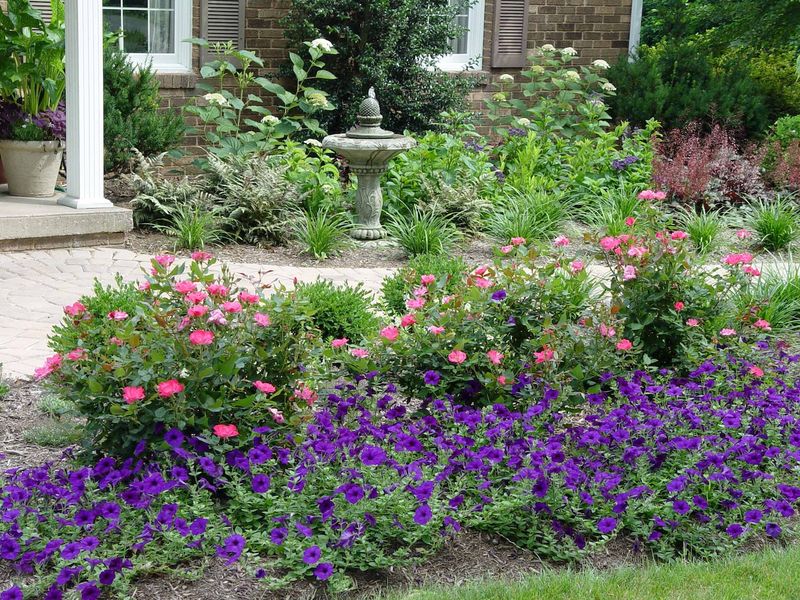
Bare dirt under roses for twenty dollars? Fixed.
A flat of spreading petunias turns that gap into a ribbon of color by midsummer.
Wave-type petunias run sideways, hiding canes and mulch. Pick colors that echo your roses, like white with pink or deep purple with yellow.
If yours go leggy in July heat, pinch the stems back by half and give a dose of liquid fertilizer. They bounce back fast.
Keep them a foot from rose crowns so both get airflow.
9. Creeping Thyme
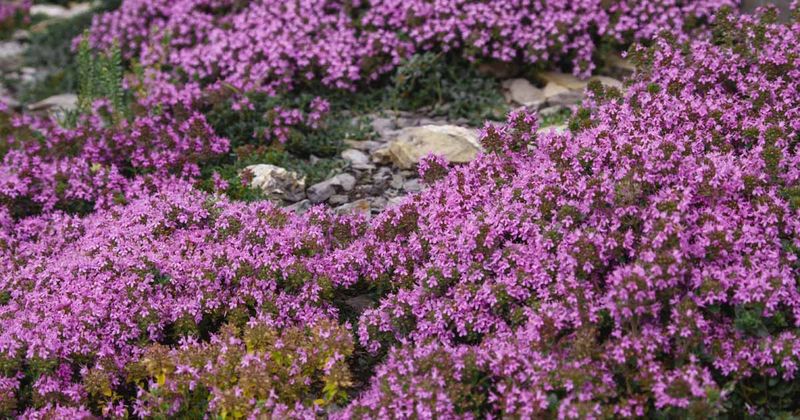
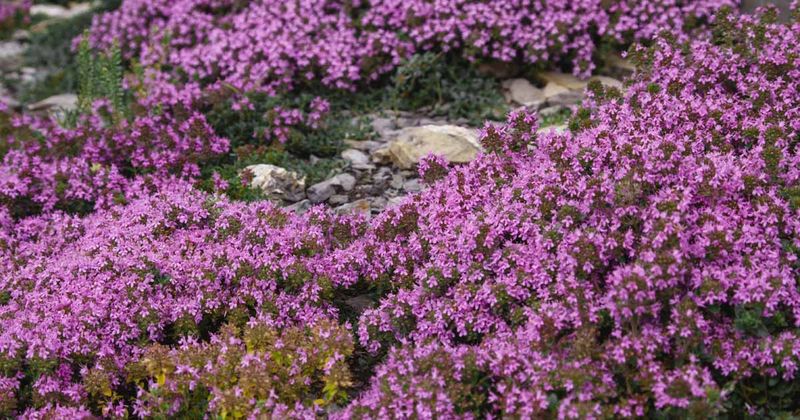
Step on it and the air fills with a savory scent. Low thymes like woolly or lime thyme creep across the soil, softening hard edges and stone paths around roses.
Shallow roots mean thyme barely competes with your roses for water. The tight mat also helps shade out weeds.
Woolly thyme gives gray fuzz, lime thyme gives a bright green glow. Both want sharp drainage, so they work best along the sunny rim.
10. Verbena
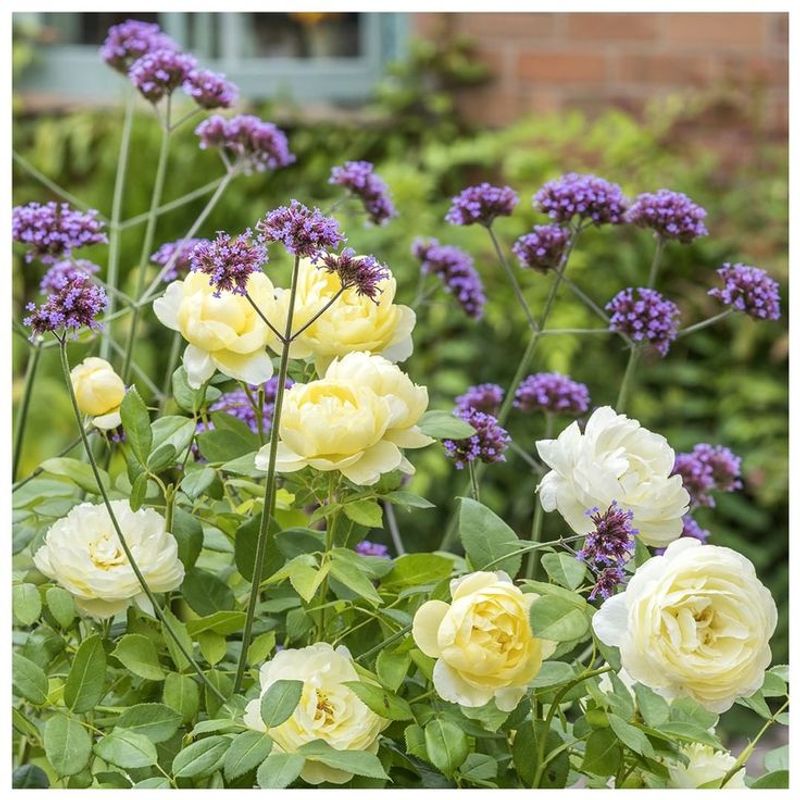
Butterflies treat verbena like a buffet line. Its clusters of tiny flowers bring a steady flutter of wings to the rose bed all summer.
Trailing kinds sprawl over edges and blur the line between bed and lawn. Tall Verbena bonariensis floats purple dots on wiry stems right through rose shrubs.
Verbena handles heat that knocks out many annuals. Trim lightly midseason to keep fresh blooms coming.
11. Million Bells (Calibrachoa)
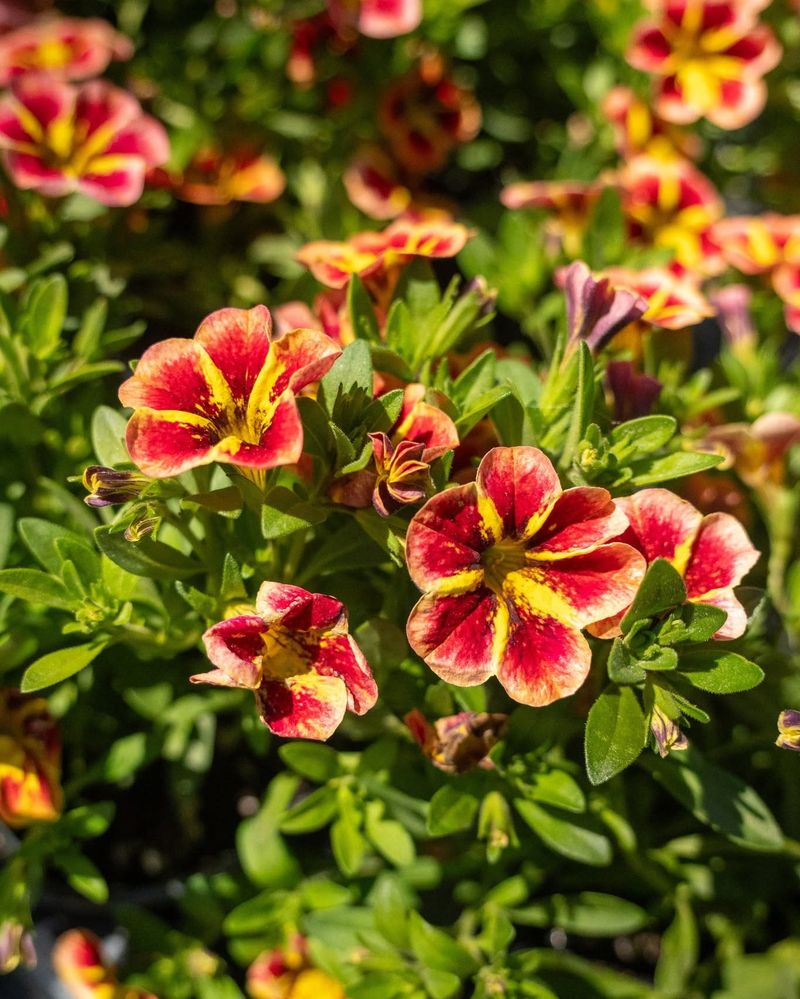
Think of million bells as petunias’ tidy little cousin. Hundreds of mini trumpets cover each plant, and the trailing stems spill gracefully over raised bed walls.
Unlike petunias, they rarely need deadheading. That makes them ideal for busy gardeners.
They dislike soggy roots, so they shine on raised edges or in pots at the base of tree roses. Feed every two weeks for nonstop color.
12. Sweet Alyssum
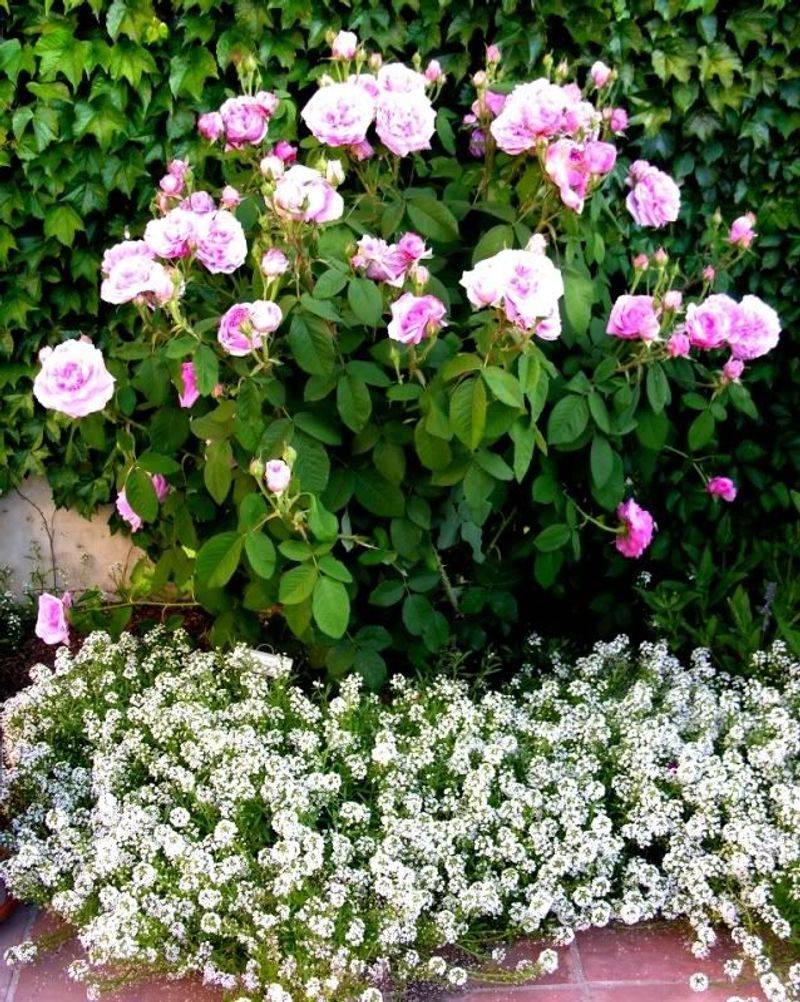
Kneel down near sweet alyssum on a warm evening and you will catch a honey scent. Tiny white or purple flowers form a frothy carpet that looks like lace under rose bushes.
Shallow roots keep it from fighting roses. It also attracts tiny beneficial wasps and hoverflies.
If it fizzles in midsummer heat, shear it back and water. It returns when nights cool and often self-seeds for next year.
13. Salvia nemorosa
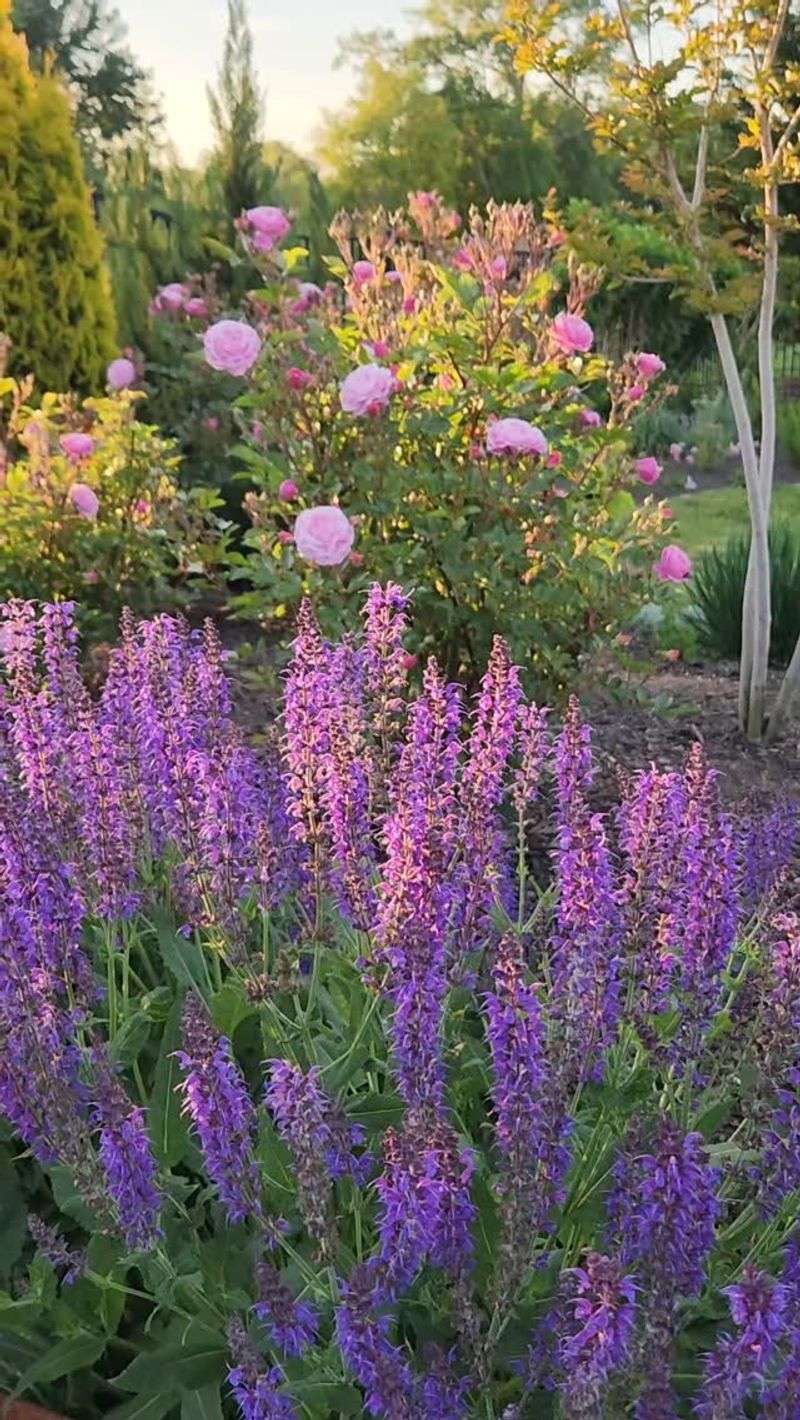
Hummingbirds zip straight to it. Salvia nemorosa sends up dense violet spikes that add vertical punch without the woody stiffness of roses.
The cool blue-purple tone flatters every rose color. Cut spent spikes back to fresh leaves and you will usually get another wave of bloom.
It is drought tolerant once settled and hardy across most of the US. Plant in groups of three for a looser, natural drift.
Mix a few of these companions and your roses stop standing alone.