
Roselle, Not Ordinary Hibiscus, Grows the Calyxes Behind Ruby-Red Hibiscus Tea
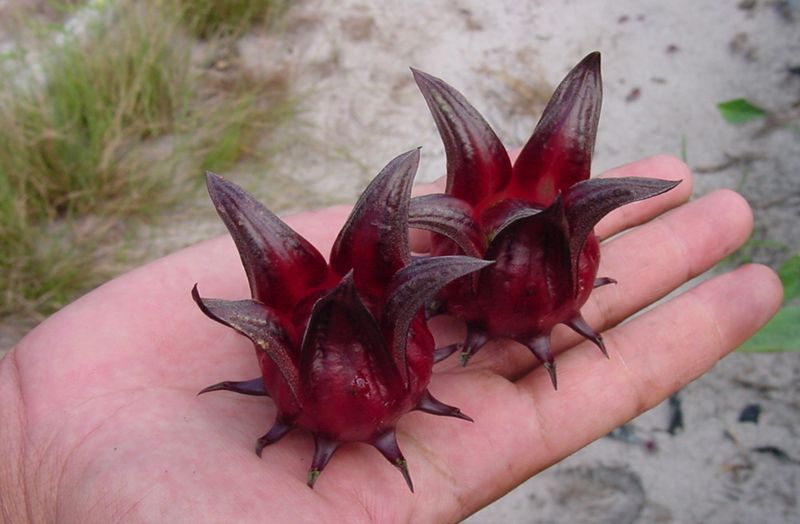
That deep red cup of hibiscus tea starts with a plant most gardeners have never grown. It is not the showy ornamental hibiscus by the mailbox, but a relative called roselle.
The part that goes into the tea is not the flower petals at all. Here is how to tell the difference, check your season, and harvest your own.
Roselle is a source of many hibiscus teas
Picture the big, glossy hibiscus blooms that brighten porches and patio pots. Those plants are lovely, but they are not the usual source of the red tea in your cup.
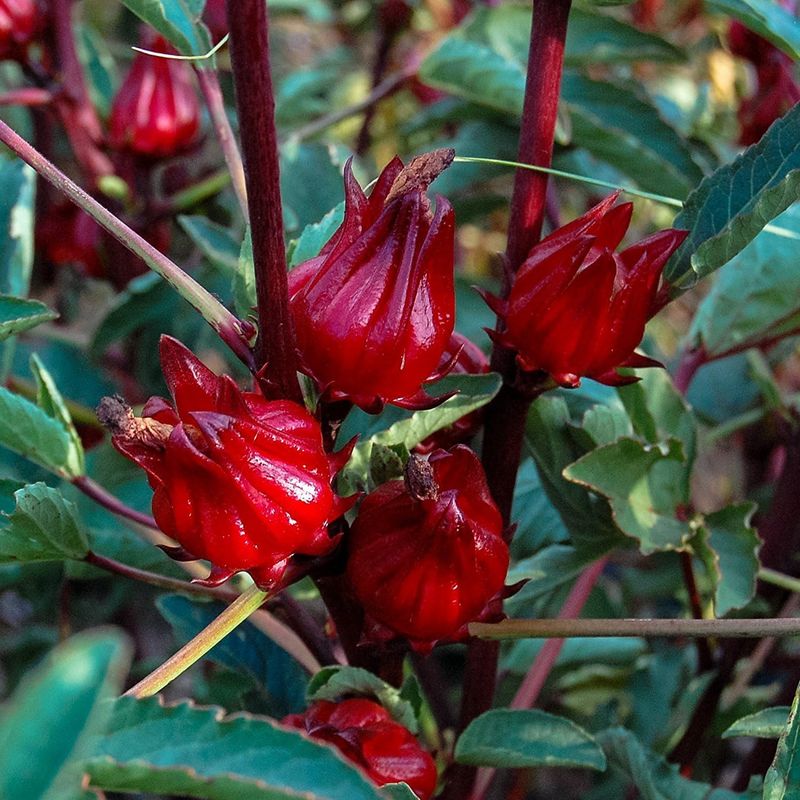
Many hibiscus teas start with roselle, Hibiscus sabdariffa, a different species in the same plant family.
Roselle is a common source of the tart, ruby-red infusion, though not the only one. UF/IFAS Gardening Solutions notes that roselle is sometimes confused with, or sold under, the broad name hibiscus.
That is why a box labeled hibiscus tea does not prove the contents are pure roselle. Blends vary, and the label is a product name, not a plant ID.
The botany matters for your garden. The ornamental hibiscus you may walk past every day could be one of many species, and nothing about it suggests it can be harvested for tea.
Gardeners who want the tea ingredient need roselle specifically, and UF/IFAS botany guidance describes the harvested part as the fleshy calyx, not the petals.
So the catchy idea that a familiar hibiscus flower grows your tea needs a correction. The right plant is roselle, and the right part is something that forms after the bloom is gone.
The next section shows exactly what that looks like.
The tea crop forms after the flower fades
Roselle’s flower is a short-lived guest. It can look pale yellowish or pink-toned, nothing like the dinner-plate blooms of many ornamentals, and it fades quickly.
The real prize shows up once the petals drop.
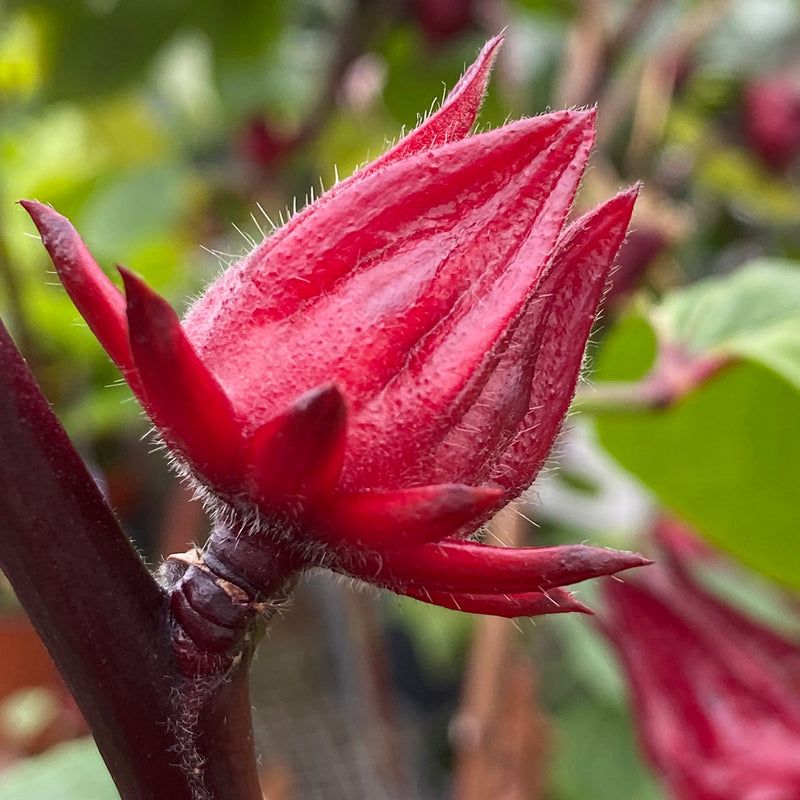
What remains is the calyx, the ring of sepals that wraps the developing seed capsule. According to UF/IFAS, this calyx swells and turns fleshy, and that red, plump structure is what gets harvested for tea.
The petals are not the crop.
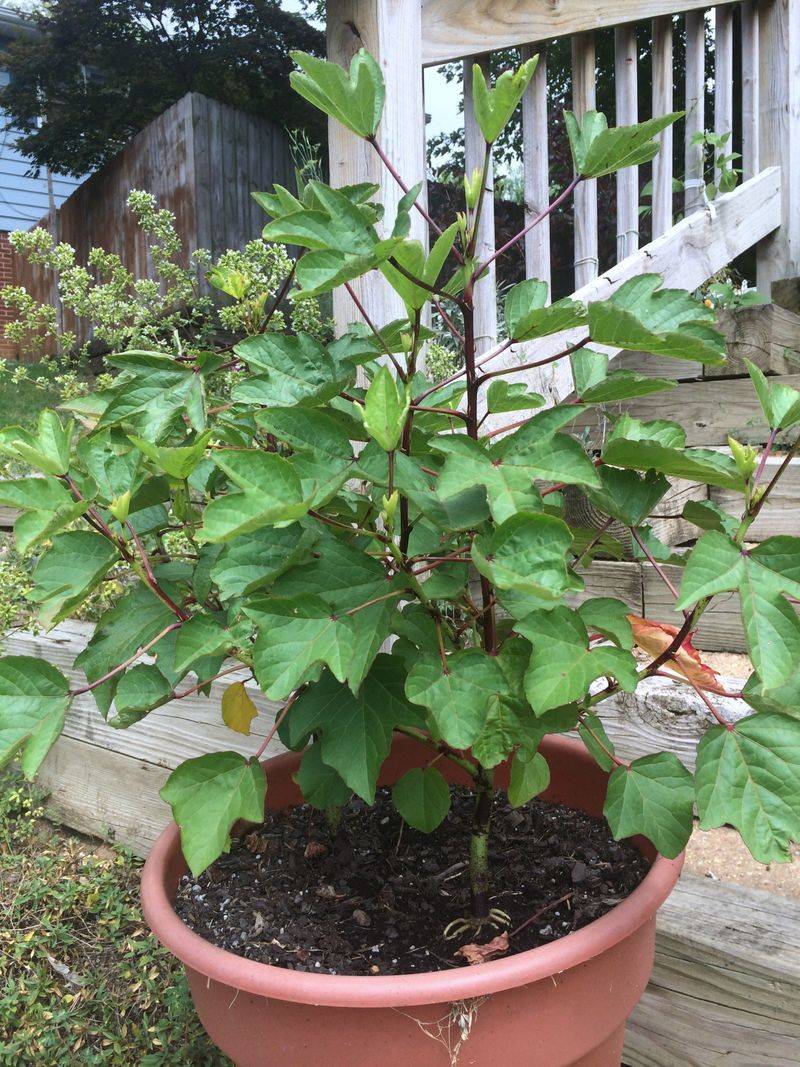
If you are shopping for plants or checking a seedling, a few clues help. Roselle has lobed leaves, and its calyx grows snugly around a seed capsule.
Still, no single look settles identity, so buy seed or plants labeled Hibiscus sabdariffa from a source you trust.
A handy mental shift: stop watching for the flower and start watching what it leaves behind. When a bloom drops and a small green-to-red cup begins to swell at the base, that is the harvest in the making.
Will roselle mature before frost in your garden?
Before you buy seed, check your calendar. Roselle flowers as days grow shorter, and UF/IFAS reports flowering about three to four months after planting.
A plant can look healthy all summer and still be nowhere near ready when cold arrives.
That timing is a real limit in cooler regions. Rutgers NJAES describes some roselle types flowering so late in New Jersey that they do not mature outdoors there.
Leafy growth is not the same as a calyx harvest.
So there is no single national schedule. Your local first-frost date matters, and so does the cultivar you choose.
Some types flower earlier than others, so ask your seed supplier or local extension office which ones suit your season.
A practical test: count backward from your average first frost. If flowering would likely begin only days before cold, plan for a disappointing harvest, or consider a container you can move to a sheltered spot.
Warm regions have the easiest path, while gardeners farther north should treat roselle as an experiment, not a promise.
Set expectations now and the planting steps in the next section will make more sense.
Give roselle a warm, sunny start
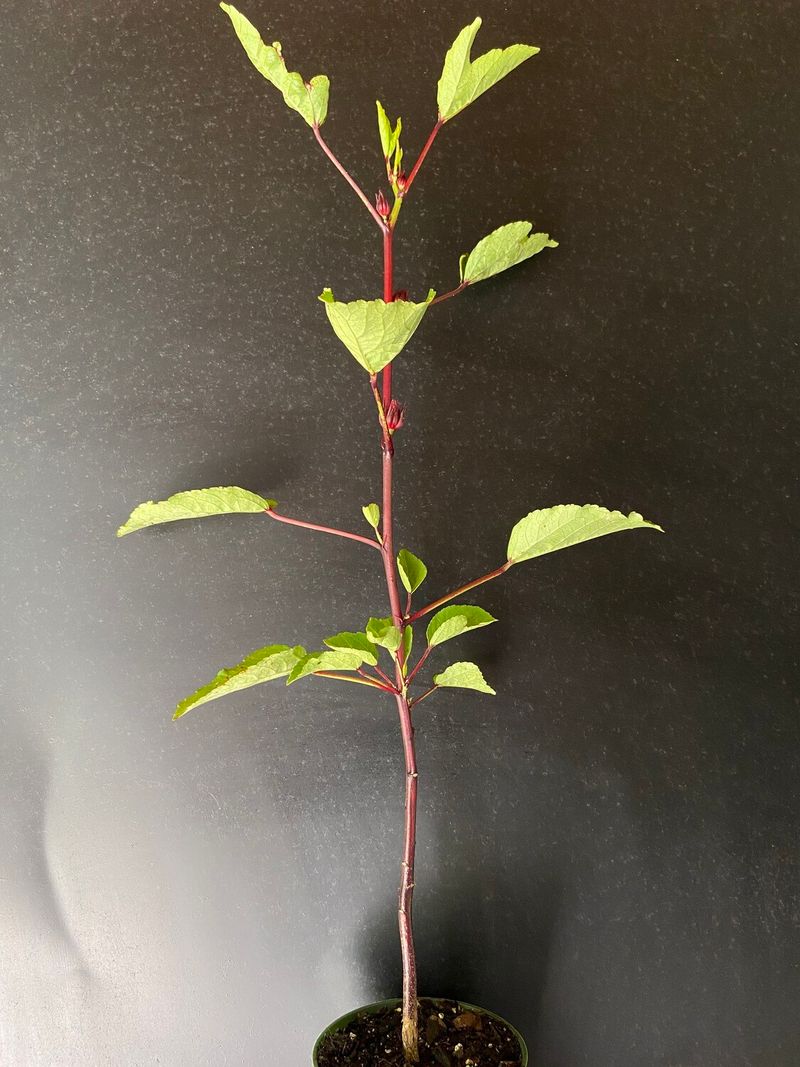
Once you know your season might work, the planting basics are simple. A Mid-Atlantic growing guide from the University of the District of Columbia suggests starting seeds indoors about six weeks before outdoor planting.
Another option it gives is sowing outdoors after frost danger has passed.
Treat those timings as regional guidance, not a nationwide calendar. A gardener in Florida or Minnesota will need to adjust to local weather.
The idea is the same everywhere: roselle wants warm soil and no frost.
The same guide advises full sun and well-drained soil. Water regularly so young plants do not stall.
Leave roughly three to four feet between plants, because roselle grows into a big, bushy shrub.
Try giving each seedling a spot where it will not be crowded by taller neighbors. Good airflow and plenty of light keep growth steady through the long wait for flowers.
These steps improve your odds, but they cannot change the day length that triggers flowering.
Harvest the calyx at full size
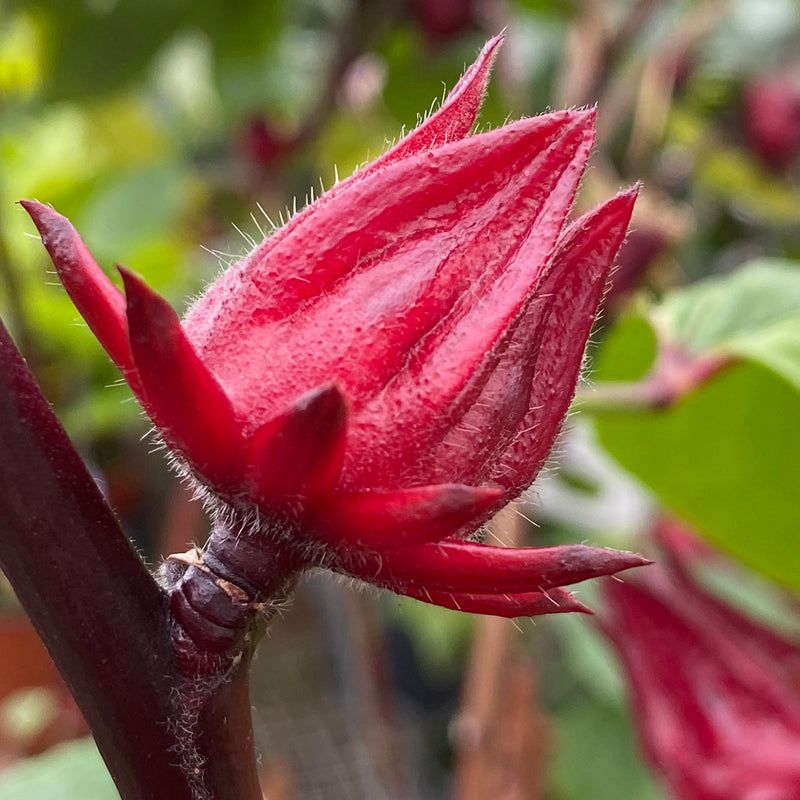
Harvest day starts with patience. Wait for the flower to fade, then keep an eye on the calyx wrapped around the seed capsule.
It should look plump, fleshy, and deep red.
UF/IFAS says the calyx reaches its maximum size about two weeks after flowering, and that is the stage to pick. Treat that as a guide, not a guarantee, since cultivars and growing conditions differ.
Check your plants every few days rather than counting on an exact date.
Timing matters because the calyx changes. UF/IFAS notes that if it is left longer, it becomes more fibrous as the seeds mature.
A tough, stringy calyx is a clue you waited too long.
Remember the frost caveat. If cold arrives before your plants have flowered and swelled their calyxes, there may be nothing ready to pick.
Some gardeners in cooler areas will get only a small harvest or none at all, and that is a normal outcome for a short-day plant.
Handle and dry the harvest carefully
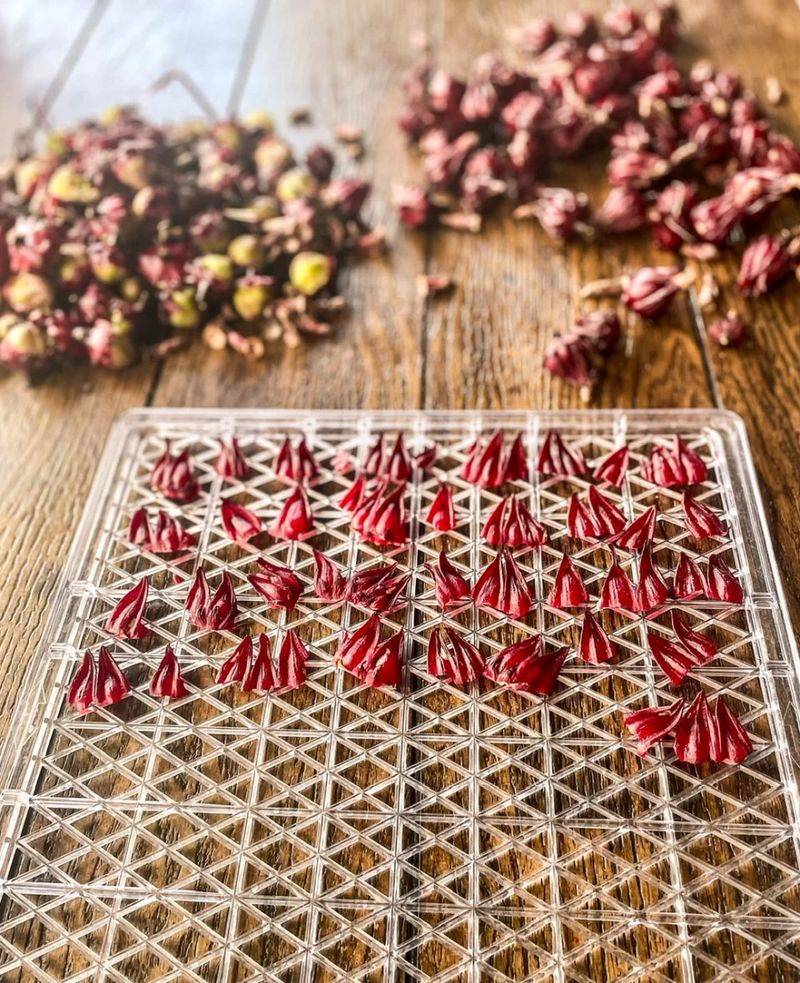
Roselle calyxes are meant to be eaten or steeped, so treat them like any fresh food. Rutgers NJAES recommends careful handling, clean tools, suitable wash water, and hygienic preparation.
It also points to low-humidity air drying for quality.
Rutgers does not give a roselle-specific drying recipe here, so avoid inventing temperatures or hours. Instead, borrow cautious general habits for dried herbs.
These are not a tested roselle protocol, just sensible practice.
Alabama Extension advises continuing drying without interruption, so do not stop halfway and restart. After drying, check sealed jars for condensation or moisture.
Any sign of dampness means the material needs more drying.
Store fully dried material in a cool, dry, dark place. A tightly closed jar in a cupboard away from the stove works well for many gardeners.
Label it with the date so you remember what you grew and when.
Grow roselle for the calyx, not just the bloom
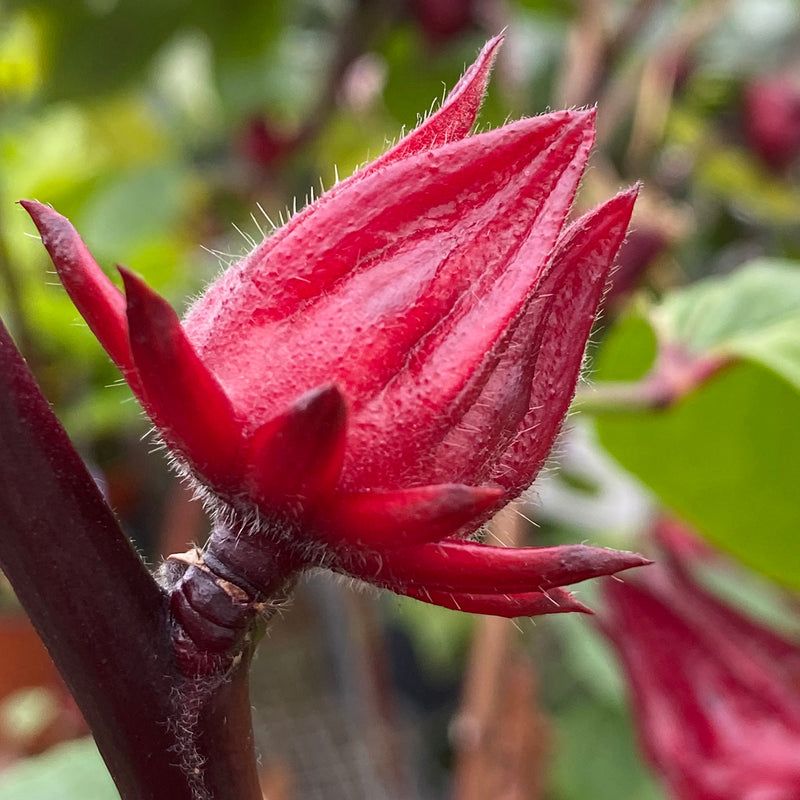
Look for roselle, Hibiscus sabdariffa, rather than assuming a pretty hibiscus will do. Check whether your season is long enough for its calyxes to mature before frost.
Then harvest the swelling calyx once the flower is gone.
The best tea starts with knowing which plant and which part you are growing. A flower is only the announcement, and the calyx is the crop.