
Is Fall a Good Time to Plant a Native Tree in North Carolina? What to Know About Pawpaw
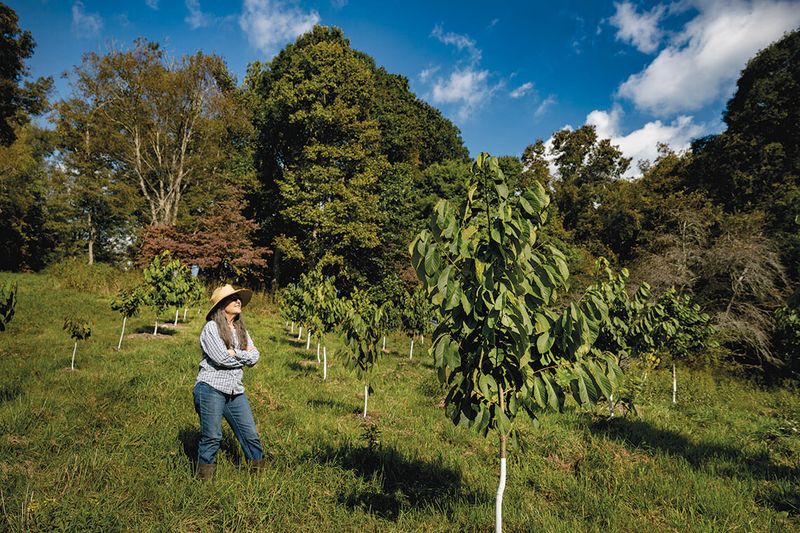
Autumn in North Carolina brings cooler air, and many homeowners start eyeing empty spots in the yard. Fall can be a smart time to plant a tree, but it is not a magic switch, and no single native species wins a rooting race.
Pawpaw is one native option worth a closer look, as long as you handle it with care. Here is how to decide whether a fall planting suits your yard.
Fall can help a tree establish, but no species ranks first
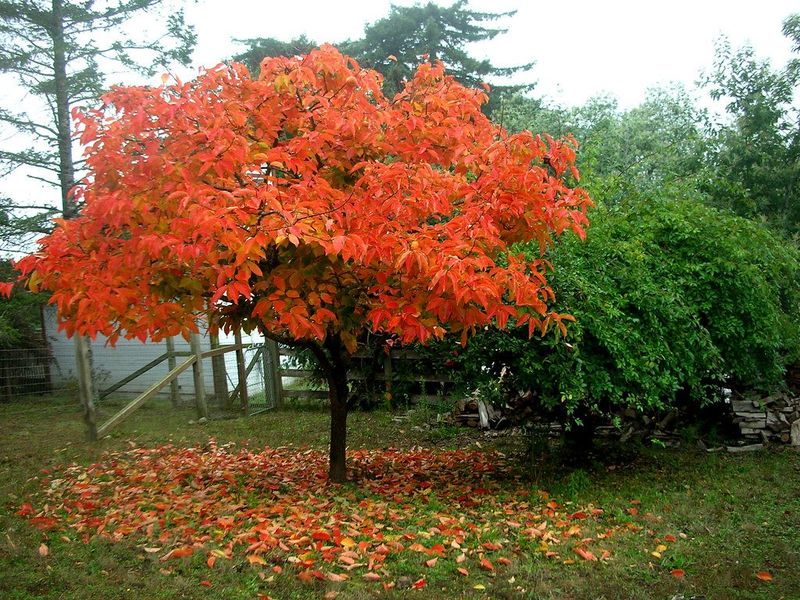
Plenty of garden headlines promise that one special tree roots in fastest if you plant it in October. The sources we reviewed do not back that up.
No Extension guidance ranks native trees by rooting speed, and none treats October as a deadline you will miss if you wait.
What the guidance does say is more modest and still useful. NC Cooperative Extension in Beaufort County recommends fall for many native plants and notes that planting in October or November may give roots time to settle in before summer stress arrives.
The idea is that roots can keep growing while the top of the plant slows down for the season.
Notice the word may. Root growth depends on the species and on your site conditions, and a fall planting does not guarantee fast roots or fast growth above ground.
A tree set in poor soil or a bad spot will struggle in any season.
Native status does not erase that. NC State Extension’s native plant guidance still calls for thoughtful site selection and care while plants establish.
Planting guidance for woody plants in general is also covered in the woody ornamentals chapter, which we will lean on later.
So think of fall as an opportunity, not a countdown clock. If you are in the Coastal Plain, Piedmont, or mountains, you have room to plan.
Pawpaw is one native tree we will use as a concrete example, not as a champion.
Pawpaw is an option, not a proven fastest-rooting tree
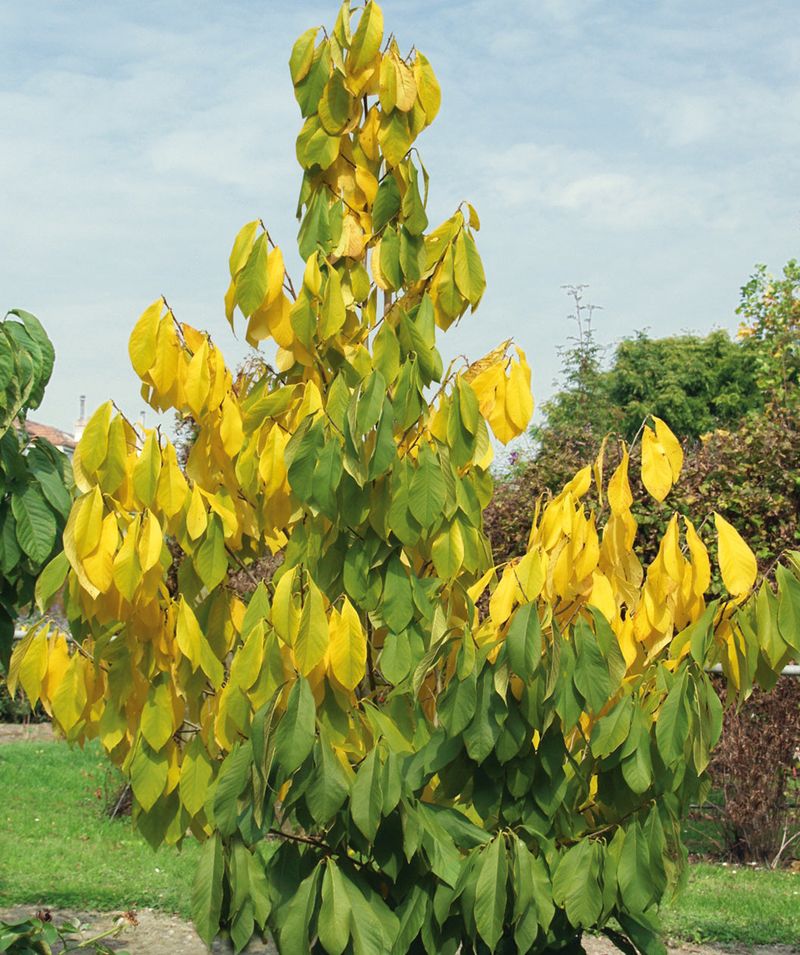
Pawpaw makes a good example because Extension gives specific planting advice for it. Nothing we found says it roots faster than other natives, so treat it as one option among several rather than a winner.
Here is what is supported. NC Cooperative Extension in Wilkes County says to plant pawpaws while they are dormant, in fall or early spring.
That gives you a window of months, not a single October weekend.
The same source warns that the pawpaw’s taproot is easily damaged during planting. A taproot is the thick main root that grows straight down.
If it gets bent, torn, or crushed, the tree may have a harder time getting started.
That warning is the practical heart of the matter. Slow down, lift the tree gently, and avoid yanking or dropping it by the trunk.
Work in a way that keeps the root system as intact as you can.
None of this means pawpaw is right for every yard. We are not adding site requirements or promises beyond what Extension states.
Before you buy, make sure the spot fits the tree, which is what the next section covers.
Match a native tree to the yard
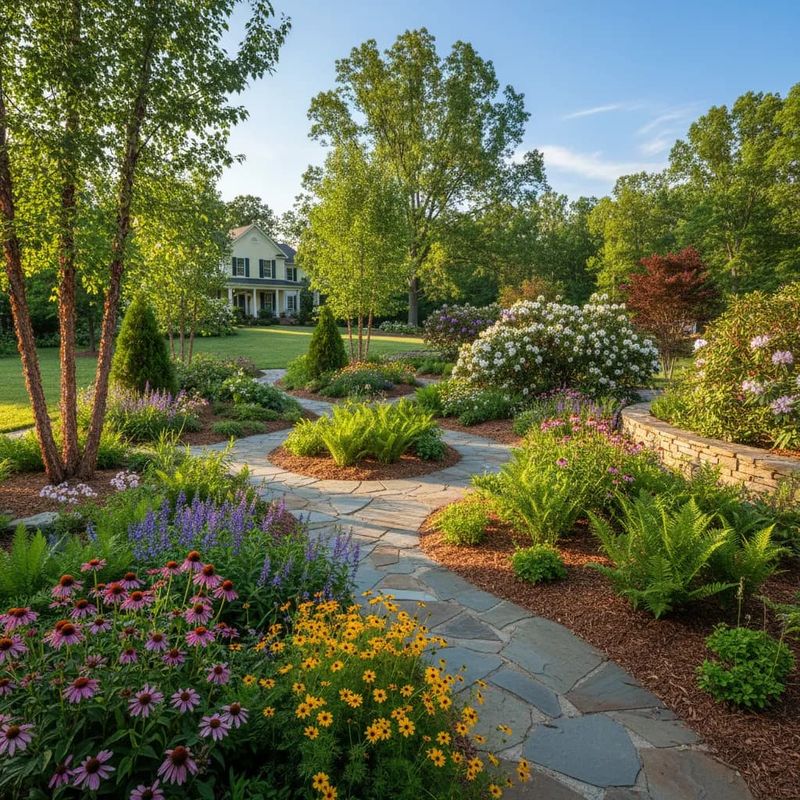
A tree that thrives in a mountain cove may sulk on a sandy Coastal Plain lot. North Carolina covers very different conditions, and being native to the state does not mean a species suits every yard.
Matching the tree to the site is the step that matters most.
NC State Extension recommends looking at soil texture, drainage, pH, sunlight, available space, and the plant’s growth habit. Each of those is something you can check this weekend.
Start with the soil. Squeeze a damp handful and see whether it feels sandy, sticky, or somewhere between.
Then watch the spot after a heavy rain to see whether water drains away or sits.
Next, track the sun. Note how many hours of direct light the spot gets across a day, and whether nearby buildings or big trees change that.
A soil test through your county Extension office can tell you about pH.
Finally, think about size and shape. Some natives stay small and sit under taller trees, while others spread wide.
NC State lists downy serviceberry, ironwood, redbud, and flowering dogwood among native understory trees, and their ranges vary by species.
If pawpaw is on your list, hold it to the same test as any other tree. Check your own conditions first, and let the site pick the species instead of the season.
Plant carefully and protect the root system
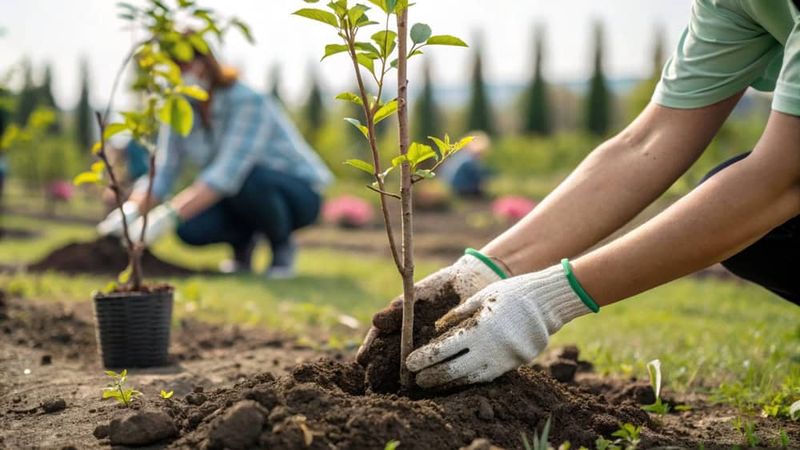
Planting day is where roots are either protected or harmed. The steps are simple, but each one counts.
First, call North Carolina 811 before you dig. NC State’s citizen guide to trees advises it so you avoid buried utility lines.
The guide also asks you to consider the tree’s mature height and spread, so look up and around for wires, roofs, and property lines.
Next, dig the hole. NC State’s woody ornamental guidance calls for a hole as deep as the root ball and two to three times wider.
Wide is the key part, because loosened ground beside the root ball is where new roots will spread.
Set the tree so it sits at or slightly above grade, meaning level with the surrounding soil or a touch higher. Planting too deep is a common mistake.
Then refill with the same soil you dug out, without amendments mixed into the backfill.
If you are planting a pawpaw, handle the roots with extra care. Wilkes County Extension warns that the taproot is easily damaged.
Never carry the tree by its trunk, and set it in the hole gently instead of dropping it.
Before you backfill, check that the tree stands straight, and firm the soil lightly with your hands. Skip stomping hard on it.
Water and mulch while the tree establishes
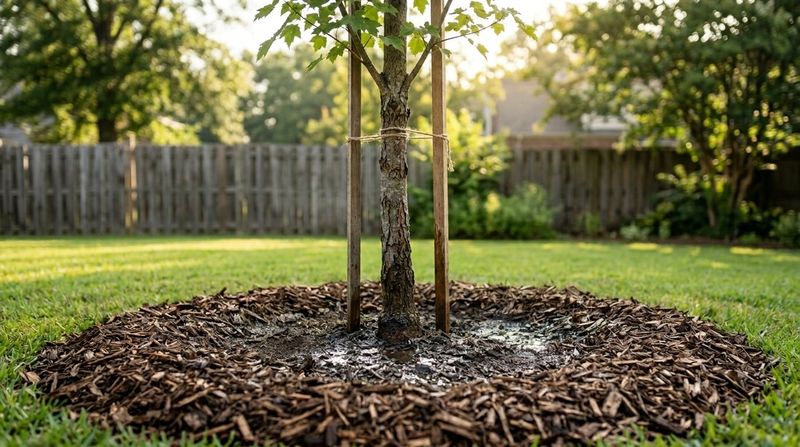
Once the tree is in the ground, mulch is your next job. NC State Extension recommends 2 to 3 inches of organic mulch, kept at least 6 inches from the trunk.
Piling it against the bark is a habit to skip, so leave a bare gap around the base.
Watering comes next, and fall weather can fool you. Cool days and an occasional rainstorm do not mean a new tree is off the hook.
A small root ball can dry out even when the lawn looks fine.
According to NC State’s native plant guidance, newly planted natives need water for the first few weeks or until roots establish. Cooler-season plants may need less, but not none.
The best method is to check. Push a finger or trowel into the soil near the root ball, and look at how damp it is a few inches down.
If it is dry, water slowly and deeply. If it is soggy, hold off.
Adjust as the weather changes. A dry, breezy stretch in a sandy Coastal Plain yard calls for more checking than a rainy week in clay soil.
Keep the habit going until the tree is clearly settled.
Use fall as an opportunity, not a deadline
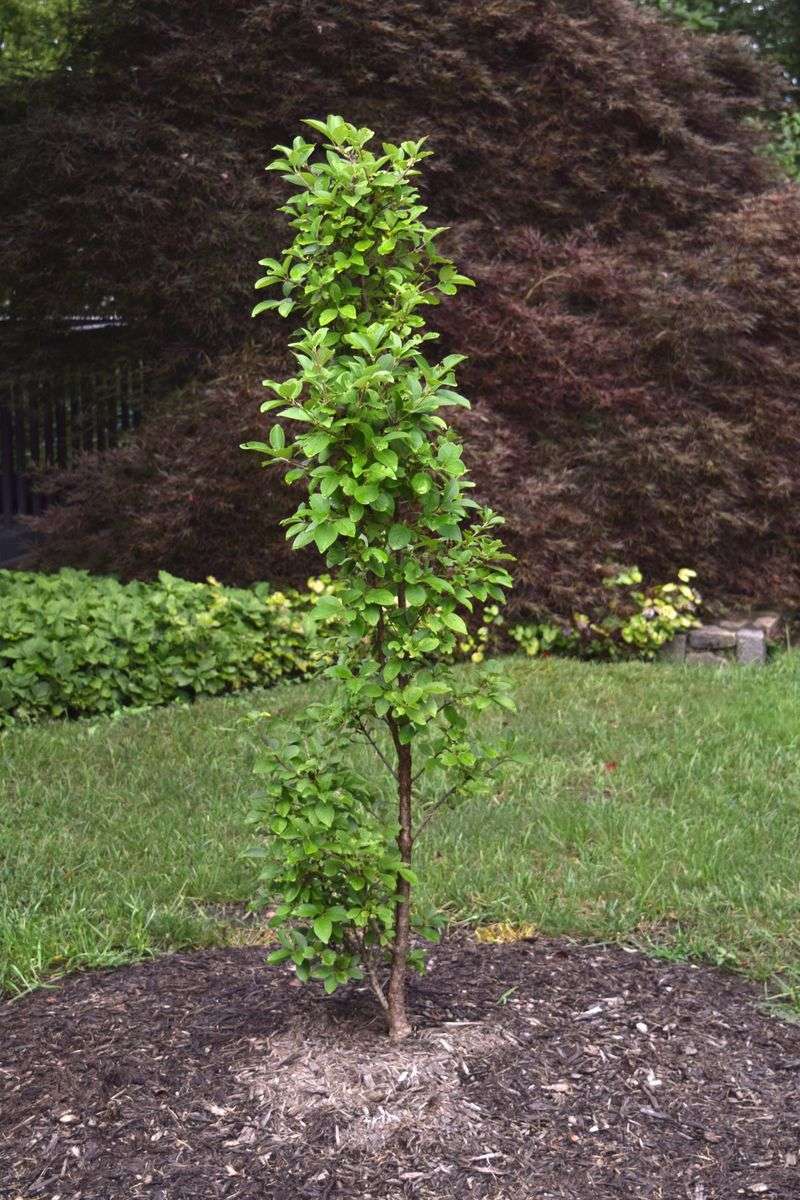
Fall may give a suitable native tree time to settle before summer, as Beaufort County Extension notes. Pawpaw is one option during dormancy, and Wilkes County Extension says early spring works too.
Let site fit, gentle handling, and steady watering guide your choice, not the calendar.
A tree planted well in the right spot has the best shot, whatever month it goes in.