
Does Rosemary By Your Door Repel Mosquitoes Or Sharpen Your Memory?

Rosemary smells so strong that it feels like it must be doing something. Plenty of gardeners have heard that brushing past the plant by the door chases off mosquitoes and wakes up the brain.
It is a lovely idea, and it is worth checking against what researchers have actually tested. Here is what holds up and what is still just garden talk.
A field test found no protection from whole rosemary plants

Start with the most direct test of the doorway-plant idea. In a 2026 field study in the Journal of Medical Entomology, researchers set out prostrate rosemary at urban and rural sites in California and watched what happened for 16 weeks.
They did not just test healthy plants sitting still. They also damaged some of the plants on purpose, since crushing leaves releases more of that piney scent.
Then they compared mosquito catches near the plants with catches at control spots that had no plants.
The result was plain. Neither the intact rosemary nor the damaged rosemary reduced the number of host-seeking mosquitoes.
The researchers also tested citronella-scented geranium, and it did not cut catches either.
Across the whole study, the team collected 44,527 mosquitoes. That number only tells you the traps caught plenty of insects, so the test had real mosquito pressure.
It is not a sign that rosemary did well.
So if you were hoping the pot by your door was quietly guarding your porch, this is the first reality check. Under the conditions tested, a living rosemary plant did not work as a spatial repellent.
Enjoy it for the flavor and the fragrance, but do not count on it to keep bites away.
Mosquitoes track hosts through more than smell
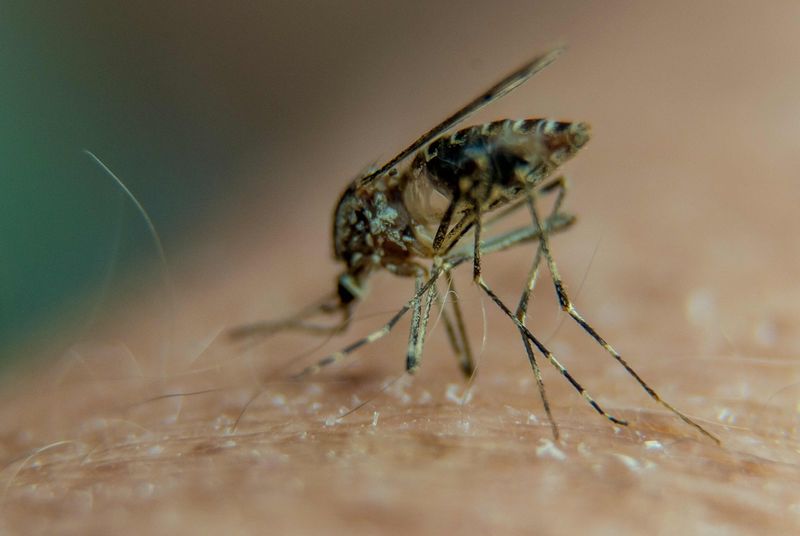
Smell is only one piece of how a mosquito finds you. These insects use odor, carbon dioxide from your breath, vision, body heat, and humidity to home in on a host.
When you step outside, they are reading several signals at once.
Odor still matters a lot. A peer-reviewed review of olfaction in Anopheles mosquitoes explains that odorant receptors are part of the sensory system they use to pick up scents.
That is where the rosemary story gets its spark. If mosquitoes smell with receptors, it sounds reasonable that a strong herb could jam them.
The leap feels small, and that is why the claim spreads so easily.
But general biology is not proof of a trick. Knowing that mosquitoes have smell receptors does not show that rosemary scrambles them or hides you from their search.
Nothing in that background tells us what a potted herb does to a hungry mosquito.
A scent-based idea can sound sensible and still fail when someone measures it. With so many cues in play, one plant’s fragrance could easily be drowned out by your breath, your warmth, and your movement.
That is exactly why the idea needed a real field test.
One rosemary-aroma study found mixed memory results

The memory claim has a real study behind it, which is part of its charm. In 2003, researchers ran a randomized study of 144 healthy adults comparing the aromas of rosemary and lavender essential oils on thinking and mood.
The rosemary results were mixed. People exposed to rosemary aroma did better on some memory measures.
But they also showed slower speed of memory, so one skill went up while another dragged.
That second part often gets left out of the exciting version of the story. Calling this a memory boost smooths over what the researchers actually reported.
Think about the setup, too. Volunteers sat in a controlled room and breathed in a measured aroma while they took tests.
That is very different from walking past a pot of rosemary on your way to the mailbox and catching a quick whiff.
A few test scores in a lab do not add up to a dependable lift in everyday recall. Remembering where you left your keys or a neighbor’s name is not what these tasks measured.
The study is interesting, but it is not a promise.
A small cineole study does not prove a memory boost

Another study often gets pulled in as backup, so it helps to see what it actually did. A 2012 study of 20 volunteers measured how much 1,8-cineole, a compound in rosemary, ended up in their blood after they breathed rosemary essential oil aroma.
The researchers then looked at how those levels lined up with test performance. Higher absorbed cineole went along with better results on serial subtraction and on visual information processing tasks.
Notice the word correlation. It means two things moved together, not that one caused the other.
This study cannot say rosemary made people perform better.
It was also small, with only 20 people. A small group makes it easier for a pattern to appear by chance and harder to know if it would repeat.
And the tasks matter. Counting backward by sevens and processing visual information are narrow tests.
They do not show that anyone remembered appointments, names, or recipes better in daily life.
This study also stands apart from the 2003 one. It used a different design and looked at different measures, so the two do not confirm each other into one big memory claim.
Each is a small piece, and neither is a green light for brushing past the plant.
A garden plant is not an essential-oil exposure
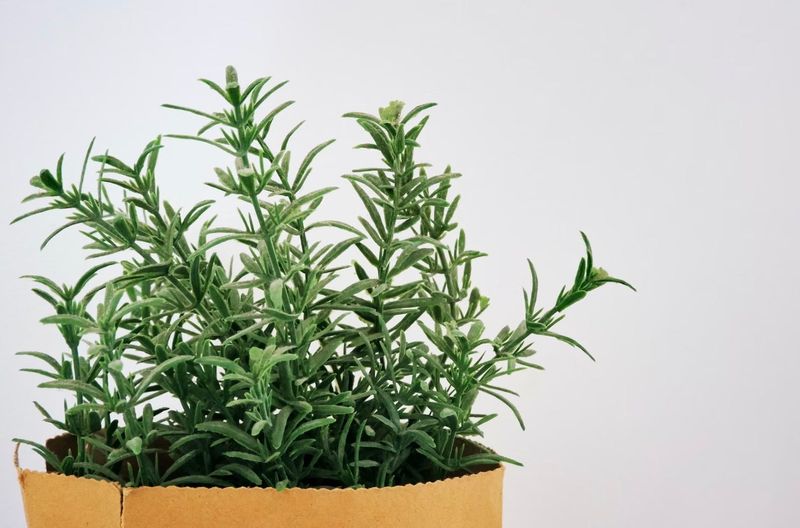
Put the studies side by side and a pattern shows up. The mosquito work tested whole living plants outdoors, and the 2026 field study found no drop in mosquito catches.
The memory work used essential oil aroma in controlled rooms, like the 2003 trial and the 2012 study.
Those are different things. Essential oil is a concentrated extract, and a living plant releases far less scent into open air.
Rosemary compounds such as camphor and 1,8-cineole have shown effects at high concentrations in lab settings, but that does not mean an intact plant produces the same exposure or result.
Outdoors, wind scatters the scent, and a mosquito or a passerby gets only a faint trace. A lab can hold the dose steady, and a doorway cannot.
It is tempting to fix the gap by reaching for the bottle. Natural does not mean harmless, though.
Poison Control warns that essential oils can cause skin reactions and poisoning when misused or swallowed.
So the lab findings and the garden plant should stay in separate boxes. One does not stand in for the other.
Keep the rosemary, but use established bite prevention

Keep growing rosemary. It is a tough, useful herb that earns its spot in the garden and the kitchen.
Just give the mosquito job to methods that are known to work.
CDC guidance comes down to three steps. Use an EPA-registered repellent and follow the label directions.
Keep screens on doors and windows in good repair. Remove or regularly empty anything that holds water, like buckets, saucers, and old planters.
That last one is easy to do on a walk around your yard. Tip out standing water often, because that is where mosquitoes lay eggs.
Rosemary can stay by the door for its flavor and scent, but neither mosquito protection nor sharper recall from brushing past it has been shown. Sometimes the best use of a good herb is simply dinner.