
An October Feeding Is Not a Reliable Bloom Shortcut for Your North Carolina Christmas Cactus
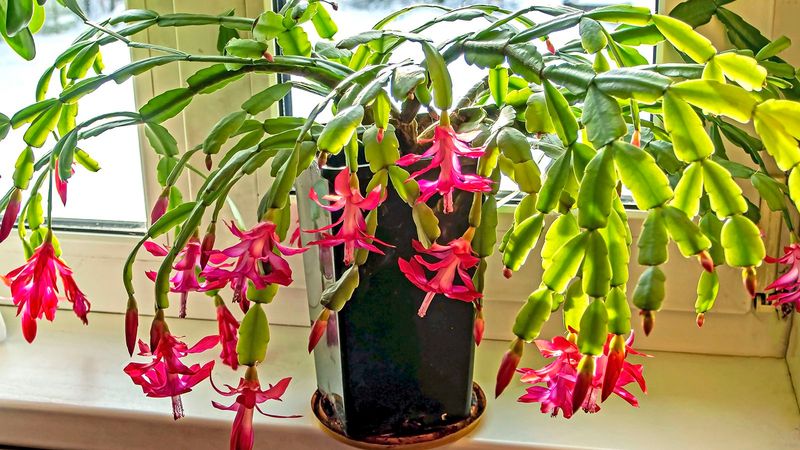
Many North Carolina gardeners wonder if one last dose of fertilizer in October will cover a holiday cactus in flowers. It is a tempting idea, but it does not hold up.
What really matters this month is the setting your plant lives in, from light to nights to steady care. Here is what Extension guidance says you can do now to give your cactus its best shot at winter blooms.
An October feeding is not the bloom switch
If you were hoping a single October feeding would flip your cactus into bloom mode, here is the plain truth: it will not. No feeding schedule can guarantee a full winter display.
North Carolina Extension guidance places routine feeding in the active growth months of spring and summer, with a half-strength soluble fertilizer monthly, and says to stop by late summer. Another Extension article says to stop in fall and winter.
Fertilizer calendars do vary a bit. UConn Extension allows a monthly balanced fertilizer from April through October.
That is a different calendar, but it is still about keeping a growing plant healthy. None of these sources shows that a special October dose produces more flowers.
So if you have been feeding all season, there is no need to panic or to rush an extra dose. If you stopped in late summer, you did nothing wrong.
Your plant is not behind.
The practical takeaway is simple. Do not fertilize just to force flowers.
Feeding feeds leaves and stems, while the real signals for buds come from light and temperature, which the next sections cover. Think of fertilizer as groundwork for the plant’s overall health, not a trigger you can pull in the fall.
A plant that is overfed late may also put energy into soft new growth instead of settling into its fall routine. Skipping the extra dose costs you nothing, and your attention is better spent on the conditions around the pot.
What actually prompts holiday cactus buds?
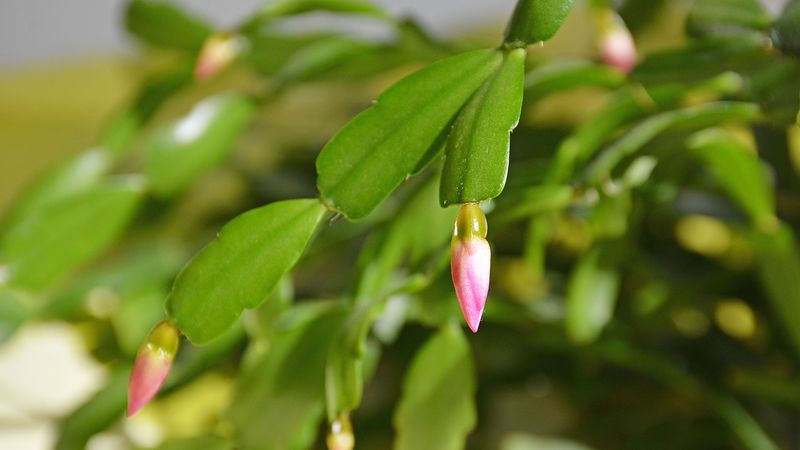
Holiday cacti set buds in response to the seasons, mainly the length of the night and the temperature. NC State’s Plant Toolbox recommends bright light, nights around 55 to 65 degrees F, and uninterrupted nights of at least 13 hours from mid-September to mid-November.
That is a long stretch of darkness, and it is the cue the plant uses to start flower buds. Extension guidance also describes about six weeks of long nights for bud set.
In other words, your cactus is counting nights, not fertilizer doses.
Think of these numbers as a practical guide, not a promise. Plant type, age, earlier growth, and the conditions in your home all change how well a plant responds.
Two cacti in the same living room can bloom on different dates.
Cooler nights matter too. A spot that stays in that 55 to 65 degree range at night is a good target, such as a room that is not heated much after dark.
It should still stay well above freezing, which we will get to shortly.
If your plant is already in the middle of this window, you have not missed anything. Now the question is whether your home actually gives it real darkness, which is where most people run into trouble.
Can your cactus get uninterrupted nights?
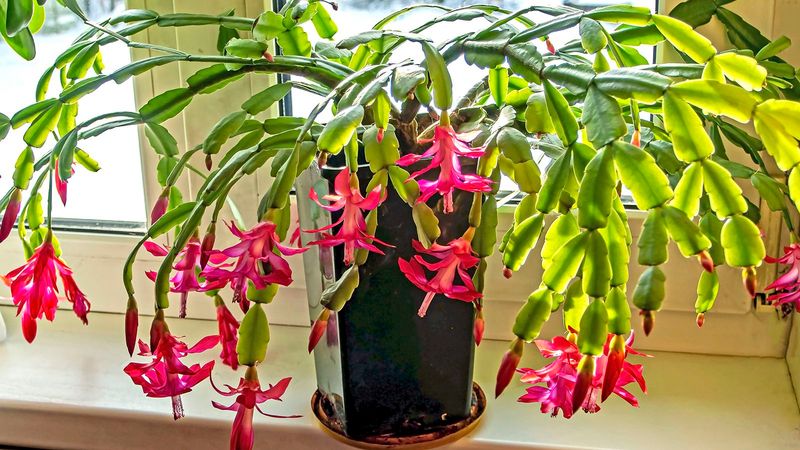
Walk through your house after sunset and notice which rooms stay lit. A cactus parked beside a lamp, a hallway light, or a television glow may never get the long dark stretch it needs.
NC State’s guidance calls for bright light during the day and uninterrupted nights of at least 13 hours in the mid-September to mid-November window.
Evening artificial light can interrupt that long-night cue. Even a short burst, like flipping on a lamp at 9 p.m., can break up the darkness.
Rooms you rarely use at night, such as a guest room or a sunroom you close off, often work well.
For daytime, look for a bright window. East and west windows are common choices in many North Carolina homes, and a bit of sheer curtain can soften harsh afternoon sun.
Bright does not mean scorching, and leaves that turn reddish or limp may be getting too much direct sun.
If you cannot find a naturally dark room, you can drape a breathable cloth over the plant in the evening and remove it in the morning. Keep this simple and consistent.
Once you have found a good spot, try to leave the plant there. Steady placement matters even more once buds appear, as the next section explains.
Steady conditions help protect developing buds
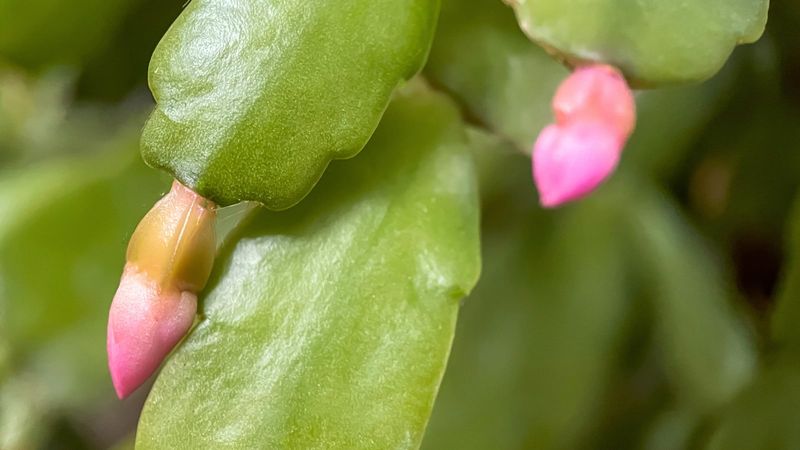
Once buds show up, your job shifts from encouraging them to keeping them. First, bring the plant indoors before frost or freezing weather arrives.
N.C. Cooperative Extension advises this, and it warns against temperatures below 50 degrees F.
Cold is not a bloom trick, so do not leave a plant outside to chill it into flowering.
Next, water consistently. Water when the top inch of the mix is dry, let the excess drain, and keep the mix evenly moist after buds set.
Do not leave the pot sitting in a saucer of water, since soggy roots cause their own problems.
Skip the idea of withholding water to push buds. UMass Extension says research has not supported it and that water stress can reduce bud set.
Its fact sheet is about commercial greenhouse production, which uses controlled light and nutrient programs, so treat it as background and not a home schedule.
Finally, resist the urge to rearrange. Iowa State Extension notes that sudden shifts in light, temperature, humidity, or watering can make buds drop.
A diagnostic clue: if small buds are littering the floor under the plant, ask what changed in the past week. A moved pot, a draft from a door, a heater kicking on, or a missed watering are the usual suspects.
Which holiday cactus do you have?
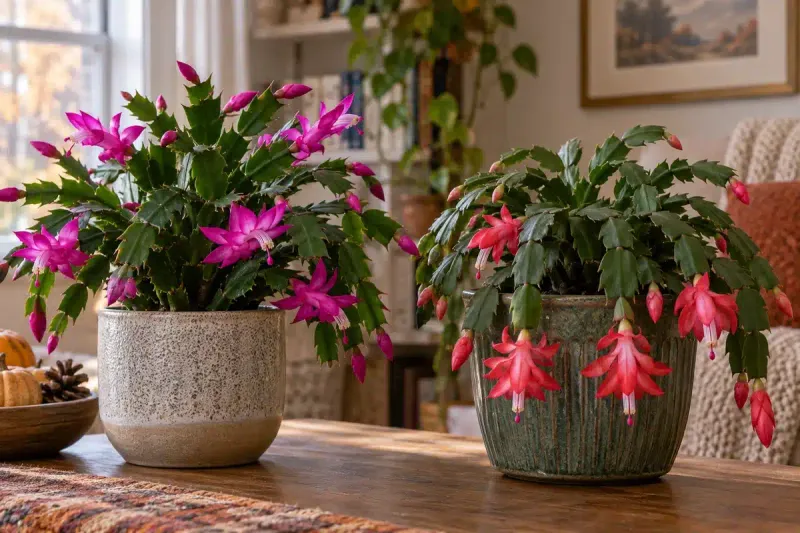
The plant sold as a Christmas cactus at many stores may actually be a Thanksgiving cactus. N.C.
Cooperative Extension notes that Thanksgiving cactus is commonly sold under the Christmas name and usually blooms earlier.
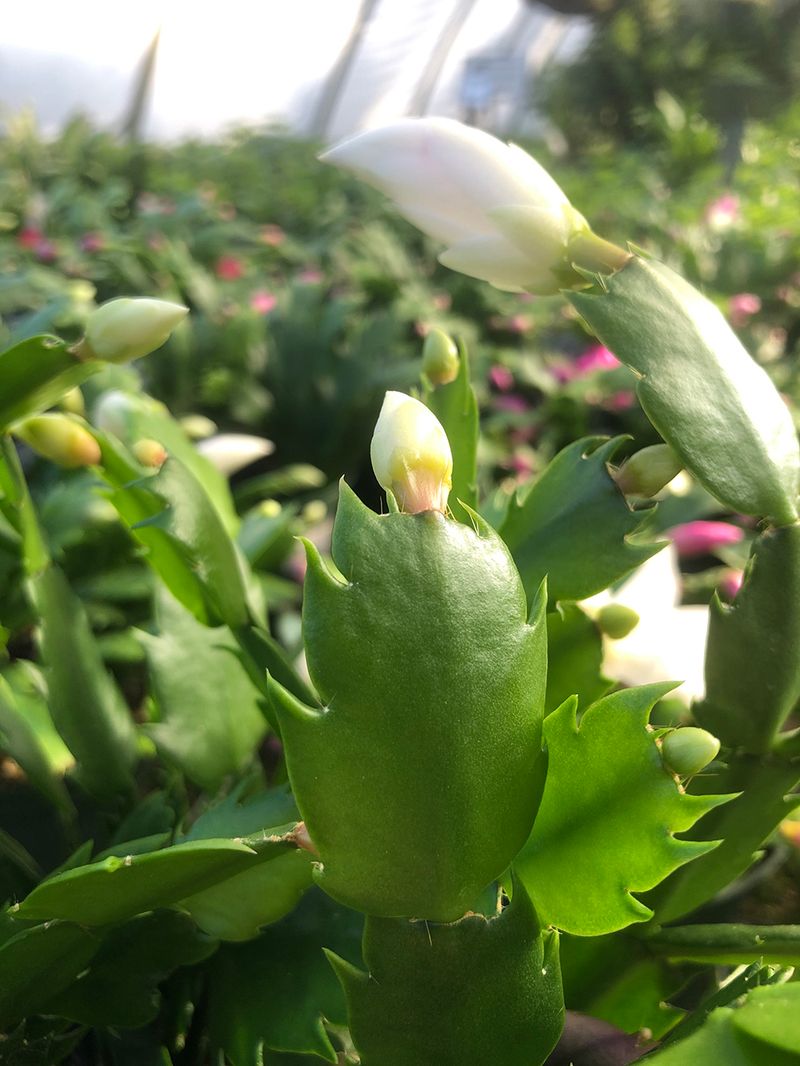
You can tell them apart by looking closely at the stem segments. Thanksgiving cactus has pointed edges, almost like small teeth.
True Christmas cactus has rounder, smoother edges.
Why does this matter? If yours has pointed segments and starts blooming in early November, nothing is wrong.
That is simply its schedule. A plant with rounded edges may open closer to December, or later.
Bloom time also shifts with cultivar and with how a plant was grown. A cactus that was forced into bloom by a grower may behave differently once it is in your home.
You can read more about telling them apart in this Sampson County Extension article.
So set your expectations by type, not by the calendar on the wall. Whatever you have, the care steps stay the same: bright days, dark nights, steady conditions, and consistent watering.
Knowing your type just keeps you from worrying when a plant is on its own timetable.
A fuller display starts before next fall
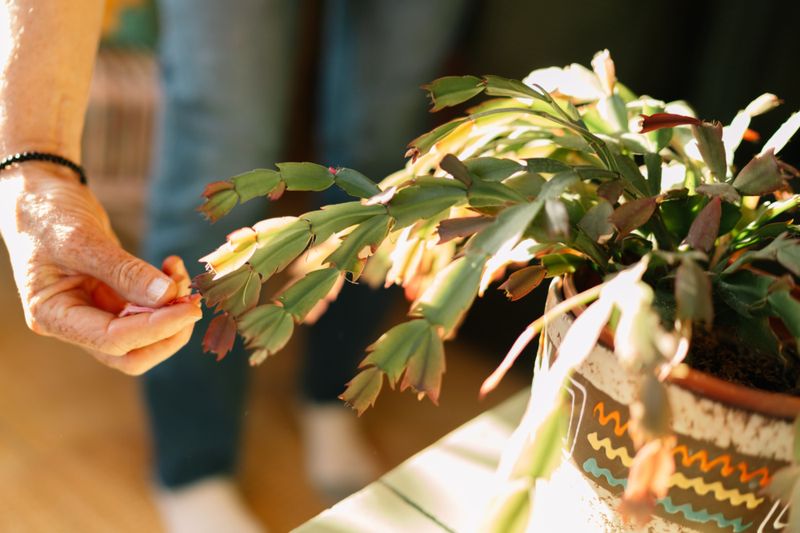
If you want a fuller plant next year, the work begins in warm weather, not now. N.C.
Cooperative Extension recommends pinching stems in early June to promote branching. More branches mean more stem tips, and those tips are where flowers can form.
To pinch, twist or snip off a segment or two at the end of a stem. Do it gently and keep the plant healthy and evenly watered.
Early June gives the plant the whole summer to grow new branches.
Spring and summer feeding fits in here too. A half-strength soluble fertilizer monthly, starting when new growth appears in late winter or early spring, supports active growth.
Then stop in late summer, following Extension guidance.
Neither step is an October fix. Pinching in October would remove growing tips you want, and feeding then does not promise extra flowers.
Neither one guarantees a particular number of blooms.
If you are reading this in fall, jot a note on your calendar for early June. Next year’s plant will thank you with more places to flower, even if the display still varies with type, age, and conditions.
This month, protect the conditions—not the fertilizer schedule
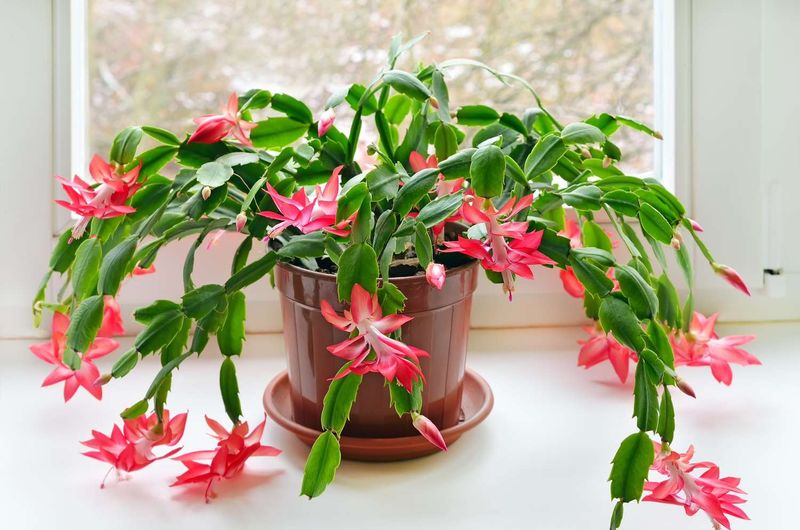
Here is your October plan. Skip fertilizer meant as a bloom shortcut.
Give the plant bright days and uninterrupted dark nights, and keep it indoors away from frost.
Once buds form, leave the pot where it is and water evenly when the top inch of mix is dry. These steps support flowering, but they cannot guarantee a full display or exact holiday timing.
Plan on pinching in June for next year.
A cactus blooms when the room feels like autumn, so give it that.