
How You Can Encourage Your Christmas Cactus to Bloom for the Holidays
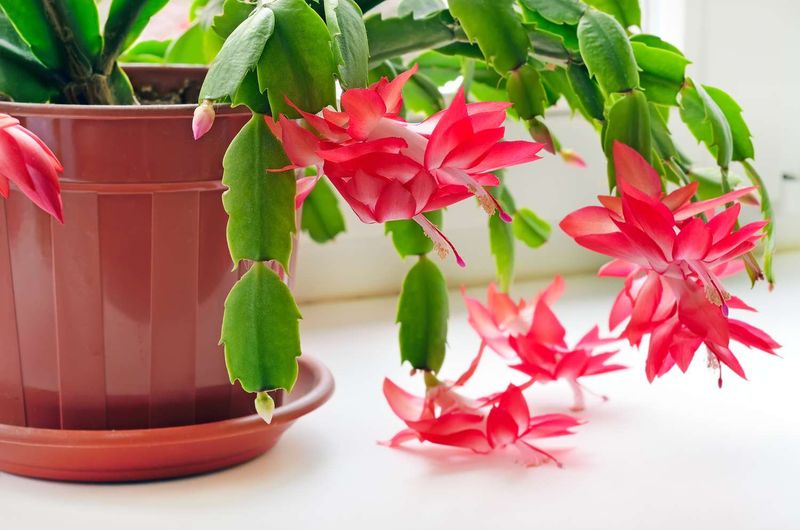
A holiday cactus covered in buds is a wonderful sight, but plenty of owners end up with bare stems in December or flowers in early November. The plant listens to light, temperature, and steady care, and you can influence all three.
October is a handy time to begin a simple routine. Here is what helps, what does not, and why no routine can promise a bloom on Christmas Day.
October can start the countdown, but it cannot set a guaranteed bloom date
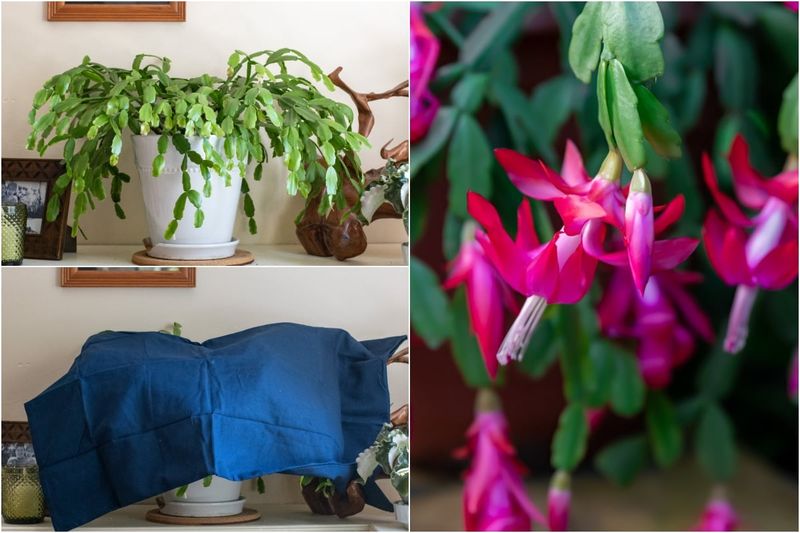
Picture your cactus in mid-October: green, healthy, and showing no sign of color. That is normal, and it is a good moment to begin.
UConn Extension suggests starting short-day treatment for Christmas cactus around October 1.
Short days are the key idea. University of Minnesota Extension says Christmas and Thanksgiving types take approximately six weeks of short days to bloom.
If you are reading this in mid-October, you can still start and may still encourage buds. Treat the six weeks as a helpful guide, though, not a formula that works the same way for every plant.
Exact scheduling is unreliable because plants differ. University of Wisconsin Extension notes that no single forcing schedule works across all cultivars and conditions.
Temperature changes the pace, and so does how the plant was grown before it came home. Growers even manipulate light and temperature to time the blooms you see in stores.
So the honest goal is encouragement. You can shift the odds toward buds by giving the plant what it responds to.
You cannot pick the exact day the first flower opens. Before you plan anything, find out what kind of plant you actually own, because that shapes your expectations.
The cactus you own may not be a Christmas cactus
Many plants sold as Christmas cactus are really Thanksgiving cactus or hybrids. That matters if yours bloomed in early November and you wondered what you did wrong.
Often the answer is nothing at all, because the plant simply runs on an earlier clock.
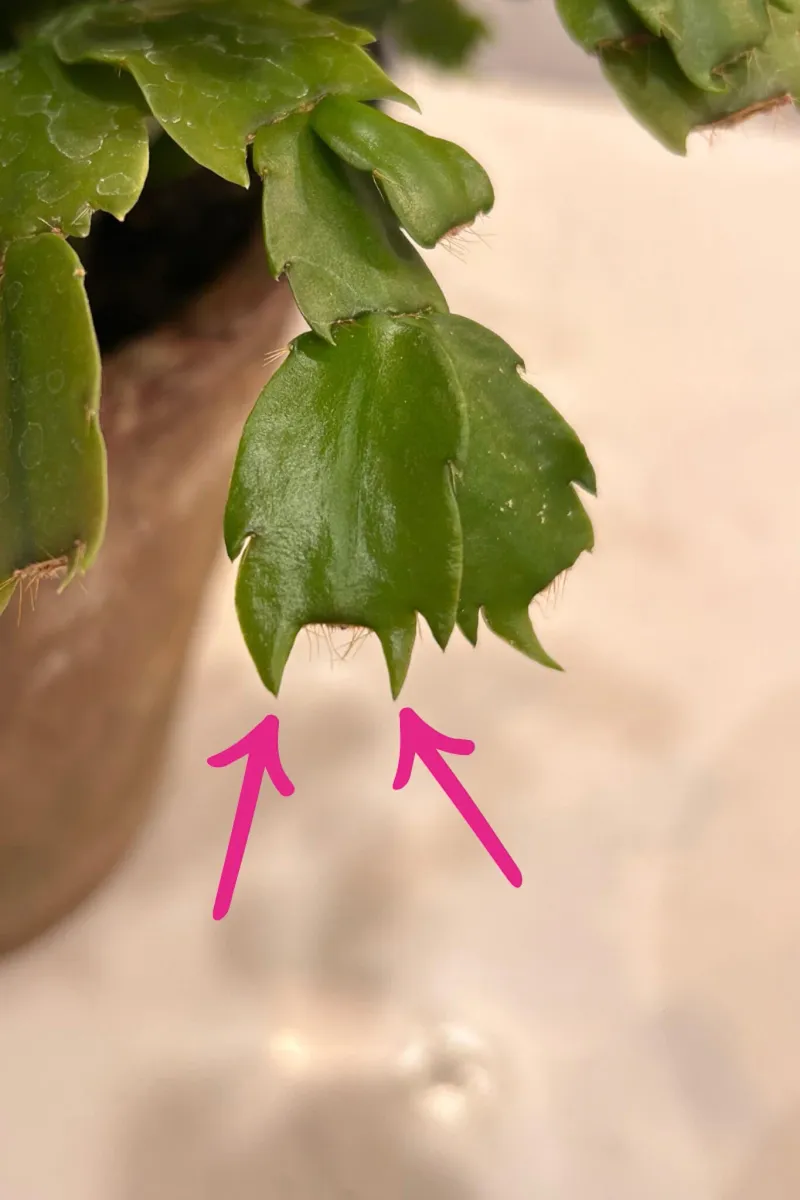
Look closely at the flat stem segments. Iowa State Extension explains that Thanksgiving cactus has pointed teeth along the edges, while Christmas cactus has smoother, rounded or scalloped edges.
University of Illinois Extension describes the same difference and notes that Thanksgiving types generally flower earlier.
Treat this as a clue, not a prediction. Hybrids can look like a mix of both, and cultivars within a type vary.
A toothed plant may open flowers in November or later, depending on its light and temperature history.
Take a photo of a few stem segments and keep it with your notes. If your plant has teeth, expect blooms ahead of Christmas.
If the edges are smooth, you may be closer to the holiday, though still without a promised date.
Long, uninterrupted nights help trigger buds
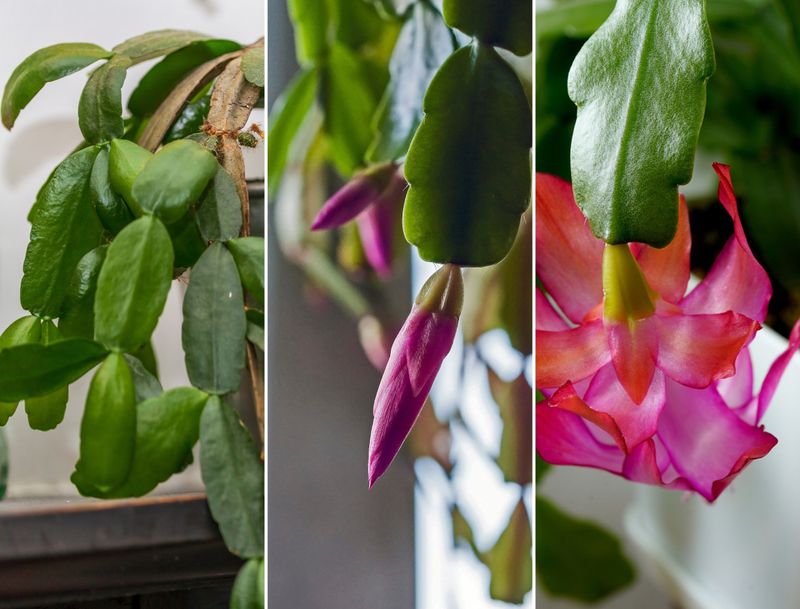
Flower buds form when the plant senses a change in the light it receives. It needs bright daytime light paired with a consistent, dark stretch at night.
University of Minnesota Extension describes long uninterrupted nights as the signal that encourages bud initiation.
Household lighting is the usual troublemaker. A lamp, a hallway light, or a television glowing near the plant can break up the dark period.
UConn Extension warns that artificial light during the dark hours can interfere with buds forming.
You may hear that holiday cacti are short-day plants. That is useful shorthand, but it is not the whole picture.
UMass Extension reports that flower initiation may occur at 50 to 59°F under a range of daylengths, while at warmer temperatures short days are needed.
That is commercial greenhouse guidance, so use it cautiously at home. The takeaway is simple: light and temperature work together.
A plant in a cool room may bud with less fuss, and a plant in a warm room leans harder on those long nights.
Give the plant bright days and a dependable dark period
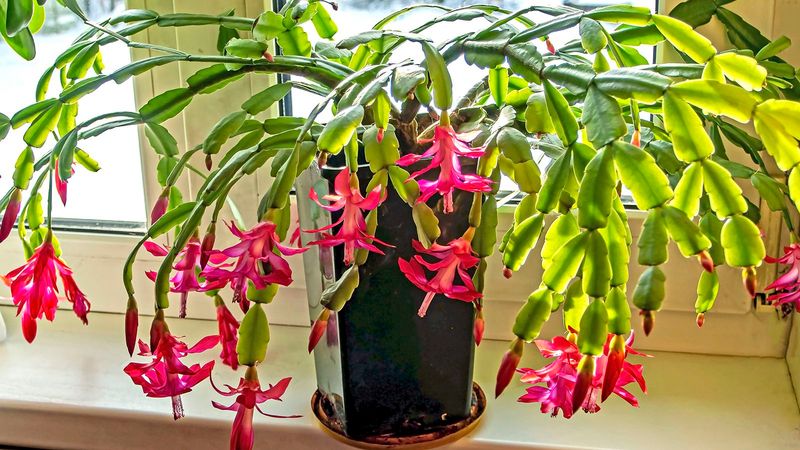
Now for the routine. Keep the plant in bright light during the day, near a window where it gets plenty of daylight without scorching sun.
Then give it a dark period each night with no interruptions.
A common starting point is at least 12 hours of darkness for about four to six weeks. University of Minnesota Extension gives guidance along these lines.
Iowa State Extension adds that many cultivars need 14 to 16 hours of uninterrupted darkness, while others may respond to 12.
If you cannot control the room lights, move the plant each evening to a spare room, a closet, or under a box. Move it back to its bright spot each morning.
Never leave it in darkness all day, because it still needs daytime light.
UConn Extension stresses keeping the schedule steady. Treat these numbers as a practical starting point.
Look for tiny buds at the stem tips after a few weeks, and if you see none, be patient before changing anything.
Moderate temperatures support the light schedule
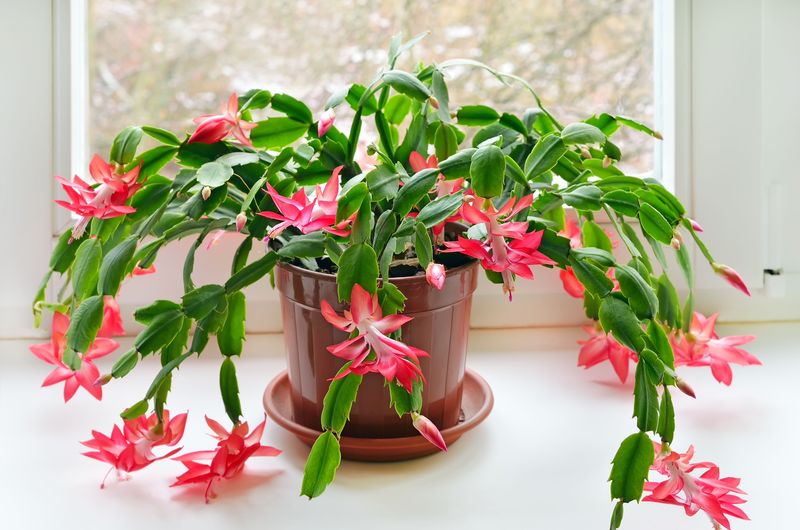
Temperature is the other half of the plan. A practical household target is roughly 65 to 70°F during the day and 55 to 65°F at night.
University of Minnesota Extension gives ranges close to these.
Cooler nights near 55°F can encourage flowering even when your dark period is less tidy. A thermometer near the pot takes the guesswork out.
An unheated but frost-free spot, such as a cool spare room, often works well.
These ranges are not a precise recipe. Temperature, daylength, and cultivar all interact, and the commercial findings from UMass Extension come from greenhouses with tight control.
Your living room will never match that, and it does not need to.
Cold is not a shortcut. If you summered the plant outdoors, University of Illinois Extension advises bringing it inside as nights approach the low 50s°F.
Frost and extreme cold can harm the plant and cause bud drop.
Steady watering helps buds form
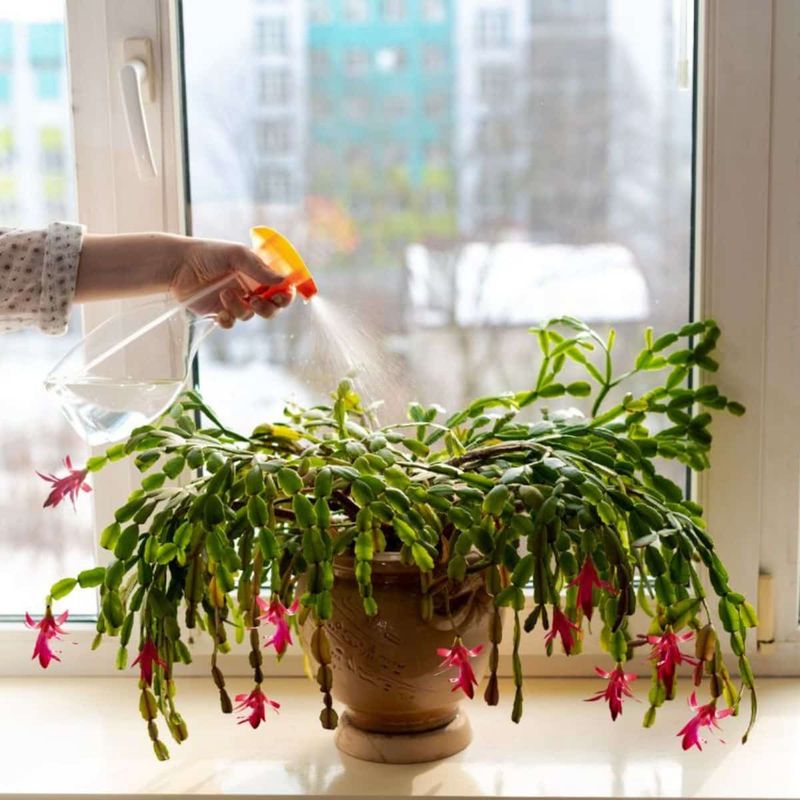
Some advice online says to stop watering to force blooms. Skip that.
Drought is not a bloom trigger, and it can backfire.
In a controlled 1981 HortScience study on Thanksgiving cactus, withholding water until plants wilted reduced flower numbers. UMass Extension likewise says water stress during flower induction reduces bud set.
A better plan is consistency. Water when the top of the soil feels slightly dry, let extra water drain away, and empty the saucer.
Use a pot with drainage holes and a well-drained mix, since soggy roots cause their own trouble.
One missed watering will not necessarily ruin your flowers. The concern is repeated, severe drying or constant waterlogging during the weeks buds are forming.
Steady, moderate moisture gives the plant the best chance to set buds.
Once buds appear, keep conditions stable
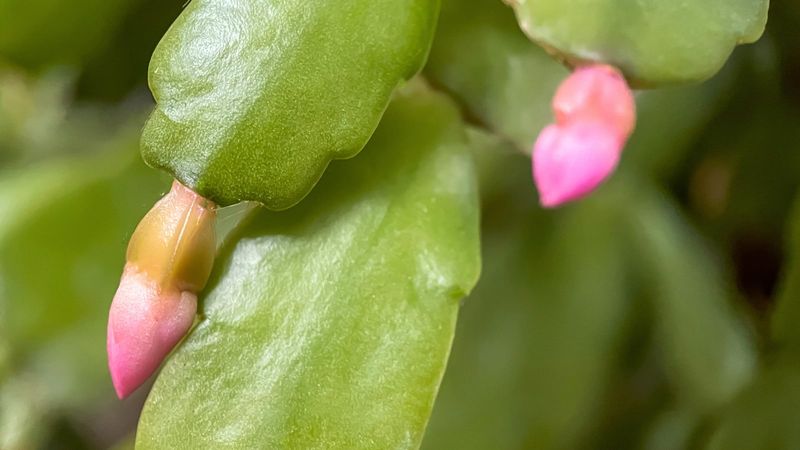
When you spot tiny buds at the stem tips, your job changes from encouraging to protecting. Pick a spot and leave the plant there.
Moving it around now is one of the easiest ways to lose buds.
University of Minnesota Extension advises avoiding sudden changes in temperature, light, watering, or location. UConn Extension adds that drafts and very warm conditions can contribute to bud drop.
Keep the pot away from heater vents, fireplaces, and cold window glass. Check that the room does not swing wildly between warm days and chilly nights.
Keep watering on the same steady pattern.
Do not panic if a single bud falls after a small change. Plants often shed a few and still flower well.
Widespread bud loss is more likely when several stresses stack up, such as a move, a heater blast, and a dry spell together.
Aim for holiday blooms, not a date you can control
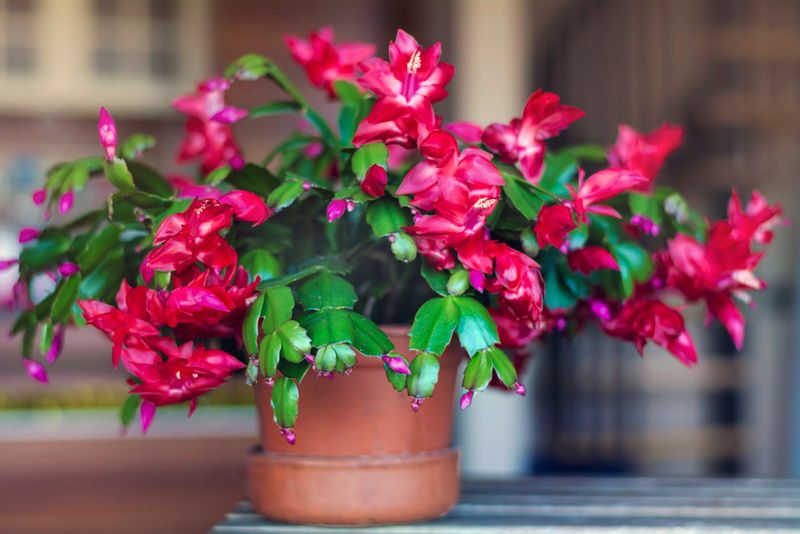
Here is the short checklist. Identify your plant by its stem edges, start a steady routine of bright days and long dark nights, hold temperatures moderate, water consistently, and leave buds alone once they show.
University of Wisconsin Extension and University of Minnesota Extension both support these steps as ways to encourage flowering, not guarantee a date.
Your cactus keeps its own calendar, and a bloom a week early or late is still a win.