
Keep Peony Foliage Green Until It Dies Back This Fall, Then Cut: Timing for Every Peony Type

Fall cleanup makes many gardeners want to grab the pruners and chop the peonies down right away. But the leaves on your peonies are still working, even when the garden looks a little tired.
Knowing when to cut, what type of peony you have, and whether disease is present can save you from a mistake. Here is a calm, simple way to decide.
When to cut herbaceous peonies back
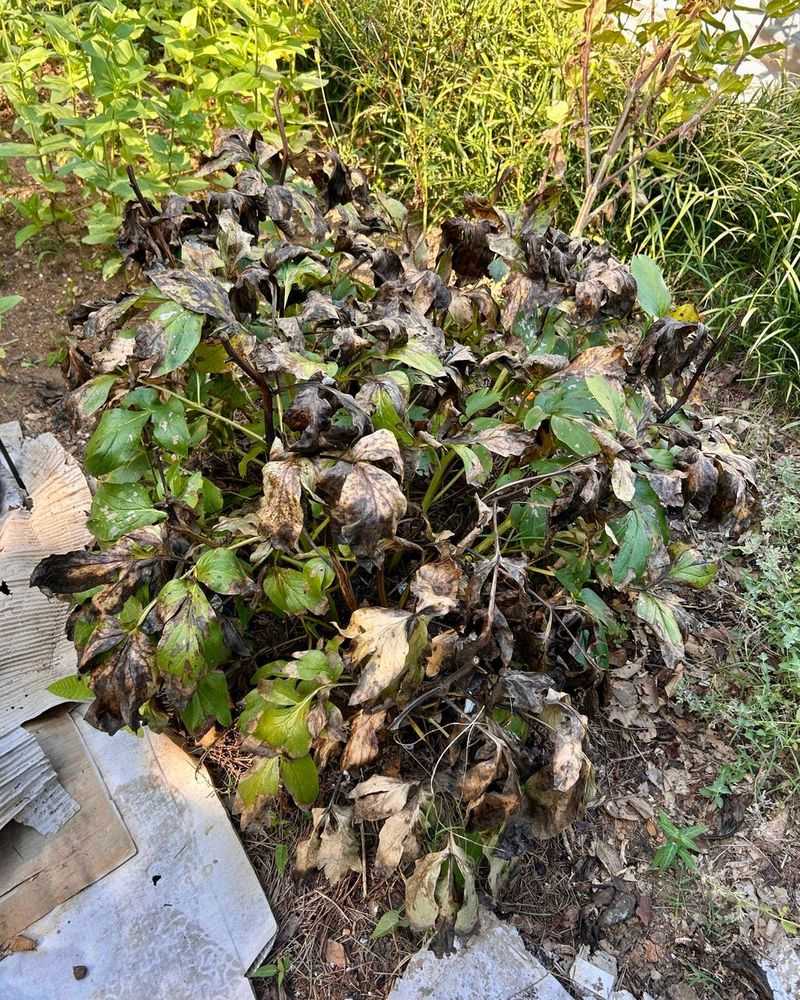
Start by looking at the leaves instead of the calendar. For herbaceous peonies, the plants that die back to the ground each winter, the best time to cut is once the foliage has mostly died back, turned brown, or been killed by frost.
Fall starting on the calendar is not a good enough reason to prune while the plant is still mostly green.
Frost is a handy cue, but it is not a deadline everyone must follow. American Peony Society guidance suggests leaving mostly green foliage in place and cutting after frost where frost applies.
Colorado State University Extension advice is to wait until the foliage is no longer green.
Recommendations also vary by region. Kansas State University Extension says foliage can be cut back at the end of August there.
No source sets one exact date for the whole country.
So here is a simple decision process. If most leaves are still green and healthy, wait and check again in a week or two.
If they are mostly brown, limp, or frosted, it is time to cut. Your local extension office can tell you what works in your climate.
Why healthy green foliage should stay
Green leaves are busy. Through photosynthesis they turn sunlight into energy, and your peony is still collecting some of that energy in late summer and fall.
Cutting the plant down while the leaves are healthy ends that work early.
That is the practical reason behind the advice from the American Peony Society to hold off until the foliage has faded. The plant gets to finish the season on its own schedule.
You may wonder whether an early cut means fewer blooms next spring. It is a reasonable worry, but nobody has measured the effect, and the sources reviewed do not show that early cutting always reduces the flower count.
A plant cut early may do fine, and no one can promise a certain number of flowers either way.
Even so, waiting costs you very little. A slightly messy bed for a few more weeks is an easy trade for letting the plant keep every bit of energy it can gather.
Kansas State University Extension offers a regional take with its earlier timing, which shows that local conditions matter.
If the sight of yellowing leaves bothers you, remember that fading color is a normal sign the plant is winding down for winter.
When disease calls for earlier removal
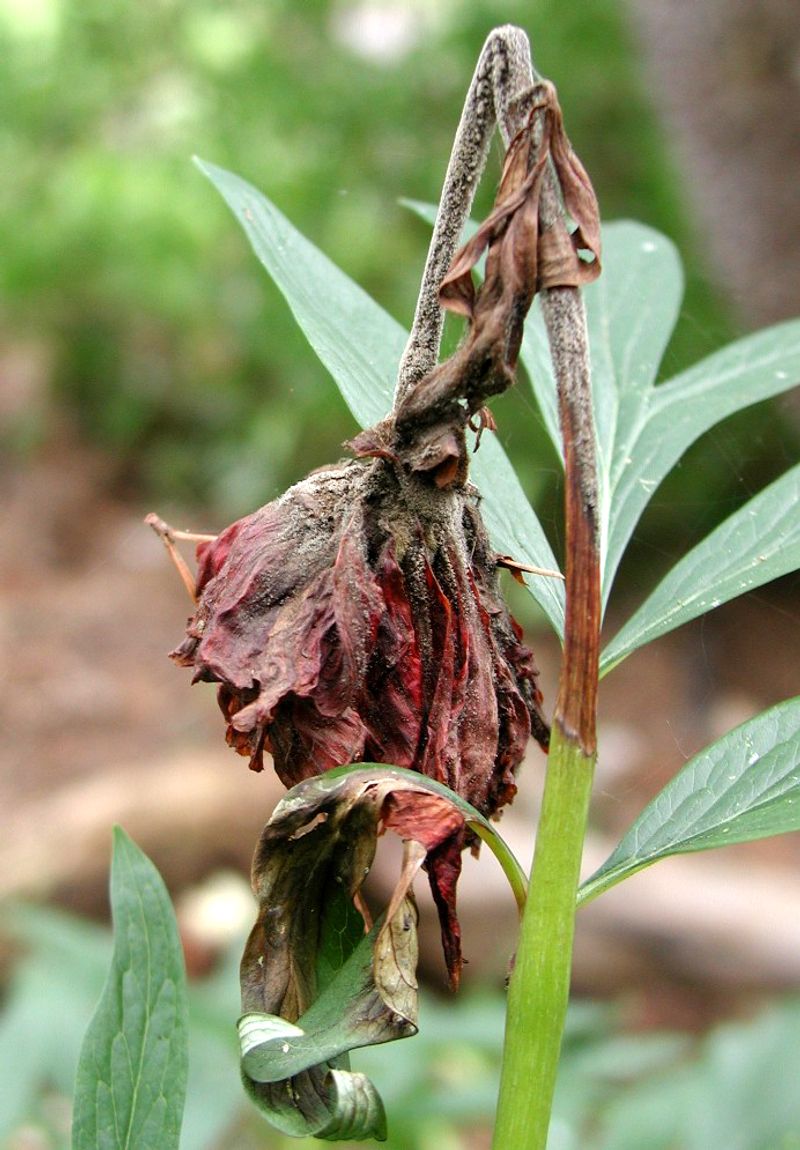
Waiting for healthy leaves to fade has one big exception. If parts of your peony are heavily diseased, remove them rather than leaving them on the plant.
Penn State Extension advises taking out heavily diseased portions while leaving as much healthy green foliage as possible.
That means you do not need to cut the whole plant. Snip off the worst stems and leaves, and let the healthy ones keep working.
Be careful about guessing what is wrong. Brown or spotted leaves alone do not prove Botrytis, because peonies can get several fungal or bacterial leaf-spot problems, as noted by University of Connecticut Extension.
For examples of what Botrytis can look like, Iowa State University Extension describes buds that fail and turn brown, gray fuzzy spores, and irregular dark spots on leaves. Treat these as clues, not a diagnosis you can make at home.
If you are unsure, your local extension office can help identify the problem. In the meantime, removing badly affected material is a safe step, and you can keep the rest of the green growth.
Identify the peony before pruning
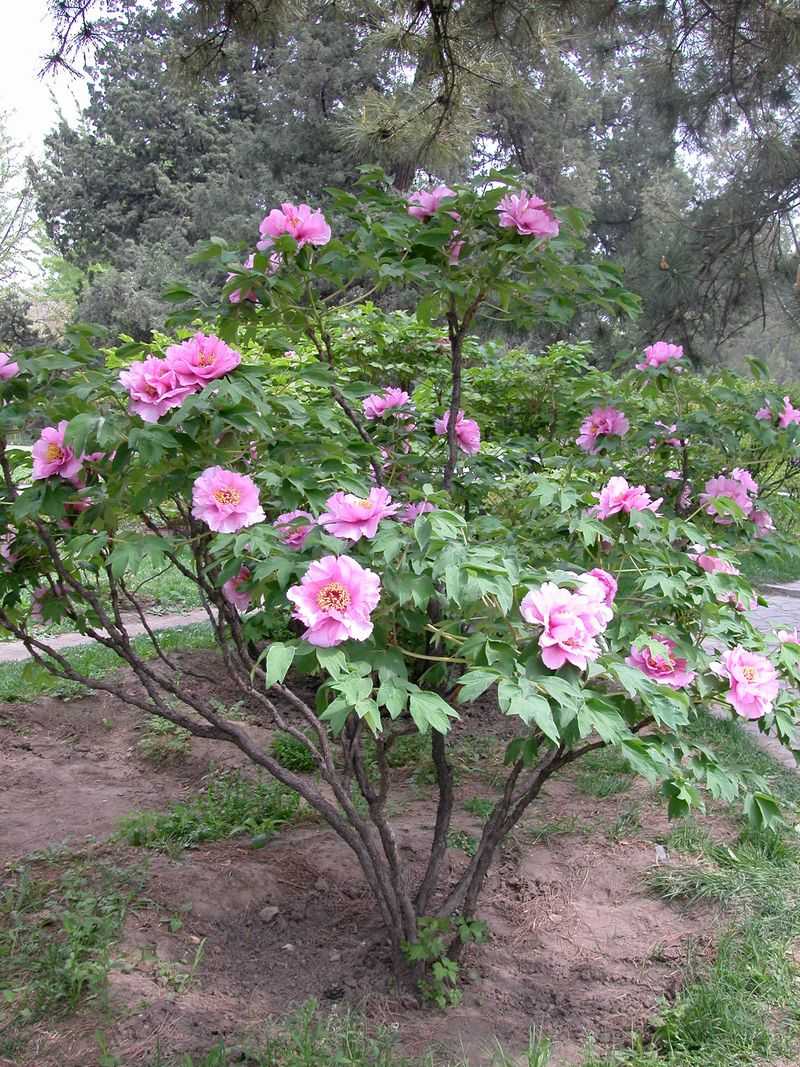
Before you cut anything, check which kind of peony you own. Cutting every type to the ground is a mistake that can harm the wrong plant.
The three common types are herbaceous, tree, and Itoh (also called intersectional) peonies.
Tree peonies have woody stems that stay above ground all year. They should not be cut to the ground.
The American Peony Society suggests removing the leaves and the leaf stems attached to them, while leaving the buds on the branches.
Itoh peonies sit in between. They are cut back to the point where the growth becomes woody, usually about 4 inches above the ground.
Leave the buds on the stems that remain.
Not sure what you have? Look at the stems in fall.
Soft stems that go limp and brown point to an herbaceous peony, while hard, bark-like branches with buds point to a tree peony. Check your plant tag or purchase records too, since they may name the type.
Once you know the type, the cut is simple, and you protect the buds that will become next year’s growth.
Cut and clear herbaceous peony debris
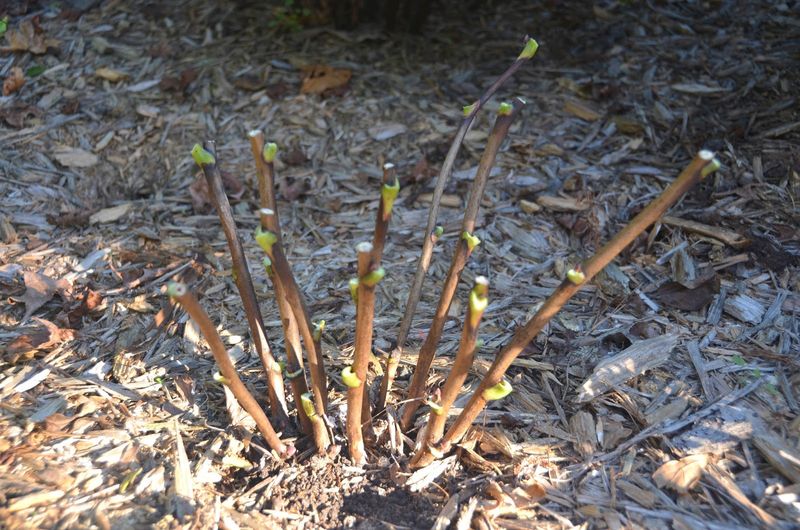
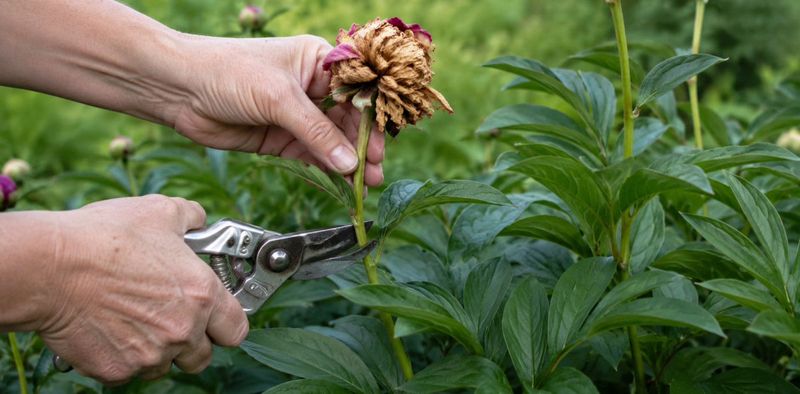
When the foliage on your herbaceous peony has mostly died back, the cut is easy. Use sharp pruners and cut the stalks at ground level.
Then remove the plant debris from the bed.
Iowa State University Extension recommends this ground-level cut and cleanup. Rake up fallen leaves too, so the bed is tidy.
Do not leave diseased cuttings lying in the bed, and do not add diseased peony material to your compost pile. Both Iowa State and University of Connecticut Extension advise against composting it.
Bag it for the trash instead, or follow your local yard-waste rules.
If disease was present this year, clean your tools between plants. An Ask Extension response suggests a 10% bleach solution or 70% rubbing alcohol.
This is a sensible habit that helps avoid carrying problems from plant to plant, but it does not guarantee disease control.
Wipe the blades, let them dry, and rinse off bleach afterward so it does not corrode the metal.
What fall cleanup can—and cannot—do for Botrytis
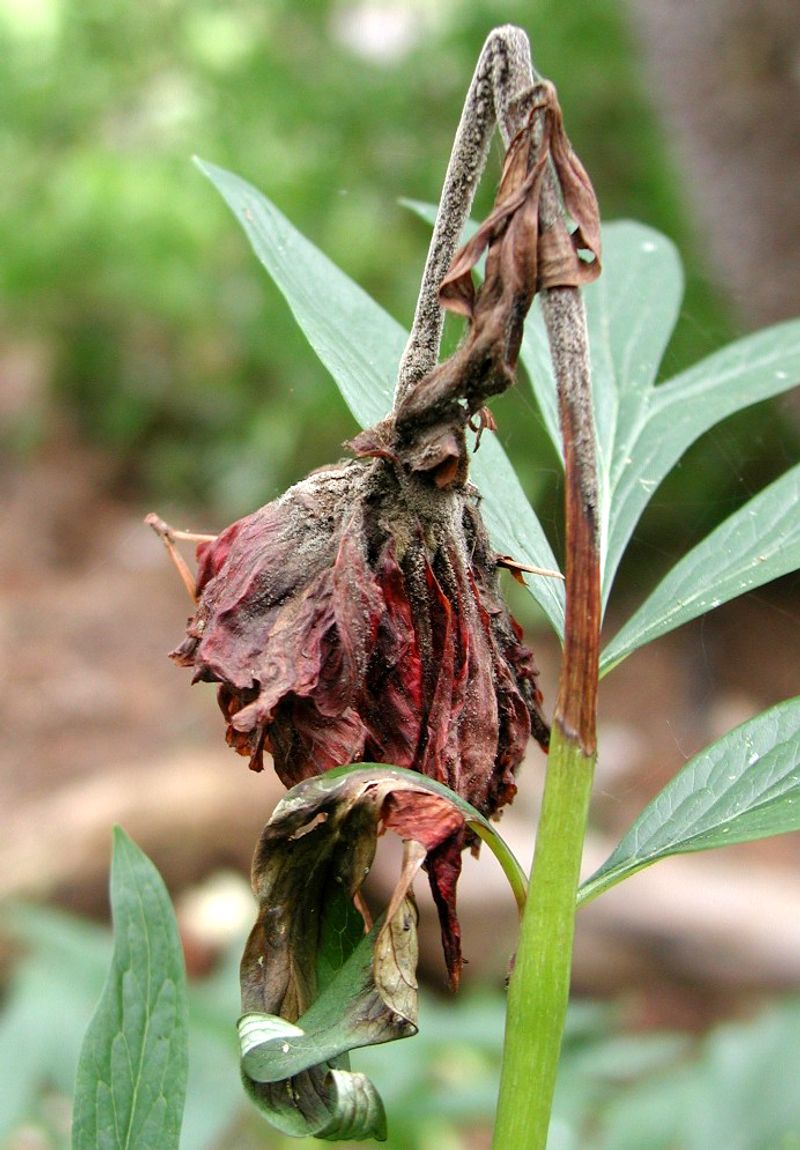
Botrytis blight can survive winter in peony debris, so removing infected stems and leaves takes away one possible source of carryover. Iowa State University Extension recommends removing old growth for that reason.
Cleanup has limits, though. The UC Statewide IPM Program reports that the fungus can also survive as small hardened structures in or on the soil.
Spores can also drift in from elsewhere, so reinfection is still possible.
Think of cleanup as lowering the odds, not as a cure. It does not eliminate Botrytis, promise a disease-free bed, or secure a certain number of blooms next spring.
It is still worth doing because it is one of the few steps fully in your hands.
Here is the short checklist. Leave healthy green foliage alone until it fades.
Remove badly diseased material sooner. Make the cut that fits your peony type: ground level for herbaceous, woody growth and buds kept for tree and Itoh types.
A peony forgives a lot, and a patient gardener usually gets the best of it.