
Pink Muhly Grass for North Carolina Curbs: A Native Alternative to Purple Fountain Grass
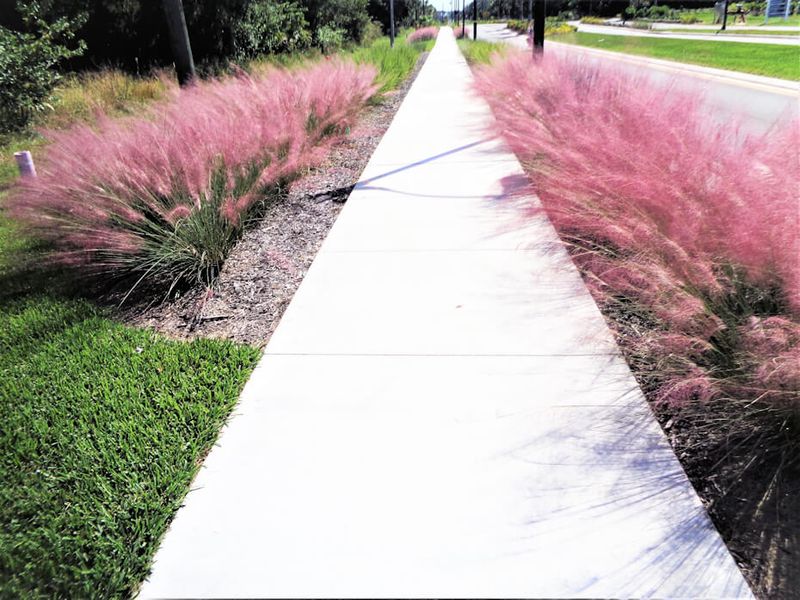
Purple fountain grass looks great at the curb in summer, but many North Carolina gardeners find themselves replanting it each spring. Pink muhly grass is a native perennial that offers a cloud of pink-purple plumes every fall.
It will not fit every spot, and it will not promise bigger growth each year. Here is how to decide if it belongs by your curb.
Purple fountain grass is not a dependable perennial across much of North Carolina
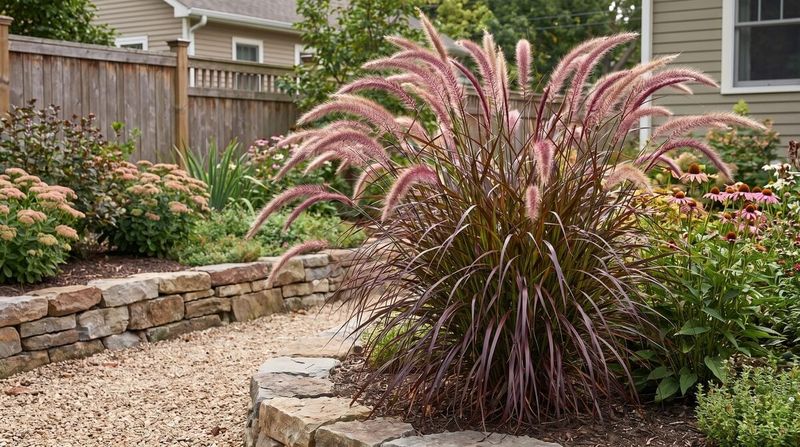
Plenty of North Carolina curbs have a purple fountain grass story. It looks lush in July, then winter arrives and the clump turns to mush.
NC State Extension’s plant profile explains why. The grass is African in origin, normally grown as an annual, and hardy in USDA zones 9a to 11b.
Much of North Carolina sits outside that zone range. That is a broad regional pattern, not a promise about your particular plant.
A sheltered spot near warm pavement or a mild stretch of the coast may carry a clump through some winters. Even so, counting on it to return is a gamble in most of the Piedmont and mountains.
There is another thing to know. The same NC State profile calls purple fountain grass weedy and says it self-seeds readily.
It reports invasiveness in some other states, but it is not listed as a legal invasive in North Carolina. That means seedlings may pop up in nearby beds, so it pays to watch for them.
None of this makes the plant a bad choice for everyone. If you enjoy buying it fresh each spring for a seasonal pot or a bold summer display, it can still do the job.
If you want something that comes back on its own and belongs to our region, a native perennial is worth a look.
Pink muhly brings native fall color, while little bluestem offers another look
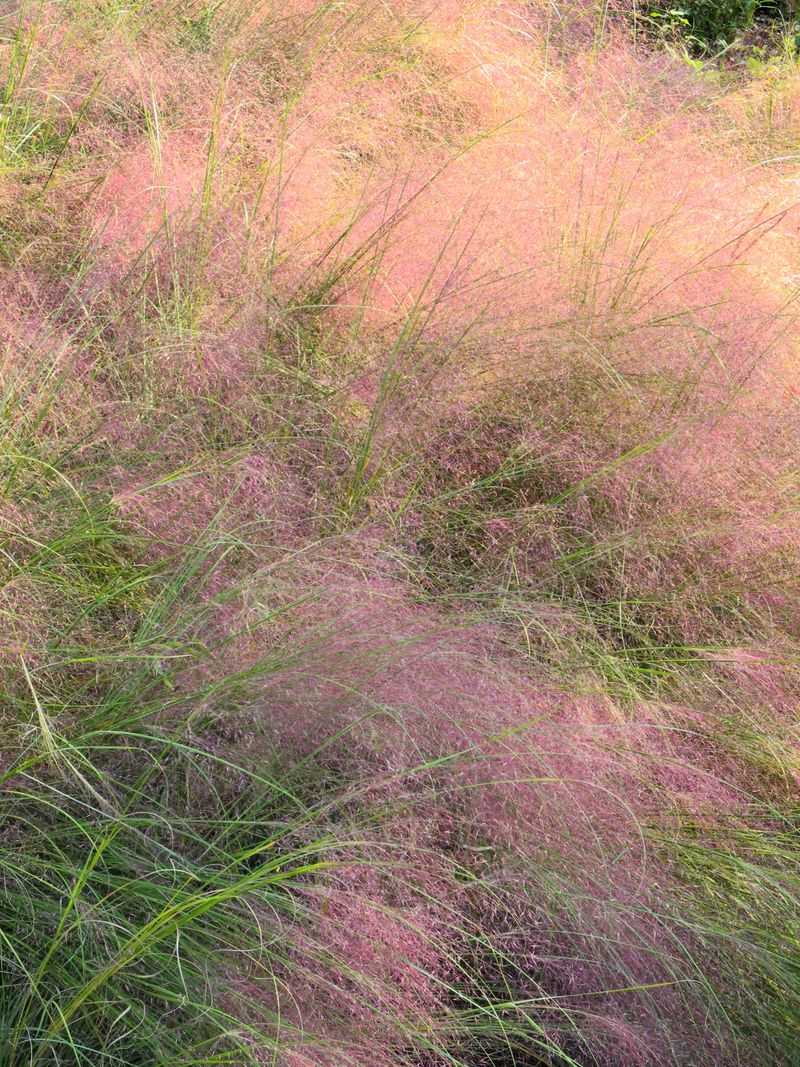
Come October, pink muhly (Muhlenbergia capillaris) puts on a show few grasses can match. According to NC State Extension, it is a long-lived, clumping perennial native to the Coastal Plain, Piedmont, and mountains.
It grows about 2 to 3 feet tall and wide, with fine, arching leaves. The pink-purple plumes appear in fall and hover above the foliage like mist.
That fine texture and fall color make it a direct visual stand-in for purple fountain grass in a sunny bed. The difference is that pink muhly belongs here.
It handles heat, humidity, drought, poor soil, and salt, which is helpful along roads and near the coast.
Little bluestem (Schizachyrium scoparium) is another good native, and it looks quite different. NC State’s plant profile lists it as a clumping perennial for all three regions, about 2 to 4 feet tall.
Its foliage turns coppery in fall and stays attractive into winter. You get warm rust tones instead of pink haze.
Think of these as choices for different goals, not a ranking. If you want a soft pink cloud, pick muhly.
If you prefer upright form and burnished winter color, bluestem may suit you better. Both want sun and well-drained soil.
Check the curb’s sun, drainage, and available space before planting
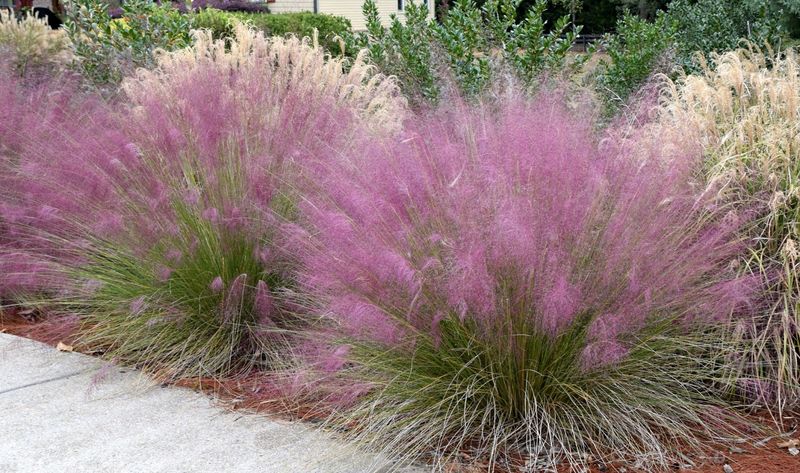
A curb strip can be a tough place for a plant, and being by the street does not guarantee success. Pink muhly needs well-drained soil and full sun for its best floral display, as NC State Extension notes.
Spend a day watching the spot. Count the hours of direct sun, and look for puddles that linger after rain.
If water stands for a day or more, choose another location or raise the planting area. On the plus side, the grass is highly salt-tolerant, which helps where road spray or coastal air is a factor.
Heavy shade will mean fewer plumes and a floppier look.
Next, plan for size. A mature clump reaches about 2 to 3 feet tall and wide, so leave that much room from the pavement, walkway, and neighboring plants.
Placing a small nursery pot right at the edge is a common mistake.
Roadside spaces also come with safety and access concerns. The NCDOT vegetation manual lists setbacks, sight distance, utilities, drainage, and mature plant height as planting considerations.
Keep clumps away from driveway sightlines, meters, and utility boxes. Because rules vary, check with your city or county and any easement on your lot before you dig.
Call 811 before digging.
Leave the grass standing through winter, then cut it back
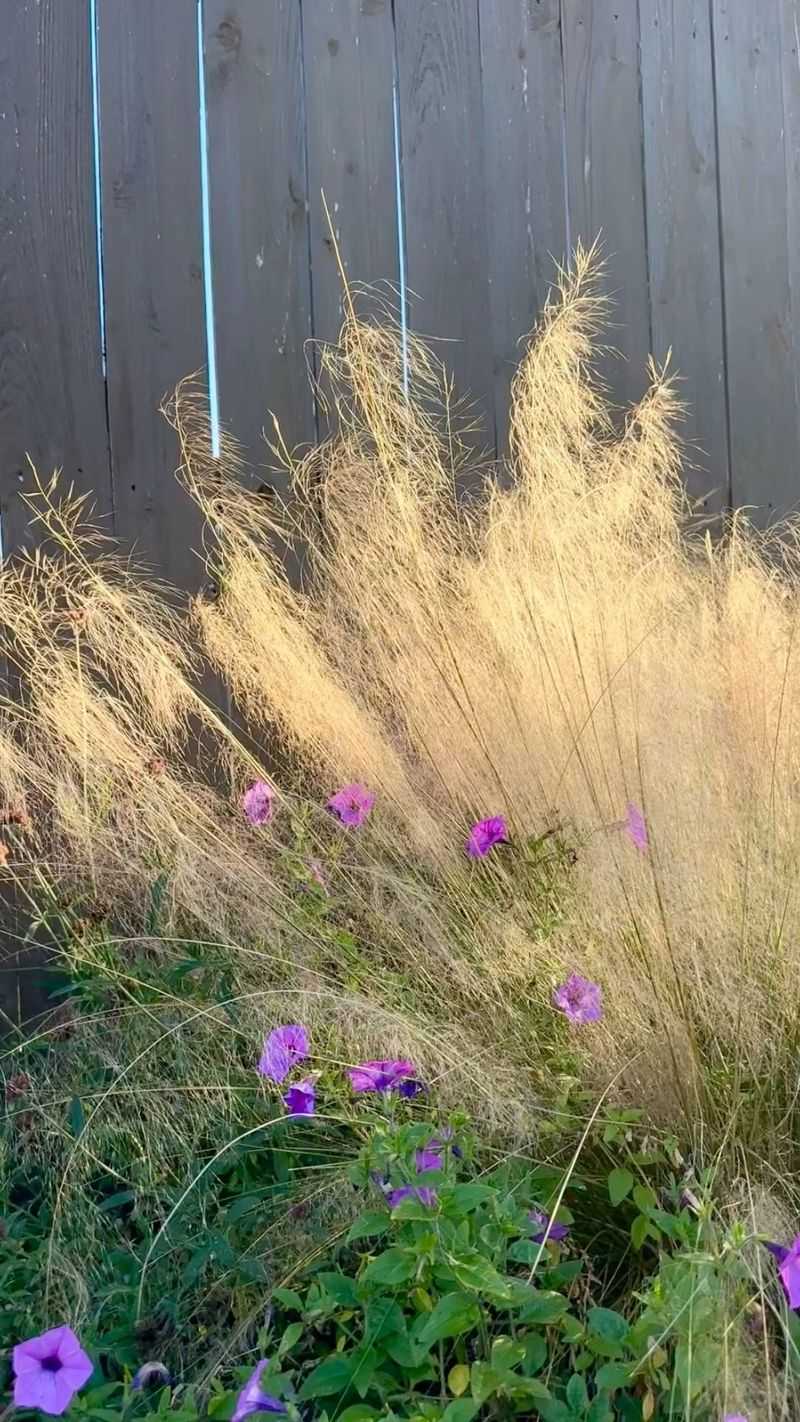
Winter care for muhly is refreshingly simple. Skip the fall cleanup and let the clump stand.
The tan, feathery foliage adds texture to a bare winter bed, and frost makes it sparkle on cold mornings.
Then comes one job. NC State Extension advises cutting ornamental grasses like muhly back to about 6 to 8 inches in late winter, before new growth begins.
In much of North Carolina, that often means February or early March, though timing shifts a bit between the coast and the mountains.
Here is an easy way to do it. Gather the blades in a loose bundle and tie them with twine or a bungee cord.
Cut through the bundle with sharp hedge shears, then lift away the whole mass. Watch for green shoots at the base, and trim before they get tall so you do not chop new growth.
Hand tools are the right choice for a clump at the curb. Do not burn it.
Fire near a road, a driveway, and neighbors’ property is not a safe homeowner task, and cutting does the job well.
Describe pink muhly’s wildlife value without overpromising
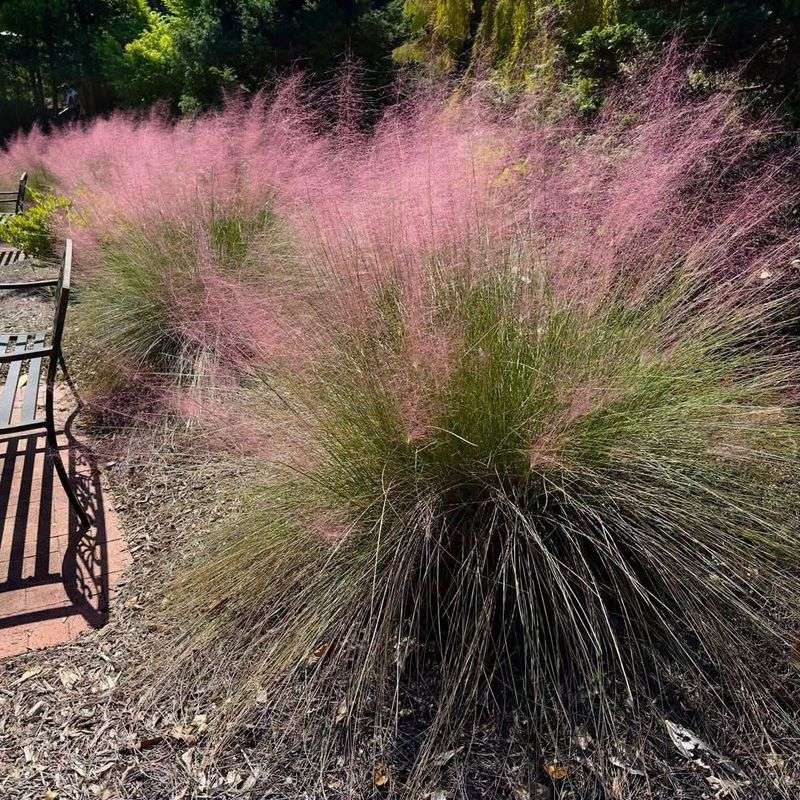
Planting a native grass is a nice way to give back to your neighborhood’s wildlife. The documented benefits are specific, so it helps to stick to them.
NC State Extension’s plant profile says pink muhly provides cover, its seeds are eaten by songbirds and small mammals, and it attracts butterflies.
Those three points are a solid case. A dense clump gives small creatures a place to hide.
Seed heads left standing through winter can offer food when other sources are scarce. In fall, you may spot butterflies visiting the blooming plumes.
Still, keep expectations realistic. The profile does not name particular species, so there is no basis for promising goldfinches, bats, box turtles, or fireflies.
Whether wildlife shows up also depends on your neighborhood, the other plants nearby, and what is happening on the street.
One small clump at the curb is a start. Pair it with other native plants, skip the pesticides, and keep some seed heads in place through the cold months.
That gives wildlife a better chance to use what you planted.
Choose for recurring seasonal interest, not guaranteed yearly growth
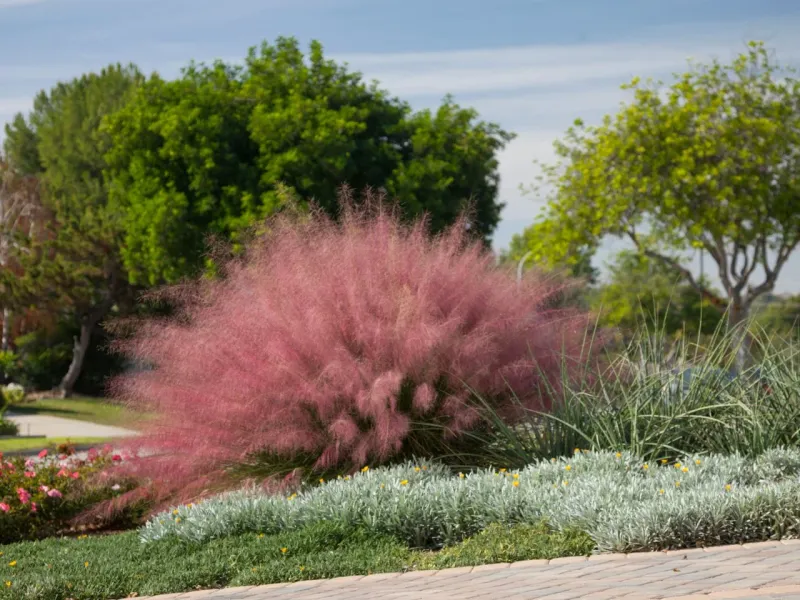
Here is a simple rule. Pink muhly suits a sunny, well-drained curb with room for a 2 to 3 foot clump, especially if you want a North Carolina native with fall color.
If your strip is shady, soggy, or crowded by utilities and sightlines, look at other options.
Perennial also does not mean bigger every year. NC State Extension lists a medium growth rate, so size depends on your site and care.
A healthy clump should return each spring and bloom in fall, but it will not follow a growth schedule.
Put the site first and the plant second. A well-matched spot beats any promise on a plant tag.