
Geraniums Stop Blooming Before Frost? Try These Checks
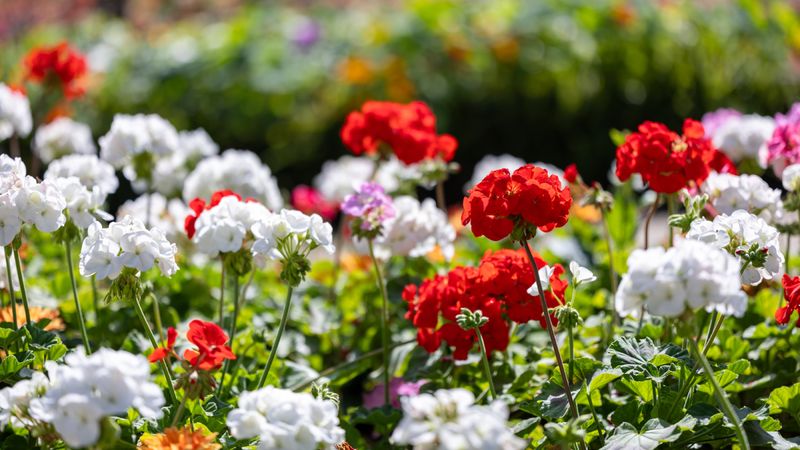
Your geraniums were loaded with color all summer, and now the flowers are thinning out just as fall arrives. It is easy to worry that you did something wrong.
Usually, a bloom stall has a few possible causes, and you can check them one at a time. Here is a calm order to follow, plus honest notes about what may and may not bring back flowers before frost.
A bloom stall has more than one possible cause
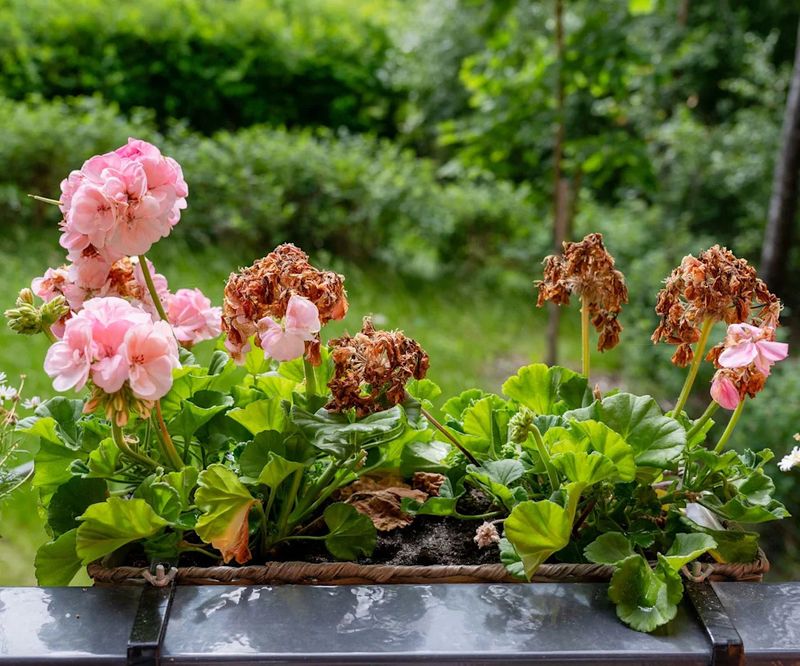
Most of the plants sold as geraniums at garden centers are really Pelargoniums. They are tender plants grown as bedding or container flowers.
They are not the same as hardy true Geraniums, which are a different genus that comes back in the ground each year. If your plant came in a hanging basket or a pot with a tag that says zonal, ivy, or Martha Washington, you are almost certainly dealing with a Pelargonium.
When flowers fade, there is no single proven culprit. University of Minnesota Extension points to factors such as light, plant type, and overfertilizing.
Extension guidance from Iowa State also ties continued blooming to removing faded flowers and giving the plant enough sun. Spent blooms, too little light, heat, watering or drainage trouble, and feeding habits can all play a part.
Weather matters too. Florida guidance from UF/IFAS reports flowering fading by mid to late summer, and Georgia Extension says growth and flowering slow a lot in hot weather.
Those are regional observations, so treat heat as one possible explanation for your plant, not a verdict for every garden in the country.
Because the cause is not always obvious, think of this article as a checklist rather than a cure. We will go in this order: remove spent stalks, look at light, check water and drainage, think carefully before feeding or pruning, and then decide whether you are trying to boost blooms or save the plant for winter.
Some steps may help your geraniums keep flowering, but none can promise new blooms before your local frost.
Start by removing spent flower stalks
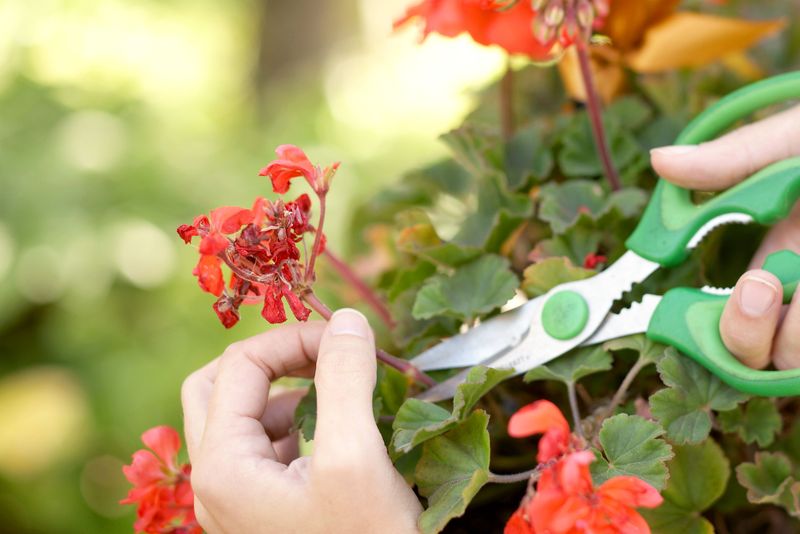
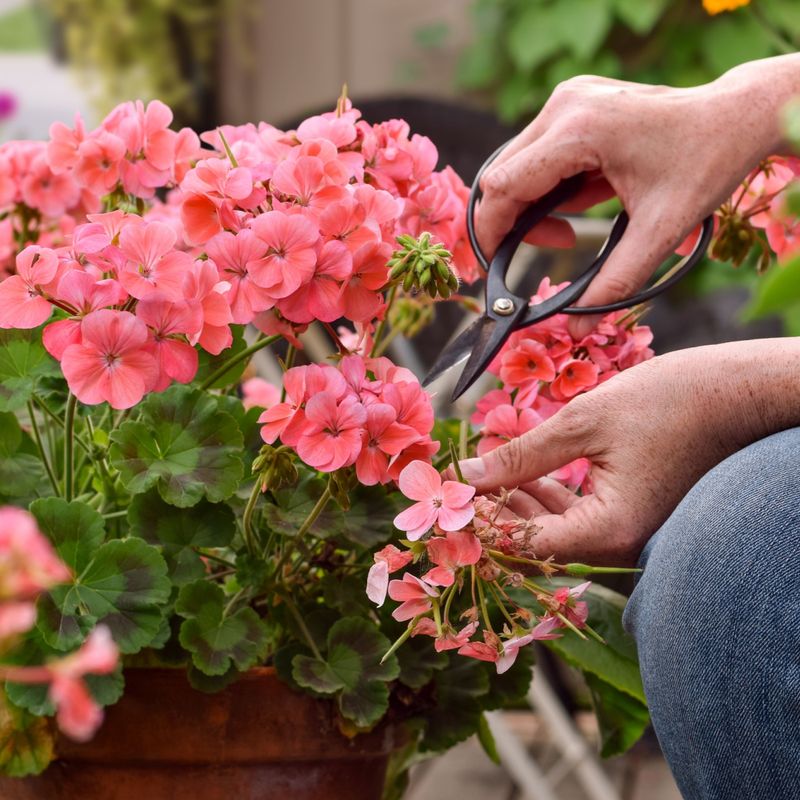
Take a slow walk around your plant and look for flower clusters that have turned brown, droopy, or full of dropped petals. Pick one and follow its stalk down with your fingers until you reach the spot where it joins the main stem.
Pinch or snip it off right there, so you do not leave a bare stub sticking out.
Doing this is called deadheading. Iowa State Extension says removing faded flowers can encourage continued flowering, and it also tidies up the plant.
UF/IFAS Extension gives similar advice for the common bedding geranium.
Here is the honest part. Deadheading is a sensible first move, but it is not a guaranteed cure.
If your plant is short on light, struggling in heat, or dealing with another problem, clean-up alone may not bring back flowers.
A good clue is what happens over the next couple of weeks. If new buds start to show up at the leaf joints, you are on the right track.
If nothing changes, you have learned something useful, and you can move on to the next check without feeling like you failed.
How much sun is enough?
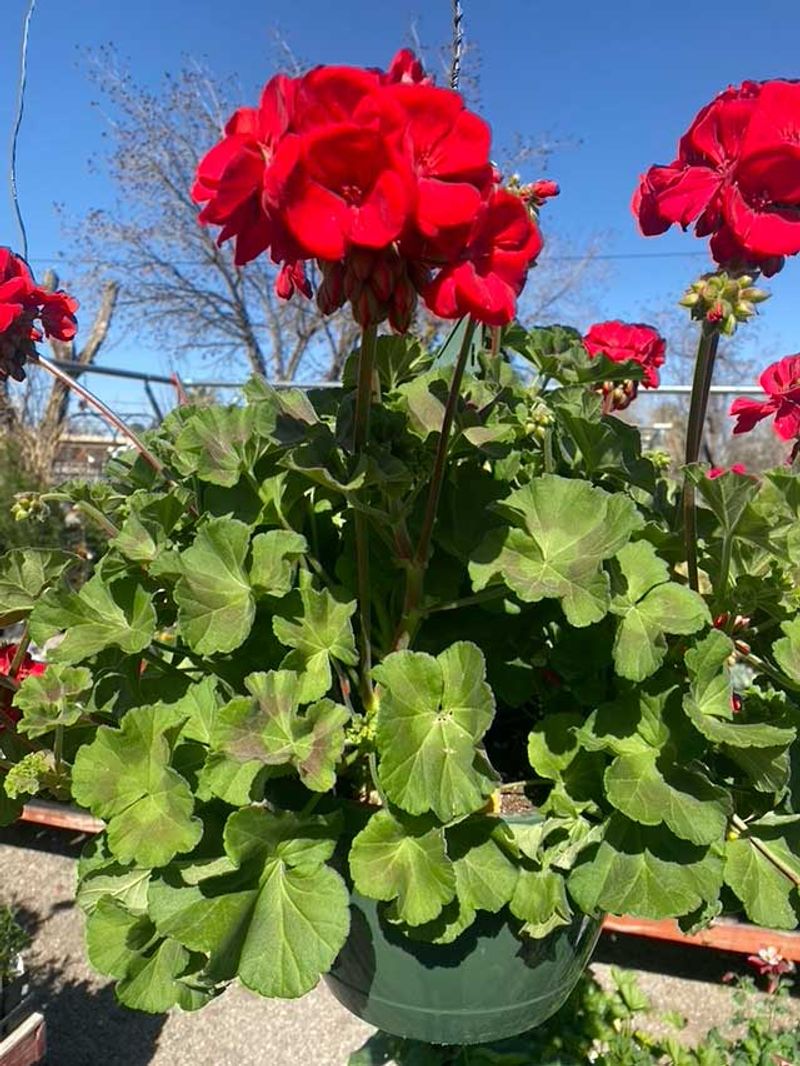
Too little light is a common reason for fewer blooms. Extension sources do not agree on one exact number, though.
University of Minnesota Extension advises at least eight hours of sun in its guidance on annual geraniums, while Iowa State says at least six hours. Treat both as helpful ranges, not strict rules.
Before you drag a pot to the sunniest spot, think about the plant type and your weather. UC IPM says Pelargoniums may need some shade in very hot temperatures.
Clemson notes that ivy geraniums prefer afternoon shade when temperatures climb above 85 degrees F.
Type matters in other ways. Martha or Lady Washington geraniums need cool nights to blossom, so they behave differently from the common zonal type.
If you are not sure which one you have, look at the leaves and flowers or check the plant tag.
A simple way to check is to watch the spot for a day. Note when the sun hits the pot and when it leaves.
If your plant gets only a few hours of light, a modest move may help. If it already bakes in strong afternoon heat, a bit of shade could be kinder than more sun.
Water and drainage deserve a check
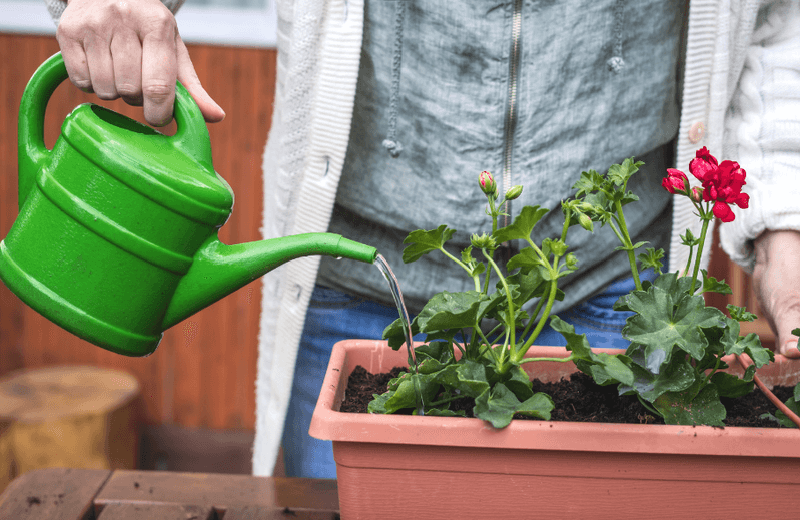
Before you change your watering habits, put a finger in the soil. For container plants, Iowa State Extension advises watering when the soil surface feels dry to the touch.
That tells you more than the calendar does.
Next, look at the pot itself. Geraniums need well-drained conditions, so make sure the drainage holes are open and the potting mix is not soggy and packed down.
Clemson cautions against letting pots sit in water, so empty saucers after you water.
Containers and garden beds behave differently. A small pot in a sunny, windy spot can dry out fast, while a plant in a shaded bed may stay damp for days.
Cool fall weather also slows how quickly soil dries, so the routine that worked in July may be too much now.
Skip any rigid schedule. Pot size, weather, and soil all change how often your plant needs water.
If the mix stays wet for a long time or the lower leaves turn yellow, drainage is worth a closer look. If you see specific signs of pests or disease, deal with those directly rather than treating the plant just because flowers have slowed.
Why fertilizer or hard pruning can backfire
When flowers stall, reaching for plant food feels natural. But more is not always better.
University of Minnesota Extension warns that geraniums may bloom poorly if overfertilized and suggests a soil test for garden beds.
Advice does vary. Iowa State recommends periodic feeding, especially for container plants, which lose nutrients when they are watered often.
That guidance is part of regular care, not a reason to add an extra late-season dose or a bloom booster. If you do feed, follow the label and think about whether your plant is in a bed or a pot.
Pruning is another tempting fix. Georgia Extension describes substantial late-summer pruning as part of a regional revival method.
That does not mean hard pruning suits every type of geranium, or that it works as a last-minute move before frost.
If your plant looks leggy, a light trim of dead or damaged growth is a calmer choice than cutting it back hard. Cold weather may arrive before new growth has time to bloom.
When in doubt, hold off and keep watching how the plant responds.
Before frost, separate bloom care from winter prep
Here is a simple path. Remove spent stalks first.
Then look at light and heat, then check soil and drainage, and skip extra fertilizer or heavy pruning unless you have a clear reason. Give each step a little time before you decide it did not work.
No source we reviewed promises that these checks will bring back flowers before your local frost. They may help a plant keep going, and that is the most honest way to put it.
Saving your plant is a separate goal. Illinois Extension describes overwintering healthy plants as houseplants, bare-root plants, or cuttings.
Move or dig them before frost, but do not expect that to give you more outdoor flowers this season.
A geranium that rests quietly indoors can still bloom again next year.