
Your Lawn Is Still Growing Under All Those Fallen Leaves, So Here’s What To Do Before The Snow
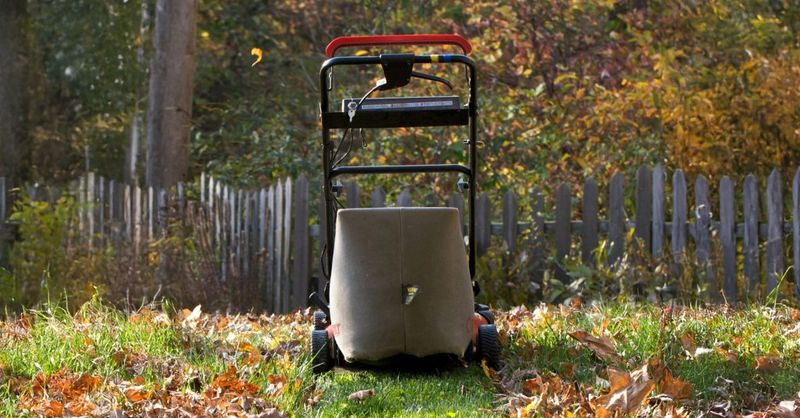
Those leaves covering your yard might look harmless, but a thick blanket can hide your grass from light and air. You may not need to fill a pile of bags to fix it, though.
A few smart passes with the mower can handle many yards, and some leaves are best moved off the grass. Here is how to decide which job your lawn needs before winter settles in.
Manage leaf cover, not every leaf
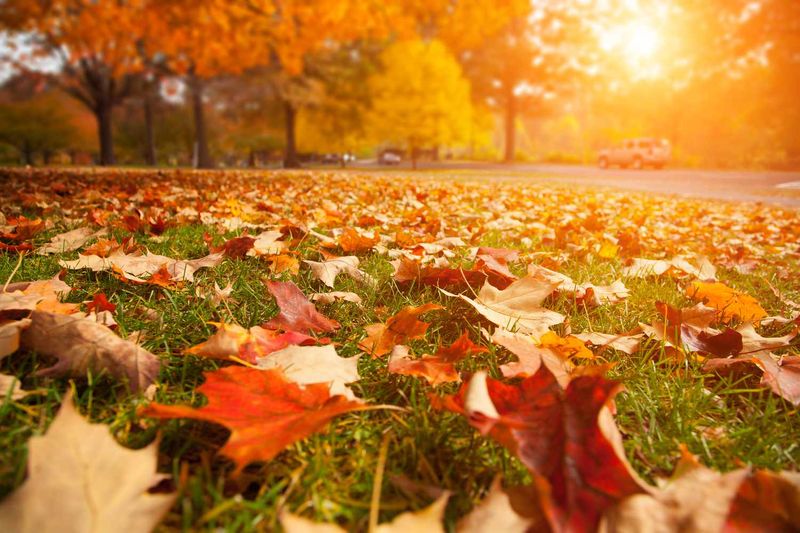
A few leaves on turf are no problem at all. A heavy layer is another story, because it can hide the grass from light and air.
University of Minnesota Extension notes that too much leaf residue can contribute to lawn damage.
Thin, shredded leaves are a different thing. Penn State Extension says a layer of shredded leaves up to about half an inch can benefit turf.
As the small pieces break down, they return organic matter and nutrients to the soil.
Researchers at Michigan State University tested shredded leaves on turf and found benefits or no measured harm. Those Michigan State leaf mulch studies were done under specific conditions, so they do not mean any depth of leaves is safe on every lawn.
That leaves you with a simple choice, not a chore list that never ends. Mulch the amount your lawn can handle, and move the excess somewhere else.
You do not have to rake and bag every leaf, and you do not have to clear every leaf from your property either.
If you have been worried you are doing something wrong by leaving leaves for a few days, relax. Timing and thickness matter far more than perfection.
Check the lawn, pick the right approach for what you see, and keep going from there.
Fall growth depends on the grass
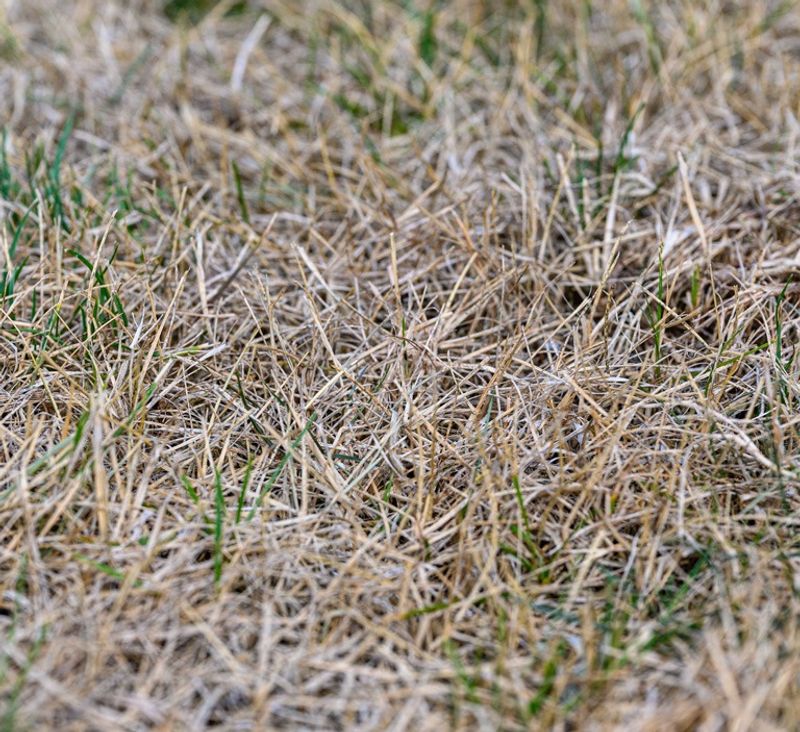
Despite what the title suggests, not every lawn is growing under its leaves right now. It depends on what kind of grass you have and what your weather has been doing.
According to the University of California Statewide IPM Program, cool-season grasses generally thrive in fall, while warm-season grasses may turn dormant as temperatures drop.
Kentucky bluegrass, tall fescue, and perennial ryegrass are common cool-season types. They often stay green and active as nights get cooler.
Bermudagrass and zoysia are warm-season grasses, and they may be slowing down or turning tan by now.
A tan lawn is not always a dying lawn. Dormant warm-season grass is resting, so it is not putting out new growth under the leaves.
Still, a thick mat can stress turf whether it is growing or resting, because it blocks light and holds moisture against the surface.
If you are not sure what you have, look at the color and feel of the blades. Green, firm grass that still needs mowing is probably active.
Tan, brittle grass that has stopped growing is probably dormant. Your local extension office can help you confirm the type and what to expect in your area.
Use visible grass to judge leaf cover
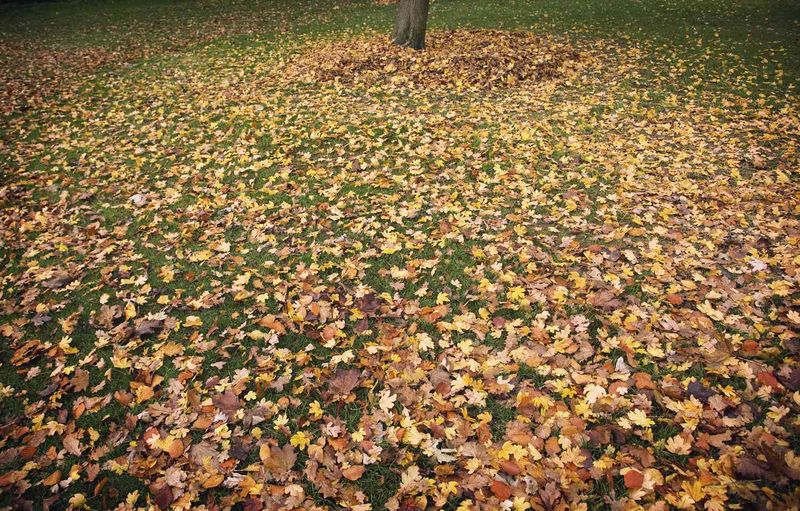
Forget the calendar for a moment and look down at your lawn. The easiest way to judge leaf cover is to see how much grass you can still spot.
University of Minnesota Extension suggests mulching with the mower until only about half the lawn surface is visible, then collecting the rest.
In other words, if you can still see plenty of green or brown turf between the leaves, mowing is likely enough. If the leaves hide more than half the grass, the layer is probably too heavy to shred in place.
That is the point to bring out a rake, a leaf blower, or a mower with a bagger.
Treat this as a handy guideline, not a rule that fits every yard. Leaf size, leaf type, how dry things are, and your grass all change the picture.
Big, flat leaves like maple can mat down faster than small ones.
Penn State Extension also points out that shredding works best when leaves are fairly dry and not too thick. So a quick check of both coverage and dryness gives you a good plan.
When in doubt, mow a small patch first and see how it looks.
Mow dry, manageable leaves
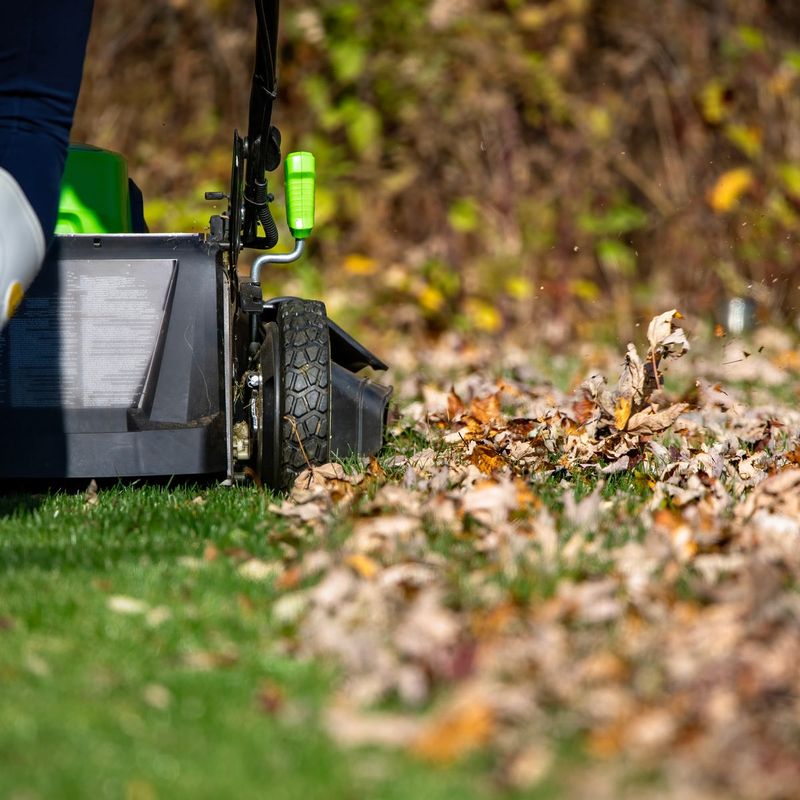
Dry leaves with plenty of grass showing are the best candidates for the mower. A mulching mower does the job well, though a regular mower can shred leaves too.
Penn State Extension notes that a slow pass, and a second pass in a cross direction if needed, makes finer pieces.
Mow regularly while leaves are falling instead of waiting for a big pile. Light, frequent passes are easier on the mower and give you smaller bits.
A heap that has built up for weeks is much harder to shred.
Walk the speed down a notch. Moving slowly gives the blade time to chop each leaf instead of pushing it ahead of the deck.
If you still see whole leaves or large chunks afterward, go over the area again from a different direction.
The goal is leaf pieces small enough to drop down between the grass blades and settle into the turf. You should be able to see grass through the shredded bits when you are done.
If a dense layer is still sitting on top, one pass was not enough.
Some areas may need more than extra passes. Thick drifts along fences or under trees may be better raked or collected.
A single pass is not always enough, and that is perfectly normal.
As for mowing height, grass type and local conditions differ. Check your regional extension advice instead of copying a number from another part of the country.
Move excess leaves off the turf
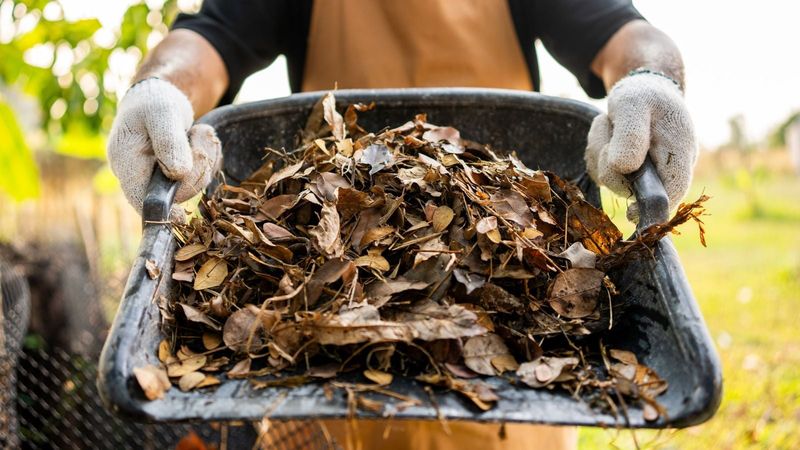
Some leaves are simply too many for the mower to handle. When they are too thick to shred or cover most of the grass, take them off the turf instead of leaving a heavy mat.
University of Minnesota Extension recommends collecting the extra for composting or use elsewhere.
A tarp makes this easier than bagging. Rake leaves onto it, drag it to the spot you want, and dump.
A mower with a bagger works too, and it shreds the leaves as it collects them.
Removed leaves are a useful material, not trash. Penn State Extension suggests composting them or using them in garden beds.
Shredded leaves spread around shrubs and perennials can act as a soft mulch.
Notice that the job here is managing leaves on the lawn. You do not need to clear every leaf from the whole property.
Leaves under shrubs, in woodland corners, or in beds can stay if they are not smothering something you want to keep.
If your yard produces more leaves than your beds can use, check whether your town offers leaf pickup or drop-off. Many do, and it saves you a lot of bagging.
Snow mold is not caused by leaves alone
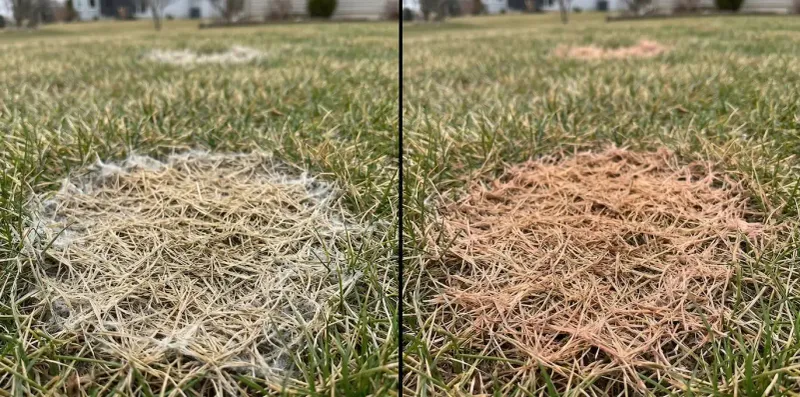
Matted leaves get blamed for snow mold, but the real cause is more complicated. Snow mold is a fungal disease, and its risk depends on winter conditions and how the turf is managed.
Leaves can be one piece of that picture, but they are not the only cause.
According to Penn State’s gray snow mold guidance, the disease typically develops under snow cover. Long periods of snow, wet turf, and other conditions all play a role.
Penn State also suggests cultural steps such as mowing into late fall and avoiding too much fall nitrogen.
Pink snow mold works a little differently. Penn State’s pink snow mold page notes that the related fungus can also cause disease without snow cover.
So a lawn with no snow can still have trouble in cool, damp weather.
Leaves still matter. Minnesota’s extension specialists say that excessive leaf residue can promote turf damage, so clearing a dense layer is a smart move.
Just do not expect any leaf job to guarantee a mold-free spring.
If you do see gray or pinkish matted patches after the snow melts, a light raking can help the grass dry and recover. Many lawns bounce back once conditions improve.
For repeat problems, your local extension office can tell you what is common in your region.
Mow safely and finish with a manageable layer
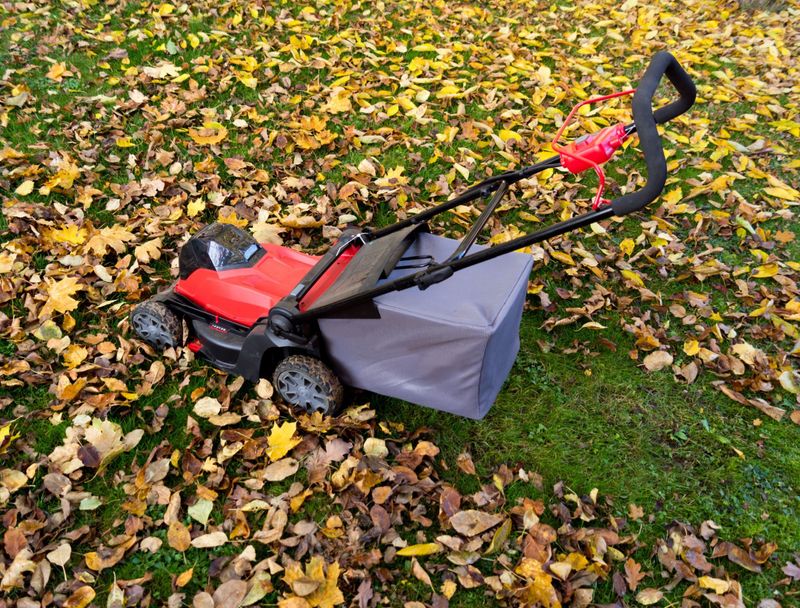
Before you start, walk the lawn and pick up sticks, stones, toys, and hoses. Keep children and bystanders well away while the mower runs.
Read your mower manual so you know how your model handles leaves and clogs.
Skip wet grass and wet leaves. The U.S.
Consumer Product Safety Commission warns that wet mowing can clog the discharge chute and jam the blade. If a clog happens, stop the blade completely before you reach near it.
When the work is done, the plan is simple. Shred dry, moderate cover with the mower, and collect or move the excess, as Penn State and Minnesota extension guidance both describe.
One pass is not the goal, and neither is a perfectly leaf-free property.
Skip any one-size final mowing height too. Your grass type and local weather decide that, so your regional extension office is the best source.
A lawn with grass peeking through a thin layer of crumbled leaves is a good place to stop, and the leaves you moved are already working in your beds.