
Can One Night of Buck Rubbing Seriously Injure a Young North Carolina Tree?
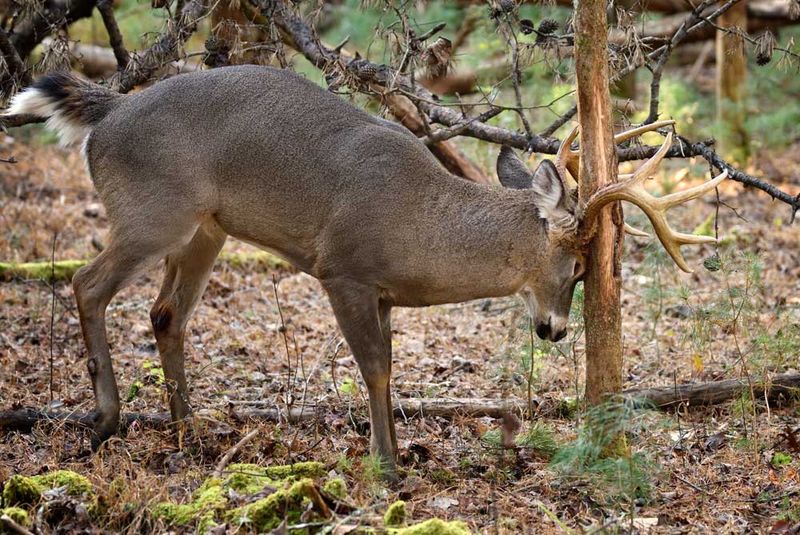
A young tree can look fine on Friday and wear a torn, stripped trunk by Saturday morning. Bucks rub their antlers on saplings in fall, and sometimes the damage is serious.
Whether a tree survives depends on how deep the wound goes and how far around the trunk it reaches. Here is how to read the damage and how to shield your yard trees before a buck finds them.
One night can wound a sapling, but it does not guarantee its death
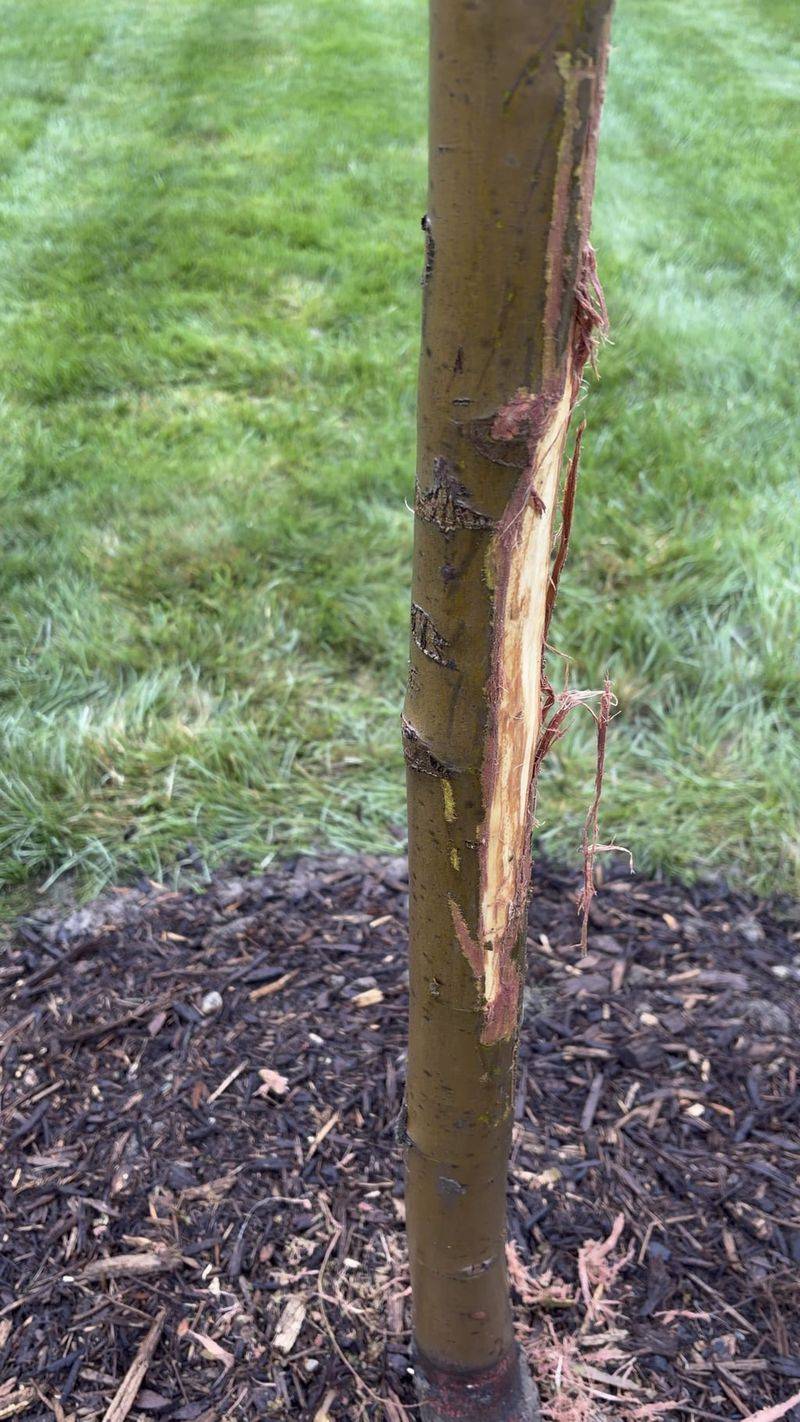
Yes, a buck can do real harm to a young tree in a single night. One homeowner described finding a maple damaged after a male deer rubbed its antlers on it, as shown in an Extension question about a rubbed young maple.
The damage was noticed after one night, which is exactly what makes these stories so alarming.
Still, that report is one person’s experience. It does not show that a single night usually kills a young tree.
Plenty of rubbed saplings keep growing, and some do not, so the story of one yard cannot predict the story of yours.
The useful way to think about it is severity versus certainty. A severe injury is a real possibility, but a certain outcome is something nobody can promise from a quick look at a scraped trunk.
What matters is how much of the tree’s living tissue was harmed, and that is something you can examine rather than guess at.
Extension guidance on treating tree girdling says the outlook depends on the depth of the injury and how much of the trunk it affects. Damage that goes all the way around the trunk is the most serious kind, because it can cut off the tree’s pathways for water and food.
Damage on just one side leaves the other side working.
So if you find a rubbed tree tomorrow, take a breath. Look closely, take photos, and read on for what to check.
Then think about preventing a repeat visit.
Why bucks rub young trees
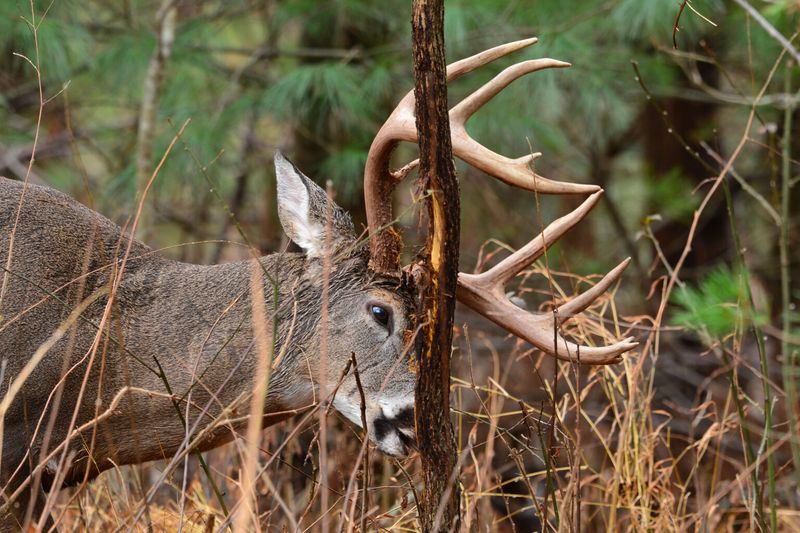
Fall is when bucks start scraping their antlers against trees and limbs. The North Carolina Wildlife Resources Commission explains in its white-tailed deer profile that rubbing around breeding season works as communication with other deer.
A rub leaves a visual mark and a scent, a bit like a message left on a fence post.
You may have heard that bucks rub only to peel off velvet, the soft covering on growing antlers. Removing velvet is part of the picture, but it is not the whole story.
Deer may rub before and during the rut, and the habit seems tied to signaling as well.
Young trees often draw attention because their trunks are about the right size for a buck to work with his antlers. Oklahoma State University Extension, in its guide to controlling deer damage on ornamental plants, notes that bucks rub young trees and limbs in fall.
A thin trunk has little bark and little room for error, so a hard rub can hurt it badly.
That does not mean every buck will target every sapling. Many yards go years without a rub, while a tree on a deer path, a field edge, or near woods may get visited again and again.
Knowing your own property’s deer traffic is half the battle.
For a steward who enjoys seeing deer at the edge of the yard, this is good news in a way. The goal is not to chase wildlife off.
It is simply to keep antlers and trunks from meeting.
Judge the injury, not just the scrape
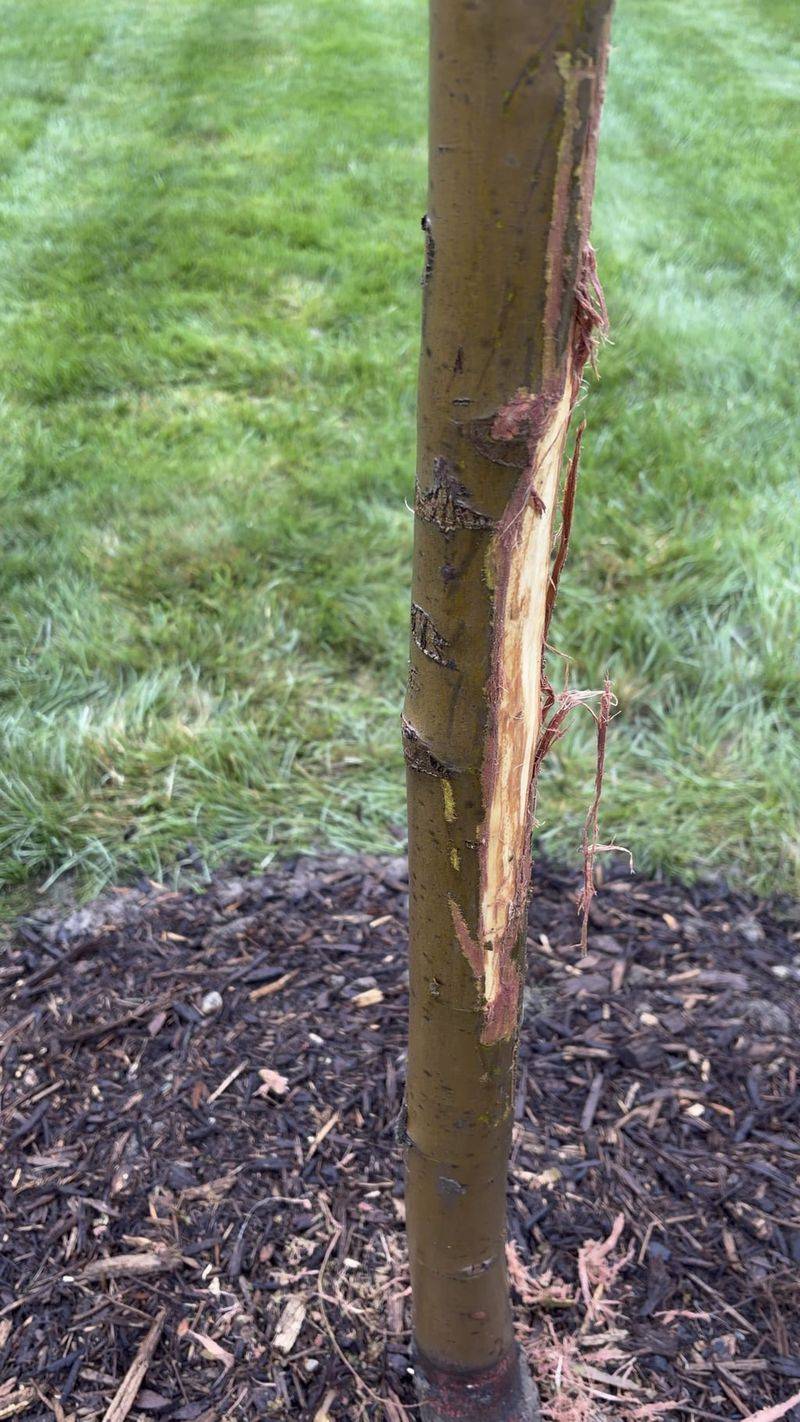
A scrape alone cannot tell you whether a tree will live. Two trees can look similarly torn up from ten feet away, and one may recover while the other declines.
The details are what count.
Extension advice on tree girdling treatment points to two main factors. The first is depth.
Scuffed outer bark is a lesser problem than a wound that has torn through to the wood underneath.
The second is how much of the trunk’s circumference is damaged. Picture the trunk as a ring.
If only a strip on one side is stripped, the rest of the ring can keep carrying water and nutrients, and the tree may heal over time.
Girdling is the serious case. When the injury runs all the way around the trunk, the tree’s pathways are cut, and the outlook is much worse.
Even then, no one can honestly name a date or a certain result from a quick glance.
Here is a practical way to check. Walk all the way around the trunk and note whether any strip of intact bark remains.
Photograph each side, then look again after a few weeks to see how the tree is leafing out or changing.
If the wound is large or you are unsure, call your county Cooperative Extension office. They can look at the species, the injury, and the site.
Until then, avoid wound paints or home remedies, and focus on keeping the deer away from the tree.
North Carolina’s rut timing varies by region, but it does not set a rubbing calendar
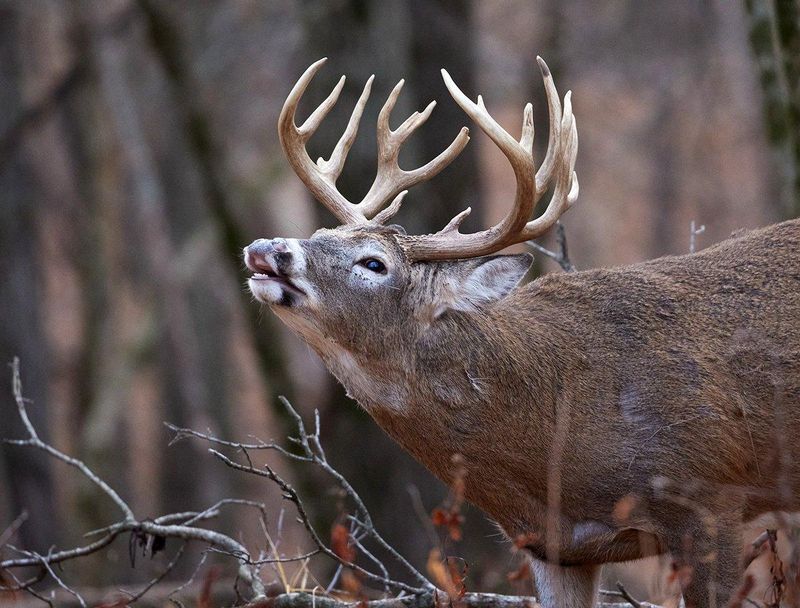
North Carolina stretches from the coast to the mountains, and deer do not all breed at once. The Wildlife Resources Commission gives a broad range for rut timing in its white-tailed deer profile.
It runs from early October on the coast to early December in the mountains, with the Piedmont in between.
That range describes breeding season, not a rubbing schedule. Nobody has verified that rubbing begins or ends on those dates in your county.
Bucks may rub before and during the rut, as noted by Oklahoma State University Extension.
So marking a date on the calendar can give a false sense of safety. A Coastal Plain gardener who waits for October might already be late, and a mountain gardener might guard trees longer than necessary.
Neither can rely on a single statewide deadline.
A better plan is to protect vulnerable trees before rubbing starts where you live. Put guards on in late summer or early fall, well ahead of anything you notice.
Then keep watching for signs on neighbors’ trees, on trails at the woodland edge, or on fence posts.
Fresh rubs often show up as shredded bark with pale, bare wood exposed. If you see one nearby, treat it as a warning for every young tree in your yard.
Your own observations are a more reliable guide than a regional date range.
Use a barrier that blocks antlers from the trunk
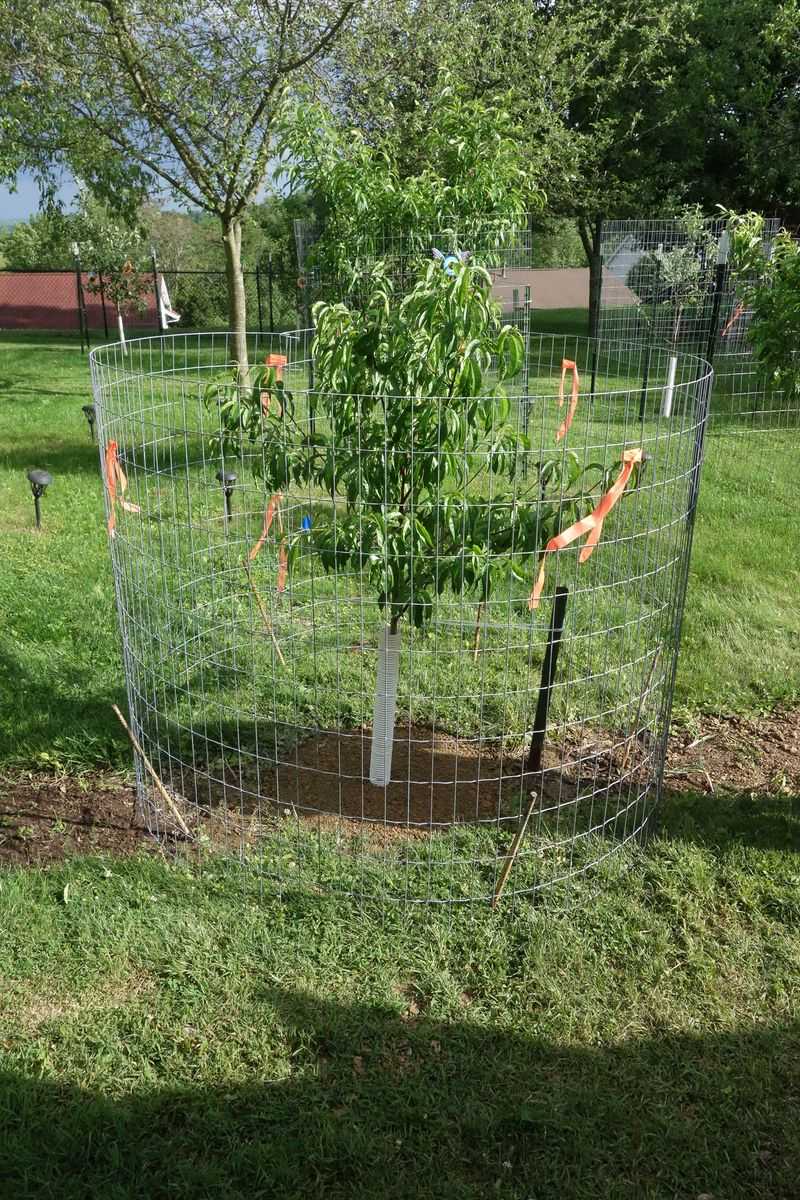
When it comes to antler rubbing, the fix is physical. A barrier must stop a buck’s antlers from touching the trunk.
University of Maryland Extension, in its deer damage guidance, lists fencing and tree protectors as effective choices, including plastic guards, tubes, or woven wire cylinders about four feet tall.
That same source says repellents do not control antler rubbing. Sprays and scent products may be tempting, since they are easy to apply on a weekend.
But a buck rubbing for communication is not tasting the bark, so a bad flavor does not stop him.
It also helps to separate two kinds of products. Many thin trunk wraps are sold mainly to reduce chewing by rodents or rabbits.
Texas A&M Forest Service, in its page on temporary browse protection, describes cages and protectors as different tools from those lighter guards.
A flimsy spiral wrap may protect a trunk from a nibbling rabbit but fold under a buck’s pushing antlers. A sturdy cage or rigid protector keeps the tree out of reach.
That is the item to look for when rubbing is your worry.
If you already use a rabbit guard on a sapling, you do not need to remove it. Consider adding a stronger cage around it, with enough space that nothing presses on the bark.
The aim is simple: the buck meets metal or rigid plastic, never your tree.
Build a wire cage with height and clearance
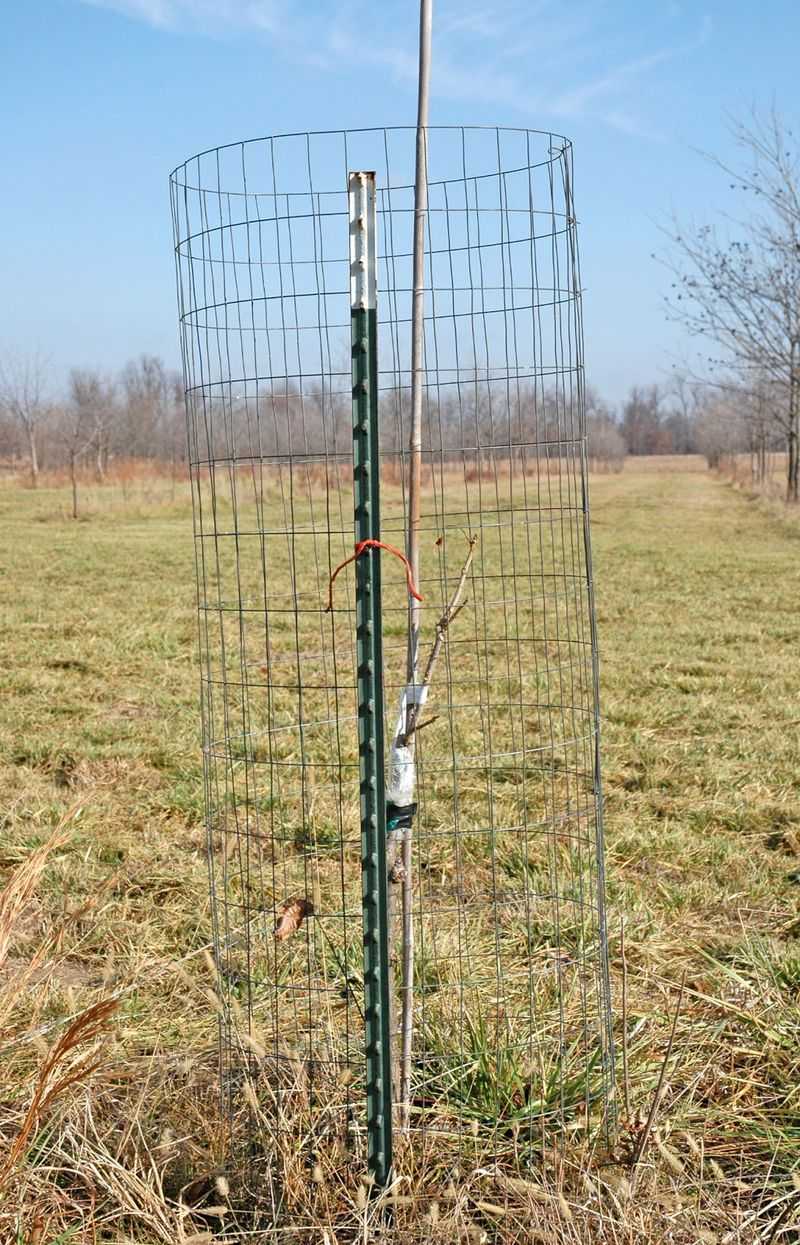
A wire cage is one of the simplest barriers to build at home. Texas A&M Forest Service gives a practical starting point on its temporary browse protection page: welded wire at least 48 inches tall and at least 12 inches across around the sapling, secured with posts.
Think of those numbers as a starting point, not a promise. A larger tree, a busy deer path, or a windy slope may call for a taller or wider cage, or stronger posts.
Your own yard will tell you what works.
Height matters because a buck swings his head and antlers up and down against the trunk. Width matters because the wire needs room around the tree, so antlers pressing on the cage cannot push wire into the bark.
A tight cage can fail by turning into the very thing that scrapes the trunk.
Here is a simple way to set one up. Roll the wire into a cylinder, center it on the tree, and clip the seam closed.
Drive stakes or posts on the outside, then fasten the cage to them so it stays upright and does not lean.
Give it a firm shove when you finish. If it wobbles, add another post or sink them deeper.
A steady cage with open space around the trunk does its job quietly, and it lets you enjoy the deer from a distance.
Inspect and adjust guards as the tree grows
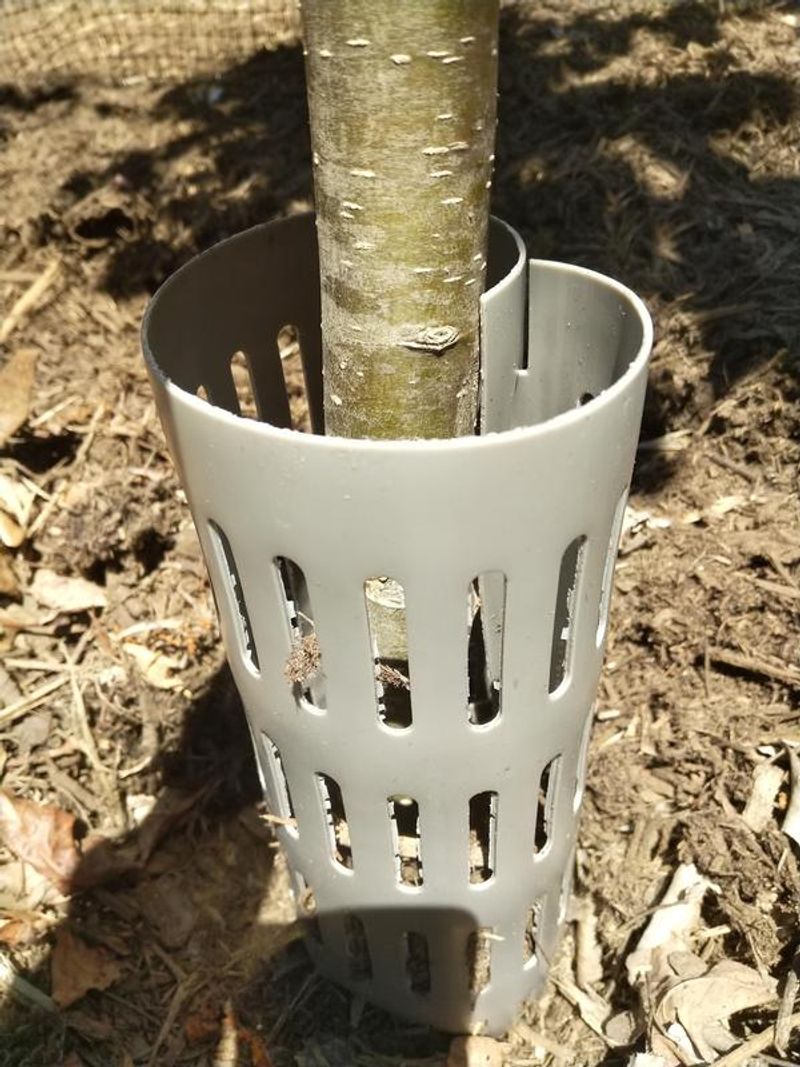
A guard that fits a sapling today may pinch it in a couple of years. Check each one seasonally for three things: stability, clearance, and constriction.
Does it stand firm, is there space around the trunk, and is anything pressing into the bark?
Texas A&M Forest Service, on its temporary browse protection page, advises checking for constriction and removing tree tubes once trees outgrow them. Its trunk guard advice also says to adjust guards as needed.
Loosen ties, widen the cage, or replace a guard that has become snug.
Make it a habit. Look at your guards when you rake leaves, mow in spring, and again before fall begins.
Put protection in place before rubbing starts in your area, and keep watching it instead of leaving it forever.
A good guard is a loan to the tree, not a permanent fixture. Return it when the trunk is ready to stand on its own.