
Jasmine on the Windowsill: A Fragrant Bedtime Ritual, Not a Proven Sleep Aid
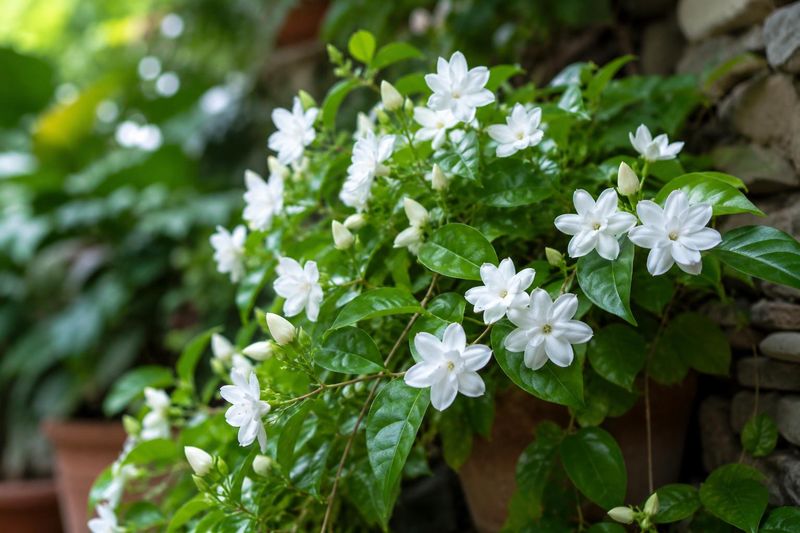
Some jasmine flowers open as the sun goes down and fill a room with a sweet, heavy scent. Plenty of people wonder if that fragrance could become part of a calm evening routine.
The science is smaller and messier than the buzz suggests, but there is still room to enjoy a blooming plant. Here is what researchers have actually measured, and how to decide if a jasmine belongs near your bed.
Some jasmine flowers open around dusk and release a complex scent
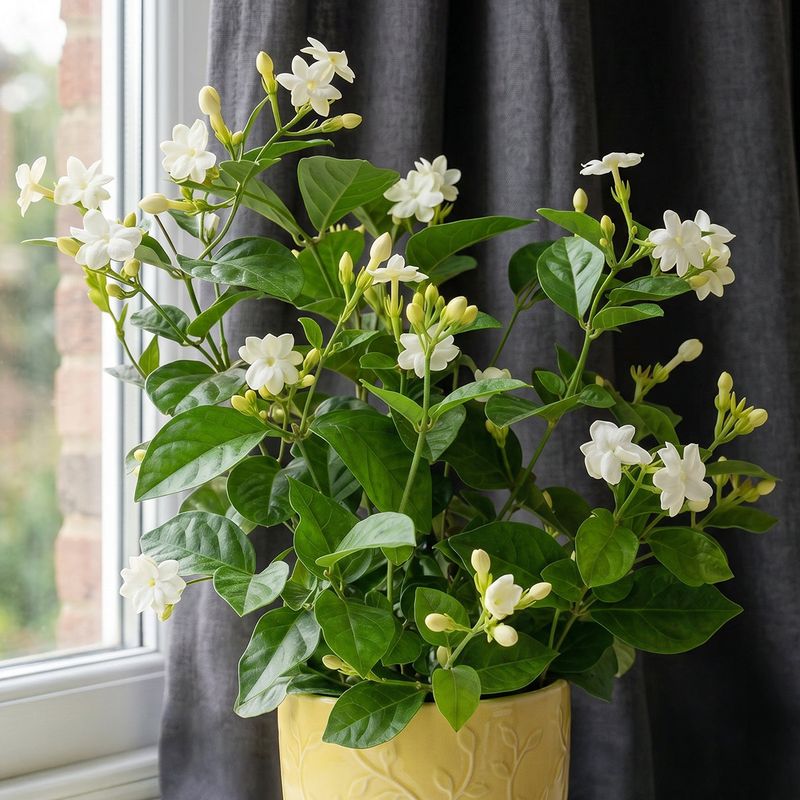
Picture a pot of Arabian jasmine on a sill at the end of the day. In a study of Jasminum sambac, researchers watched flowers open around dusk and collected the scent they gave off.
The mix included linalool, benzyl acetate, and alpha-farnesene, among other compounds.
The amounts did not stay the same. Emissions shifted as each flower aged, and they also changed between light and dark hours.
So a flower is not a steady scent machine. It follows a schedule that depends on its stage of life and the time of day.
Notice what this finding covers. It describes the plant in the species and conditions that were studied.
It does not promise that every jasmine in every living room will smell strong at night, and it says nothing about how a person feels while breathing that scent.
If your plant is a different species, or it is young, or it sits in a dim spot, the pattern could look quite different. Your nose is a decent test.
Check the flowers in the evening a few times and see whether you notice anything at all.
That small bit of observing is also a nice way to get to know your plant. You learn when buds swell, when blooms open, and how long each flower lasts.
None of that requires any health claim to be worthwhile.
Jasmine fragrance varies by species and compound
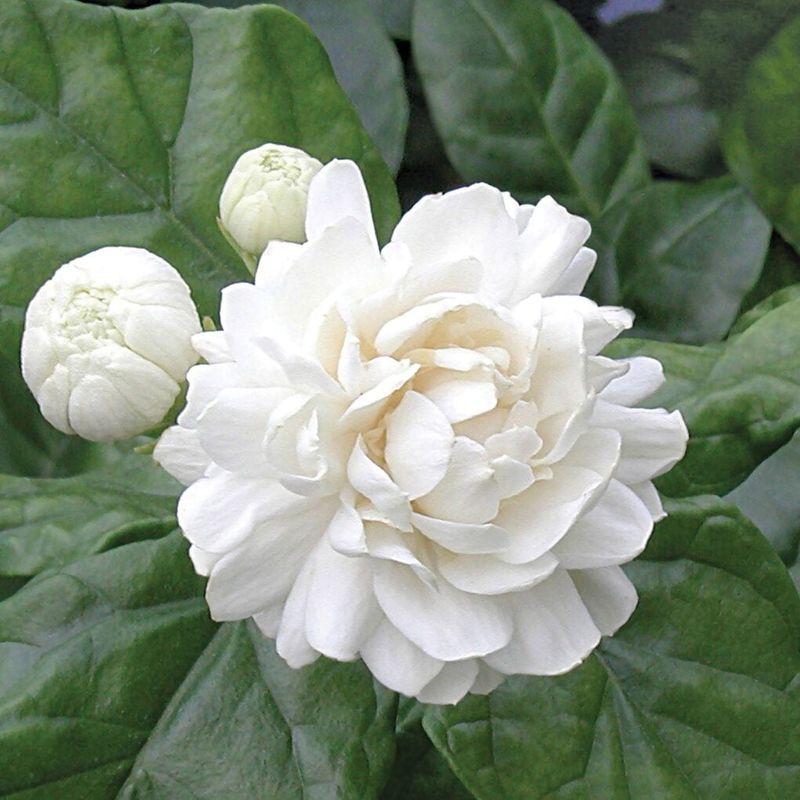
Linalool gets most of the attention, but it is only one voice in a chorus. Jasmine scent is a blend of many compounds.
Research comparing cultivated Jasminum species found that their volatile profiles are not the same, so the smell of one jasmine can differ from another.
Timing is also less settled than you might expect. The newer work on Jasminum sambac reports nighttime variation in the scent profile.
Yet a 2017 study reported linalool emissions staying relatively constant across the daily light-dark period.
Those two reports do not match neatly, and that is fine. It means nobody can say that jasmine sends out a linalool surge every evening.
Different methods, plants, and conditions may explain the gap.
There is one more gap worth knowing about. Scientists measured what flowers release.
They did not show that this release makes a person relax. A scent reading from a flower is one thing, and a human response is another.
For a home grower, the takeaway is practical. Treat your jasmine as its own plant with its own perfume, and judge it by whether you like how it smells.
A brief odor study offers only limited clues about relaxation
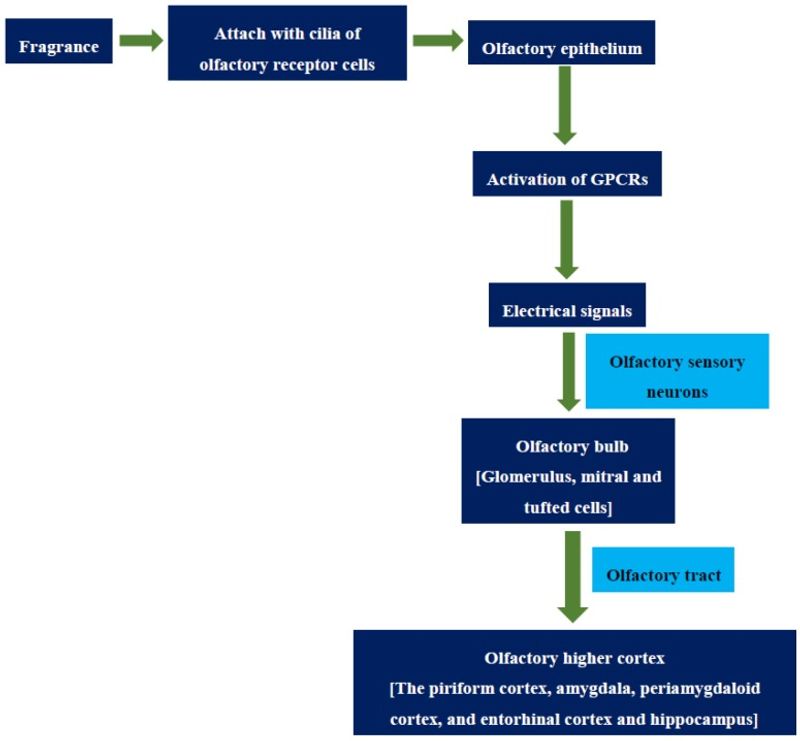
Back in 2005, scientists ran a small test with 24 healthy volunteers. In the 2005 experiment, people breathed jasmine-tea odor or isolated linalool for five minutes.
The team then looked at heart-rate-related measures and mood.
They reported some short-term changes in both. That sounds promising, and it is a fair hint that scent can nudge how people feel for a few minutes.
It is still a hint, not a verdict.
Look at what was left out. Nobody tested sleep.
Nobody used a living plant. And nobody measured how much scent a potted jasmine on a bedroom sill would actually produce.
The odor in the lab was controlled and delivered on purpose. A real windowsill plant puts out a scent that rises and falls, drifts with air currents, and fades across the room.
Those are very different situations.
So think of this study as a small door cracked open. It suggests scent exposure can affect mood for a short stretch.
It does not show that your plant will do the same thing at 10 p.m.
The sleep experiment tested odor, not a bedroom plant
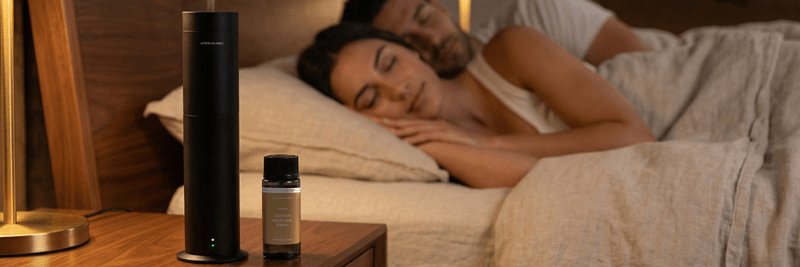
Sleep is where people most want an answer, so it helps to look closely at the small sleep experiment. It exposed 20 participants to jasmine odor during sleep over three nights.
The researchers reported better sleep efficiency and less movement.
Total sleep time did not go up, though. People did not sleep longer.
That detail matters, because many readers hear the word sleep and assume more hours.
Twenty people over three nights is a modest amount of data. A result like that can point researchers toward bigger studies, but it cannot show a dependable effect.
It also cannot tell us who would benefit and who would not.
The other big difference is the delivery. The odor in the experiment was presented as part of the study design.
A flowering houseplant is a different source with an unknown, changing output.
Put simply, this work does not show that jasmine reliably improves sleep, and it does not show that a houseplant works as a sleep aid. If sleep is a real struggle for you, talk with a clinician rather than counting on a plant.
Try it as a personal ritual, not a prescribed dose
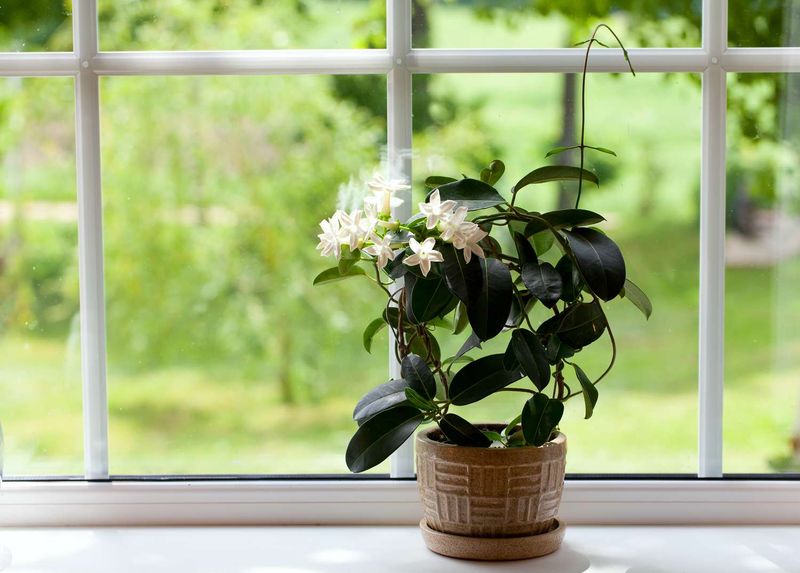
If you already love the smell of a flowering jasmine, nothing stops you from folding it into your evening. Water the plant, check for new buds, take a slow breath near a bloom, then turn off the lamp.
The ritual may be pleasant simply because it is quiet and routine.
Pay attention to your own reaction. Some nights the scent may feel soothing, and other nights it may feel like too much.
Your experience is the useful data here.
Notice what you will not find in this advice: a distance from the bed, a number of minutes, or a target dose. None exists.
The plant study on Jasminum sambac did not measure bedroom air, the brief odor test did not use a plant, and the sleep experiment did not link plant placement to sleep.
That leaves you free to experiment gently. Try the plant in the room for a week, then somewhere else for a week, and keep whichever feels better.
Keep your expectations modest and your enjoyment real.
Indoor flowering depends on the plant and its light
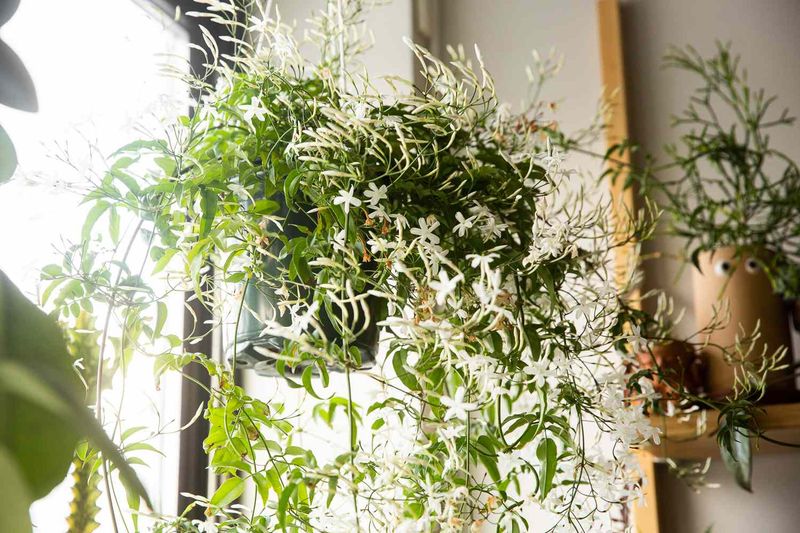
Before you fuss over care, figure out what you actually own. Jasmine is a loose label.
Some jasmines have little or no scent, and some plants with jasmine in the common name are not true Jasminum at all. Check the tag or compare leaves and flowers with a reliable plant guide.
Light is usually the make-or-break factor for blooms. Clemson Extension gives a benchmark for indoor jasmines of at least four hours of direct sun daily, or 14 to 16 hours of strong artificial light.
Care differs by species, so treat that as a starting point.
If your plant grows leaves but no flowers, light is the first thing to suspect. Try a sunnier window or add a grow light on a timer.
Dim corners tend to give you a green plant and few buds.
Keep the goal clear. These steps help a plant stay healthy and flower.
They do not guarantee a strong scent, and they do not turn the plant into a sleep tool.
A healthy jasmine with a few fragrant blooms is a satisfying win on its own.
Enjoy the fragrance only if it suits you
Scent is personal, and not everyone reacts kindly. The EPA notes that fragrances can trigger asthma episodes or other adverse effects in some sensitive people.
If you have asthma or fragrance sensitivity, go carefully.
Headache, a tight chest, a stuffy nose, or a restless night are all reasons to act. Move the plant to another room, open a window, or stop the exposure.
A strong or constant smell is not relaxing for everyone.
Here is where the science lands. Some jasmine flowers give off a complex scent, and the Jasminum sambac work shows that.
Limited studies, including the 2005 odor test and the small sleep experiment, report preliminary effects from controlled odor.
What none of it shows is a sleep benefit from a windowsill plant. Keep jasmine if it makes you smile, and let the flowers be their own reward.