
Snake Plant by a Cold Winter Window? How to Tell Leaf Injury From Root Rot
You spot a droopy or yellowing snake plant on a chilly windowsill, and your stomach drops. It is easy to blame the cold glass and fear the roots are rotting.
The truth is a bit more specific, and sorting it out takes just a few checks you can do today with items you already own.
Cold glass can injure leaves; wet soil is the main root-rot concern
Here is the good news first: a drafty window is not shown to cause root rot in your snake plant. Two different problems often get mixed up, and pulling them apart is the key to saving your plant.
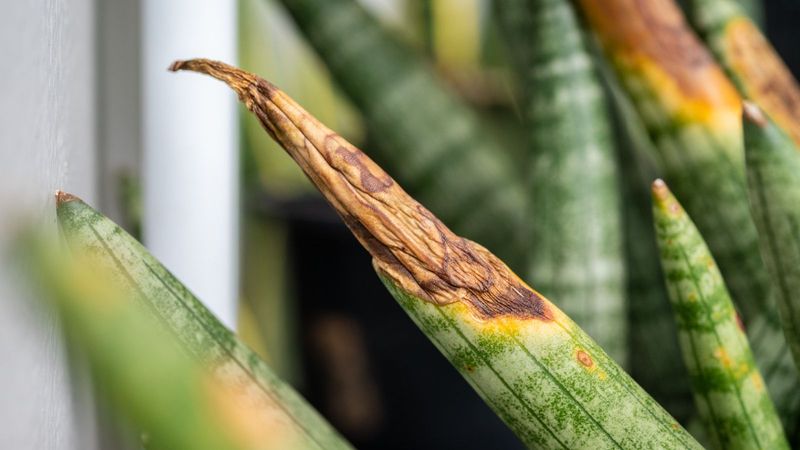
Cold can hurt the leaves. An American Phytopathological Society source reports that Sansevieria exposed to about 36 to 46 degrees Fahrenheit can develop white, sunken lesions on the leaves that show up later.
That is chilling injury to the foliage. It is not proof that the roots are rotting, and it is not a precise cutoff that applies to every home or every plant.
Root rot has a different main trigger. Iowa State Extension links root rots in houseplants to roots sitting in wet, poorly drained mix, often after too much watering.
Wet soil, not cold air itself, is the bigger worry below the surface.
So why do the two seem connected? A plant parked by a cold window in winter may also be getting watered on the same old schedule while it uses less water.
The location and the watering habit can show up together, but that does not make the window the direct cause of rot.
Think of it as two separate checklists. One is about leaf damage from cold glass and drafts.
The other is about how wet the mix stays and whether the pot drains. The next sections walk you through both, and none of the fixes require buying much.
Why winter makes watering worth a second look
Picture a snake plant in July, soaking up long days and warm air. Now picture the same plant in January, in a cooler room with weaker light.
It is the same plant, but it probably is not drinking the same amount.
Snake plants are succulents, which means their thick leaves store water. North Carolina State Extension notes that overwatering can cause the roots to rot.
These plants are currently classed as Dracaena trifasciata, though many people still know them by the older name Sansevieria.
Winter often brings slower growth, shorter days, and cooler rooms. For many homes, that means the potting mix stays damp longer than it does in summer.
Not every home follows that pattern, though. A plant near a heating vent may dry out much faster than one in a chilly spare room.
That is why a copy-and-paste routine can backfire. Watering every week because that is what you did in summer could keep the mix wet when the plant needs far less.
Guidance on frequency also varies. Mississippi State Extension offers a very long interval for these plants, while other sources simply say to wait until the soil dries.
The takeaway is simple. Stop asking what day it is and start asking what is going on in the pot.
Light, room temperature, pot type, and mix all change how fast things dry, so look at your actual plant before you reach for the watering can.
What do the leaves and roots tell you?
A drooping or yellowing snake plant looks scary, but leaves alone cannot tell you what is wrong. Cold injury, watering mistakes, and other stresses can all look alike from above.
A short step-by-step check gives you real answers.
Start by noting what the leaves are doing. Are they wilting, yellowing, or showing pale sunken patches?
Write it down or snap a photo so you can track changes.
Next, check the mix before you add any water. Push a finger or a wooden skewer deep into the pot.
University of Maryland Extension points out that plants with damaged roots can wilt even when the soil is still wet, so watering a wilted plant automatically can make things worse.
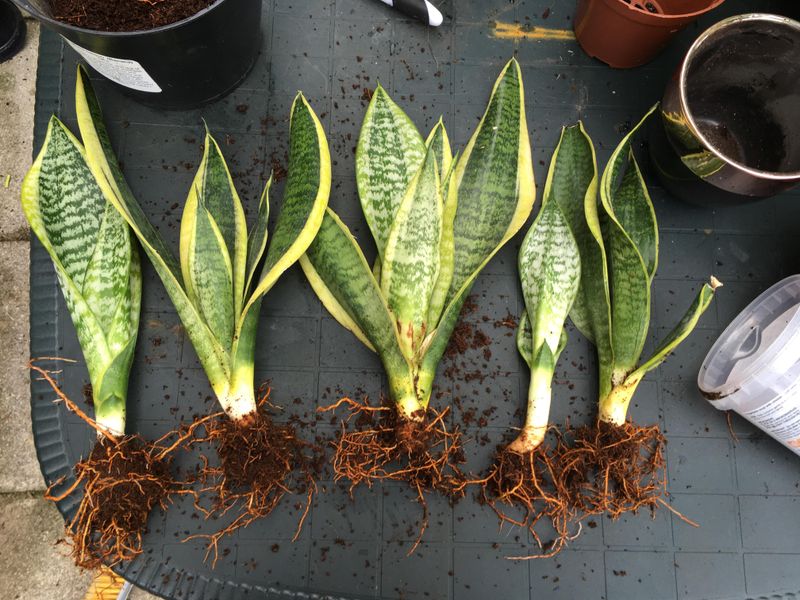
If the mix is soggy and the plant looks poor, it is time to look at the roots. Slide the plant out of the pot and see what you have.
Iowa State Extension describes warning signs such as yellowing, dieback, and brown, soft, or mushy roots, while healthy roots are generally firm and white.
Here is how to read what you find. Firm white roots in dry mix point away from rot, and cold or another stress may be the culprit.
Mushy brown roots in wet, poorly draining mix make rot far more likely. Either way, you will be making your next move based on what you saw, not on a guess.
Move the plant out of the cold zone
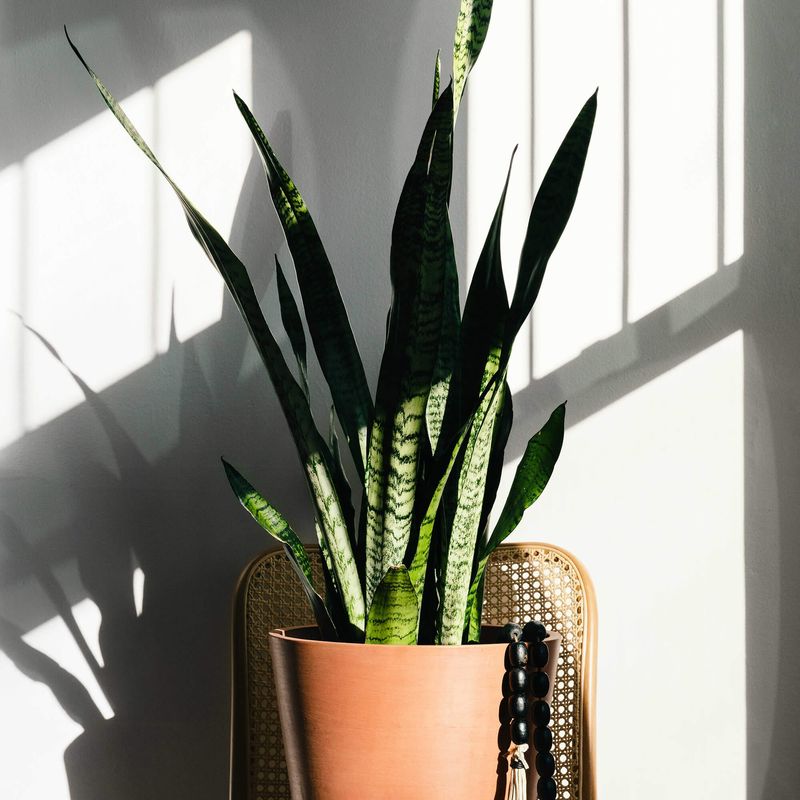
Shifting your snake plant is one of the easiest things you can do, and it costs nothing. Slide it so the leaves are not touching the glass, and keep it out of any blast of cold air from a door or a leaky frame.
University of Vermont Extension says cold glass can damage foliage, and Oregon State Extension also advises keeping houseplants away from cold glass. A few inches of space can make a real difference on a freezing night.
Keep light in mind while you rearrange. A dim corner trades one problem for another, so aim for a spot that is still bright, such as a table beside the window or a shelf just back from the glass.
A thin curtain can also act as a buffer on the coldest nights.
There is a limit to what this move does. It lowers the chance of cold injury on the leaves.
It does not tell you whether the roots are healthy, and it will not cure rot that has already started. Temperature advice varies from source to source, so use common sense: if the glass feels icy to your hand, it is too cold for leaves resting against it.
Water by soil dryness, not the calendar
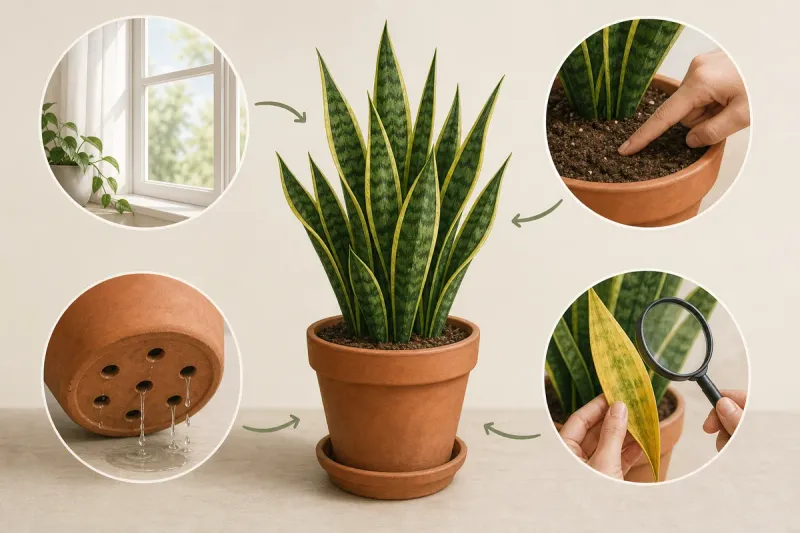
Forget the weekly watering reminder on your phone. Your snake plant cares about how dry the mix is, not what day of the week it is.
Before watering, test the pot. Poke a finger or skewer a couple of inches down, and if it comes out damp or has soil clinging to it, wait.
North Carolina State Extension guidance is to let the soil dry between waterings.
Drainage matters just as much. Use a pot with holes in the bottom, and after you water, empty any water that collects in the saucer.
Oregon State Extension stresses picking containers that drain so roots are not left sitting in water.
How fast a pot dries depends on many things: light, room temperature, pot size and material, and the mix itself. A small clay pot in a bright, warm room dries faster than a big plastic one in a cool corner.
That is likely why advice ranges so widely, and Mississippi State Extension mentions watering as seldom as every month or two for these plants.
Treat any number like that as a starting point and not a rule. In winter, you may find you are checking often and watering rarely.
That pattern is normal, and it keeps your roots out of trouble.
Confirmed rot calls for a root-and-pot reset
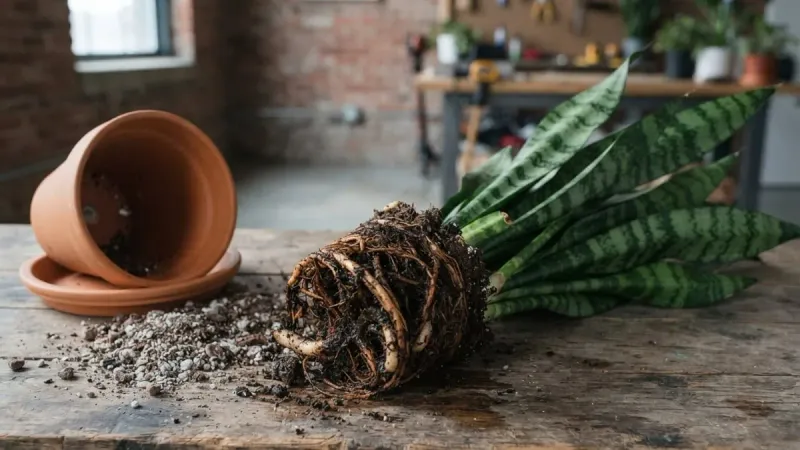
If your inspection turned up brown, soft, or mushy roots in soggy mix, rot is likely. Moving the plant to a nicer spot will not fix that.
The roots and the growing conditions are what need attention.
Start by taking the plant out of the pot and removing the old mix from the roots. Trim away the roots that are soft and brown, and keep the firm, white ones.
Be careful not to let the plant sit wet again while you work.
Wisconsin Extension advises repotting into fresh, pasteurized commercial potting mix, in a pot that has drainage. Do not reuse the old mix, since it is where the problem developed.
After repotting, hold off on heavy watering and let the new mix show you when it is truly dry. Keep the plant in bright light and away from cold glass and drafts as a sensible bonus.
No one can promise a rescued plant will bounce back, but healthy roots and a well-draining pot give it the best shot.
A snake plant forgives a lot, but it never forgives wet feet.