
Saved Amaryllis Bulb Rebloom: Why a Rest Starting This Week Won’t Guarantee Christmas Flowers
You tucked your amaryllis away last winter, and now the holidays are getting close. Plenty of gardeners hope a quick rest period will bring red and white blooms right on time.
The real timeline is a bit tighter than the popular promise, but your bulb is far from a lost cause. Here is how to size up your plant, care for it, and set honest expectations for this Christmas and the years ahead.
Can a bulb starting rest this week bloom by Christmas?
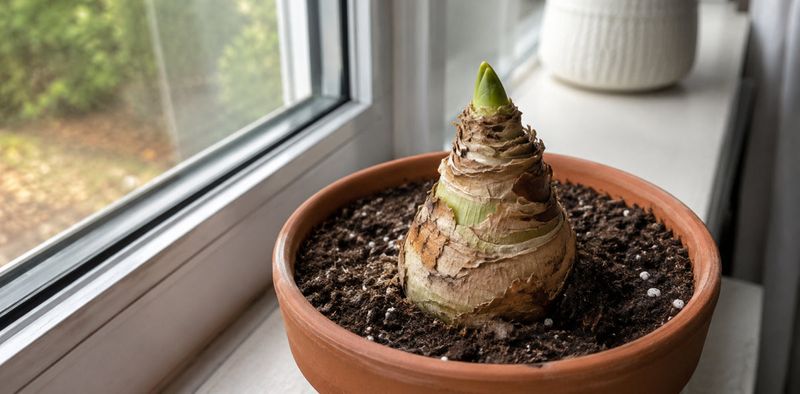
Here is the plain truth: a bulb that only begins its rest period on October 19 should not be promised flowers by Christmas. Christmas is 67 days away.
Illinois Extension guidance calls for about 8 to 12 weeks of rest, and flowers then need roughly another 4 to 6 weeks to develop.
Do the math and the gap shows up fast. Even the shortest version of that schedule adds up to about 12 weeks, which is 84 days.
Some sources run longer, and University of New Hampshire Extension describes a similar rest-then-grow pattern.
Published schedules do differ. Maryland Extension, for example, suggests a shorter rest of 6 to 8 weeks at cooler temperatures.
Even so, no schedule is a universal deadline, and bloom estimates are never guarantees. A bulb starting rest now is simply working against a calendar that is too short for a dependable Christmas show.
A bulb that has already finished its rest is in a different spot. It may still have time to flower by the holiday, though that depends on how much energy it has stored.
If your plant has not started resting yet, think of this season as setting up strong blooms for later, not as a failure.
The bulb’s next bloom depends partly on the energy it stored
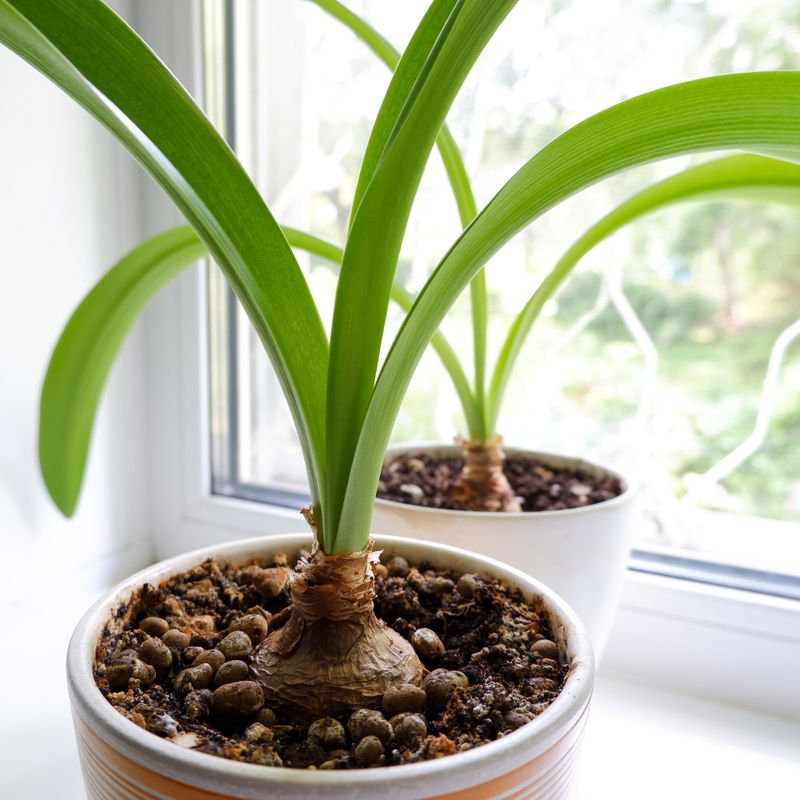
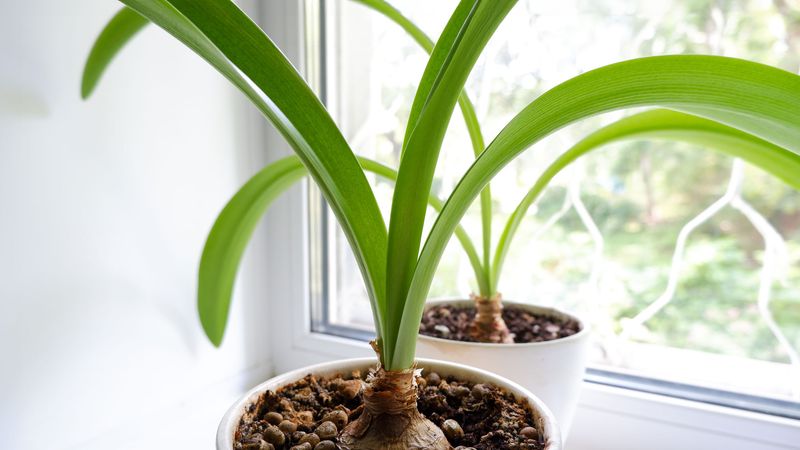
Think of the leaves as solar panels that recharge the bulb. After the flowers fade, green foliage keeps making food and sending it back down into the bulb.
University of Minnesota Extension links poor growth after blooming with a bulb that fails to send up a flower stalk, and says forcing works only when the bulb has enough stored energy.
So keep the healthy green leaves. Place the pot in bright light, water when the top of the soil feels dry, and feed regularly while the plant is actively growing.
University of Wisconsin-Madison Extension describes this same approach of keeping the plant growing after flowering.
Maybe last year you let the pot sit in a dim corner, or the leaves flopped over and you worried. That does not make a rebloom impossible.
A bulb that gets good light and steady care now can still build up reserves.
If your pot spent summer outdoors, bring it inside before frost. Minnesota Extension warns that these plants will not survive freezing temperatures, so do not wait for the first cold snap to decide.
Read the bulb’s current state before choosing a schedule
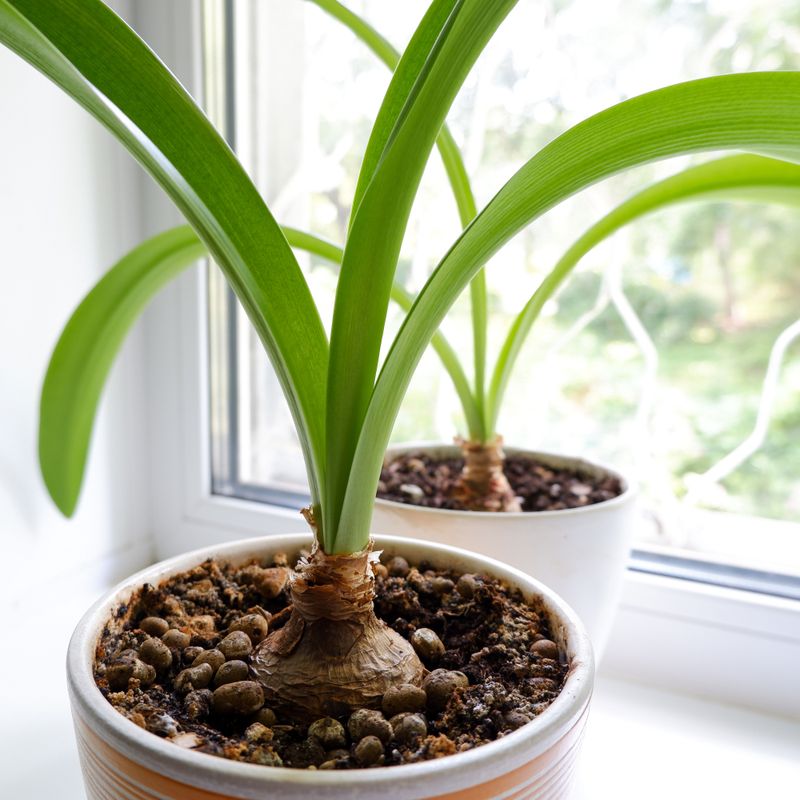
One calendar will not fit every pot on your shelf. Start by looking at what your bulb is doing right now.
Is it covered in healthy green leaves, are the leaves turning yellow and drying, or has the pot been dry and leafless for weeks?
A bulb with green leaves is actively growing and still storing energy. Yellowing, drying leaves signal that the plant is heading into a natural rest.
A bulb that has been dormant for a couple of months may be close to waking up, which puts it on a very different timeline from the other two.
It also helps to know the plant itself. The holiday favorite we call amaryllis is usually Hippeastrum, not a true Amaryllis.
That is just a name mix-up, and the care advice here applies to the plant you have.
Gardeners often hear that a forced rest is a must. Sources do not fully agree.
Illinois Extension, Wisconsin Extension, and Minnesota Extension all describe plants that can rebloom while kept growing. A rest is one tool that can help manage when the flowers appear.
So if your bulb is green and growing, you do not have to force it to sleep. You can simply keep caring for it and let it bloom on its own schedule.
Give a resting bulb a cool, dark, dry period
When a bulb is ready for a rest, the routine is simple. Move the pot to a cool, dark, dry spot, stop watering, and let the leaves yellow or dry on their own before removing them.
Never cut healthy green leaves to push the bulb into dormancy, because those leaves are still feeding it.
Every few weeks, peek at the bulb. Look for soft spots, mold, or a bad smell, which can point to rot.
A firm bulb with papery skin is doing fine.
Published temperatures vary, so treat them as different protocols rather than one exact rule. Illinois Extension suggests 45 to 55°F, while Minnesota Extension lists 50 to 60°F.
Iowa State Extension gives 50 to 55°F.
Length differs too. Many sources describe 8 to 12 weeks of rest, but Maryland Extension recommends 6 to 8 weeks at 40 to 50°F for holiday timing.
A cool closet, an unheated spare room, or a basement shelf can work if it stays in the range you choose. Pick one protocol, note your start date on a sticky note, and stick with it.
Resume warmth and light after the rest
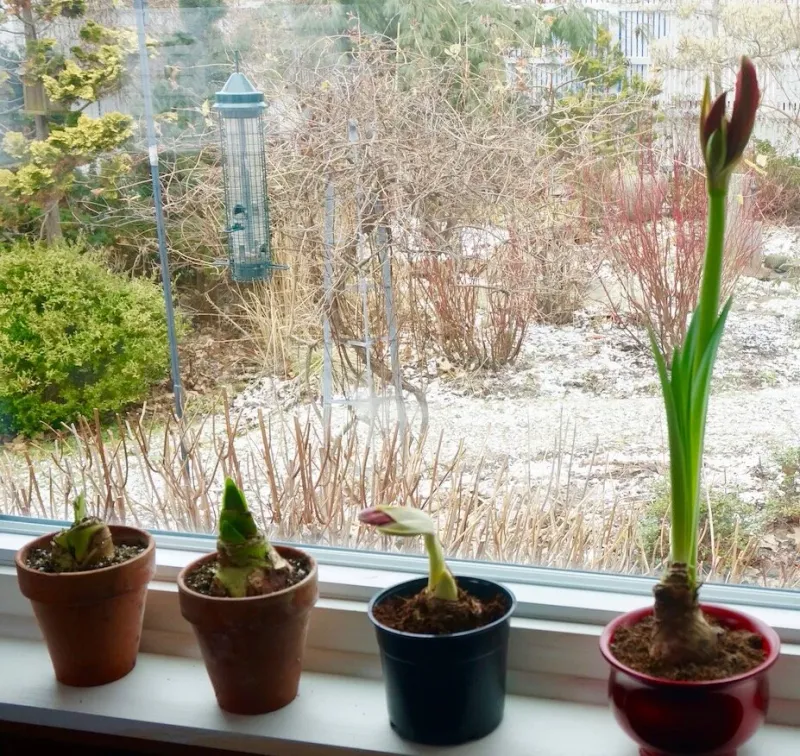
Once the rest is over, waking the bulb up is the fun part. Move the pot to a bright, warmer spot and start watering again.
A small amount at first is plenty, since the bulb has no leaves yet to use much water.
Then comes the waiting. Published estimates put flower development at about 4 to 6 weeks, according to Illinois Extension.
Another Illinois Extension article on forcing amaryllis allows for 4 to 8 weeks.
These numbers are estimates, not promises. Room temperature, light, and the bulb itself all change the pace.
A flower stalk may show up early on one bulb and weeks later on its neighbor.
Energy matters here as well. Minnesota Extension says forcing works only if the bulb has enough stored energy.
If your plant had a good growing season, it has a better shot at sending up a stalk.
Turn the pot a quarter turn every few days so the stalk grows straight. If nothing appears after several weeks, keep the plant growing with good light and feeding rather than assuming it has failed.
A bulb that has already rested has a different holiday outlook
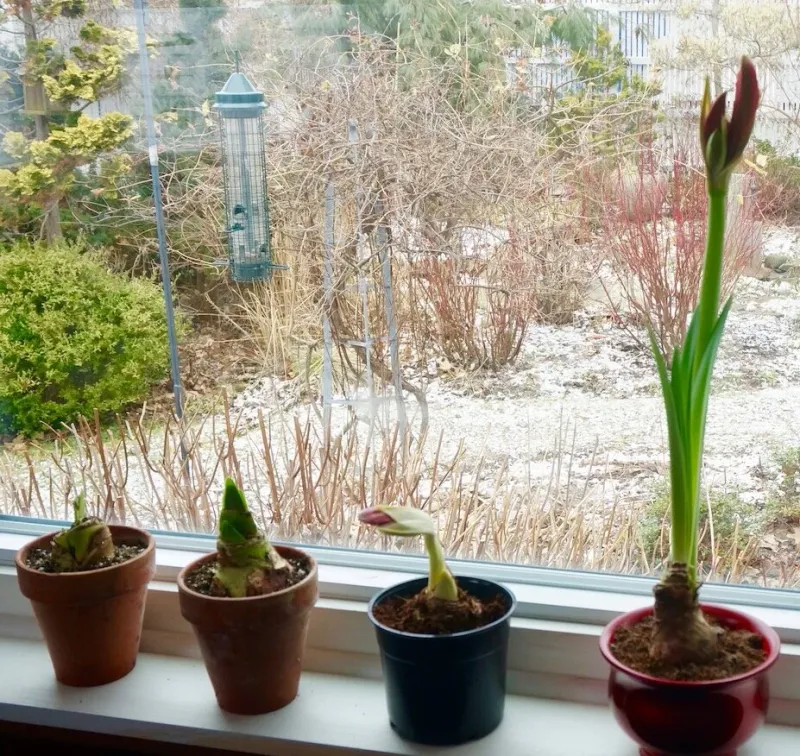
If your bulb finished a rest earlier this fall, you are in a better position than someone starting today. Christmas may still be within reach.
The catch is that neither the timing nor the bloom is guaranteed.
Many bulbs wake up on their own around now. Wisconsin Extension notes that growth often resumes in late October or November, and flowering typically follows about 4 to 6 weeks after a plant comes out of dormancy.
Count forward from the day you restart watering and you can see whether December 25 is realistic.
Say your bulb restarted in late October. Six weeks later is early December, which leaves some cushion.
A bulb restarted in mid-November is tighter, and one restarted in December is likely to bloom after the holiday.
Remember that Illinois Extension and Minnesota Extension both treat these as estimates, and stored energy plays a part. There is no trick to speed up the calendar, so enjoy the flowers whenever they arrive.
A bulb that starts rest on October 19 should be expected to bloom later, perhaps in late winter or early spring. That is a perfectly good outcome.
Protect the bulb and plan beyond Christmas
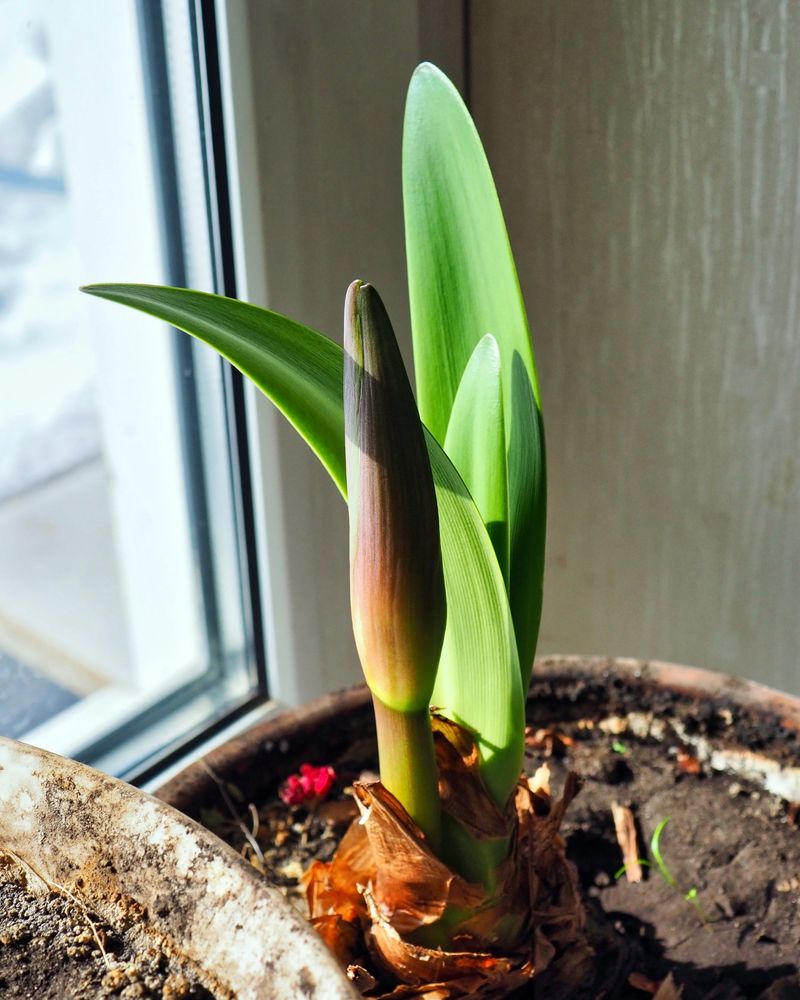
Keep the healthy leaves while the bulb is growing, since they are what recharge it. Use a controlled rest only if it suits your bulb’s condition and your timing goal.
Minnesota Extension and Wisconsin Extension both describe rebloom as something a well-cared-for bulb can do.
Judge your success by the years ahead, not one December. A bulb that blooms in February is still a win.
A saved bulb is a long game, and the flowers tend to show up for the gardener who is patient.