
Don’t Let Frost Take Your Geraniums: Try to Carry Them Through Winter Indoors
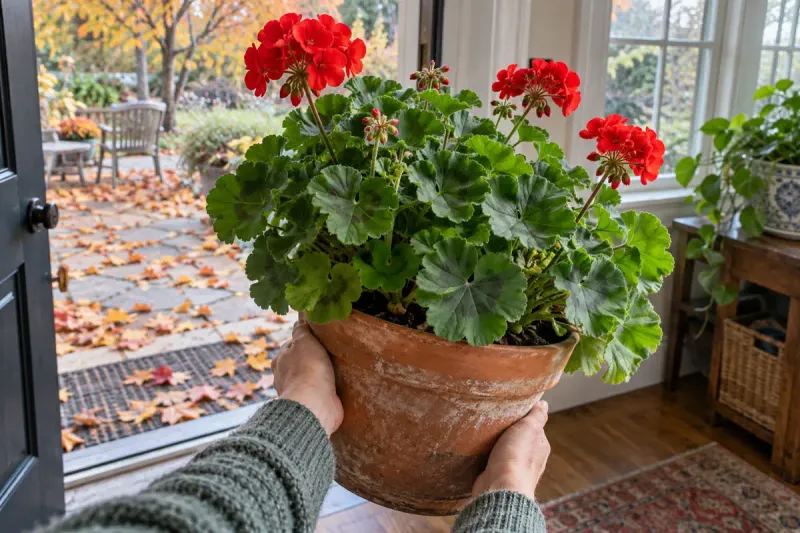
That red or pink geranium on your porch has been blooming all summer, and one cold night could end it. You do not have to say goodbye just yet.
With a little planning before the first frost, you can try to carry your plant through winter indoors. Nothing is guaranteed, but a few simple steps give it a real shot.
Bring tender geraniums in before frost
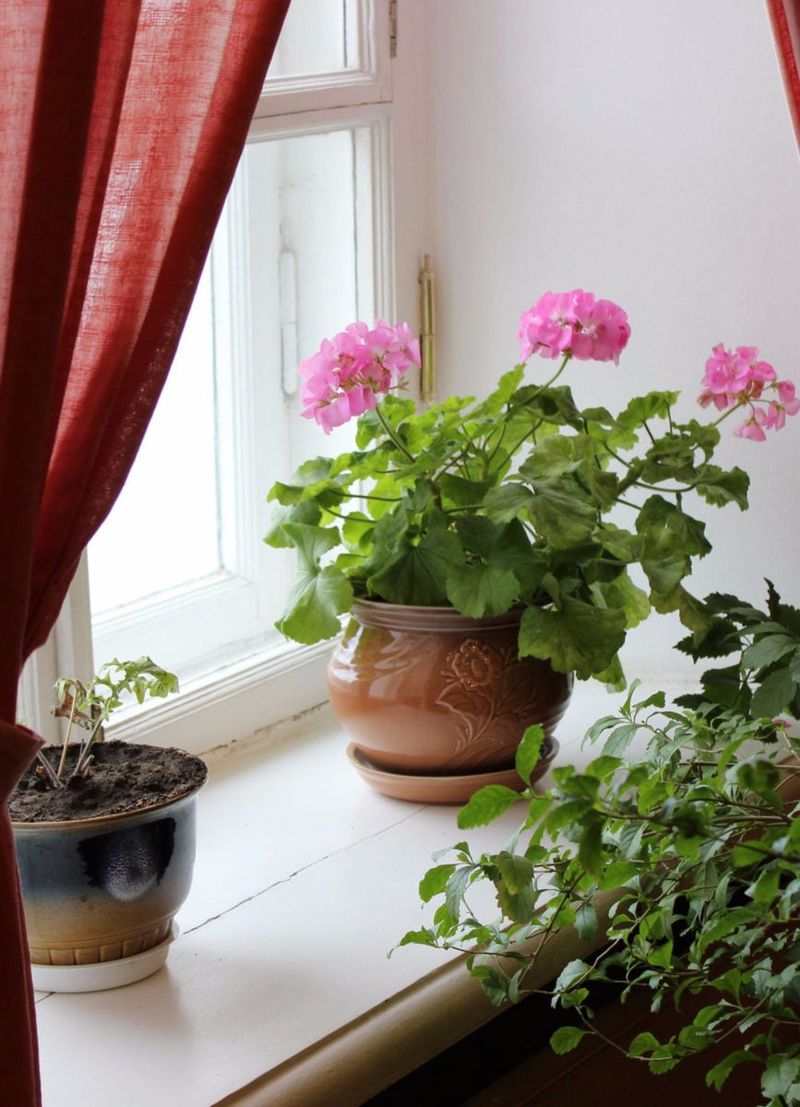
Timing matters most here. Move or dig up your plants before the first fall frost, never after it.
Frost can damage tender plants overnight, so keep an eye on the forecast once nights start getting chilly.
A quick note on names. The flowering plants most of us call geraniums are tender Pelargonium, and this advice is for them.
Hardy Geranium species, often called cranesbills, are different plants that stay in the garden all winter, as University of Illinois Extension explains.
You have three ways to go, and extension programs including Iowa State describe all of them. You can pot up the whole plant and keep it as a houseplant, which is the most straightforward choice.
You can take stem cuttings if window space is tight. Or you can store bare-root plants in a cool, dry place, which is trickier.
No method promises survival, and none promises flowers by spring. Pick the one that fits your space, and consider using more than one so you have a backup.
Pot up the whole plant for a straightforward start
Before anything comes indoors, give it a close look. Check stems and the undersides of leaves for pests, and look for signs of disease like spots or rot.
Guidance from University of Minnesota Extension says to inspect plants before they join your other houseplants. If a plant is badly infested or diseased, toss it rather than risk spreading problems inside.
For healthy plants, lift them carefully before frost. Set each one in a clean container with drainage holes and fresh potting mix.
Old garden soil can carry pests and disease indoors, so skip it.
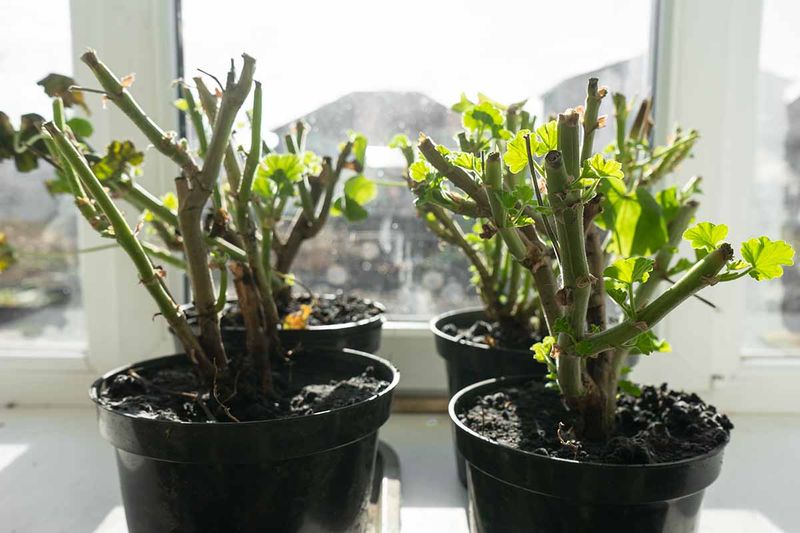
Next comes a haircut. Illinois Extension suggests trimming the plant back by about one-third to one-half.
It feels harsh, but a smaller plant is easier for roots to support while it adjusts to life indoors.
Water the pot thoroughly once, then let the extra drain away. Place it in the brightest spot you have, such as a south-facing window, or under a grow light if your windows are dim.
This is a straightforward option, not the only one and not a sure thing. Some leaves may yellow or drop in the first weeks, and that is common after a move.
Use bright light and careful watering through winter
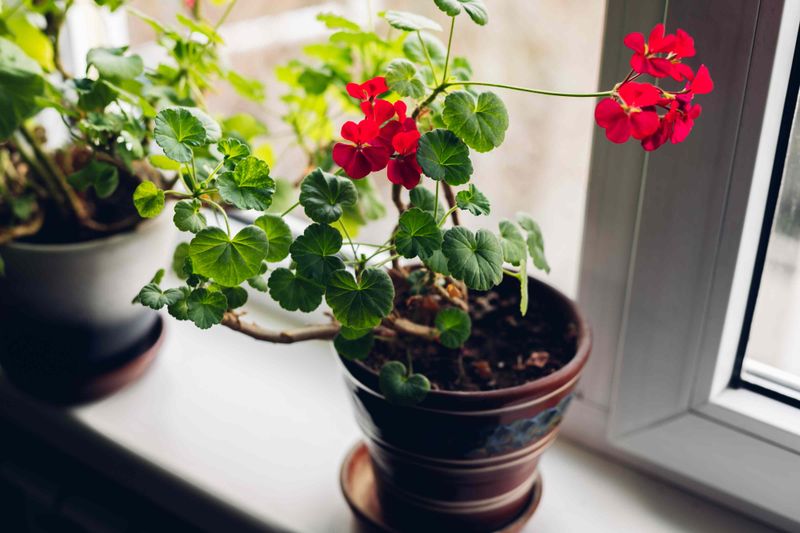
Picture a sunny windowsill in January. That is where your potted geranium wants to be, or under a grow light if daylight is short.
Bright light keeps growth compact, and it improves the odds of flowers later on.
Temperatures are a range, not a rule. Illinois Extension points to about 65°F, while Iowa State suggests 65 to 70°F days with cooler nights.
A cool-to-moderate room works, and a spot above a heating vent does not.
Skip the watering schedule. Poke a finger into the mix, and water when it feels dry, then let the extra drain out of the pot.
Soggy mix can lead to rot, so an empty saucer is your friend.
Watch the stems. If your plant stretches out with long gaps between leaves, it is likely getting too little light or sitting somewhere too warm.
Moving it closer to the window or adding a light can help.
Leaf drop after the move is not proof of failure, as University of Minnesota Extension notes. If the stems stay firm and green, keep going.
Flowers in winter are a bonus. Light, variety, and plant condition all play a part, so a plant that simply stays alive until spring has done its job.
Save space by rooting healthy stem-tip cuttings
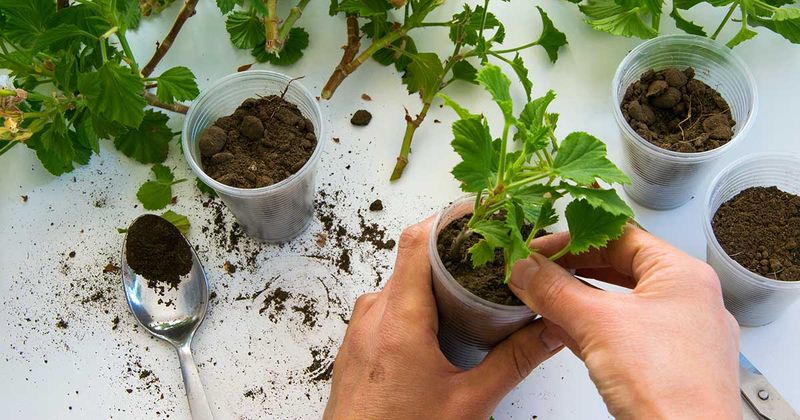
Short on windowsill room? Cuttings let you save the plant’s offspring without hauling the whole thing inside.
A few small pots take far less space than a big one.
Iowa State’s steps are simple. Take healthy stem tips about 3 to 4 inches long, and pick ones without flowers or signs of pests.
Strip off the lower leaves so the bare stem can go into the mix.
Push each cutting into a moist rooting medium, then set the pots in bright light out of direct sun. Direct rays can scorch tender cuttings before roots form, so a bright spot near a window is better than a hot sill.
Be patient. Rooting may take 6 to 8 weeks, according to Iowa State Extension.
Not every cutting will take, so start more than you think you need.
Take the cuttings before frost, while the parent plant is still healthy. That way you also have a backup if you try another method with the original.
Try bare-root storage only if you have suitable conditions
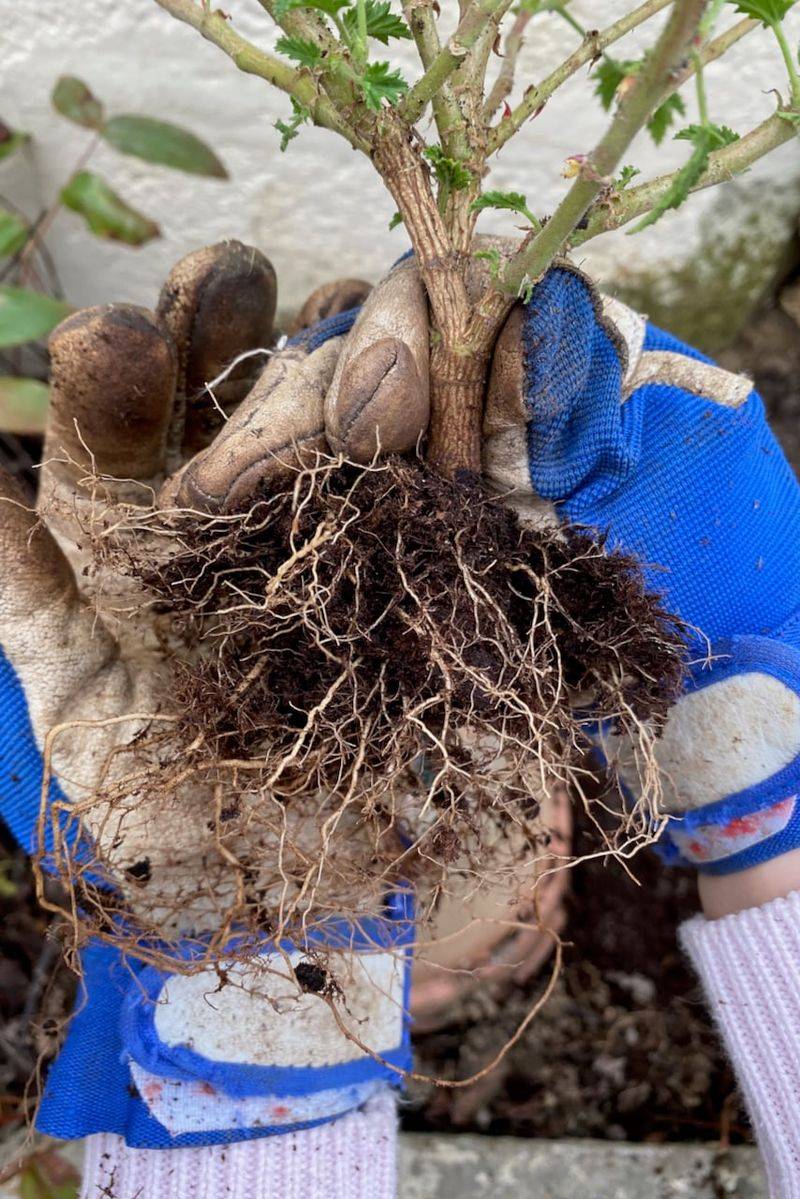
Got a cool, dry, frost-free corner like an unheated basement? Then bare-root storage is possible.
It is the more challenging route, with results that vary, so it suits gardeners who have the right spot and can spare a few plants for experiments.
Extension sources give a range of about 45 to 55°F. Warmer than that, and plants may sprout weak growth in the dark.
Colder or freezing, and they may not make it.
Expect the plants to look rough. Leaves may fall, and stem tips may die back, as Illinois Extension describes.
That alone does not mean the plant is gone.
Instructions differ on whether to soak the roots and how often. Wisconsin Extension calls the method challenging and suggests trying several plants or taking backup cuttings.
Because advice varies, check the guidance from your own state’s extension office rather than trusting one schedule.
If you are nervous about losing a favorite, this is not the safest bet. Pair it with a few cuttings or a potted plant.
Restart stored plants in spring without expecting instant blooms
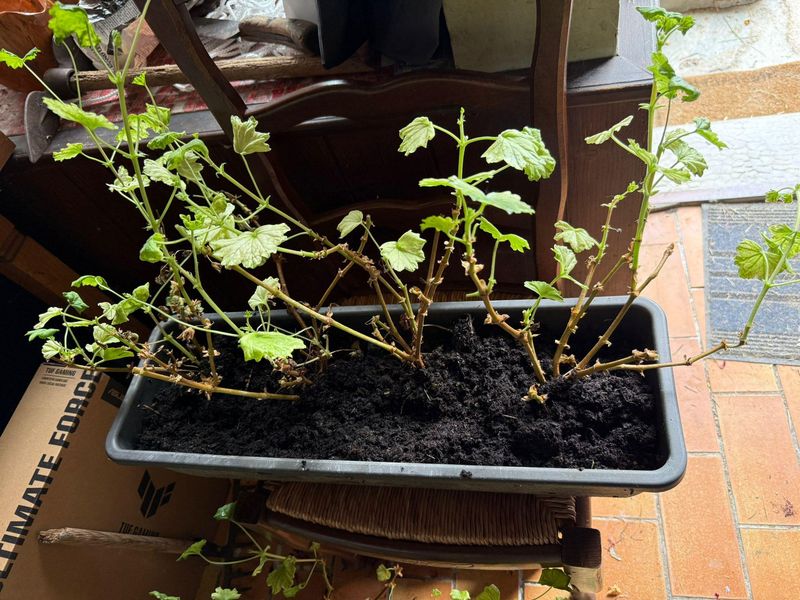
Early spring is wake-up time for stored plants. Take them out, and clear away any dead or shriveled material.
Then cut back to firm, live tissue, which should look green or at least solid inside.
Pot each plant in fresh mix, water it, and put it in good light. Illinois Extension outlines this restart routine, and Iowa State’s advice is similar.
New growth can take a while to show, so give it time before deciding anything.
A bare, bumpy stick with a few dead tips is not a lost cause. Scratch or trim a little, and if you find firm tissue, keep watering when the mix feels dry.
Only soft, mushy, or fully dried-out stems are a sign to let go.
Surviving winter and blooming are two different goals. As Minnesota Extension notes, light and variety affect flowering, so do not count on flowers by a set date.
A green, growing plant in April is already a win. Blooms are the encore.