
These Underrated North Carolina Native Shrubs Hold Their Berries All Winter In Full Sun Along Your Fence Line
By February, most of the wild food in a North Carolina yard is long gone, and hungry bluebirds and robins start searching hard for a meal. A sunny fence line is one of the best spots on your property to fix that problem.
The right native shrubs planted there will hold bright berries through the coldest weeks, feed the birds you love, and push out invasive plants that do nothing for local wildlife. Here are seven tough, overlooked natives that earn their spot along your fence.
1. Possumhaw Holly (Ilex decidua)
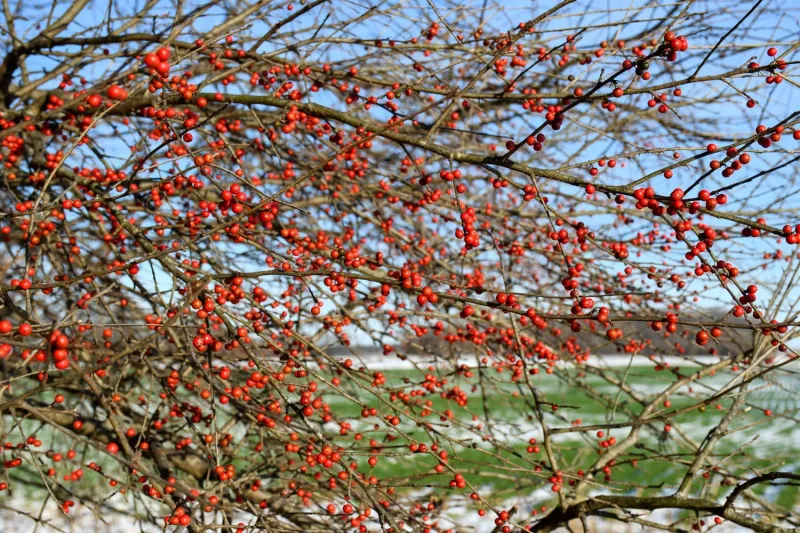
Picture a gray February morning when every other shrub looks dead, and then a burst of red lights up the fence. Possumhaw holly drops its leaves in fall, leaving bare silver branches loaded with berries.
It is one of the most overlooked natives in the state, and it deserves far better.
Here is its secret weapon. Birds tend to skip the berries early in the season because they are less tasty at first.
That means the fruit is still hanging around in February and March, right when bluebirds, mockingbirds, and wild turkeys are running out of options.
Plants grow about 7 to 15 feet tall with a rounded, spreading crown, so a few spaced along a fence make a loose, natural screen. Give them full sun for the heaviest berry crop, though they handle some shade.
Like all hollies, you need a male plant nearby for the females to fruit.
In spring, the small flowers feed native bees, including a specialist bee called Colletes banksi. Possumhaw also hosts Henry’s Elfin butterfly caterpillars, and it holds up fairly well against deer browsing.
2. Yaupon Holly (Ilex vomitoria)
Cedar waxwings travel in flocks, and when they find a yaupon loaded with fruit, they can strip it in an afternoon. Watching that happen from your kitchen window is pure winter entertainment.
Few native shrubs pull in birds quite like this one.
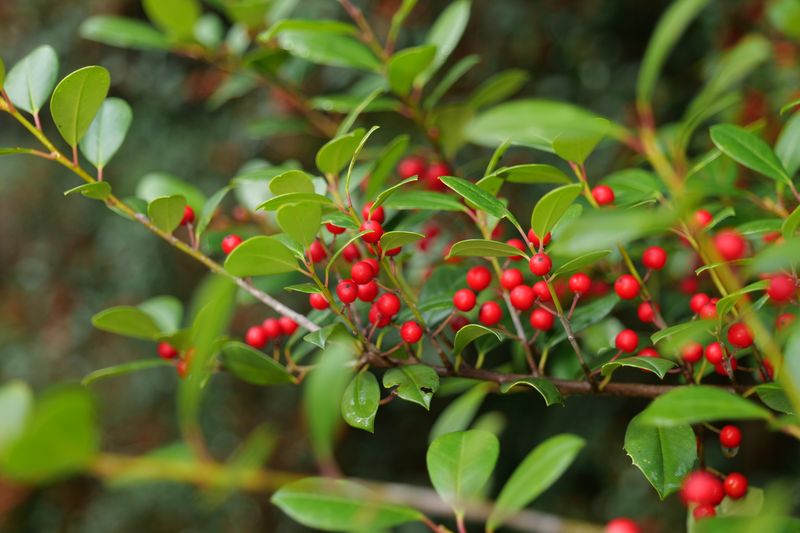
Yaupon is a broadleaf evergreen that grows quickly, often 10 to 20 feet tall, forming thick screens that block views year-round. If that is too big for your space, dwarf and weeping forms are easy to find at NC nurseries.
It shrugs off heat, salt spray, drought, and blazing sun, which makes it a coastal favorite that also thrives in the Piedmont.
Fun fact: yaupon is the only native North American plant with caffeine in its leaves. Native peoples brewed it into a tea long before coffee arrived.
The dense branches give small birds safe nesting and roosting cover, and the flowers feed bees in spring. Deer rarely touch it.
If you are pulling out invasive privet or nandina along a fence, yaupon is a smart swap that fills the same role without spreading into the woods.
3. Winterberry Holly (Ilex verticillata)
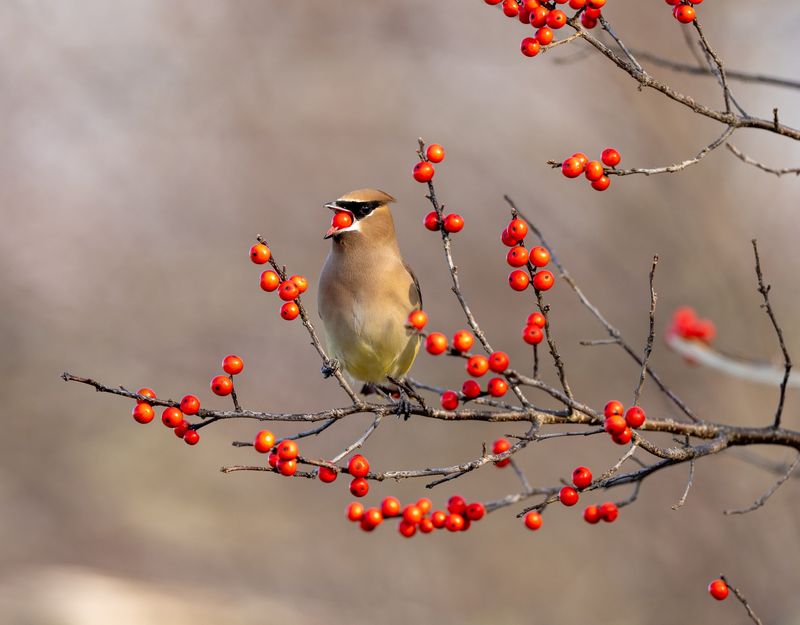
More than 48 bird species are known to eat winterberry fruit. That number alone tells you how much this shrub matters to a wildlife-friendly yard.
Eastern bluebirds, robins, and waxwings all line up for it.
All summer it blends quietly into the background with plain green leaves. Then fall arrives, the leaves drop, and suddenly every stem is crowded with scarlet berries.
In a snowy mountain yard, the contrast is stunning.
Winterberry loves moist, acidic soil, so it is perfect for that soggy low spot along the back fence where other shrubs sulk. It handles full sun well and still fruits in some shade.
Sizes range from 3 to 15 feet, and compact types fit small suburban lots.
Plant one male, such as Southern Gentleman or Jim Dandy, for every handful of females. Without him, you get no berries at all.
Deer usually leave it alone, which is a bonus anywhere ticks are a worry.
4. Inkberry Holly (Ilex glabra)
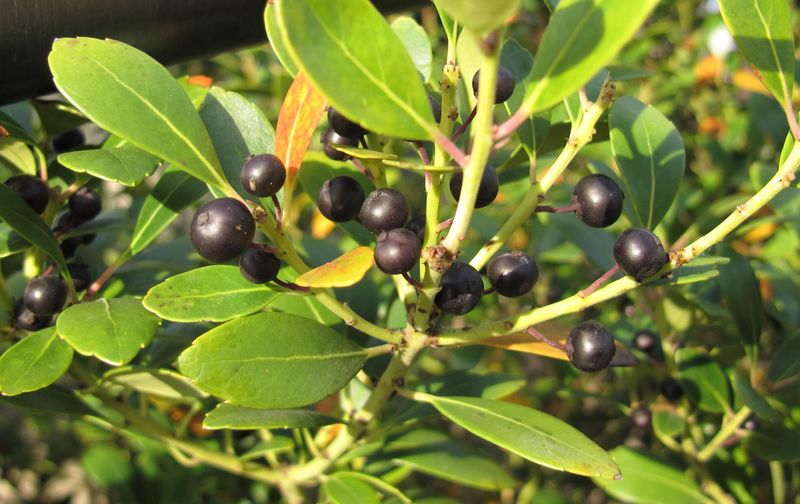
Boxwood has ruled Southern foundation plantings for generations, but it offers almost nothing to native wildlife. Inkberry is the native evergreen that can take its place without sacrificing that tidy, green look.
Think of it as a hedge with a purpose.
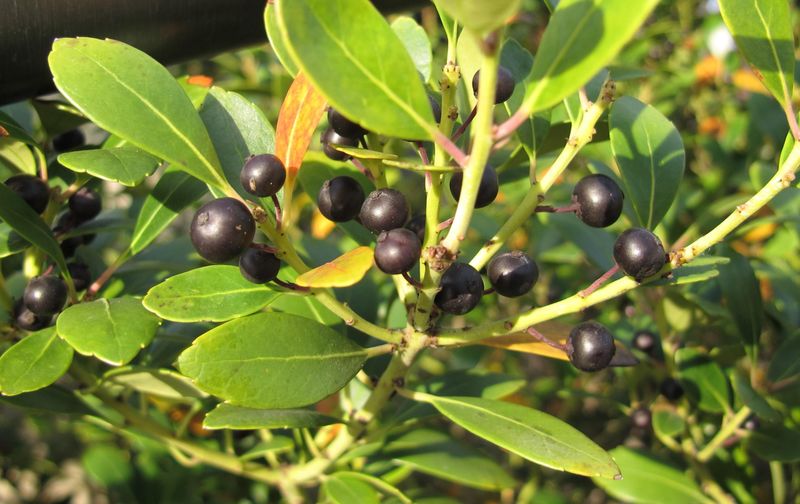
The small, glossy leaves stay green all year, giving birds shelter from cold wind. Female plants carry dark purple-black berries that often hang on into winter.
Bobwhite quail, wild turkeys, and songbirds all eat them.
Inkberry grows 5 to 10 feet tall and slowly spreads by suckers, filling gaps along a fence on its own. Compact picks like Shamrock and Compacta stay neater for small yards.
It does best in full sun to part shade and tolerates wet, sandy soils common in the Coastal Plain.
Bees love the spring flowers, and the plant hosts both Henry’s Elfin and Holly Azure butterflies. Swapping a row of boxwood or non-native hollies for inkberry is an easy weekend upgrade.
5. Fragrant Sumac (Rhus aromatica)
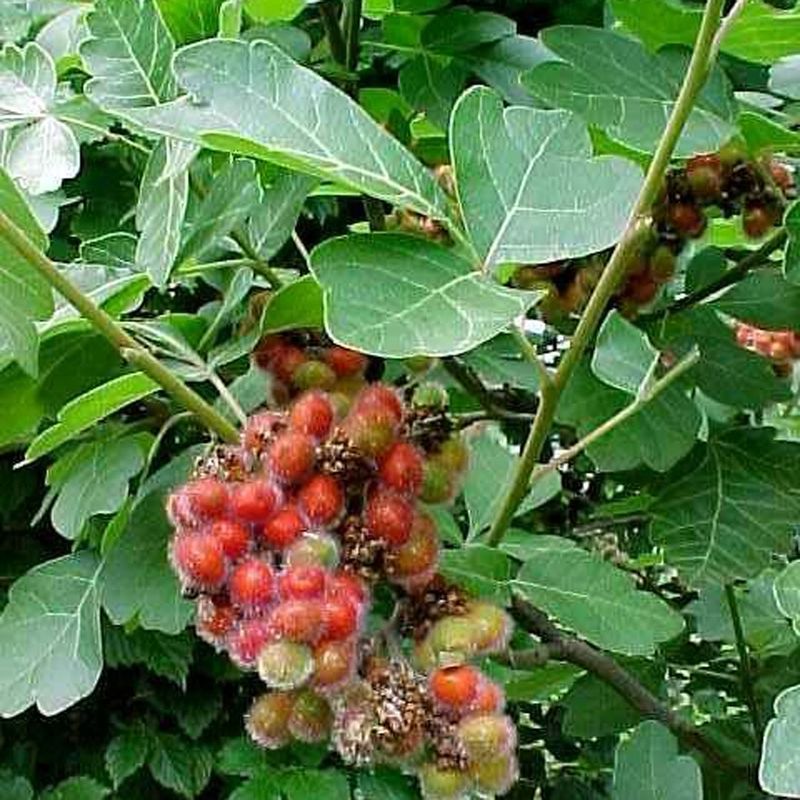
Crush a leaf and you will see how it got its name. Fragrant sumac gives off a spicy, citrusy scent that some people love and others call a little funky.
Either way, it is a hardworking groundcover shrub that most homeowners never think to plant.
Unlike the tall options on this list, fragrant sumac stays low, usually 2 to 6 feet, and spreads 6 to 10 feet wide. It fills the bottom of a fence line, covers bare dirt, and holds steep slopes together with its roots.
Full sun brings the best growth.
Fuzzy red berry clusters form in late summer and hang on into winter, feeding songbirds, turkeys, chipmunks, and opossums. It also hosts 54 kinds of moth and butterfly caterpillars, including the luna moth and red-banded hairstreak.
That means more insects for nesting birds to feed their babies in spring.
Deer tend to avoid it. Fewer deer wandering through your yard may help reduce the number of ticks they drop along your fence.
Do not confuse it with poison sumac, which has white berries and grows in swamps.
6. Red Chokeberry (Aronia arbutifolia)
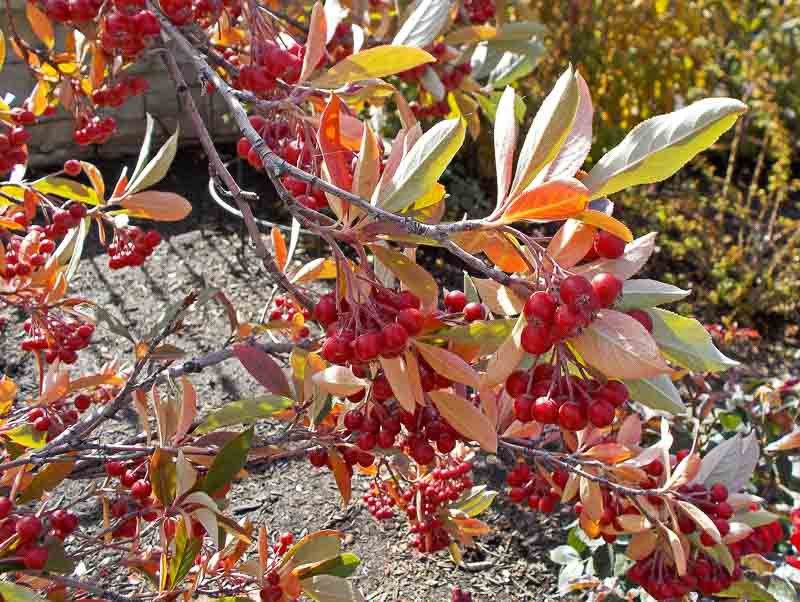
Burning bush, sold for years for its fiery fall leaves, now spreads into NC forests and crowds out native plants. Red chokeberry gives you the same blazing red autumn color without the guilt.
If you have a burning bush along your fence, this is the swap to make.
Glossy red berries appear in fall and stay on into early winter. They are sour at first, so birds wait until later in the season to eat them, when food is harder to find.
Plant it in full sun for the most fruit, though it survives in shade.
The shrub grows 6 to 10 feet tall but only 3 to 4 feet wide, so it fits narrow strips between a fence and a driveway. It slowly suckers into a small colony over time.
White spring flowers bring in bees and butterflies.
Removing a burning bush is simple in late winter. Cut it to the ground, dig the root ball, and plant chokeberry in the same spot.
7. American Holly (Ilex opaca)
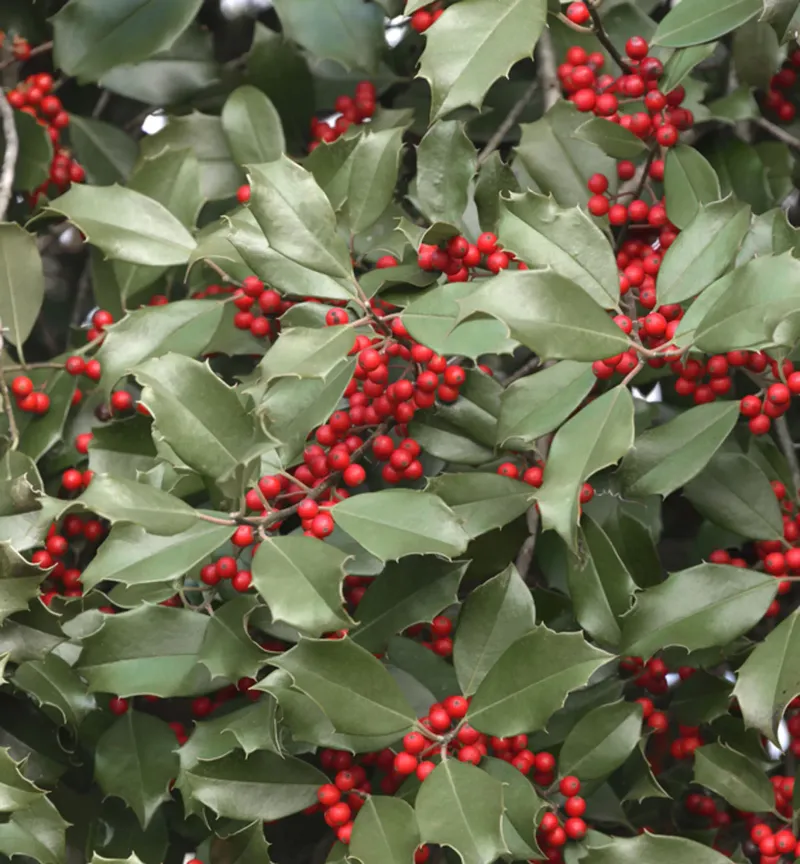
Ask any mockingbird which plant it would fight for, and it would probably point to an American holly. These birds often guard a single berry-loaded holly all winter, chasing off rivals.
It is a funny, feisty show worth watching.
American holly is a classic evergreen with spiny leaves and red berries that last well into the cold months. It grows slowly into a pyramid shape, eventually reaching 15 to 30 feet or more.
That makes it a great anchor plant for the corner of a fence line where you want a strong, year-round backbone.
The prickly leaves create a protected spot where songbirds can roost safely on freezing nights. Its spring flowers feed native bees, and caterpillars of the Henry’s Elfin butterfly feed on the leaves.
Deer usually avoid the sharp foliage.
Full sun gives the thickest growth and best berry set. As with other hollies, plant at least one male nearby.
Pair it with the lower shrubs above, and your fence line becomes a layered winter pantry for NC wildlife.