
The Simple Rose Task You Do Before Winter That Decides How Strong Your Bushes Wake Up Next Spring
Walk out to your rose bush after the first few hard frosts and you may wonder if it can really handle the cold months ahead. For some roses, especially tender or grafted ones in cold-winter areas, one late-fall job can lower the risk of winter damage.
That job is a protective mound of soil or compost over the base of the plant. Here is how to tell whether your rose needs it, when to do it, and what to skip.
A protective mound can reduce winter injury, not decide spring vigor
Let’s fix the big promise in the title right away. A mound of soil does not decide how strong your rose looks next spring.
What it can do is shield the most vulnerable part of certain roses from winter injury.
On a grafted rose, the graft union is the knobby spot near the base where the top variety joins the rootstock. The crown sits just below it.
Both can be damaged by deep cold and by swings between freezing and thawing. Penn State Extension notes that graft unions can be especially vulnerable, which is why tender grafted roses get the most attention.
Covering that area with well-drained soil or compost is a way to lower risk. It is not a guarantee.
A protected rose can still come back slowly, and a rose with poor drainage, disease, or drought stress can struggle even under a perfect mound.
Think of this as a conditional job, not a rule for every rose in the yard. Illinois Extension and Washington State University Extension both describe winter protection for roses that need it.
Hardy shrub roses may need very little. The next sections help you sort out which group your plants fall into.
Which roses need the extra protection?
Not every rose in your yard needs the same care. Tender hybrid teas, floribundas, and grandifloras are often grafted, and they are the most likely to benefit from a mound where winters turn truly cold.
Look near the base for a swollen knob where the canes begin. That is usually the graft union.
Hardy shrub roses are a different story. Many tough cultivars handle cold with little help, and Penn State Extension says some hardy types need little added protection in a milder zone.
Own-root roses, which are not grafted, may also regrow from their roots even if the canes die back in winter.
Several things change the answer for your garden. Hardiness rating of the cultivar matters, and so does how harsh your winters usually are.
An open, windy spot is tougher on a rose than a sheltered corner near a wall. Soil that stays soggy can add to the damage, and a mound will not fix a wet site.
If you are unsure what you planted, check the plant tag or ask the nursery. Then compare it with advice from your state Extension office.
Illinois Extension’s rose care page is a helpful example, but your local office knows your climate best.
A good rule of thumb is simple. If your rose is tender or grafted and your winters are cold, plan to protect it.
If it is a hardy shrub or grows on its own roots, a light mulch layer may be enough.
Wait for the rose to acclimate before you mound it
Timing is where many gardeners get nervous. Mound too early, and the rose may not have settled into dormancy.
Wait too long, and the soil may be frozen and impossible to dig. The goal is the middle ground, and it depends on where you live.
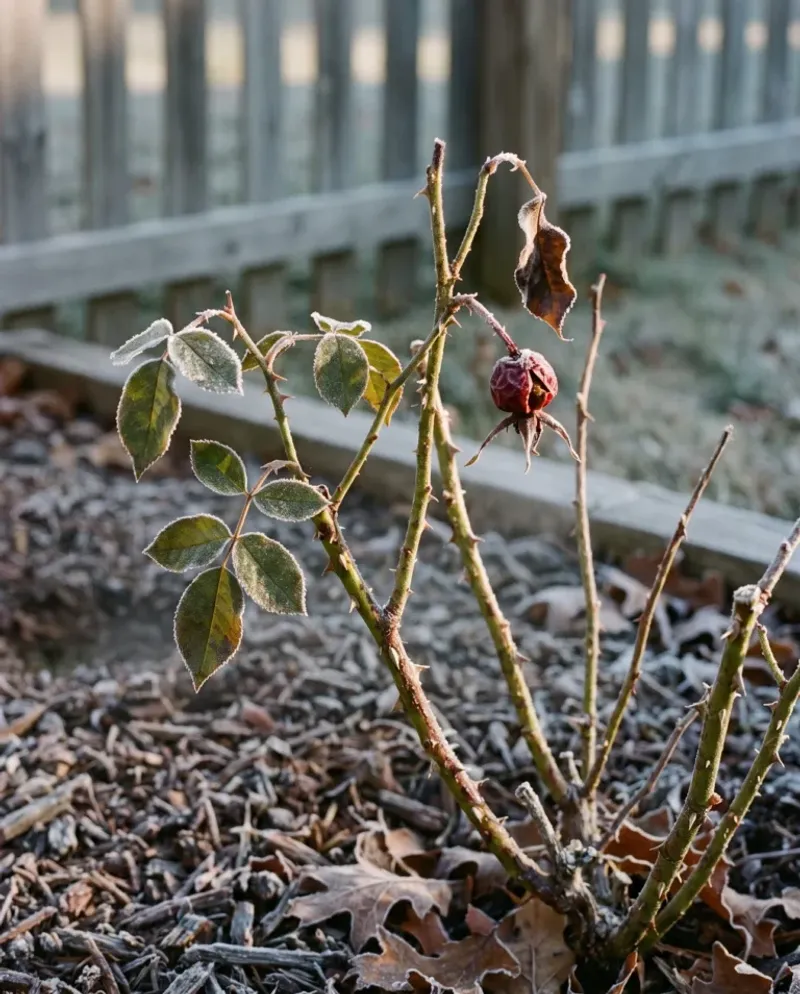
A good general cue is several hard frosts. After those frosts, a rose has slowed down and begun to rest.
Washington State University Extension advises protecting roses after several frosts but before the ground freezes.
Other Extension offices word it a little differently. Illinois Extension points to a killing frost and mostly fallen leaves as signs it is time.
Penn State and other states give advice that varies by rose type. These small differences are normal because winters differ so much across the country.
So skip the calendar date you saw in a social media post. Instead, watch your own garden.
Have you had a run of hard frosts? Are the leaves dropping and new growth stopped?
Is the ground still workable?
If you answered yes, you are likely close to mounding time. To be sure, call or search your county Extension office and ask how timing in your area relates to the ground freezing.
Having soil or compost ready beforehand helps you act the moment conditions line up, rather than scrambling after a cold snap arrives.
Bring in soil to cover the crown and graft union
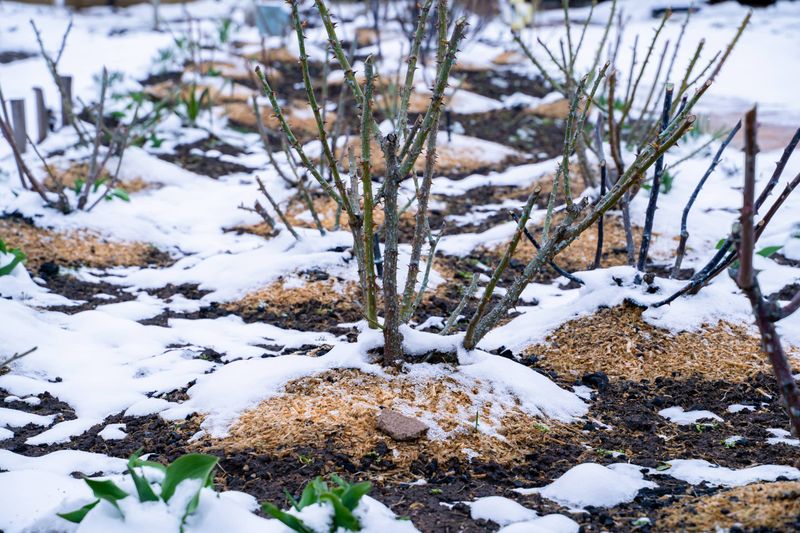
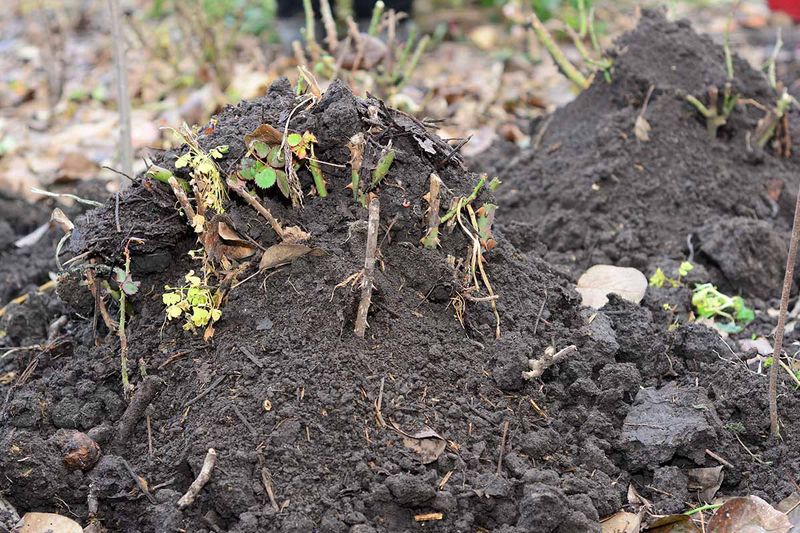
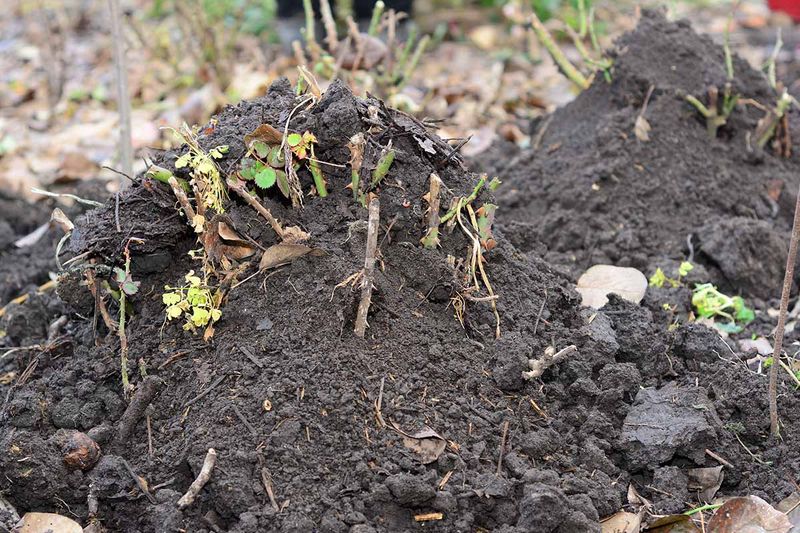
Here is the hands-on part. For roses that need this level of protection, pile roughly 8 to 12 inches of well-drained soil or compost over the crown and graft union.
Build it into a cone shape around the base so the canes poke out the top.
Bring the material in from somewhere else, such as a wheelbarrow of garden soil or finished compost. Do not scrape soil from around the rose.
Pulling it away from the plant can expose or injure the roots you are trying to protect. This guidance appears in sources like Illinois Extension’s rose care page.
Choose material that drains well. Soggy, heavy piles can hold too much water around the crown.
If your site already has drainage problems, a mound will not solve them.
It also helps to remember that a deep mound and a light mulch layer are not the same thing. A hardy shrub rose may need only a thin blanket of mulch around its base.
A tender grafted rose may need that deeper cover over the union. Penn State Extension and Washington State University Extension both treat protection as something matched to the rose.
When you finish, step back and check that no part of the graft union is peeking out. Leave the canes alone for now.
In spring, you will pull the soil back gradually as the weather warms.
Keep the rose from entering winter drought-stressed

Watering is a helper, not a replacement for winter protection. A rose that goes into the cold with dry roots can have a harder time, so a little attention in late fall is worth it.
The key word is conditional.
Check the soil first. If it feels dry a few inches down and the ground is not frozen, a good soak can make sense.
If the soil is already moist, skip it. Never water frozen ground, because the water cannot soak in.
Sources give different details. Washington State University Extension advises keeping soil moist into late fall.
Colorado State University Extension recommends watering during prolonged dry periods when air and soil temperatures are above 40 degrees Fahrenheit and there is no snow cover. That is one source’s guidance for its region, not a number that fits every yard.
There is no fixed winter watering schedule here. Let dryness and weather guide you.
And remember that watering does not make up for skipping a mound on a tender rose, just as a mound will not rescue a plant that went into winter bone dry.
Skip heavy fall pruning and target disease cleanup
When the garden looks messy in fall, it is tempting to cut everything back. For roses, hold off.
Iowa State Extension warns that fall pruning can stimulate tender new growth that is vulnerable to winter damage. Illinois Extension says most rose pruning is done in spring.
There is one exception. If a tall cane is likely to whip around in winter wind or snap under snow, a limited safety cut can help.
That is about preventing breakage, not shaping the bush. Trim only what is needed and leave the rest for spring.
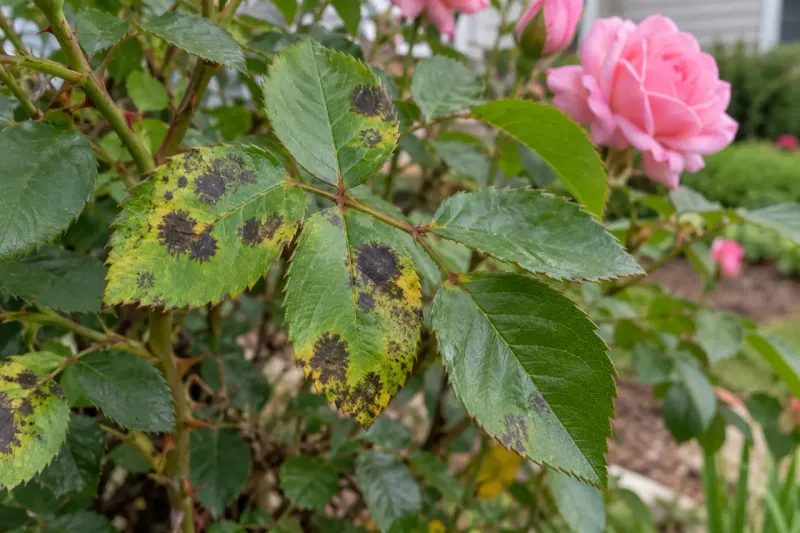
Cleanup is a separate job, and it is for roses that had trouble. If your rose had black spot, with dark spots on the leaves and yellowing, gather the fallen leaves and remove infected debris.
Illinois Extension explains that the fungus can overwinter on fallen leaves and infected canes. Removing them in fall or before spring bud-break can help reduce disease carryover.
That does not mean stripping every leaf from every rose. A healthy plant does not need that.
Target the roses that showed symptoms, bag the debris, and keep it out of your compost pile if you are worried about spreading spores.
Let the rose type and your local winter set the rule

Start by figuring out what kind of rose you have. If it is tender or grafted and your winters are cold, plan a mound.
If it is a hardy shrub or grows on its own roots, a light mulch layer may do. Then wait for dormancy and timing that fits your area, and add 8 to 12 inches of well-drained soil or compost over the crown and graft union if protection is warranted.
A mound can lower the chance of winter injury, but it cannot guarantee strong spring growth. Your local Extension office, along with sources like Illinois Extension, can give advice for your exact rose and climate.
Roses are tougher than they look, and a little local knowledge goes a long way.