
These Camellia Varieties Start Blooming First In North Carolina Yards And Keep Color Going All Winter
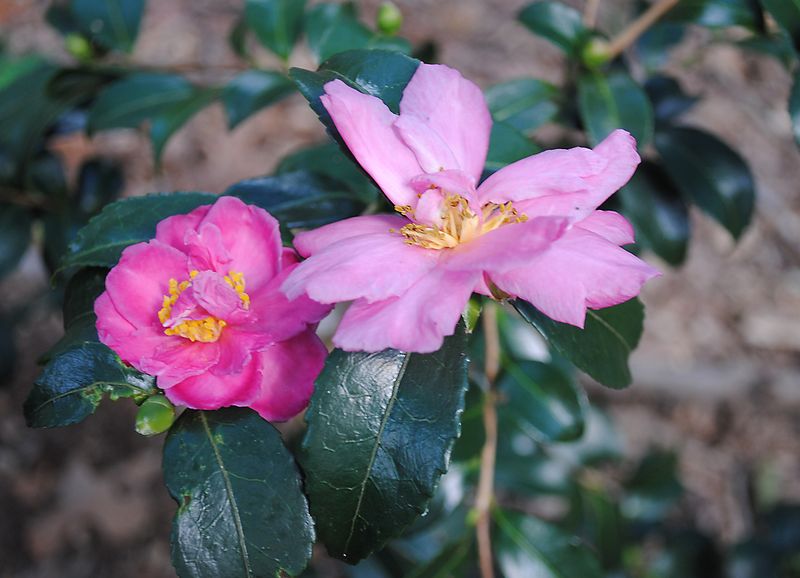
Most North Carolina yards go quiet and brown once the first hard frost rolls through. A few smart camellia picks can change that, putting fresh pink, red, and white flowers on your shrubs from October all the way to spring.
Even better, those winter blooms can feed bees on mild days when almost nothing else is open. Here are eight varieties that start the show early and keep it going while the rest of the garden sleeps.
1. Yuletide Sasanqua
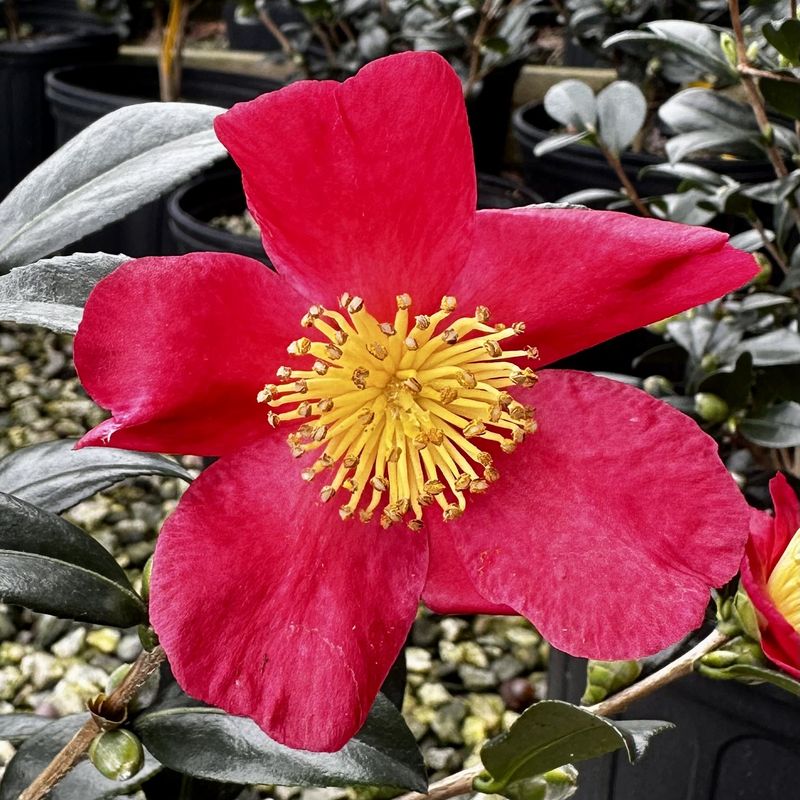
Picture a holiday wreath that grows itself. That is the easiest way to describe ‘Yuletide’, a sasanqua that covers itself in bright red single flowers right around December, each one lit up by a fuzzy center of yellow stamens.
Its upright, tidy shape makes it a natural choice for a hedge along a fence line or a single standout shrub near the front steps. Plan for it to reach roughly 8 to 10 feet over time, so give it room instead of squeezing it under a window.
On warm December afternoons, keep an eye out for honeybees working those open flowers. Few plants in a Piedmont or Coastal Plain yard offer nectar that late, which makes this shrub a quiet helper for pollinators heading into winter.
2. Pink Butterfly Sasanqua
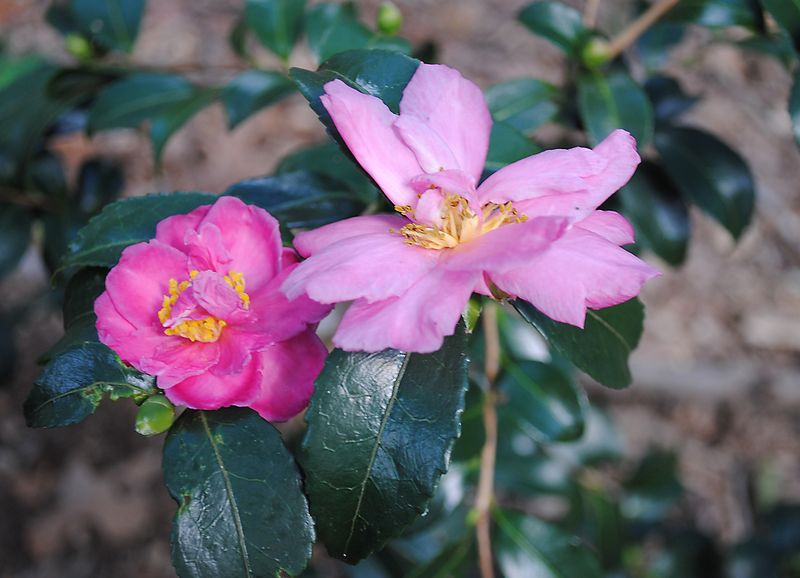
Gardeners around Raleigh and Durham often call November the month when ‘Pink Butterfly’ steals the show. Its wide, soft pink petals flutter open in loose clusters, and from a distance the whole shrub really does look like it is covered in resting wings.
The growth habit is a bit looser and more open than ‘Yuletide’, which gives it a relaxed, woodland look. It fits beautifully at the edge of a pine grove, where filtered light keeps the leaves from scorching.
Pair it with native companions like inkberry holly or Christmas fern underneath. That combo adds layered shelter for ground-feeding birds like towhees while the camellia handles the fall color.
3. William Lanier Hunt
Here is a bit of local history worth knowing. This sasanqua carries the name of William Lanier Hunt, the Chapel Hill plantsman who helped found the North Carolina Botanical Garden and spent decades championing Southern gardens.
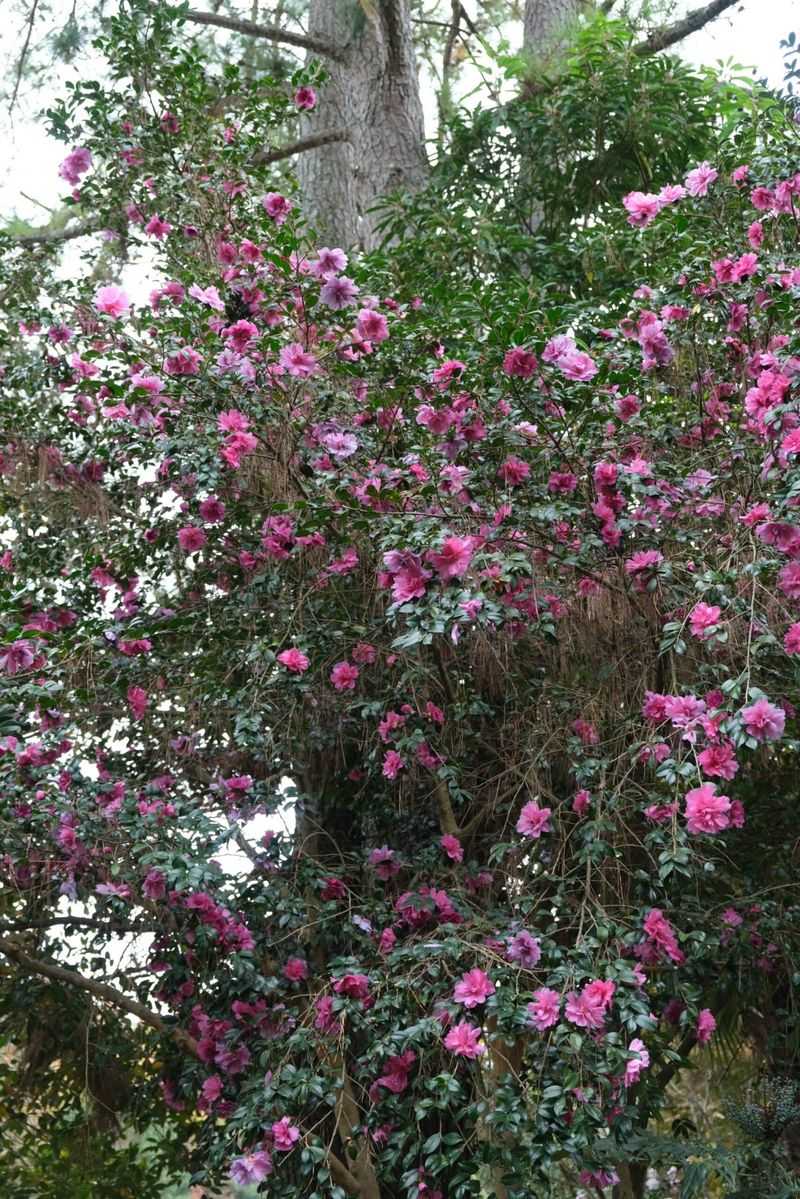
Fittingly, his namesake puts on a generous show. Around late November, the shrub can carry hundreds of double rose-colored flowers at once, so many that the foliage nearly disappears.
Planting one is a nice way to connect your yard to the state’s gardening roots. Give it morning sun and afternoon shade, water deeply during its first year, and spread 2 to 3 inches of pine straw or shredded leaves around it, keeping the mulch a few inches off the trunk.
4. October Magic Inspiration
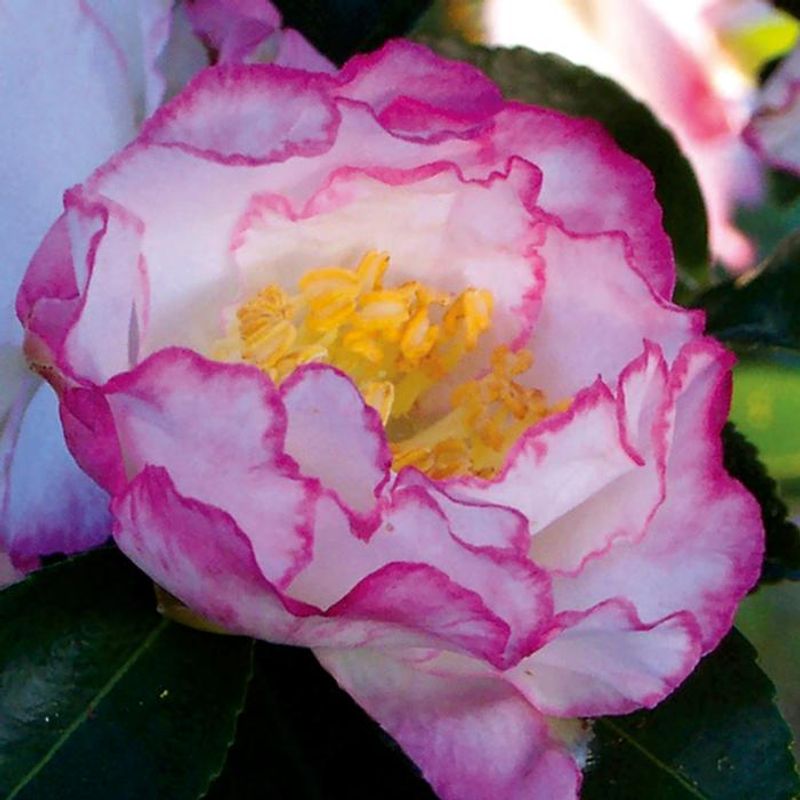
Small yard, big wishes? The October Magic series was bred with tighter spaces in mind, and Inspiration is one of the earliest of the bunch, often opening its first flowers in October.
Blooms usually continue through November, which means you get color while the maples are still turning. That overlap creates a lovely moment where autumn leaves and camellia petals share the stage.
Its compact size works well in foundation beds, large containers on a patio, or tucked along a walkway. Like its cousin Pink Perplexion, which blooms over the same window, it gives busy homeowners a low-fuss way to kick off the camellia season.
Just prune right after flowering ends, since next year’s buds form on old wood.
5. Early Autumn Japonica
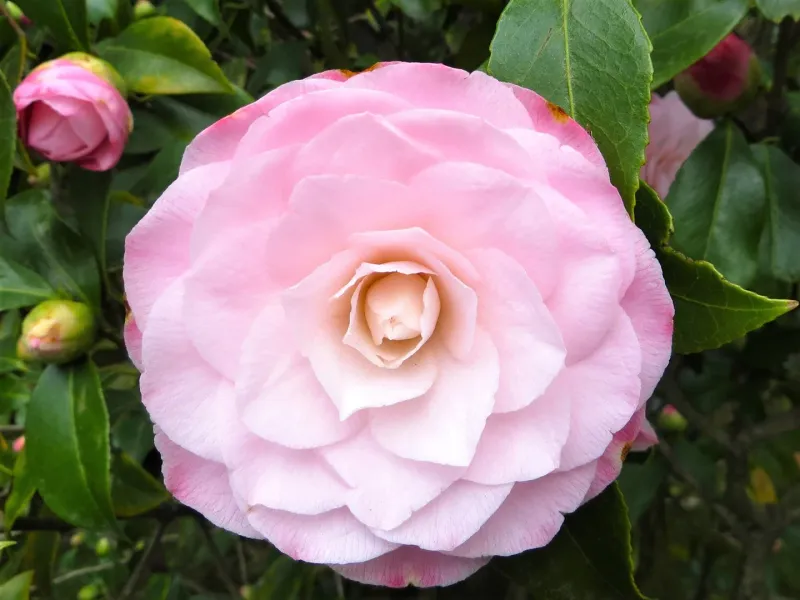
Japonicas are supposed to wait until winter. ‘Early Autumn’ clearly never got the memo.
Most Camellia japonica plants hold back until December or later, leaving fall to the sasanquas. This one breaks the rule, opening large, formal double flowers in rosy pink during autumn and continuing all the way into spring.
That long run makes it a bridge plant in your lineup. When your sasanquas fade in January, ‘Early Autumn’ keeps going, so there is no awkward gap in color.
Bees appreciate it too, since japonica flowers offer food on those mild winter days that pop up across the Coastal Plain and Piedmont.
Site it where it is shielded from harsh winter wind, and the elegant blooms will stay cleaner and last longer.
6. Winter’s Interlude
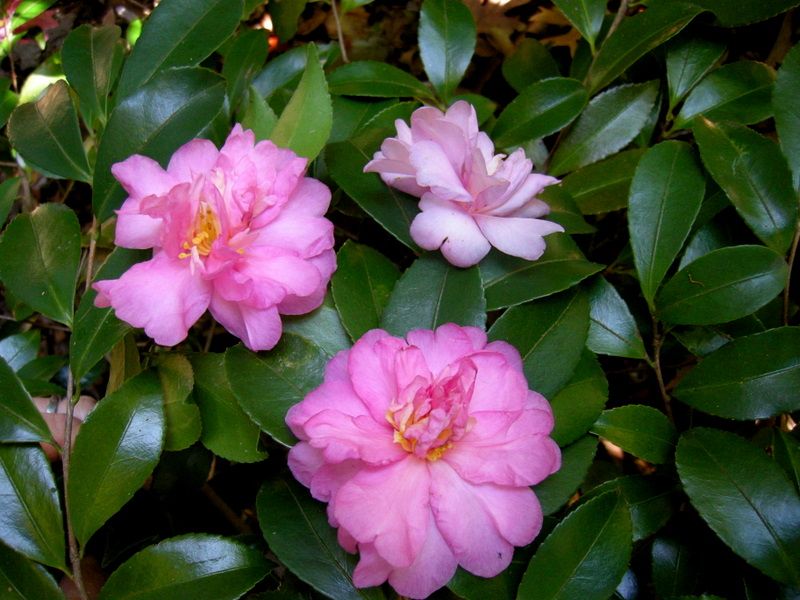
Mountain gardeners, this one is for you. ‘Winter’s Interlude’ comes from the Ackerman breeding program, which set out to create camellias that could handle colder climates than the classic Southern types.
The result is a tough shrub with cheerful pink, anemone-form flowers that open for four to six weeks in November and December. The puffy centers give each bloom a playful, almost pom-pom look.
Cold-hardy hybrids like this may survive temperatures down to around -10°F in a sheltered spot, so a north or east side of the house protected from wind is ideal in Boone or Asheville. Gardeners in the colder Piedmont benefit too, since a surprise January freeze is less likely to wreck the show.
7. Snow Flurry
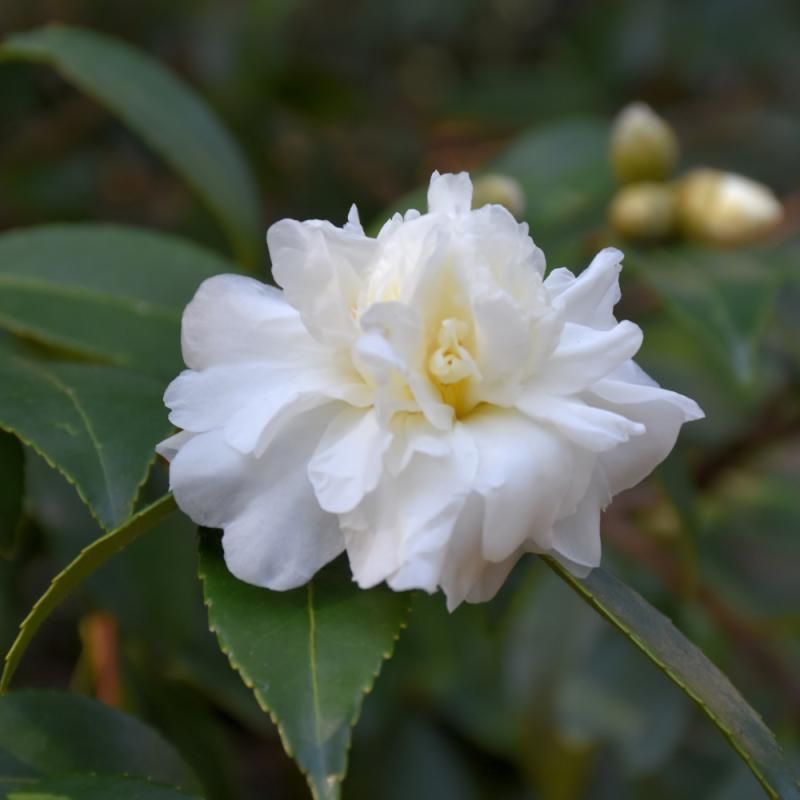
White flowers glow at dusk, and ‘Snow Flurry’ takes full advantage. Another Ackerman hybrid, it ranks among the earliest of the cold-hardy group, opening crisp white anemone to peony-form blooms in fall.
The branches arch gracefully rather than standing stiff and upright. That soft shape looks right at home on a slope or at the back of a mixed border with native shrubs like mountain laurel or bottlebrush buckeye.
Western North Carolina gardeners frequently recommend it alongside other tough picks like ‘Pink Icicle’ and ‘April Tryst’. If you sit on the porch in the evening, plant it where you can see it, because those pale blooms almost seem to light themselves up as the sun goes down.
8. Crimson Candles
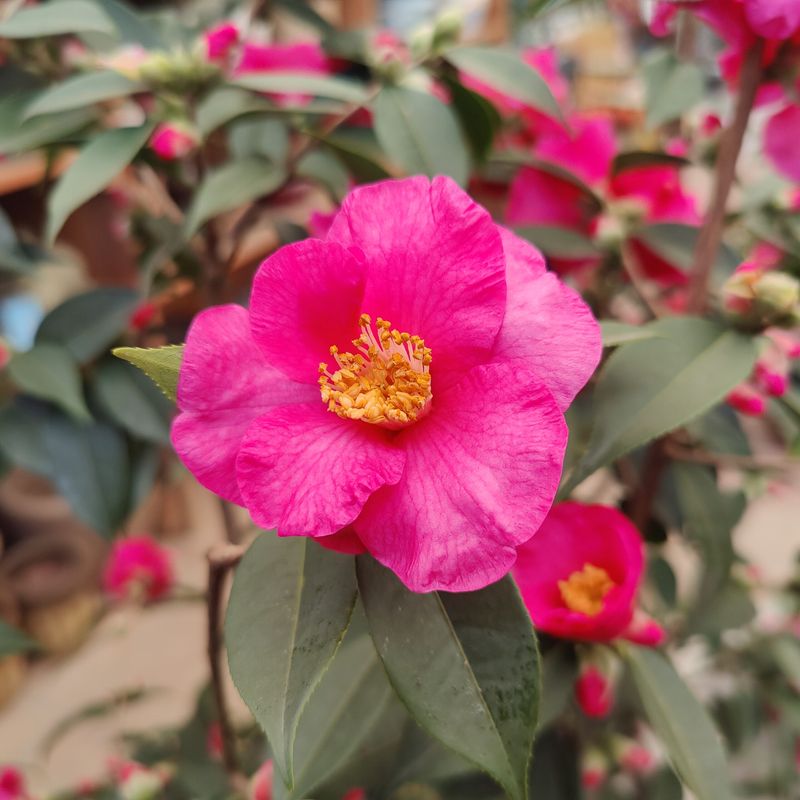
Some plants make you wait for the payoff. ‘Crimson Candles’ turns the waiting into its own show.
All winter long, its buds wear bright red sepals that look like tiny candles lining every branch. Then, in February and March, they finally open into loads of small rose-red single flowers that close out the camellia season with a flourish.
It grows quickly and is hardy in Zones 7 through 9, which covers most of the Piedmont and coast. Placed at the end of your lineup, it carries color right up until spring bulbs and native redbuds take over, completing a bloom calendar that can stretch from October into April.
Those single flowers are easy for early bees to reach, giving them a welcome late-winter snack.