
What It Really Means When A Box Turtle Digs Into Your North Carolina Leaf Pile This Fall
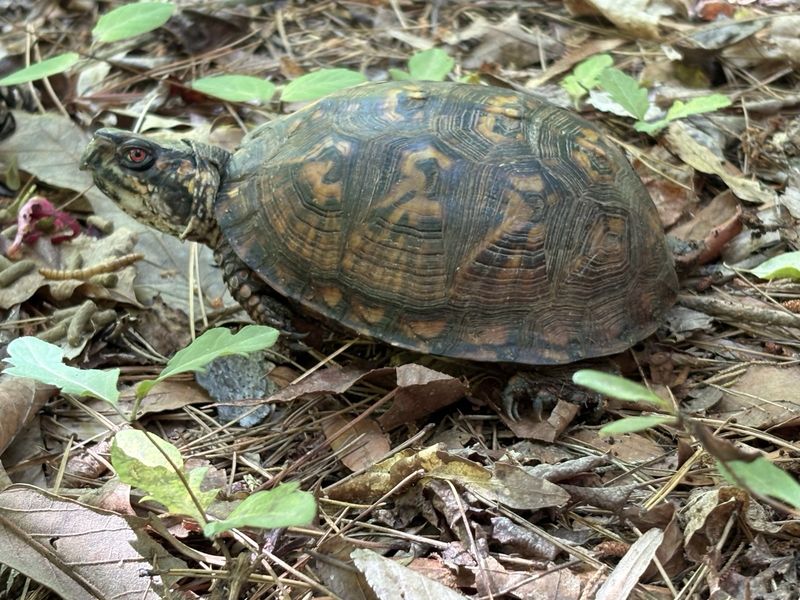
A box turtle pushing into the leaves at the edge of your North Carolina yard can stop you mid-rake. It looks like a turtle tucking in for the cold months, but the full story is a little more careful than that.
What you do next matters, because a few swipes of a rake or a mower pass could hurt an animal that has lived in your neighborhood for years. Here is what the sighting suggests, what it cannot prove, and how to protect the turtle.
A Late-Fall Dig May Be a Winter Refuge
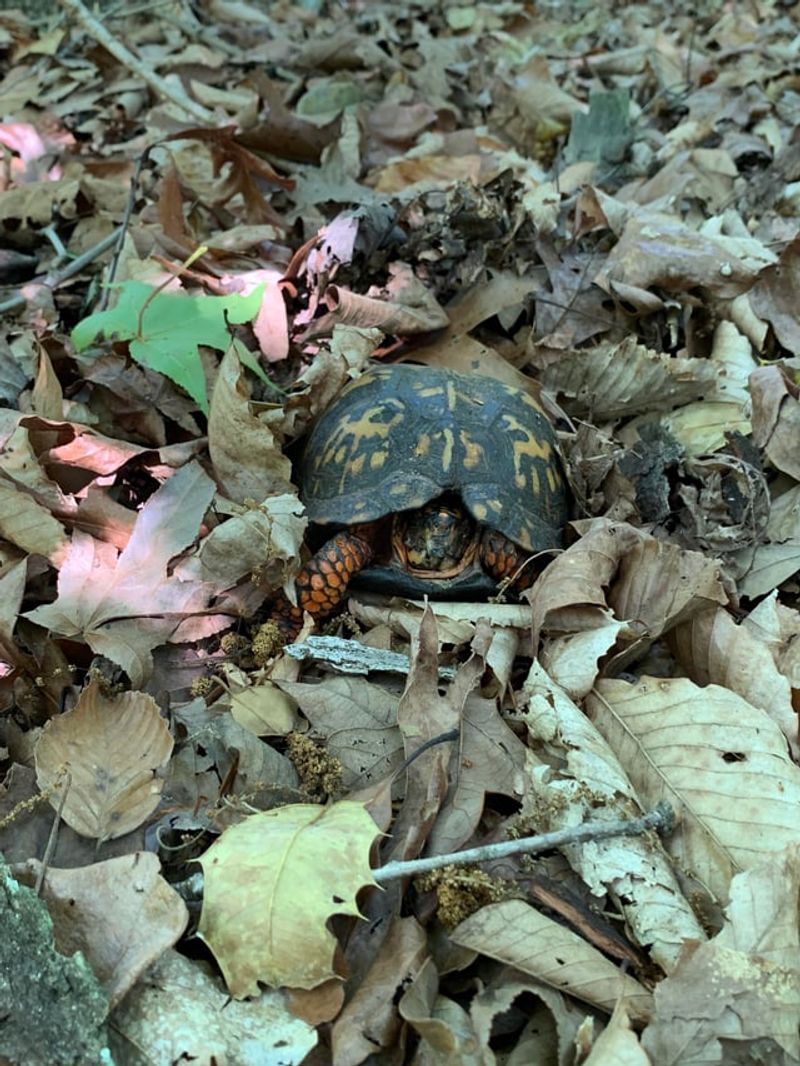
Seeing a turtle burrow into leaves in November can feel like a clear sign that winter has begun. The truth is a bit looser.
NC Wildlife says eastern box turtles are active during the day in both spring and fall, and that they typically bury in soil or forest-floor leaf litter during winter dormancy.
That means a turtle settling into your leaf pile may be choosing an overwintering refuge. It may be preparing to overwinter, and that is the most you can say from one look.
A turtle can also be resting, sheltering from a cold snap, or simply poking around before it moves on. Turtles have been seen in every month of the year, so a fall sighting cannot confirm that this one has entered winter dormancy.
It is also worth knowing what this behavior is not. A late-fall dig is not nesting.
According to the NC Wildlife species page, females lay eggs in spring, and the species profile gives a May to July nesting period. So an autumn turtle tucked into the leaves is looking for cover, not laying eggs.
Treat the spot as important, and keep your guesses humble. The turtle has told you something about where it feels safe, even if it has not told you the whole plan.
Box Turtles Use More Than One Kind of Refuge
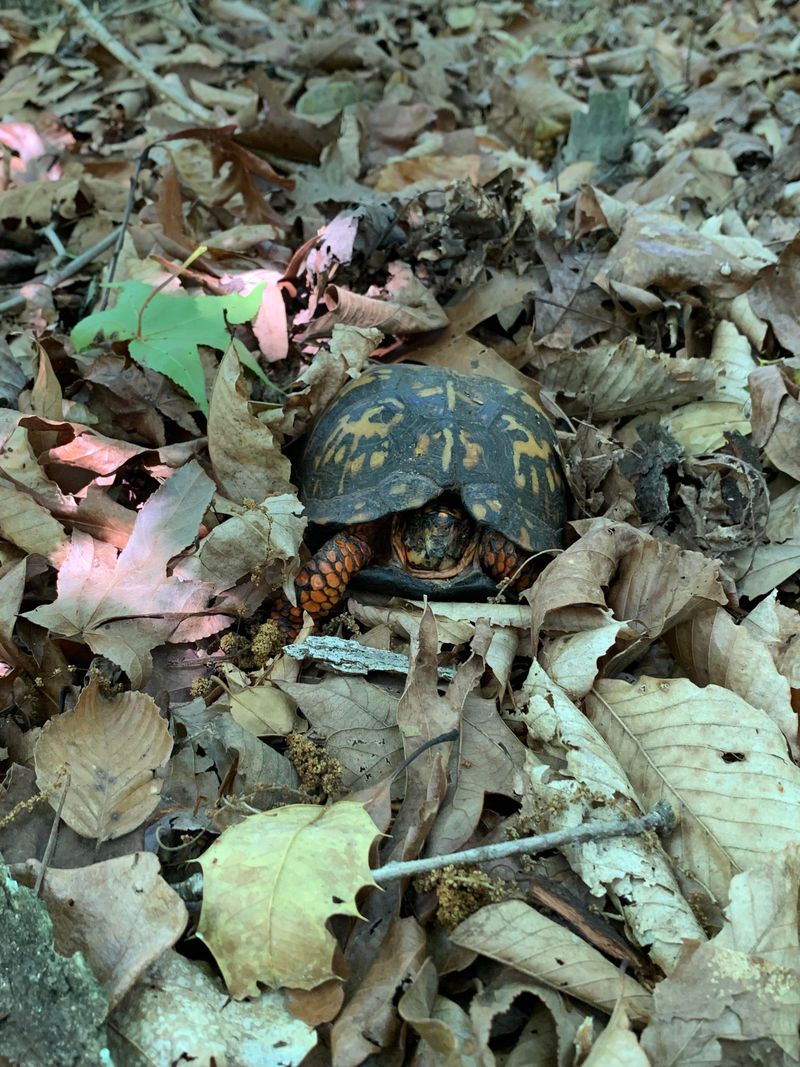
Not every box turtle picks the same bedroom. A 2023 status assessment describes eastern box turtles overwintering in loose soil and leaf-litter packs, and also in stump holes, root masses, natural depressions, and mammal burrows.
Depth varies too. Some turtles settle just below the surface, while others go several inches down.
Some burrow deeper as winter goes on. Those are observations from the studies it reviews, and they are not a depth guide for your yard, so please do not picture a neat, standard hole.
For a homeowner, the practical meaning is simple. A turtle might be tucked into a shallow pocket under leaves, beside an old stump, or in a hollow along a root.
Some of those places look like nothing more than a patch of ordinary debris.
Because refuges differ, a turtle you cannot see is not necessarily gone. It may be just under the leaves or soil a few steps from where you last spotted it.
That is a good reason to go slowly with rakes, shovels, and mowers around the places where it was last seen.
What the Turtle’s Presence Says About Your Yard
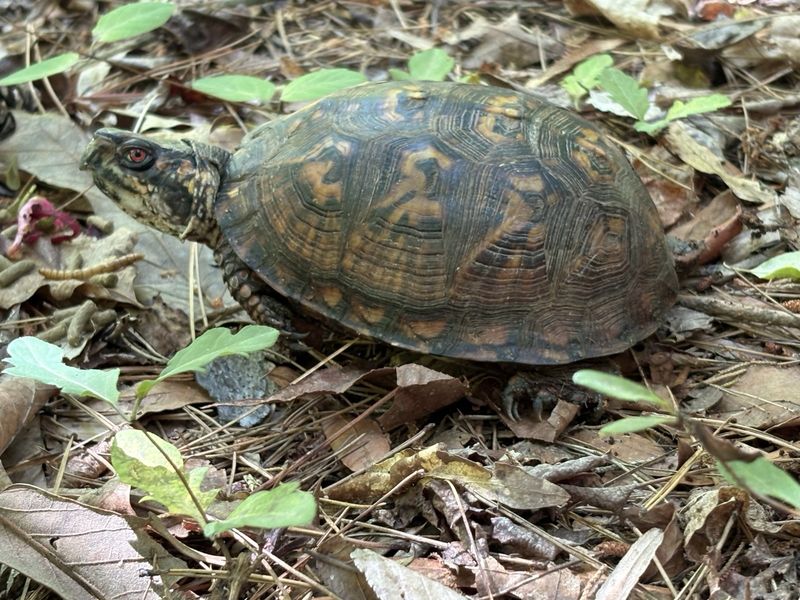
A box turtle in your yard tells you that it uses your yard. That is good news, and it is worth feeling proud of.
What it does not tell you is that your yard meets all of the turtle’s needs, or that the turtle will make it safely through winter here.
Leaf litter itself is real wildlife habitat. NC Cooperative Extension in Henderson County describes leaf litter as habitat for box turtles and other wildlife.
Still, the strongest claims about overwintering come from forested settings. The status assessment describes forest habitat and leaf duff as important, and it also documents cold-related deaths.
A pile of leaves in a residential yard may offer cover, but it is not automatically the same as a forest floor.
You also do not need to bury your whole lawn to help. NC Cooperative Extension in Burke County notes that thick leaf cover can smother grass, and it suggests managing heavily covered lawn areas while keeping or repurposing leaves elsewhere.
A balanced plan works well. Mulch or rake the leaves from open grass, and keep one undisturbed leafy corner, ideally under shrubs or along a fence line, where wildlife can shelter.
Your lawn stays healthy, and the turtle keeps a quiet place to settle.
Leave the Settled Patch Undisturbed
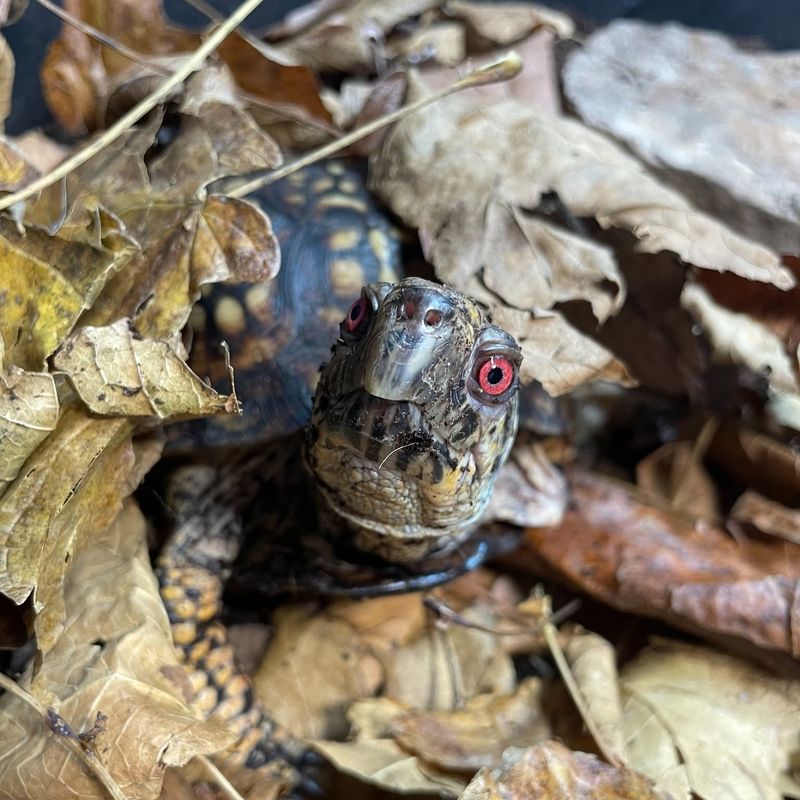
Once you see a turtle settle into a leaf pile, the best move is to walk away. Skip raking, digging, burning, or running machinery over that patch.
Overwintering spots can be shallow and they vary, as the status assessment describes, so even light disturbance could reach a turtle you cannot see.
This is a cautious yard habit, not an official rule. No published guidance gives a safe distance, so there is no magic radius to measure.
A sensible approach is to treat the settled patch and a little extra room around it as off limits until spring, and to keep tools and pets away.
A few easy steps help. Set a stick or a few stones near the edge so everyone in the household knows to avoid the spot.
Mow and rake other parts of the yard around it. Never use a leaf blower, fire, or a tiller there.
Leaf litter also shelters many other small creatures, as the Henderson County Extension article points out. Leaving the patch alone looks after more than the turtle, and it costs you nothing but a little less tidiness.
When to Move a Turtle or Seek Help

A healthy turtle that has found cover needs no rescue. Please do not carry it to another yard, a park, or the woods, even with good intentions.
NC Wildlife explains that box turtles have small territories and strong homing instincts, so a turtle dropped somewhere new may spend its energy trying to get back.
Moving is for immediate danger only, such as a spot where a mower is about to run or a turtle sitting in a driveway. In that case, move it the shortest distance possible, ideally under 50 feet.
If it is crossing a road and it is safe for you to help, carry it across in the direction it was already heading.
An injured turtle is a different case. If you see a cracked shell, bleeding, or another injury, contact a licensed reptile rehabilitator for advice.
Keep the turtle calm and avoid home treatment.
For a healthy turtle, resist the urge to dig it up, bring it indoors, or offer food. Those steps can interrupt its natural routine and do more harm than good.
Watching from a distance is a real form of help.
Protect the Refuge and Avoid Unneeded Intervention
A turtle in your fall leaves may be getting ready for winter, but that does not prove it is dormant or that your yard is a guaranteed safe place to spend it. According to NC Wildlife, fall activity is normal.
Protect the immediate patch, rake the rest of your leaves as needed, and move a healthy turtle only if it is in clear danger.
The best help is often a quiet corner and a little patience.