
Keep Your Christmas Cactus Thriving Through Bloom Season When Dry Winter Air Is a Possible Stressor
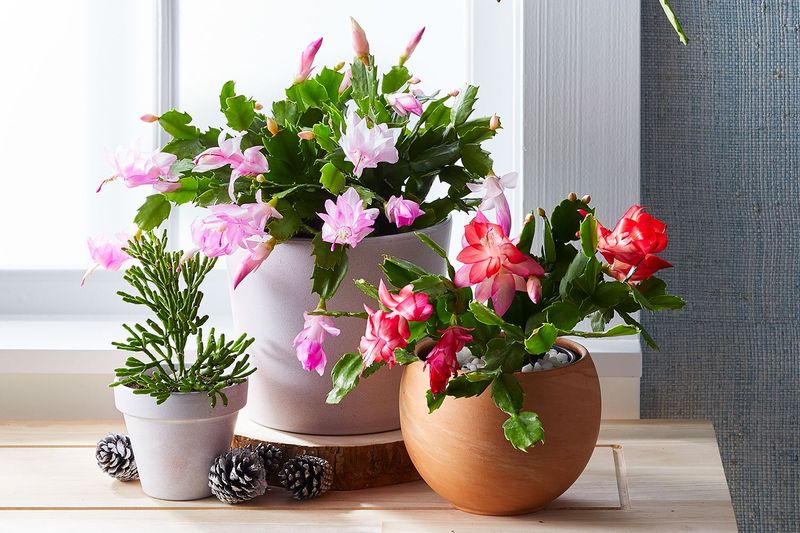
You bring home a Christmas cactus loaded with buds, and then a few of them start dropping onto the table. It is a worry many plant owners share, and it does not mean you did something wrong.
Dry heated air can play a part, but it is only one of several things worth checking. Here is a simple way to sort through the possibilities and give your plant steady, supportive conditions.
A dropped bud does not prove the air is too dry
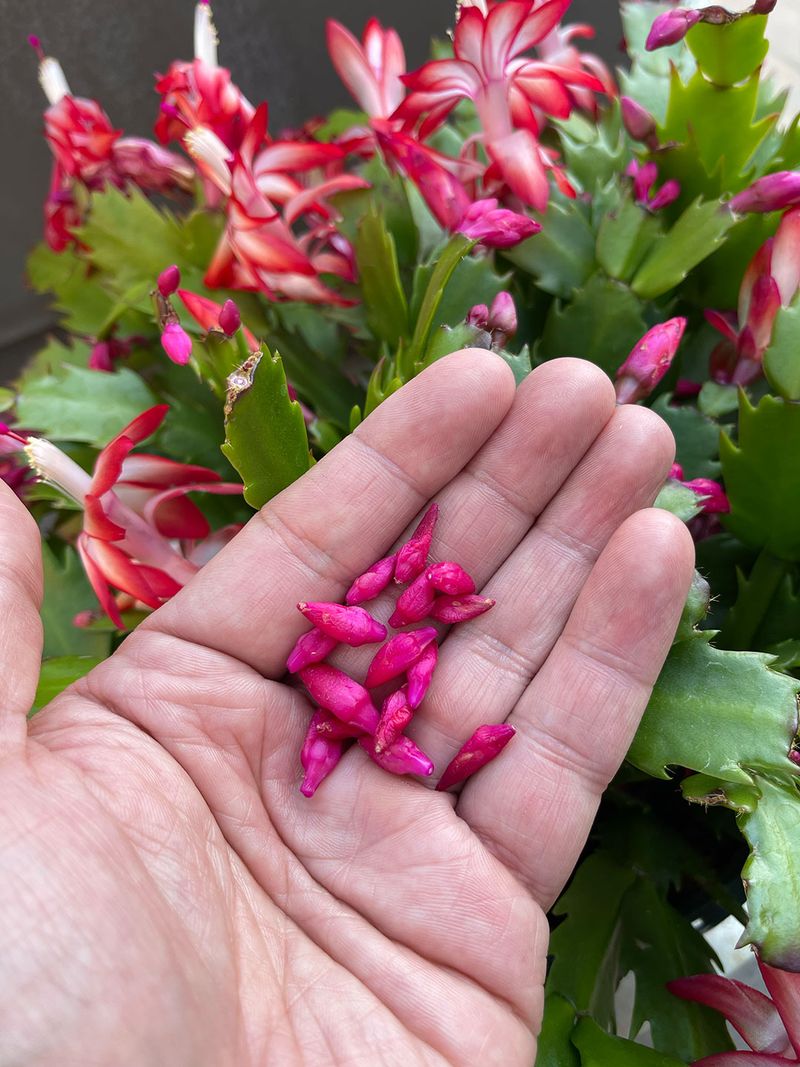
Finding a bud on the floor feels like a verdict, but it is really just a clue. Holiday cacti come from humid, rainforest-like conditions, and Clemson Extension notes that buds may drop when humidity is too low.
So dry heated air can be one stressor, especially if your plant sits near a heat vent.
It is rarely the only suspect, though. Sources list several other possible causes, including drafts, temperature swings, excess heat, low light, watering problems, and sudden changes in care.
University of Connecticut guidance lists these same culprits side by side, which is a good reminder that one fallen bud cannot point to a single cause.
Think of the rest of this article as a checklist rather than a diagnosis. Walk through the plant’s spot, the air around it, and the way it is watered.
Most of the fixes cost little and take only a few minutes.
One more detail helps: Iowa State Extension points out that many plants sold as Christmas cactus are actually Thanksgiving cactus or hybrids. Those can bloom on a slightly different schedule, so your plant may simply be following its own calendar.
Put the cactus where winter conditions stay steady
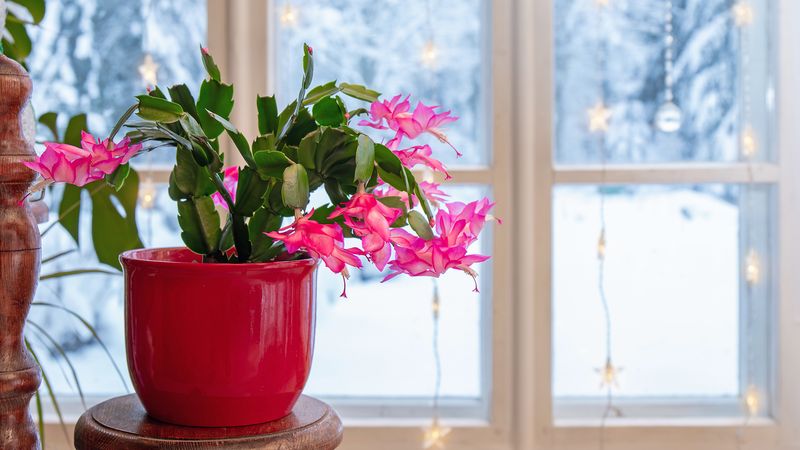
Location does a lot of the work. A budded plant usually does best in bright, indirect light, such as a spot near a window filtered by a sheer curtain.
Direct midday sun through glass can be harsh, while a dim corner may leave the plant short on energy.
Next, look at what the air is doing around the pot. Illinois Extension advises keeping houseplants out of hot and cold air blasts.
That means steering clear of heating vents, radiators, fireplaces, cold window glass, and the draft from a door that opens often.
A simple test is to hold your hand where the plant sits for a minute. If you feel warm puffs, cold seeping in, or a breeze every time the furnace kicks on, try another spot.
Steadiness matters most while buds are developing. Iowa State notes that drafts and marked changes in care can contribute to bud drop, and it advises against moving the plant during bud development.
The concern is sudden or large changes in conditions, not the act of turning a pot a little.
If you must relocate your cactus, pick a place with light and temperature similar to the old one. A calm, consistent spot is the goal, and a bright shelf away from vents often fits the bill.
Raise humidity without relying on daily misting
If your home feels very dry in winter, giving the plant some extra moisture in the air is reasonable. The most practical choice is a room humidifier, which can raise humidity for the whole space and for the plants in it.
Iowa State Extension lists it alongside two lower-tech ideas.
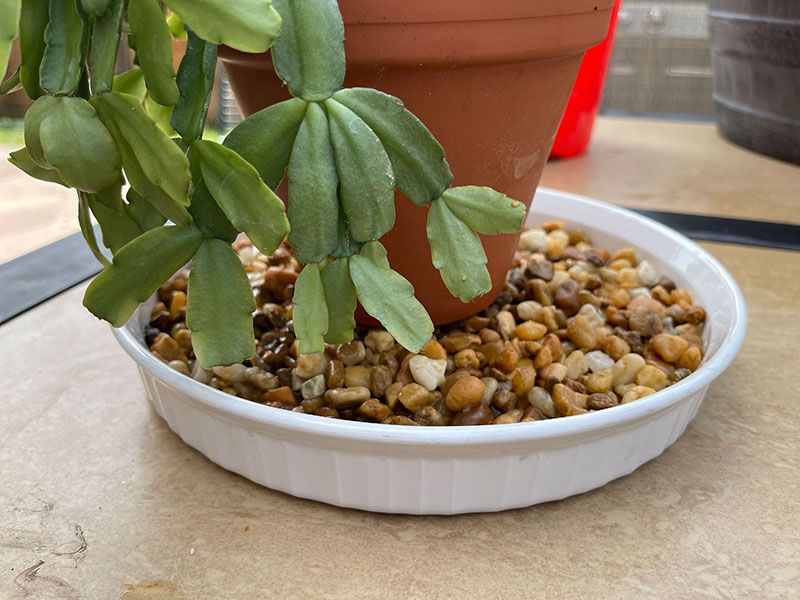
Grouping plants close together creates a small humid pocket as their leaves release moisture. A pebble tray works too: set a shallow tray of pebbles with water beneath the pot, and keep the pot above the waterline so the roots never sit in water.
Misting is the popular habit that falls short. The foliage dries quickly, and Iowa State says misting would need to be repeated several times a day to make a real difference.
Illinois Extension adds that its effect is brief and that heavy misting may raise the risk of disease.
Keep expectations realistic. Better humidity can ease one possible stress, but it cannot promise that every bud will stay.
Pair it with a steady spot and sensible watering for the best odds.
Keep the potting mix moist, not waterlogged
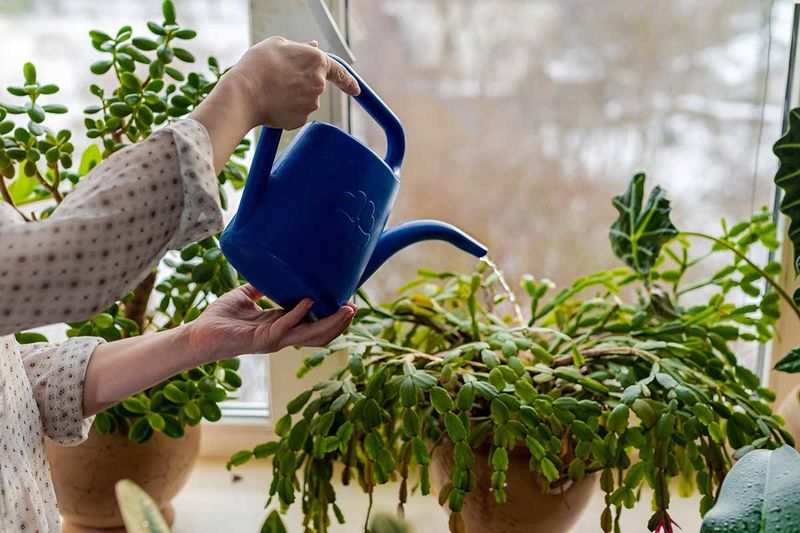
Watering is where good intentions often go sideways. During budding and flowering, Iowa State recommends evenly moist soil.
That means the mix should not dry out excessively, but it should not be soggy either.
A finger test makes this easy. Press a finger about an inch into the mix.
If it feels dry, water thoroughly until the extra runs out of the bottom. If it still feels damp, wait a day or two and check again.
Drainage is the safety net. Use a pot with holes and a mix that drains well, and empty the saucer after watering so the pot never stands in water.
Overwatering can lead to limp growth and root rot, which can also cause buds to fall.
It helps to remember where this plant comes from. A holiday cactus is a rainforest epiphyte, not a desert cactus, so it likes more moisture than a spiny desert species.
Even so, University of Minnesota Extension cautions that excess moisture and waterlogged soil can harm the roots.
Treat the goal as a steady middle: a mix that feels like a wrung-out sponge, never bone dry and never dripping.
Forming buds and keeping them are different jobs
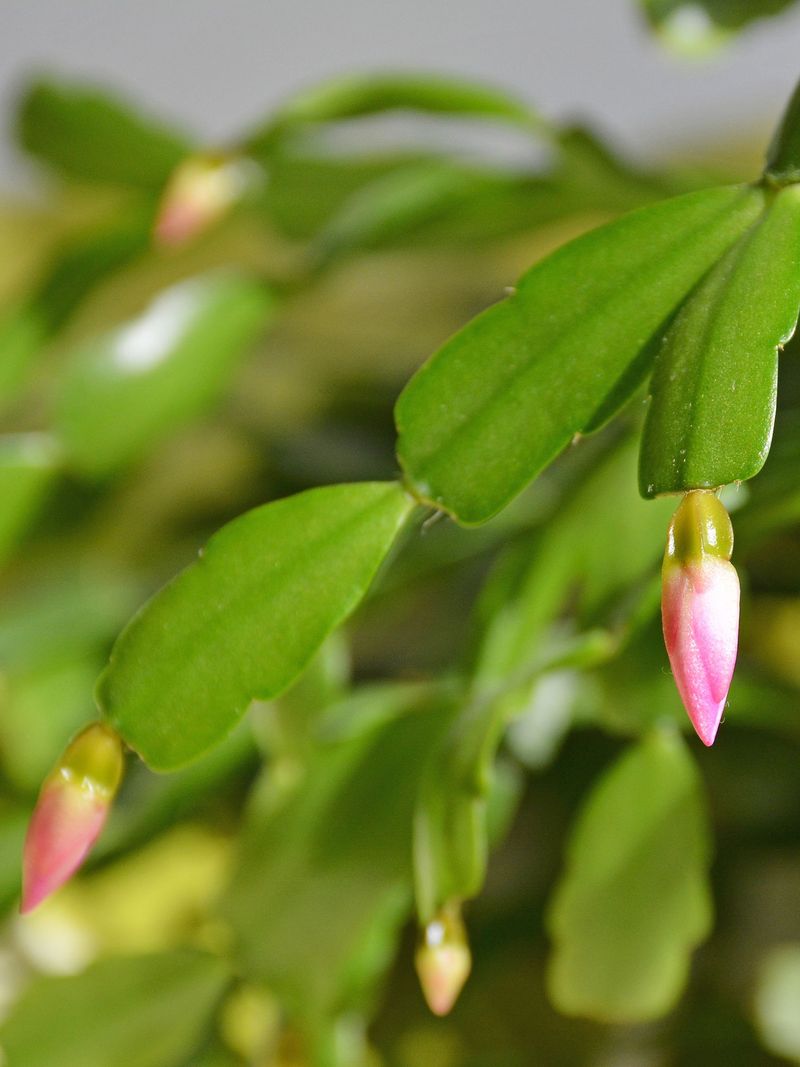
Getting buds to appear and keeping them on the plant call for different care. Holiday cacti are short-day plants, so longer nights help trigger flowering.
Iowa State describes how artificial light at night can interfere with it, so a plant parked under a bright lamp may bloom poorly.
Temperature plays a role too, but it depends on the stage. Iowa State gives a general indoor range of 60 to 70 degrees F and cooler nights, around 60 to 65 degrees, for flower formation.
Other extension sources give slightly different ranges, so treat the numbers as general guidance rather than a rule for every cultivar and home. For more on bloom problems, see this Iowa State answer on poor blooming.
Once buds are visible, the job shifts to protecting them. Steady conditions, no excessive dryness, no drafts, and no overwatering all help limit drop.
You may have heard that holding back water forces buds. UMass greenhouse guidance says research has not supported withholding water for induction and reports that water stress can reduce bud set.
Skip that trick.
Finally, check the plant’s label or shape. If the leaf segments have pointed teeth, it may be a Thanksgiving cactus, which often blooms earlier than a true Christmas cactus.
A steady routine gives buds their best chance
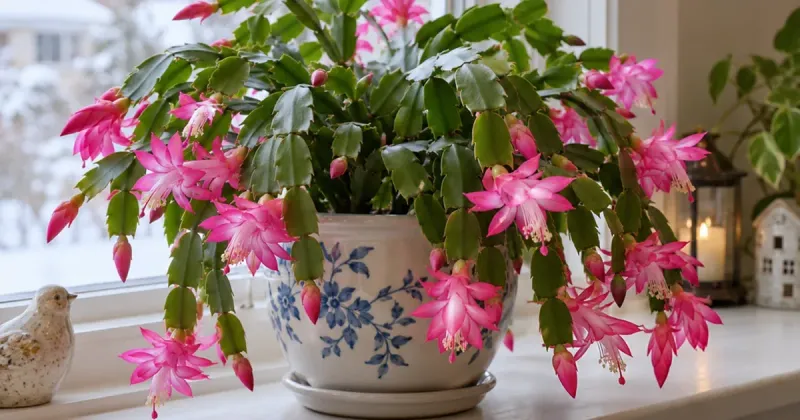
A few habits cover most of the ground: bright, indirect light, a spot away from vents and drafts, and watering that keeps the mix lightly moist while it drains well. If the room is very dry, a humidifier or a pebble tray works better than misting, as Iowa State’s humidity advice explains.
Keep conditions from swinging suddenly while buds develop, and these steps can reduce avoidable stress. They cannot guarantee every bud stays, and a single fallen bud will never tell you exactly what went wrong.
Plants are forgiving in small ways, and a calm routine often says more to a cactus than any single fix.