
Creeping Charlie Keeps Coming Back Because Pulling It Leaves The Real Problem Behind. Here’s How To Finally Clear It This Fall
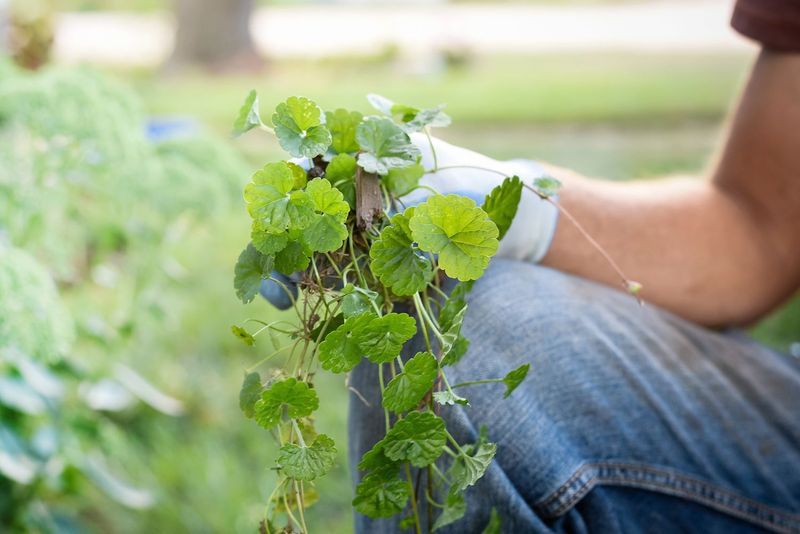
You yank out a mat of Creeping Charlie, the bare spot looks great, and a few weeks later green runners are creeping back. That is frustrating, but it is not a sign you did something wrong.
This weed travels in a way that makes a quick pull easy to get wrong. Here is how it works, and how to build a fall plan that gives you the best shot at clearing it.
Why a quick pull can leave Creeping Charlie behind
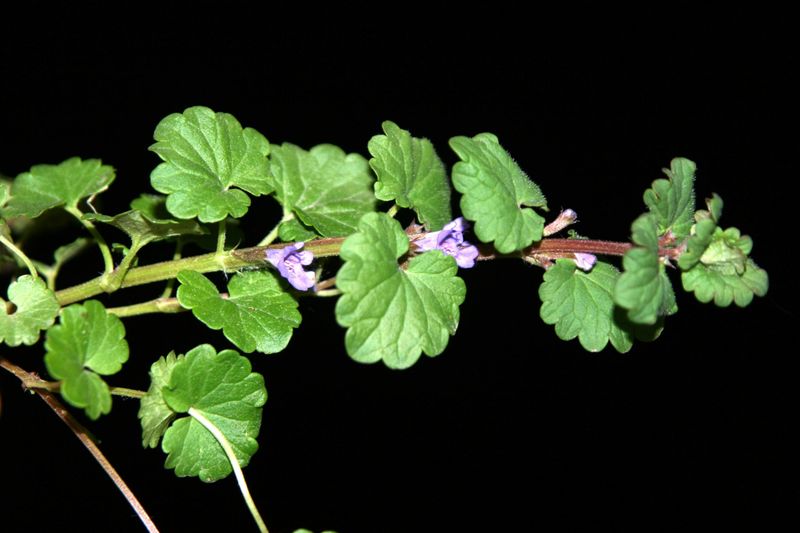
Picture a long green string lying along the soil, with little round leaves all down its length. That string is a stolon, a creeping stem that runs across the surface.
At points along the stem called nodes, it can send down roots and start a new plant.
Here is where a quick tug goes wrong. If you grab a clump and pull, the stem often snaps.
A rooted node or a live runner piece can stay behind in the turf, and it can keep growing. Iowa State Extension guidance describes this creeping, rooting growth habit and why ground ivy is hard to remove completely.
You may have heard that it comes back because you left the roots. That is a bit too simple.
Creeping Charlie does not have the deep underground root system that wild violet has, and Purdue plant diagnostic notes point out that difference. The trouble is mostly in those rooted nodes and surviving runners.
An incomplete pull is a common reason for regrowth, but it is not the only possible one. Seeds, stray stem pieces carried on a mower, or a neighboring patch can also play a part.
The good news is that pulling is not a lost cause. If you remove the whole connected runner, node by node, and keep checking the spot, a small patch can be cleared.
The key is how carefully you pull, not whether you pull.
Match the control method to the size of the patch
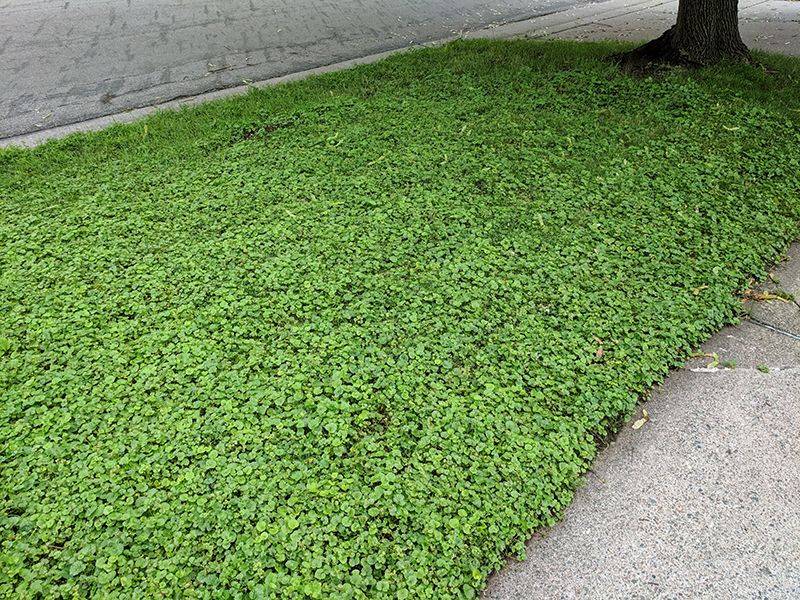
Before you pick a tool, take a good look at how much ground the weed has taken. A patch about the size of a doormat is a very different job from a lawn where the runners are woven through the grass in every direction.
For a small patch, persistent hand removal is a reasonable plan. University of Minnesota Extension says hand removal can work if you repeat it, which fits what many gardeners find in practice.
As the infestation grows, the job gets harder. Runners thread between grass blades and travel under other plants, so tracing each one to its end takes more and more time.
A single missed piece can restart the patch.
That is why University of Wisconsin Extension cautions that hand pulling may not be practical for heavily infested lawns, since the creeping stem system is so difficult to remove completely.
For those larger areas, a postemergence lawn treatment is an option to consider. It is not required, and it is not a guaranteed cure.
A simple test helps: if you can gather every runner in an afternoon or two, start with your hands. If you cannot even find where the patch ends, read on about labeled products.
Remove small patches thoroughly and check them again
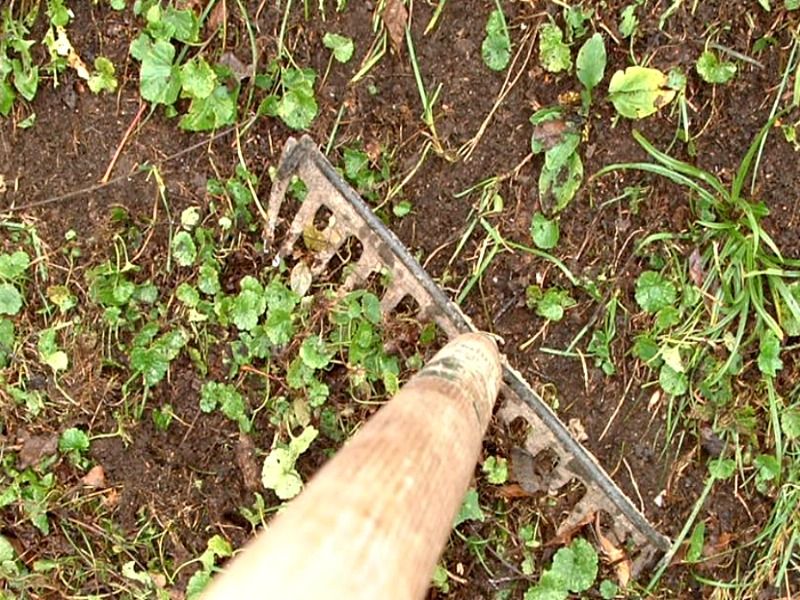
Timing your pull makes a big difference. Wait for a soaking rain, or water the area deeply the day before.
Damp soil lets the runners slide out with less snapping.
Start at the edge of the patch, not the middle. Find a runner, follow it back, and lift each node along the way with a hand fork or trowel.
Slide your fingers under the stem so you are lifting rather than yanking.
Bag everything you remove and take it out of the garden. Do not toss it on a compost pile that gets little heat, and do not leave it lying on bare soil, since stem pieces can root again.
Then come back. Check the cleared spot every week or two through the growing season, and pull new shoots while they are small.
Iowa State notes that persistence over several growing seasons may be needed.
Patience is the real tool here. Minnesota Extension likewise says hand removal works when it is repeated.
Keep your expectations matched to the size of the job. This method suits a small patch far better than a large mat, where you would be fighting runners faster than you can clear them.
For a larger lawn infestation, check the product label first
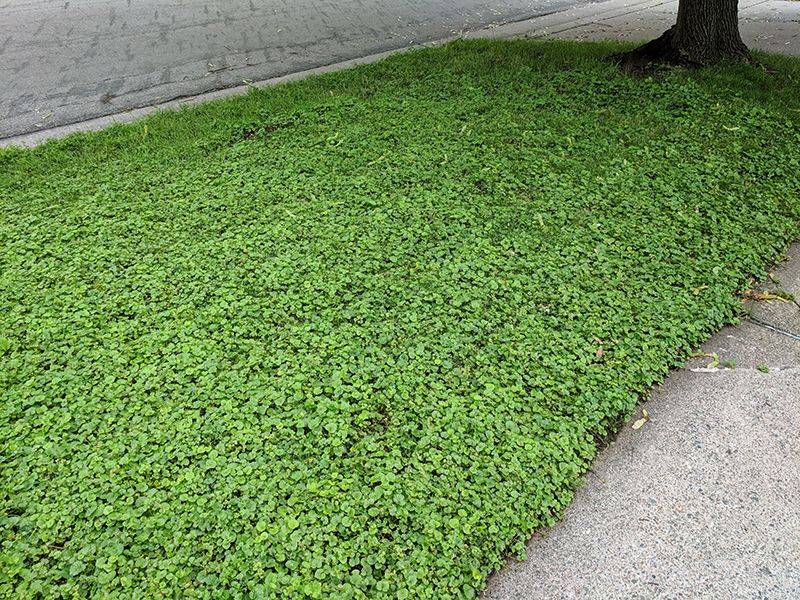
When creeping stems cover a big part of the lawn, a postemergence broadleaf herbicide may be worth considering. Postemergence simply means it is applied to weeds that are already growing.
The first test is the label. The product must list Creeping Charlie or ground ivy as a target, and it must list your lawn type, such as a cool-season or warm-season grass.
If either is missing, put it back on the shelf, because some products can injure certain turf.
You will see triclopyr come up often. Wisconsin Extension and Penn State Extension both identify it as a useful ingredient for ground ivy.
Still, advice varies on other ingredients and formulations, so treat it as one possibility rather than a universal fix. An ingredient name on the front is not a substitute for reading the directions.
Consider spot treatment if the weed is in patches. Wisconsin’s lawn weed guidance supports treating the affected areas instead of the whole lawn, which avoids exposing grass that does not need it.
Skip home remedies like borax. Wisconsin Extension reports that it is typically ineffective and can injure turf and other plants.
Use fall as an opportunity, not a guarantee
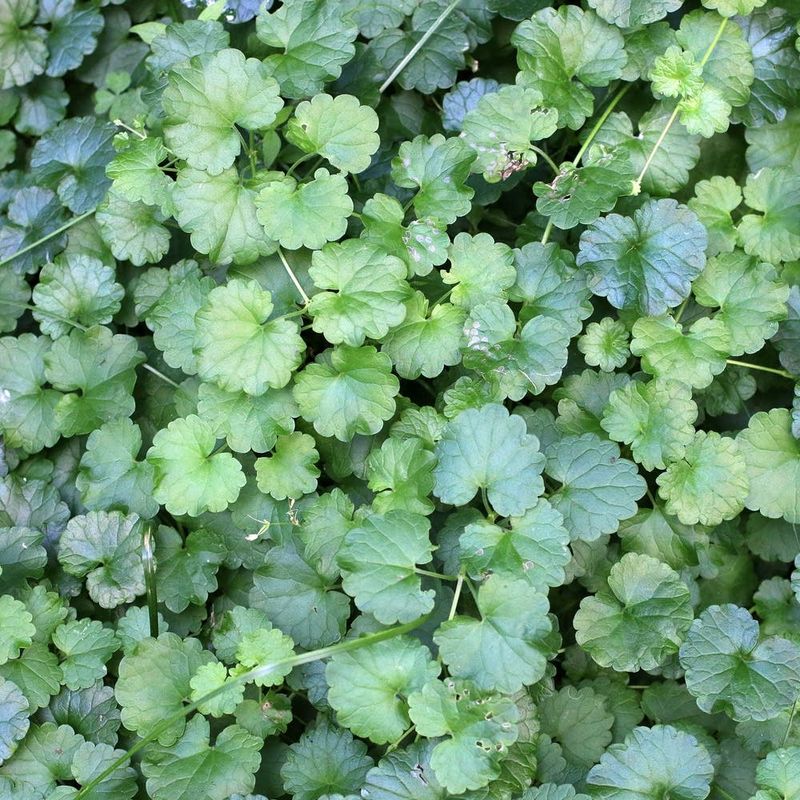
Fall gets recommended a lot, and there is a reason. In autumn, Creeping Charlie is often still actively growing while many other plants are slowing down, so a treatment may reach the weed when it is taking things in.
The exact timing depends on where you live. Wisconsin Extension and Penn State Extension describe windows that range from late August into autumn, and some sources suggest after the first frost.
There is no single national date.
So let conditions guide you. Aim for weeds that are green and growing, not dormant or stressed by drought, and follow the label on temperature, rain, and mowing before and after you apply.
Fall is not a magic window, either. In field trials in Indiana and Tennessee, the choice of herbicide mattered more than whether it went on in fall or spring.
Those results come from the places tested, so they do not prove that fall is better or worse everywhere. The best products there reached just over 53 percent control, which shows that control may be incomplete.
The takeaway is simple. Fall is a good time to act, but picking a suitable labeled product matters more, and you should plan on checking for survivors.
Keep herbicide on target and follow every label direction
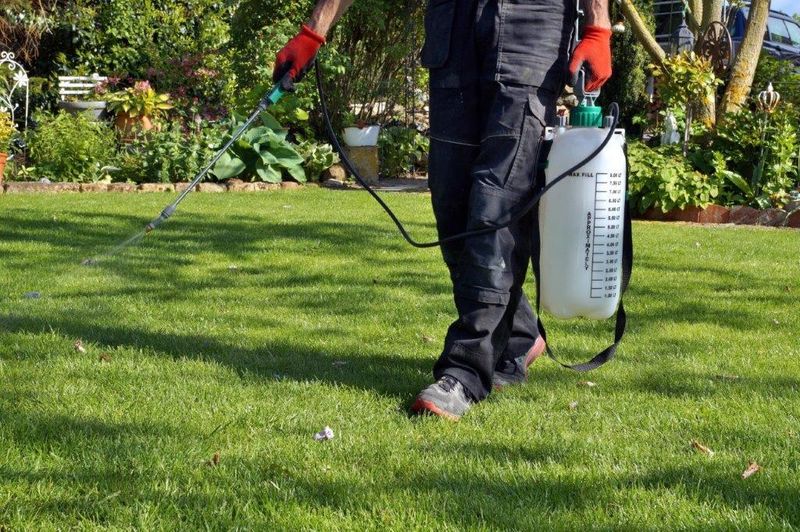
A lawn product that is safe for grass can still hurt the plants next to it. Broadleaf herbicides can damage flowers, vegetables, trees, and shrubs if they touch the foliage or reach vulnerable roots.
Rutgers Cooperative Extension covers this risk in its guidance on ground ivy in home lawns.
Before you spray, check the sky. Pick a calm day, keep the sprayer low, and avoid areas near garden beds, tree roots, and shrub borders.
Drift can carry droplets farther than you expect.
Then read the whole label. The EPA’s pesticide labeling guidance explains that the label directions govern how a product is used.
That covers where it can go, weather limits, mowing before and after, re-entry times for people and pets, and how soon you can treat again.
Do not use a brush killer or any product simply because it contains an ingredient you read about. It has to be labeled for your lawn use and your target weed, as South Dakota State University Extension notes in its fall herbicide guidance.
If survivors show up, any second treatment must follow the label too, including the stated waiting period and limits on repeat use.
Support the turf and keep watching for survivors
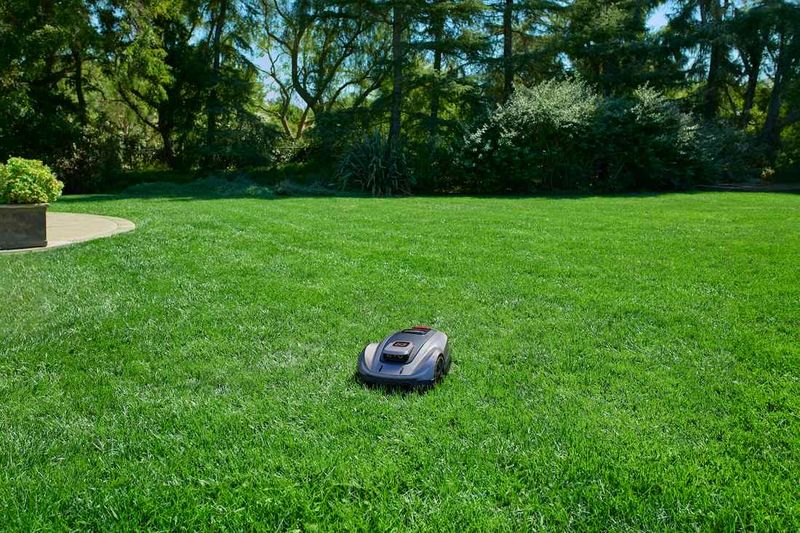
After pulling or treating, the work shifts to watching. Walk the area every week or two and look for small round leaves or fresh runners poking up.
Pull or spot-treat the stragglers early, following the label if you use a product.
Next, help your grass fight back. Mow at a height that suits your grass species, since taller turf in the right range shades the soil better.
If the lawn is thin, look at what is causing it, such as heavy shade, compacted soil, or poor drainage, and fix what you realistically can.
Creeping Charlie loves those weak spots. Wisconsin Extension and Purdue both link ground ivy to thin or shaded turf and recommend building turf density.
A thicker lawn helps with competition and prevention, but it will not erase an established mat by itself.
Your plan, then, is to clear small patches carefully, use a fitting labeled product only for bigger infestations, and keep checking.
Creeping Charlie rarely leaves in one move, but it rarely outlasts a gardener who keeps showing up.