
Trying a Mason Jar Humidity Cover to Root a Cutting From Grandma’s Rose in North Carolina
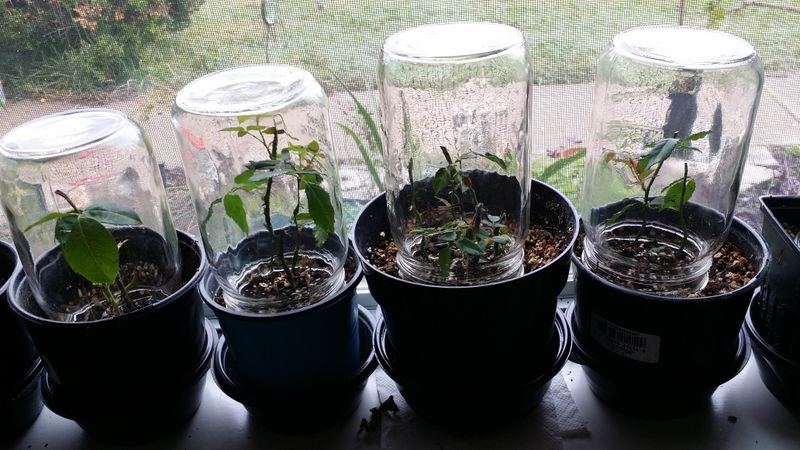
Many North Carolina gardeners have a rose they would hate to lose, like one that grew by a grandmother’s porch. Taking a cutting is a low-cost way to try making a copy of it.
A clear cover, such as a glass jar, can help a leafy cutting stay humid while it tries to root. Roots are never guaranteed, so here is how to give your cuttings a fair chance.
A clear cover helps hold humidity—not make roots
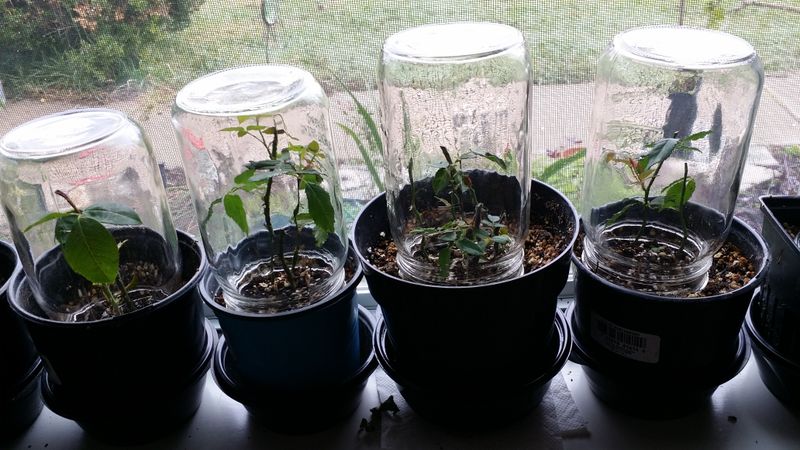
You may have seen the idea passed around as an old Southern Mason jar trick. The sources reviewed for this article describe rose cuttings and clear humidity covers, but they do not show a distinct Southern tradition built around Mason jars.
Think of the jar as a home-gardener adaptation, and treat the nostalgia as a charming story rather than documented history.
What a cover really does is slow the loss of moisture from leaves. A cutting has no roots yet, so it cannot drink much, and its leaves can wilt fast in dry air.
UGA Cooperative Extension describes clear, closable propagation chambers as miniature greenhouses, and it lists several kinds of covers, including bags, bottles, bins, and cloches. A jar is simply one more option on that list.
The cover does not make roots by itself. A cutting can still rot, dry out, or sit there without rooting, even under perfect glass.
North Carolina Cooperative Extension suggests a clear bag over a pot of moist potting soil, which works on the same idea.
The next sections cover timing, preparation, sun safety, and what to expect from the plant you end up with.
Choose timing for the kind of cutting you have
Anyone hoping for one simple fall timetable will be disappointed, because roses do not work that way. The right season depends on how mature the stem is.
A soft green shoot, a firmer summer stem, and a bare woody cane each have their own window.
For local guidance, North Carolina Cooperative Extension says rose cuttings can be taken year-round, with its best local success from November through February. That is the source’s advice for our state, and it is not a promise for every cutting or every yard.
Other sources point to different times. UGA’s propagation table lists roses as wounded softwood cuttings taken in spring and summer under mist.
Iowa State Extension calls semi-hardwood cuttings easiest in July and August and says hardwood cuttings are typically collected in late winter.
These advice sets are describing different cutting types, so they do not contradict each other. They also do not prove every fall method works equally well across the mountains, Piedmont, and coast.
A practical plan is to match your timing to the stem in your hand, and to try more than one season if the first round fails.
If a cutting does not make it, that is common. Treat the first try as practice and try again with fresh material.
Prepare healthy cuttings and set them in rooting medium
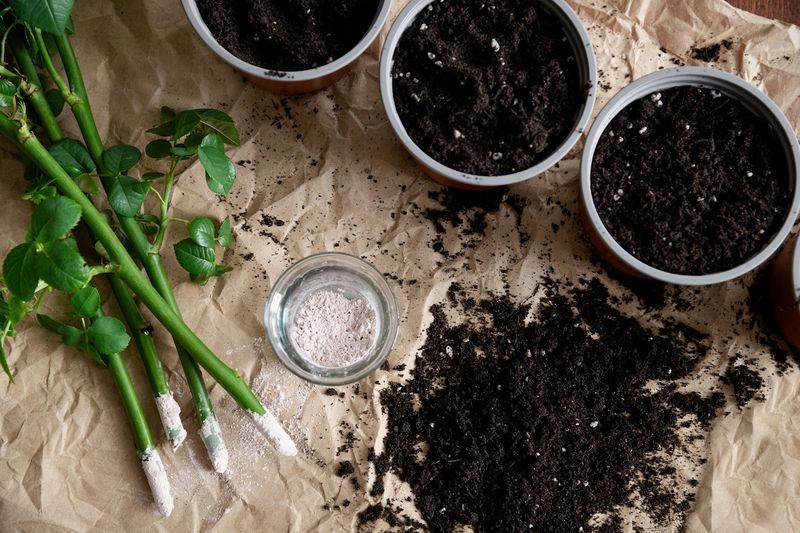
Start with healthy growth from the rose you care about. Skip stems that look diseased, chewed, or weak.
UGA Extension recommends disease-free stock and sanitized tools, containers, and media to cut down on fungal problems, so wipe your pruners and wash your pots first.
For a leafy cutting, NC Cooperative Extension advises a piece about 6 to 8 inches long. Remove any flowers or hips and the lower leaves, but keep the upper leaves.
Do not let the cutting dry out before planting, so carry a damp paper towel or plastic bag to the garden.
Fill a clean pot with moist, well-drained potting soil or rooting mix and push the stripped end in. Poke a hole first so the bark does not scrape off.
Keep the mix damp like a wrung-out sponge, not soggy, since waterlogged mix invites rot.
Rooting hormone is optional in some guidance. NC Extension says it can improve the chances of success, and an Ask Extension answer treats it as a helpful extra.
Take several cuttings, perhaps a half dozen, and put each in its own pot or spaced well apart. Some will likely fail, and that is part of the process.
Cover the pot, protect it from sun, and acclimate gradually
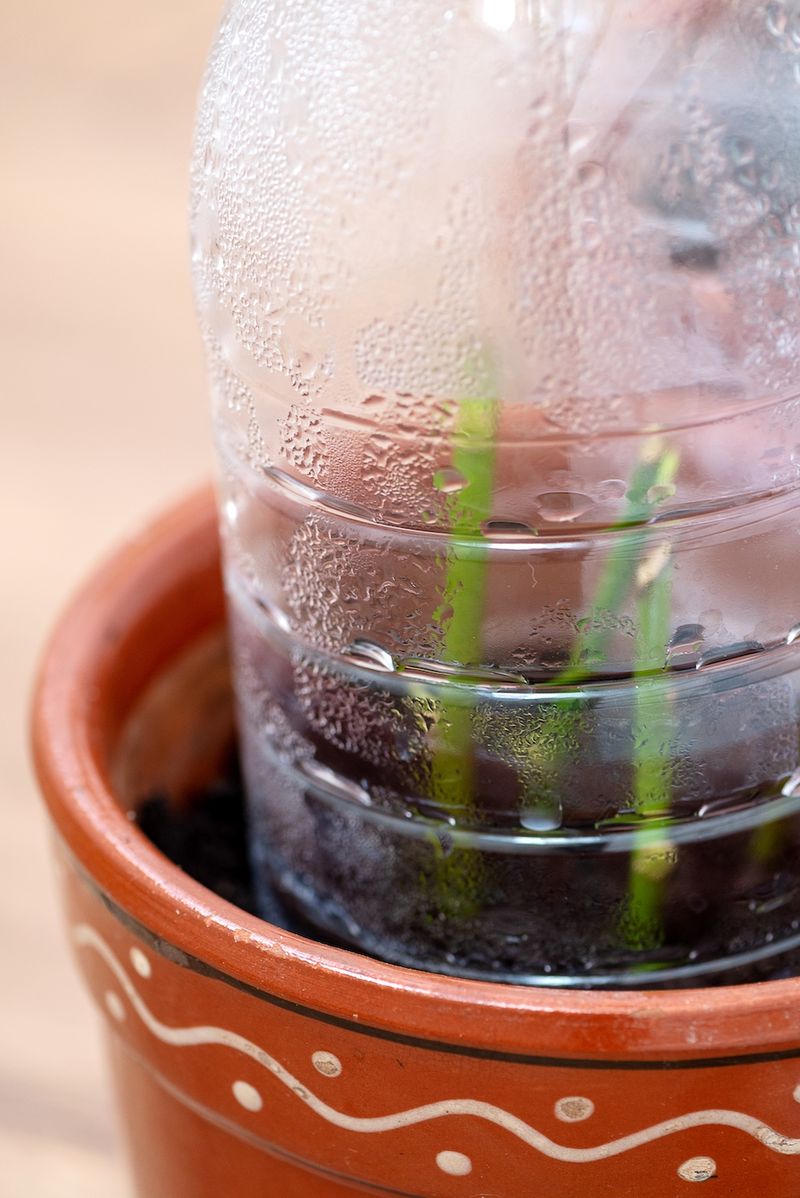
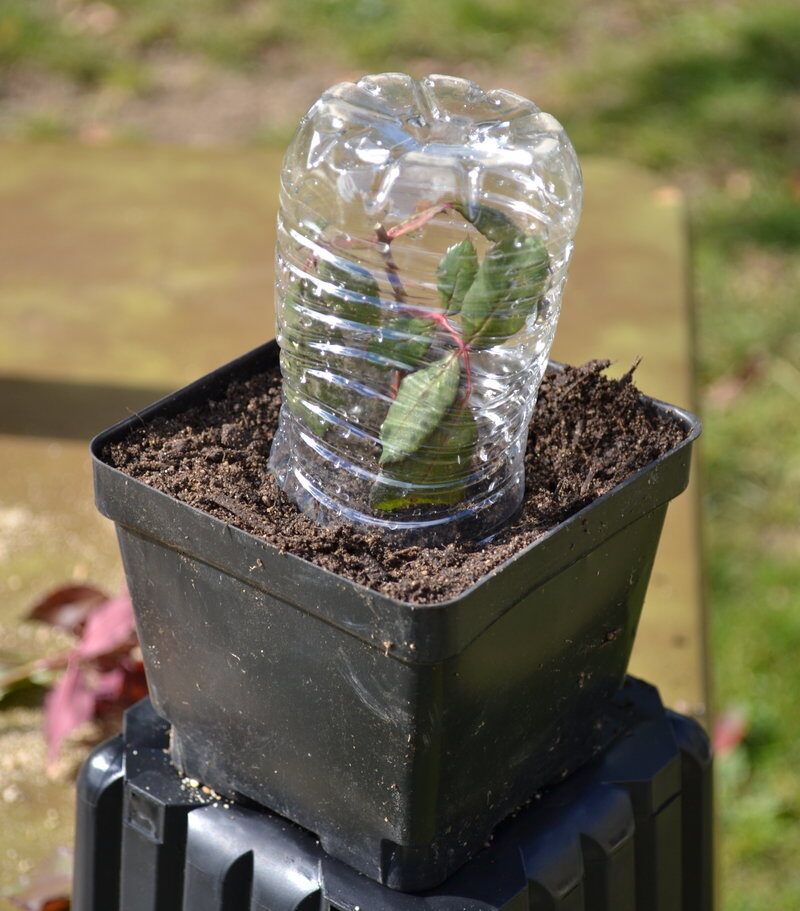
Once the cutting is potted, put a clear bag, jar, or cloche over it to hold in moisture. Think of the cover as a tiny greenhouse that keeps the leaves from drying while there are no roots to supply water.
A bag held up with sticks keeps leaves from touching the plastic, which can encourage rot.
Place the pot in bright light, but out of direct sun. NC Extension recommends this setup for rose cuttings.
A north-facing window, a bright porch corner, or a shaded spot works better than a sunny sill.
Heat is the big risk. Utah State University Extension reports that cloche interiors may run 20 to 40 degrees Fahrenheit hotter than the outdoors on sunny days.
A sealed jar in strong sun can cook a cutting, so never park one in full sun, even on a cool autumn afternoon.
Check the pot every few days. Touch the medium, add a little water if it feels dry, and lift the cover briefly to let fresh air in.
If you see mold or blackening stems, remove that cutting so it does not spread trouble.
When roots form or new growth appears, UGA Extension advises opening the cover gradually and then removing it as the cutting acclimates. Start with an hour or two of open air and extend it day by day.
A rooted cutting is a new own-root plant, not a finished bush
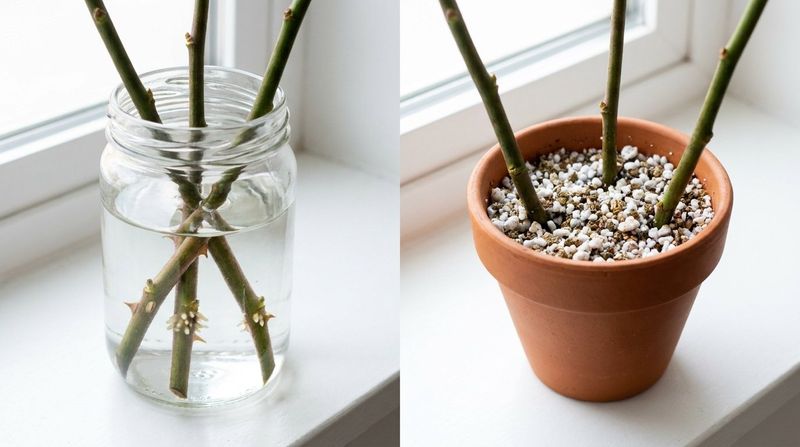
A cutting grows on its own roots. It does not copy the rootstock of a grafted rose, and the flowers may look like the parent’s while the plant behaves differently.
University of California Cooperative Extension notes that some cuttings, particularly from hybrid teas, may be less vigorous, less disease-resistant, or shorter-lived than grafted plants.
Results also vary by variety. UC Davis Foundation Plant Services says rooting success differs among varieties and that a rooted cutting takes time to become suitable for landscape planting.
An old, tough garden rose may root readily, while a fussy modern one may not.
Be patient after roots form. NC Extension advises growing potted cuttings for the season before planting them in beds the following fall.
Until then, keep them watered, in bright light, and protected from harsh weather. A rooted cutting is still a baby plant, not a mature landscape bush.
Before you snip a named rose, check whether it is protected. Extension sources caution against propagating protected or patented cultivars, and the U.S.
Patent and Trademark Office explains that plant patents can cover asexually reproduced varieties. Look up the cultivar’s status on the plant tag or with the breeder.
An unnamed heirloom from a family yard is a different situation, but it is still worth checking if you know its name.
Try several cuttings and let the rose set the timetable
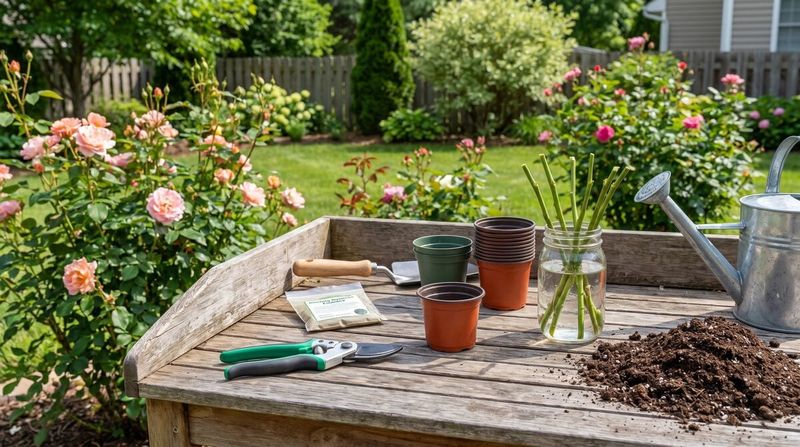
A clear cover is a humidity aid, and the right timing depends on the type of cutting you take. NC Extension suggests taking multiple cuttings, which is wise advice since some will fail and others may need a full season before planting out.
So take a handful from a rose you love, keep them clean, moist, and out of the hot sun, and give them time. A jar will not promise a new bush by fall, but patience might give you a piece of that porch rose for years to come.