
Why You Should Never Pile Mulch Against Your North Carolina Tree Trunks Before Winter Sets In
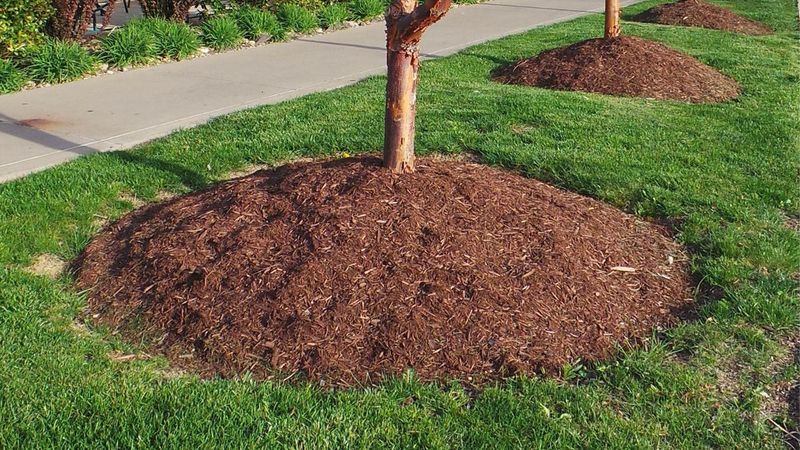
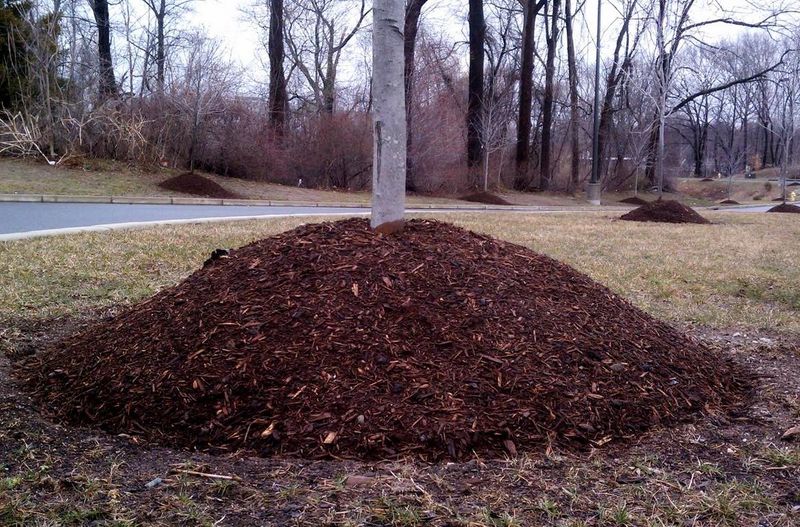
Fall is when many of us freshen up the beds around our trees, and it is easy to keep piling on mulch until it looks tall and tidy. That cone of bark against the trunk, often called a mulch volcano, can cause problems for the tree.
The good news is that you can still mulch before winter and protect your roots. Here is how to do it the right way in your North Carolina yard.
Fall mulch can protect roots without touching the trunk
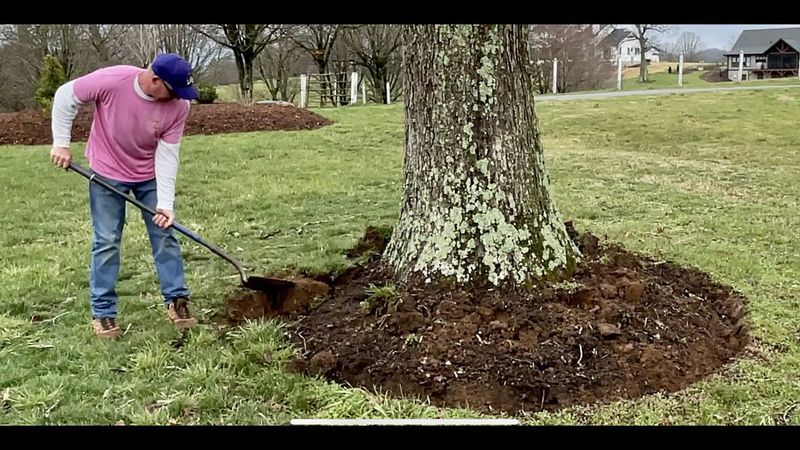
Cold weather coming is no reason to leave tree roots bare. Mulch spread the right way can help protect roots, and N.C.
Cooperative Extension advice on fall mulching lists root protection and less soil erosion among its benefits. That same advice warns homeowners not to pile mulch against trunks.
So the lesson is not “skip mulch in autumn.” The lesson is about where the mulch goes and how much of it there is. A wide, shallow blanket over the soil does a very different job than a tall mound hugging the bark.
Think of mulch as a blanket for the ground, not a sweater for the trunk. Trees in the Piedmont, the Coastal Plain, and the mountains all gain from steady soil conditions, and NC State’s woody ornamentals guidance recommends a shallow, broad layer kept back from the trunk.
The exact depth and spacing come up in the how-to section below.
Once you can picture the difference between useful ground cover and a pile against the bark, the rest of your fall cleanup gets easier. Your tree gets the root protection, and the trunk stays dry and breathing.
A mulch volcano can keep bark wet and redirect root growth
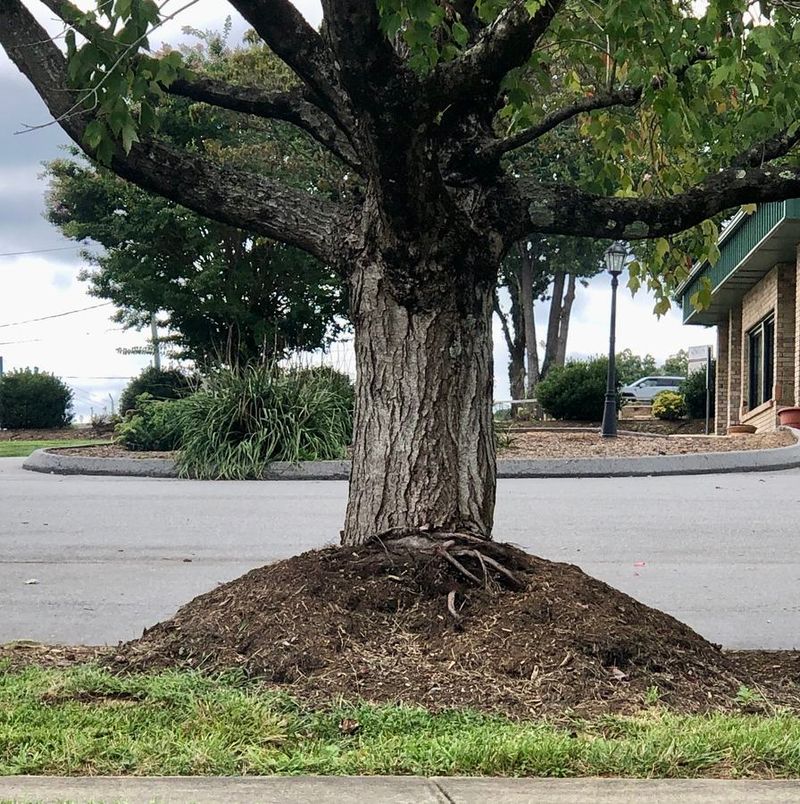
Bark is built to handle air and rain, not to sit buried in damp wood chips for months. According to NC State Extension, excessively deep or trunk-contacting mulch can keep bark wet and encourage decay.
Roots can also respond to a thick mulch layer. When mulch is too deep, roots may grow up into it instead of out into the soil, and those roots can later wrap around the trunk and squeeze it.
This is called girdling, and it tends to develop slowly.
Notice the word “can” here. One fresh pile does not doom a tree, and how much harm shows up depends on conditions such as drainage, mulch type, tree species, and how long the mulch stays against the trunk.
A pile that has sat there for several seasons is a bigger concern than one you fix this weekend.
Mulch is also not the only cause of girdling roots. Trees planted too deeply can develop them too, which is why the fix starts with looking closely at what is actually happening at the base of your tree.
Voles are a winter concern, but damage is not inevitable

Winter brings another worry for some yards: voles. These small rodents may chew roots and bark when food gets scarce.
NC State reports that during severe winters, especially with snow cover, voles may consume roots and girdle trunks.
Thick mulch near a trunk can give them cover to move around unseen. Even so, NC State’s wildlife guidance supports a narrower point: clearing mulch near the trunk reduces hiding places.
It does not say mulch guarantees voles.
Your own risk depends on your yard. A mild winter with no snow cover is very different from a hard one, and a mountain property with deep snow faces different odds than a coastal lot.
Many yards never see vole trouble at all.
Hold onto this idea for later: the usual gap at the trunk is a routine habit, while extra clearing is a response to signs of vole activity. Two different steps, two different situations.
Shape a shallow, wide ring around the tree
Start by looking at what is already there. Push a gloved hand or a ruler into the mulch and measure it.
If you already have 2 to 3 inches, you may not need to add anything, and you can simply fluff it up.
For an established landscape tree, NC State recommends 2 to 3 inches of mulch, starting 6 inches from the trunk and extending outward across as much of the root zone as practical. Renew it only as needed rather than topping it off every year out of habit.
Picture a doughnut, not a volcano. The hole in the middle is your 6-inch gap, and the wide ring is the shallow layer that covers the roots.
Now do a quick visual check. You should see the root flare, the place where the trunk widens as it meets the major roots.
If the flare is visible and the mulch is shallow, you are in good shape.
Keep in mind that this 6-inch gap is the routine rule. It is not the same as the wider clearing used for vole habitat, which only applies where you have signs of voles.
Shredded hardwood or pine bark both work, and wide beats tall every time.
Already have a pile? Pull it back carefully
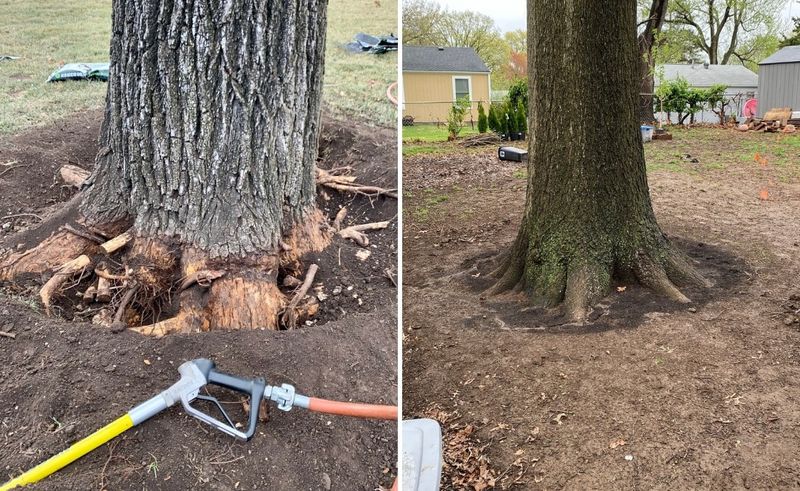
If you inherited a mulch volcano or built one yourself, the fix is gentle. Use a hand rake or your gloved hands to pull the excess away from the trunk, then spread it across the root zone.
NC State’s guidance describes this same approach of moving the extra mulch outward.
Work slowly so you do not scrape the bark. Stop when the mulch is about 2 to 3 inches deep and the 6-inch gap is open around the trunk.
Next, look at what you uncover. If you see the widening flare, the problem was just extra mulch, and you are finished.
If you find soil covering the flare and the trunk goes straight into the ground like a post, the tree may have been planted too deeply.
Do not start digging hard around the trunk, and do not cut roots you suspect are girdling. Penn State Extension suggests considering an arborist for root-flare excavation.
A certified arborist can judge whether the work is worth the risk to the tree.
Clear a wider zone when vole activity is present
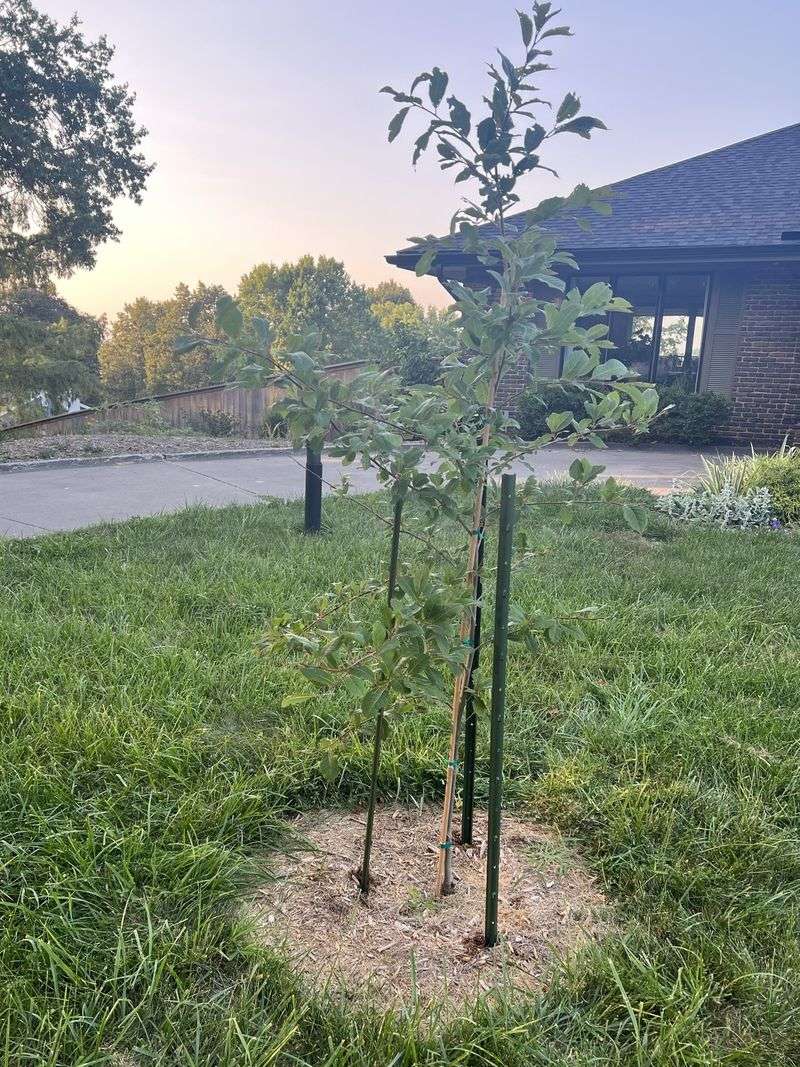
When you actually see signs of voles, such as small runways in the grass, burrow holes, or gnawed bark, it is time to adjust. NC State’s habitat guidance recommends removing mulch within a foot of the trunk to reduce cover.
That wider clear zone is a targeted response. You do not need a bare foot around every tree in every yard, so keep the usual 6-inch gap where you have no vole signs.
For young trees with thin bark, NC State also describes close mowing of nearby grass and hardware-cloth cylinders as management options. The cylinder wraps around the trunk to keep gnawing mouths off the bark, and it should be sized so the trunk has room to grow.
Keep the rest of the mulch ring in place, shallow and wide, so roots still get their protection. You are only opening up the strip nearest the trunk, which is where voles would hide while they feed.
Leave roots mulched and the trunk clear
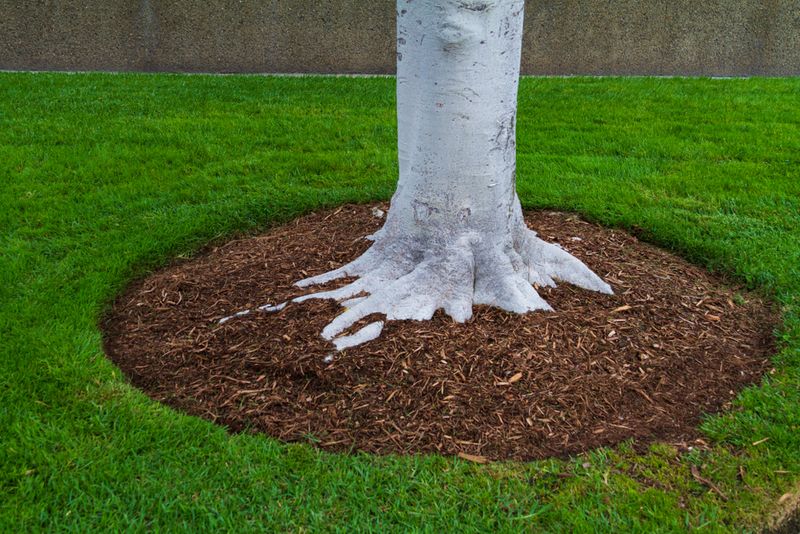
Your trees can head into winter with mulch over their roots, as long as it is shallow, wide, and kept off the trunk. Let the root flare show, count what is already there before adding more, and widen the clearing only if vole signs appear.
NC State’s guidance backs that simple approach.
A tree wants a cozy root zone and a trunk that can breathe, and your rake can give it both.