
Don’t Dig Up Your Struggling Rhododendron Yet – Curled Winter Leaves Are a Common Cold Response
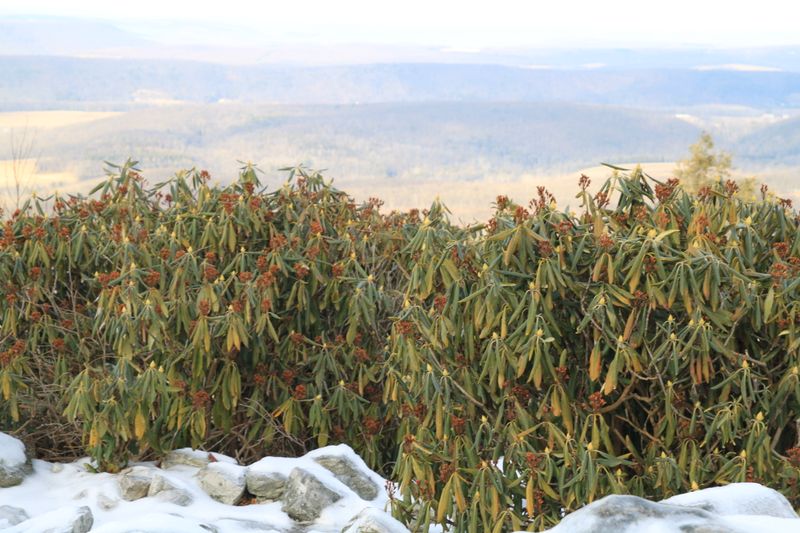
You walk out on a frozen morning and your rhododendron looks awful. The leaves are rolled up tight like little cigars and hanging straight down.
Before you grab a shovel, know that this look is very common in cold weather, and it often tells a calmer story than it seems. Here is how to read the signs, spot real trouble, and give your shrub a better shot at a good spring.
Cold-weather curls alone are not a reason to dig
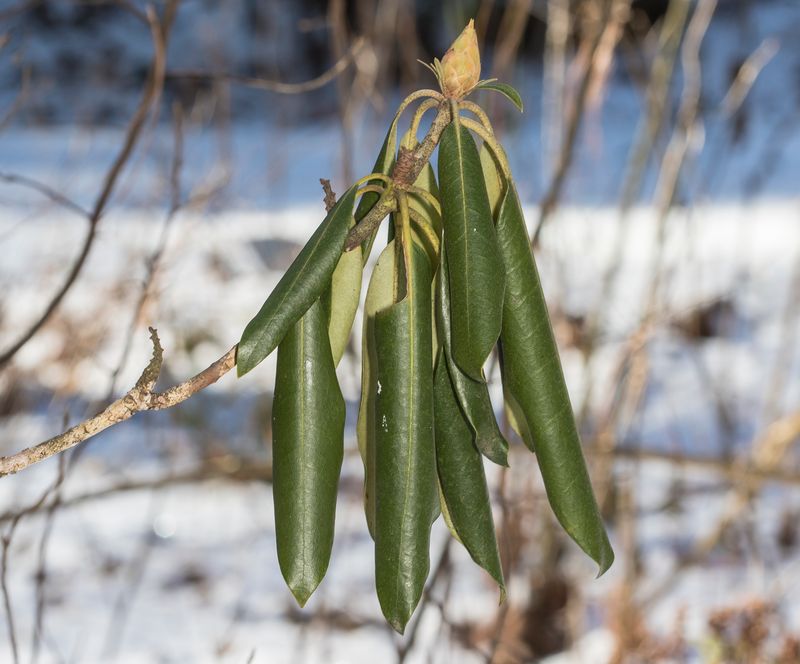
Picture a frosty morning where your rhododendron leaves hang down and roll tight along their length. It looks like a plant giving up, but it is one of the most common sights in cold-climate gardens.
The Missouri Botanical Garden describes rolled, drooping leaves as a typical cold response, with plants generally recovering in spring.
University of Vermont Extension also describes tight winter leaf rolling as typical of evergreen rhododendrons. So if the curling shows up when temperatures drop, the pattern alone is not a reason to dig up the shrub or cut it back.
A good clue is what happens when the weather warms. Leaves that loosen and flatten out again over a mild afternoon or a thaw are behaving the way many rhododendrons do.
Think of it as a mood that follows the thermometer.
That said, not every curled leaf is harmless, and not every rhododendron reacts the same way. Some shrubs curl hard, others barely at all, and that difference does not by itself tell you which plant is healthier.
Curling that hangs on after the weather warms, or comes with browning, dieback, or leaf drop, deserves a closer look.
The rest of this article sorts out those differences. You will see what scientists know about the movement, how winter burn looks different, which warning signs matter, and which simple fall steps can lower your shrub’s stress.
Thermonasty is real, but its exact purpose remains unsettled
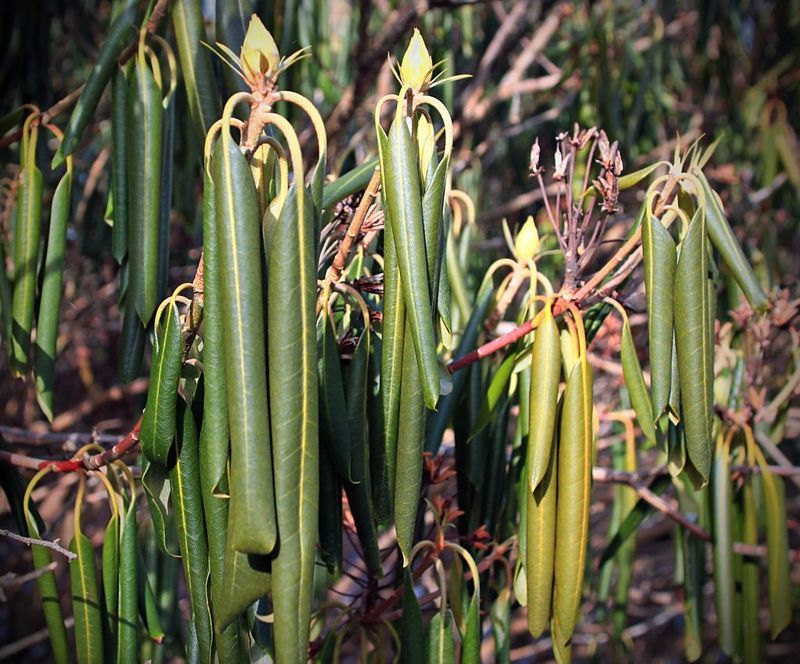
Researchers have a name for this leaf movement: thermonasty. It means the leaves change position in response to temperature, and in rhododendrons that usually means rolling and drooping as it gets cold.
The movement itself is well documented.
A 2023 study of Rhododendron maximum used infrared imaging and saw rolling and drooping after ice formed in the leaf’s vascular tissue. That ties the movement to real freezing events in the plant.
Species differ, too. In a five-species comparison, the more winter-tolerant species showed more intense leaf movement.
That does not mean every rhododendron curls the same way, and it does not mean a heavy curl proves a plant is healthy.
Why do they do it? You may hear that curling saves water, and that is a popular garden explanation.
But a research synthesis on rhododendron leaf movement discusses several possible functions, including less exposure to winter sunlight and other benefits during cold stress.
The honest answer is that scientists have not settled it. For you, the takeaway is simple: curling is a common cold-linked behavior, and its exact job is still being worked out.
Treat it as a clue to watch, not a verdict.
Winter burn leaves damage, not just a temporary curl
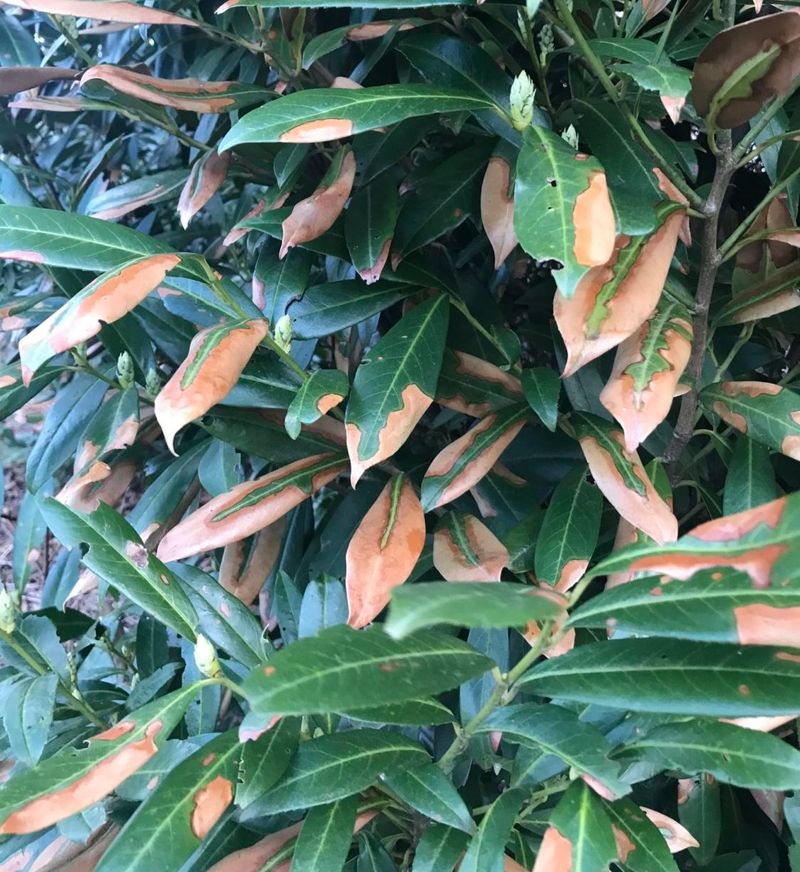
Curled leaves change position. Winter burn changes the leaf tissue itself.
The telltale look is brown or tan leaf margins and tips, often on the side facing the wind or the low winter sun.
Here is the tricky part: the damage may not show up right away. According to University of Wisconsin Extension, winter burn often becomes more obvious as snow melts and spring temperatures rise.
A shrub that looked fine in January can show brown edges in March.
Several things can contribute. Drying wind, bright winter sun, frozen soil that keeps roots from supplying water, dry autumn conditions, and a cultivar that is only marginally hardy for your area can all play a part.
University of Minnesota Extension covers many of these exposure factors for winter shrub care.
That means curled leaves by themselves do not prove winter burn. A shrub can curl in the cold and come through with clean, green foliage.
Likewise, winter burn is not always the result of a gardening mistake, since weather and site can do it even with good care.
A simple check helps. Look at the leaf edges once the weather warms.
Flat, green leaves point toward normal recovery, while crisp brown margins point toward injury worth tracking through spring.
Persistent wilt and dieback call for a closer look
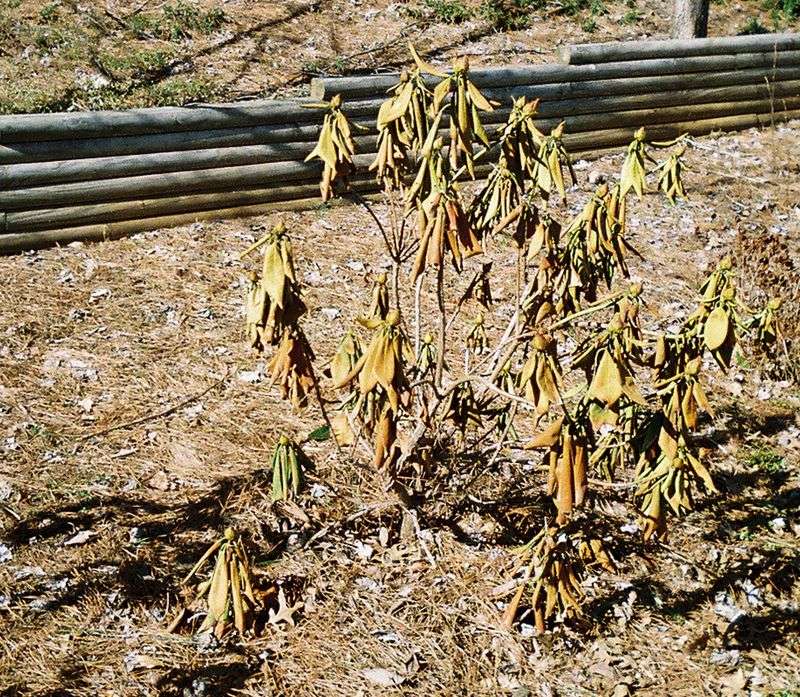
Curling is not only a winter symptom. Heat, strong sun, and water stress can make rhododendron leaves cup or droop too, and the Missouri Botanical Garden notes this can happen in hot summer weather.
Oregon State’s Ask Extension service also covers drooping rhododendrons. A droop that eases by evening or after a good soak is different from one that never lets up.
Signs that deserve attention include wilting that lasts through the growing season, yellowing or dull-green leaves, stunted growth, leaf drop, scattered dead branches, cankers, and obvious leaf spots. One symptom alone rarely tells the story, so look at the whole plant and how it has changed over weeks.
Some causes are serious. Phytophthora root rot, for example, can cause permanent wilting and leaf drop.
The University of Minnesota’s diagnostic guide describes reddish-brown, rotted roots as one clue. The University of Maryland also offers a guide to common azalea and rhododendron problems.
Still, you cannot name a disease from a droop. Check the soil moisture and drainage, think about recent weather and sun exposure, and note whether symptoms are spreading.
If they persist, take clear photos and contact your local extension office or a certified arborist for a reliable diagnosis. Getting an expert opinion beats guessing or digging blindly.
Water a dry root zone before the ground freezes
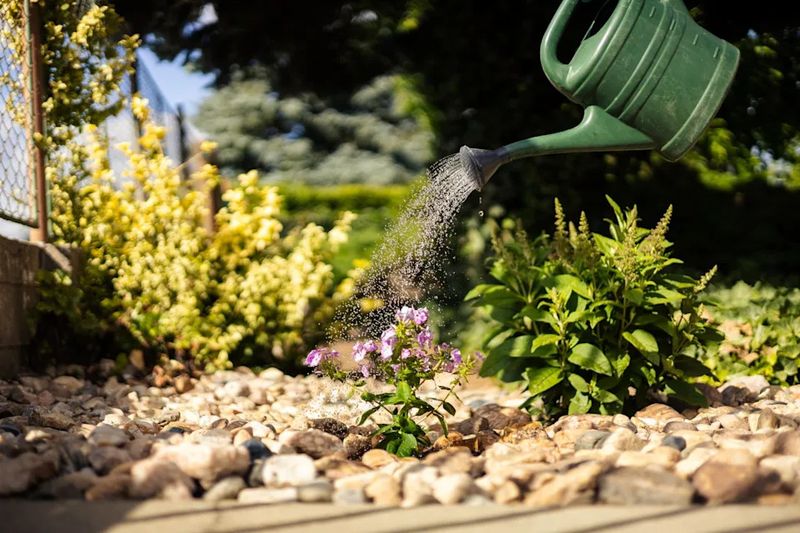
Late fall is the moment to ask a simple question: has autumn been dry? If so, a thorough watering before the ground freezes helps your rhododendron avoid heading into winter with a parched root zone.
University of Minnesota Extension recommends thorough late-fall watering before freeze-up, and the Missouri Botanical Garden also lists fall watering in its rhododendron care advice.
Use a slow soak so water reaches the whole root zone instead of running off. Poke a finger or trowel a few inches into the soil first.
If it is already damp, skip the hose.
There is an important limit here. Do not water soil that is saturated or drains poorly, because rhododendron roots dislike soggy conditions and extra water can make things worse.
Also keep expectations realistic. A good fall drink can reduce stress, but it does not promise your shrub will escape winter injury.
Weather, exposure, drainage, and cultivar hardiness still have a say.
Mulch shallow roots and reduce harsh exposure where possible
Rhododendron roots are shallow and fibrous, so they sit close to the surface where soil swings between wet, dry, warm, and frozen. A few inches of mulch over the root zone helps conserve moisture and moderate soil temperature.
Extension guidance from University of Vermont and University of Minnesota points to mulch for exactly these reasons.
Spread it out over the root area, but pull it back so it does not pile against the stems. Mulch heaped on the trunk can hold moisture where you do not want it.
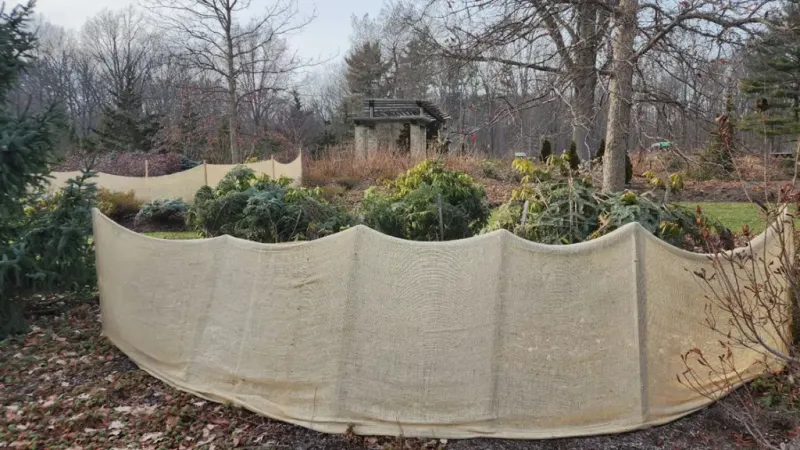
If your shrub sits in an open spot, wind and winter sun add stress. University of Minnesota winter-protection advice and Wisconsin Extension both note that cutting drying wind and winter sun can help limit injury.
A burlap screen set up on the windy side is one option for exposed plants.
Site matters too. A cultivar that is a poor match for your winter may get hurt even with careful tending, so check hardiness ratings before you buy new shrubs.
Treat these steps as ways to lower risk. They can help, but they are not a guarantee against winter burn.
Wait for spring growth before removing damaged branches
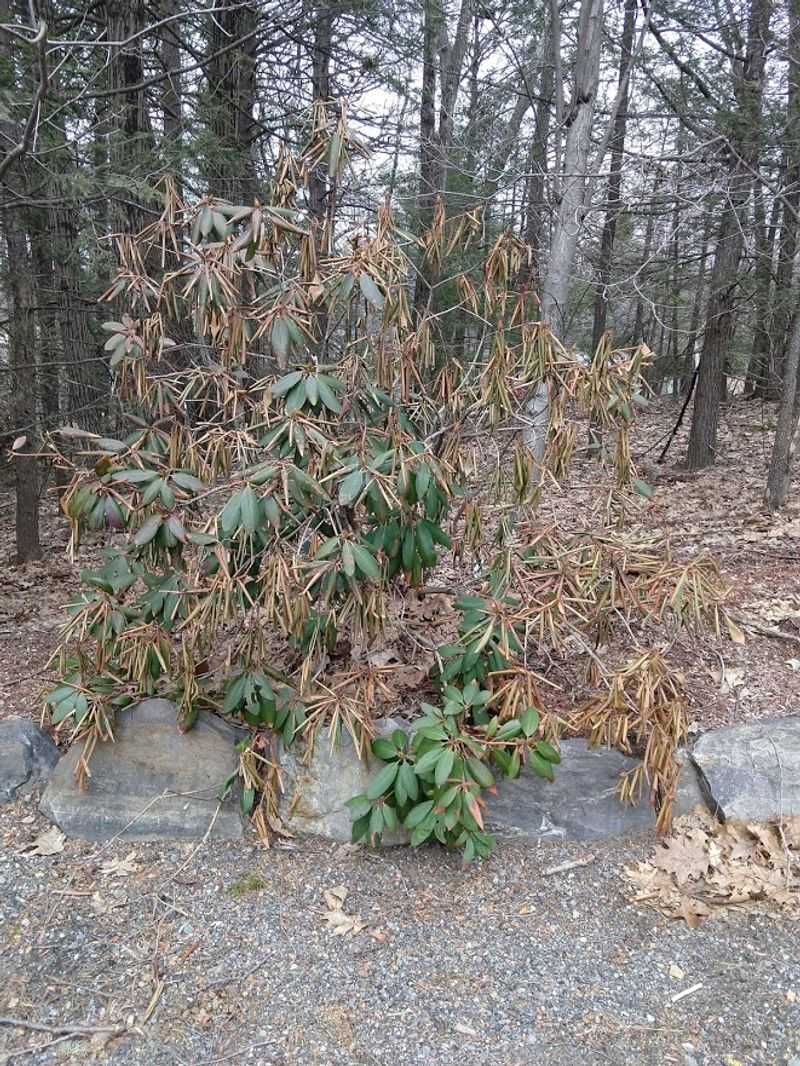
Your best tool for winter worries is patience. Watch whether the curled leaves relax as the weather warms, then see what spring growth shows you about the real damage.
Wisconsin Extension advises waiting until mid-spring to prune winter-injured evergreen foliage, so you can tell living tissue from dead. Vermont Extension suggests pruning damaged or diseased parts in late winter or early spring.
Either way, do not cut a branch just because its leaves were curled in January.
A scratch test or a look for swelling buds can help you decide. Branches that leaf out are alive, and ones that stay bare after neighbors have grown may be done.
If wilting, leaf drop, or dieback keeps spreading into the growing season, the Missouri Botanical Garden notes that cold-related curling should not be the only explanation you accept. Seek a proper diagnosis.
A rhododendron that looks defeated in winter often just needs time to prove otherwise.