
Pot Your Amaryllis in Early to Mid-November for a Chance at Christmas Flowers
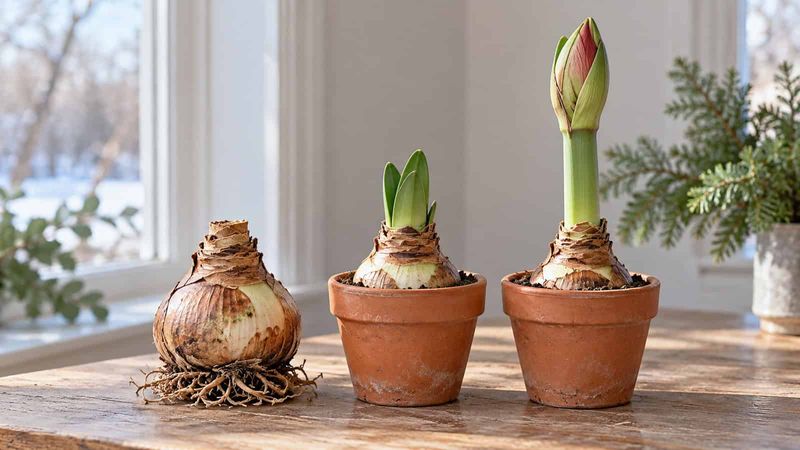
A fat amaryllis bulb looks like a plain brown onion, yet it can send up tall stalks of bright flowers in the middle of winter. The trick is timing, and the clock starts when you pot it.
If you plant in early to mid-November, you have a reasonable chance of seeing blooms around Christmas. Here is how to pot it, care for it, and set expectations that keep the whole project stress free.
Early to Mid-November Gives You a Chance at Christmas Flowers
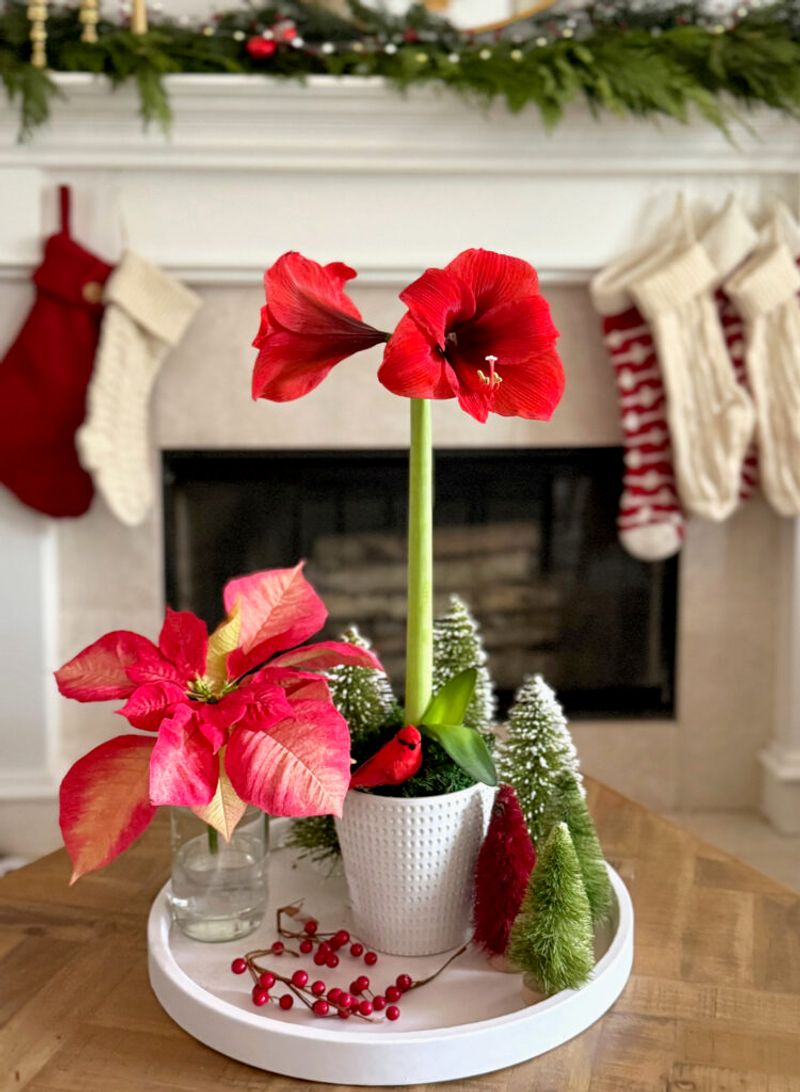
If you want amaryllis flowers near December 25, the job starts this week. Iowa State Extension says amaryllis usually blooms about 6 to 8 weeks after planting, and it recommends potting in early to mid-November for Christmas flowers.
Do the math and the reason becomes clear. Pot a bulb on November 5 and eight weeks lands you around the end of December.
Pot it on November 30, and the same 6 to 8 weeks points to mid-to-late January. So potting at any point in the month will not get you there, and that is why the early to mid-November window matters.
Even then, treat Christmas flowers as a possibility, not a promise. Timing varies, and South Dakota State University Extension notes that some varieties may take as long as 10 weeks to begin flowering.
Bulb condition, warmth, light, and variety can all nudge the schedule earlier or later.
The good news is that this is a low-stress project. You need one bulb, one pot, some potting mix, and a bright spot.
If the flowers show up a little before or after the holiday, you still get a lovely winter bloom show. The rest of this article walks through each step in order, so you can get the bulb planted while the timing still works in your favor.
The Holiday “Amaryllis” Is Usually a Hippeastrum
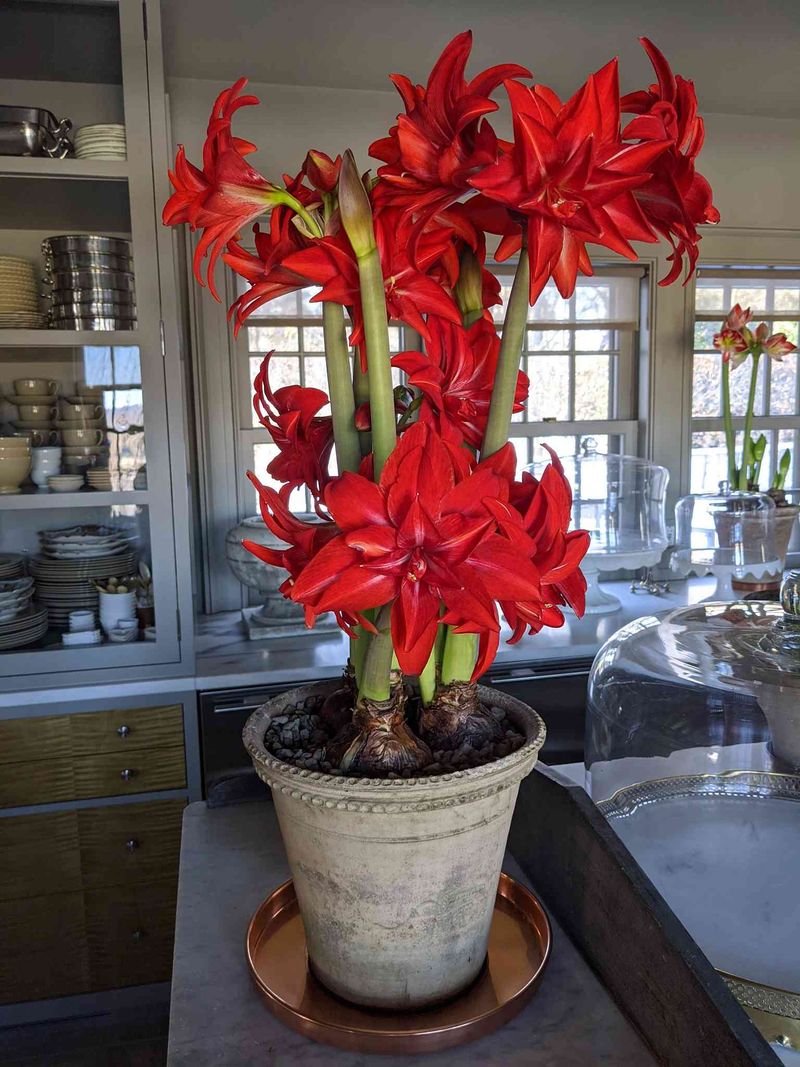
Walk into a store in fall and the boxed bulbs labeled amaryllis are, in most cases, a different plant than the true amaryllis. According to University of Wisconsin-Madison Extension, the bulbs sold for indoor flowering are commonly Hippeastrum, even though they are marketed under the amaryllis name.
You do not need to memorize the botany. What matters is that the advice here is for those cultivated indoor bulbs, grown in pots for winter flowers.
It is not a universal outdoor planting calendar, so do not use these dates to plant bulbs in your garden beds.
One safety note before you set the pot on a table. The ASPCA lists amaryllis as toxic to cats, dogs, and horses.
If you share your home with a pet, choose a spot well out of reach, such as a high shelf or a room the animal cannot enter.
Plant the Bulb High in a Close-Fitting Pot
Start with the pot. Pick one with drainage holes that is only slightly wider than the bulb.
Clemson Cooperative Extension gives this close-fit approach, and a snug pot suits the bulb well.
A heavy pot with a broad base is a smart choice because the tall flower stalks and big blooms can make a light pot tip over. South Dakota State University Extension also notes the benefit of a stable pot.
Now plant in this order:
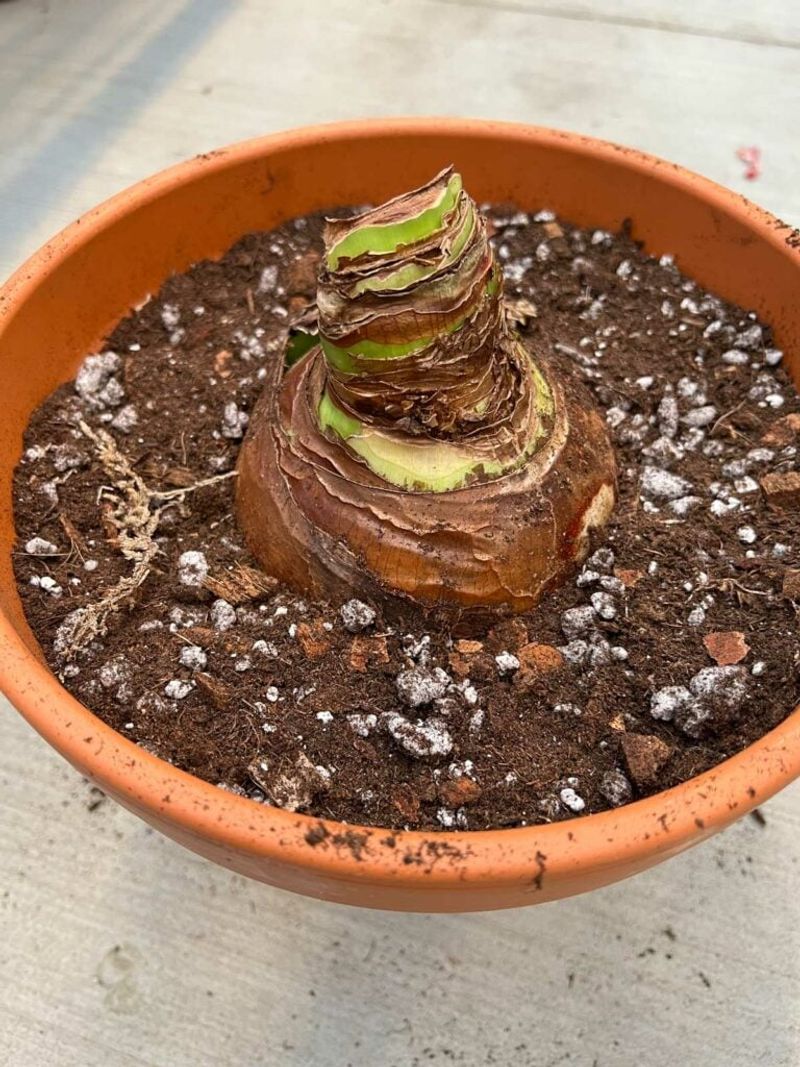
First, add a layer of potting mix to the bottom of the pot. Second, set the bulb on it with the pointed end up and the flat, root end down.
Third, add mix around the sides until about the top third of the bulb stays exposed above the surface.
Press the mix lightly so the bulb sits firmly. Leaving the shoulders of the bulb showing is normal, and it is part of the plan.
Save watering and light for the next step so you can handle them calmly.
Water Carefully and Give the Bulb Light and Warmth
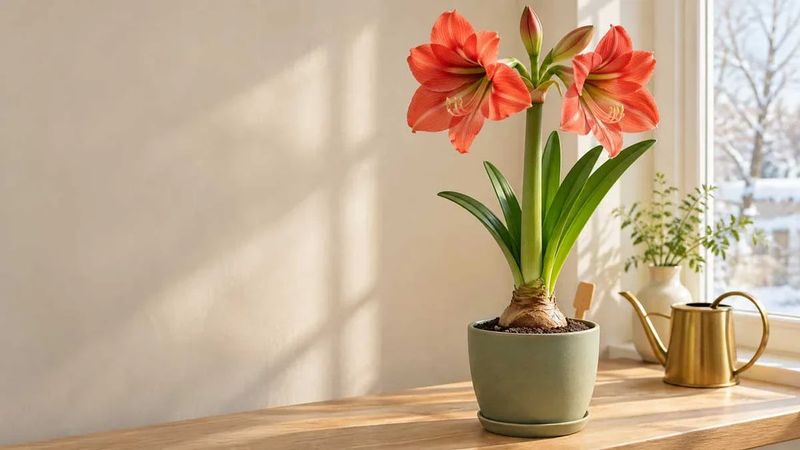
Right after planting, water the pot thoroughly and let the extra drain away. Then ease off.
Clemson Cooperative Extension advises against keeping the mix constantly wet, and University of Maryland Extension points out that overwatering can cause rot.
As green growth appears, begin to water more often. A bulb with no leaves or stalk drinks very little, while one with a growing stalk and foliage uses much more.
Let the top of the mix feel slightly dry before you water again.
Give the pot bright light and warmth while it gets going. Clemson recommends 70 to 75 degrees F until roots and shoots begin growing.
A spot near a sunny window away from drafts usually works.
Once flowers open, the advice changes. Conditions around 65 degrees F can prolong the blooms, so moving the pot to a cooler room may help you enjoy them longer.
A Second Bulb Can Hedge Against Variable Timing
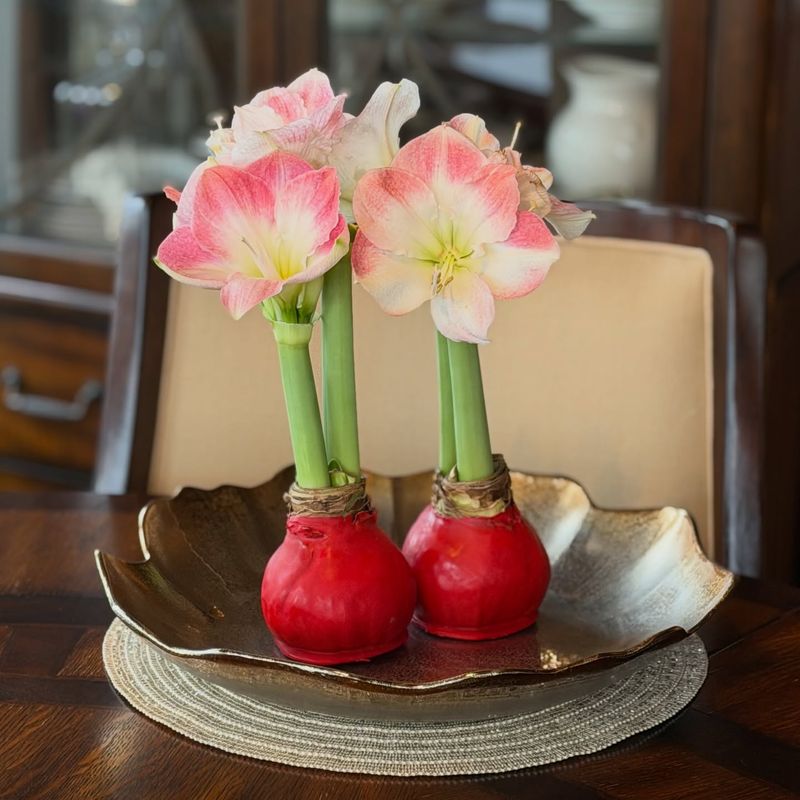
Bulbs do not follow a calendar, so a backup plan can help. Iowa State Extension suggests potting a second bulb several days after the first.
The idea is to spread out the timing, which improves your odds of having one in bloom near Christmas.
Think of it as a hedge, not a guarantee. One bulb might open a bit early and fade before the holiday, while the other might hit its peak right on time.
It is also possible that neither lines up exactly, and that is normal.
Bloom times vary because varieties differ. As South Dakota State University Extension notes, some may take as long as 10 weeks to begin flowering.
Warmth and light can also speed up or slow down growth.
So aim for early to mid-November, pot the second bulb a few days later, and keep both in the same care routine. You cannot control the exact bloom date, but you can give yourself two chances at a flowering bulb in December.
Flower Size and Stalk Count Depend on the Bulb and Variety
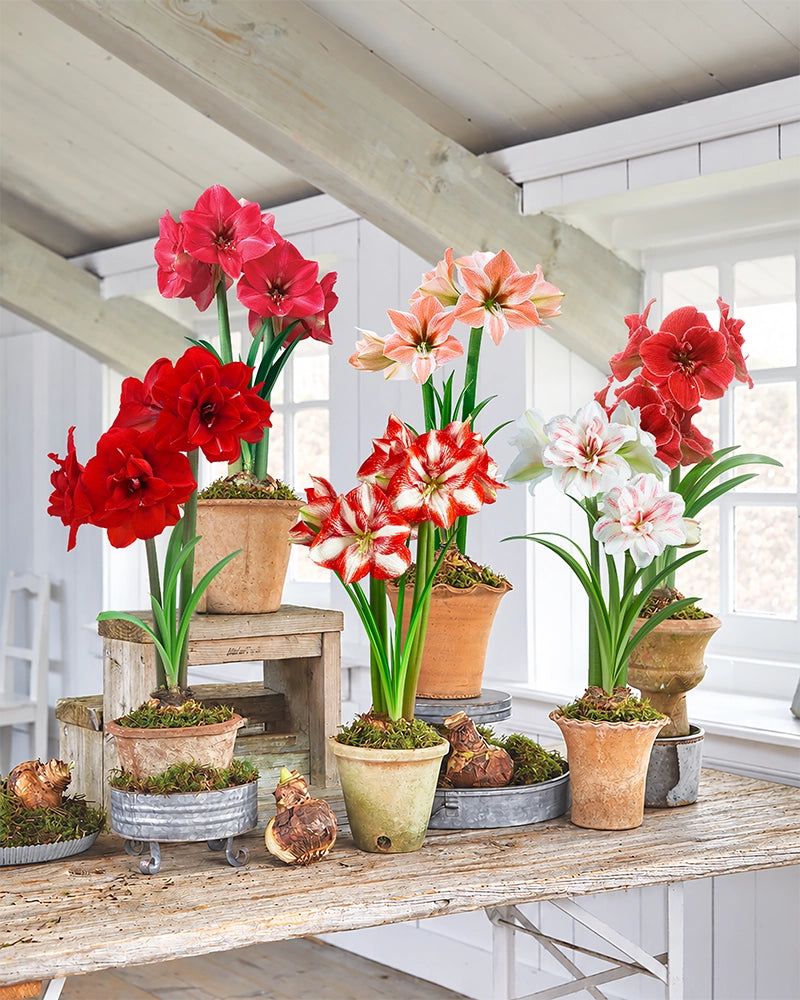
Planting time gets you flowers at about the right season, but it does not set how big they are. Amaryllis varieties range from miniature to large-flowered, as University of Florida IFAS Extension describes.
A small-flowered variety will stay small no matter when you pot it.
Bulb size matters for stalk count. Larger bulbs are more likely to produce multiple stalks, though no bulb is guaranteed to do so.
A first-year bulb might send up one stalk, while another of the same size might send up two.
You may see a flower count on a stalk mentioned. South Dakota State University Extension says stalks commonly carry four flowers, but counts vary with bulb size and variety.
When you shop, read the label for the variety type and pick a firm, healthy bulb. That choice shapes your results more than the date on the calendar.
Keep the Leaves Growing After the Flowers Fade
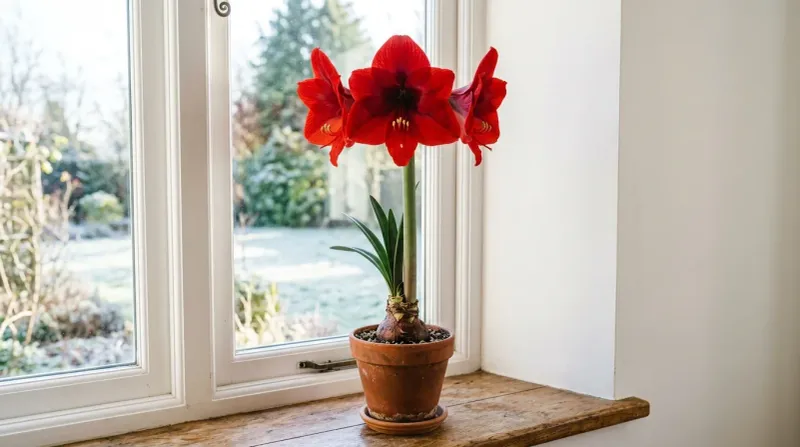
When the last flower fades, the bulb is not finished. Reblooming is possible, but it takes ongoing care.
Keep the plant going, and leave the foliage growing in bright light so the bulb can store energy, as Clemson Cooperative Extension explains.
Those long green leaves work like solar panels that refill the bulb. Keep watering as needed, and do not cut them off just because the show is over.
There is no promise it will flower again, but this is the step that gives it the chance.
A bulb is a patient plant, and what you do in the quiet months decides what happens next winter.