
These 17 Flowering Ground Covers Turn That Bare, Shady Spot Under Your Trees Into A Carpet Of Blooms
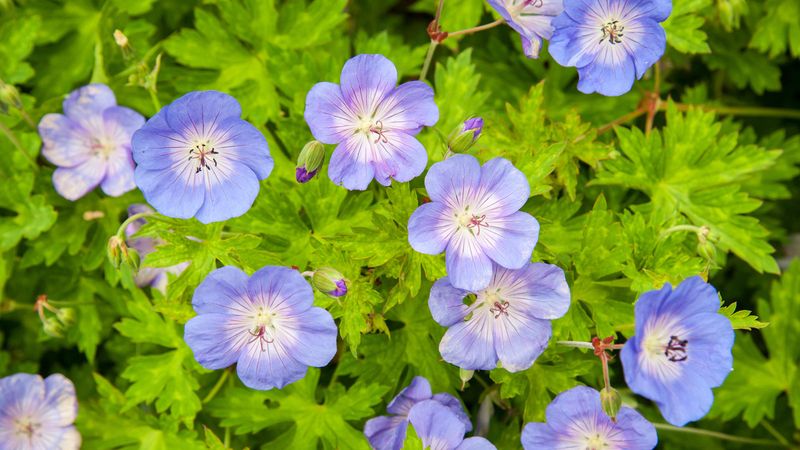
That patch of bare dirt under your trees is not your fault. Grass gives up there because it gets too little sun and has to fight tree roots for water.
The good news is that plenty of low, tough plants actually like those conditions and will fill the space with leaves and flowers. Here are 17 that can turn your problem spot into the prettiest part of the yard.
1. Dwarf Chinese Astilbe
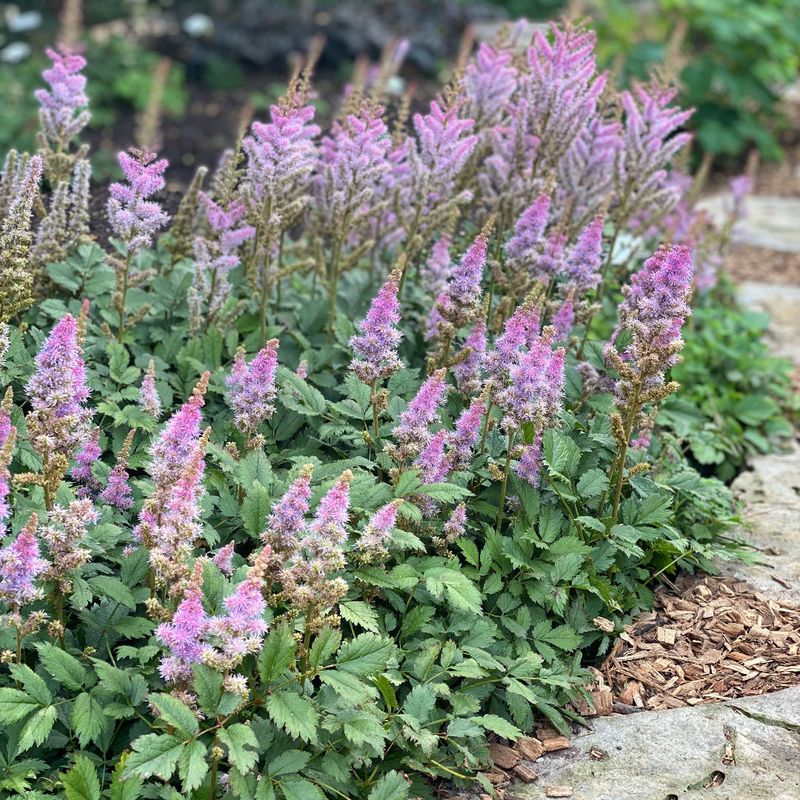
Most astilbes stand tall and proud, but ‘Pumila’ stays close to the ground at about 8 inches. Its fuzzy lavender-pink plumes show up in late summer, right when the rest of a shade garden starts looking tired.
Give it rich, moist soil that still drains well. Under a tree, that usually means adding a few inches of compost and watering during dry spells, since tree roots drink first.
If the leaf edges turn crispy and brown, the plant is thirsty, not sick. A deep soak once a week in summer usually fixes it, and the clumps will spread steadily once they settle in.
2. Periwinkle (Vinca minor)
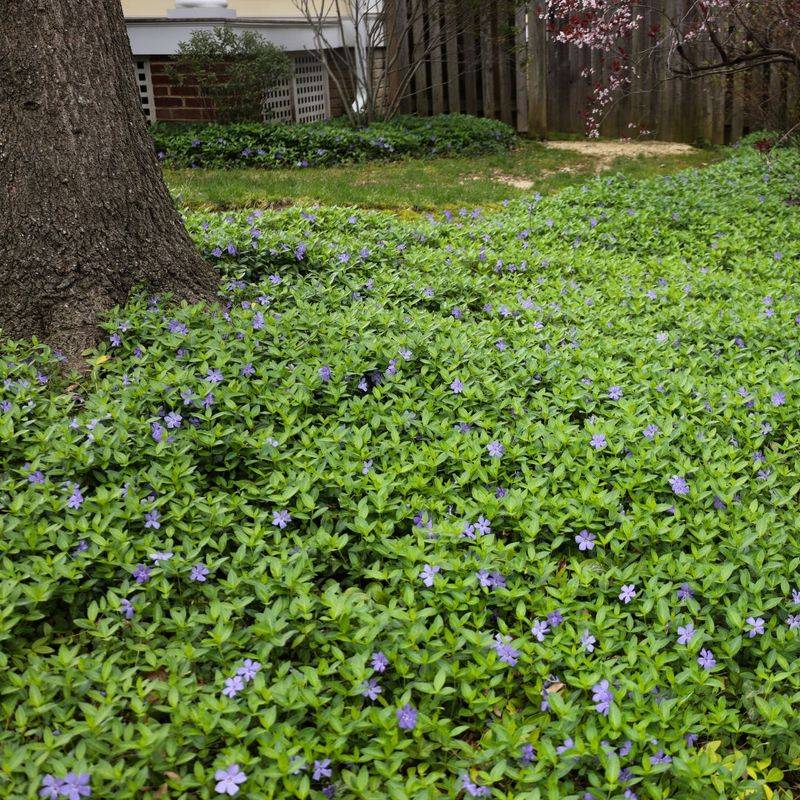
Grandma probably had a patch of periwinkle by the back steps, and there is a reason it lasted decades. The glossy leaves stay green all year, and lilac-blue flowers pop up in spring with a few extras through summer.
It grows about 6 inches tall and handles partial to full shade with ease. Look for ‘Alba’ if you want white flowers or ‘Atropurpurea’ for deep purple.
One honest warning: it spreads hard and is considered invasive in some areas, so check your local guidance before planting. Edge it with a border, and skip it entirely in soggy spots where it tends to struggle.
3. Bugleweed (Ajuga)
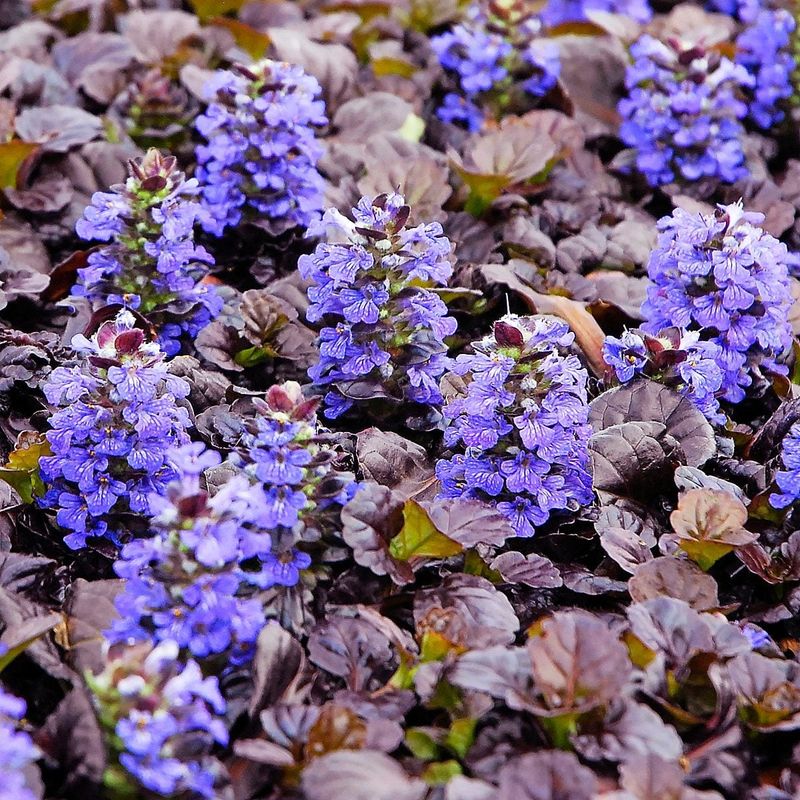
Picture a rug that changes color with the seasons. Bugleweed forms a tight mat 2 to 8 inches tall, and its leaves come in bronze, burgundy, purple, or even cream-splashed versions.
In spring, short spikes of violet-blue flowers rise up and the bees go wild. Pink and white types exist too if blue is not your thing.
Ajuga wants well-drained soil, so avoid low spots where water puddles. If the center of a clump starts to rot or thin out, lift a few rosettes and replant them in fresh soil.
4. Spotted Deadnettle (Lamium maculatum)
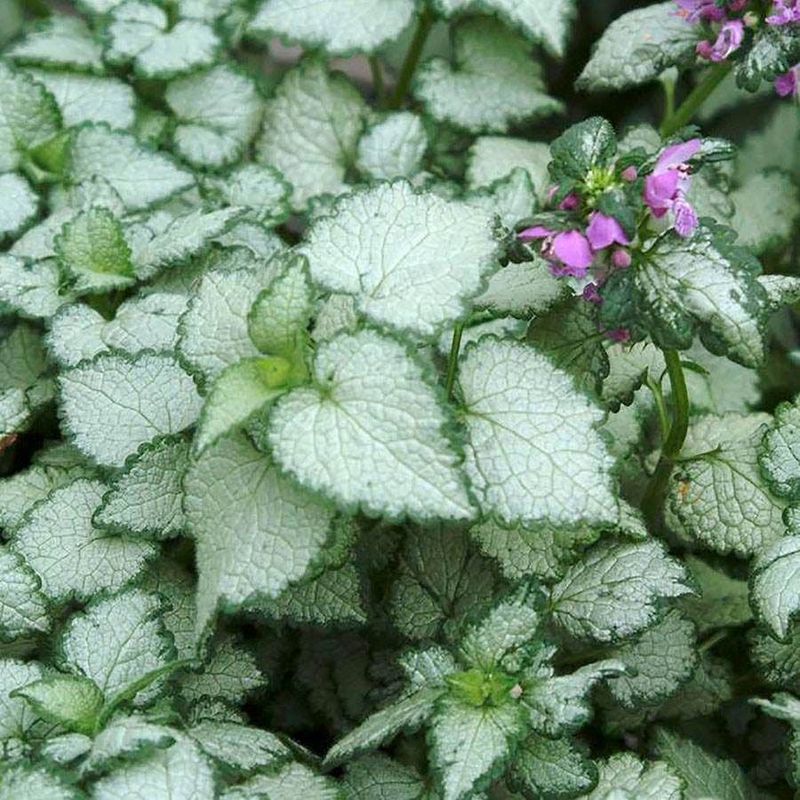
Silver leaves are a secret weapon in the shade. They catch what little light sneaks through the branches and make a dark corner look like it is glowing.
Spotted deadnettle grows 8 to 12 inches tall and blooms from late spring into midsummer. Try ‘Beacon Silver’ for pink-purple flowers, ‘Pink Pewter’ for soft pink, or ‘White Nancy’ for crisp white.
Do not worry about the name, because it does not sting. If it looks scraggly by August, shear it back by half and water well, and a fresh flush of leaves will follow.
5. Barrenwort (Epimedium)
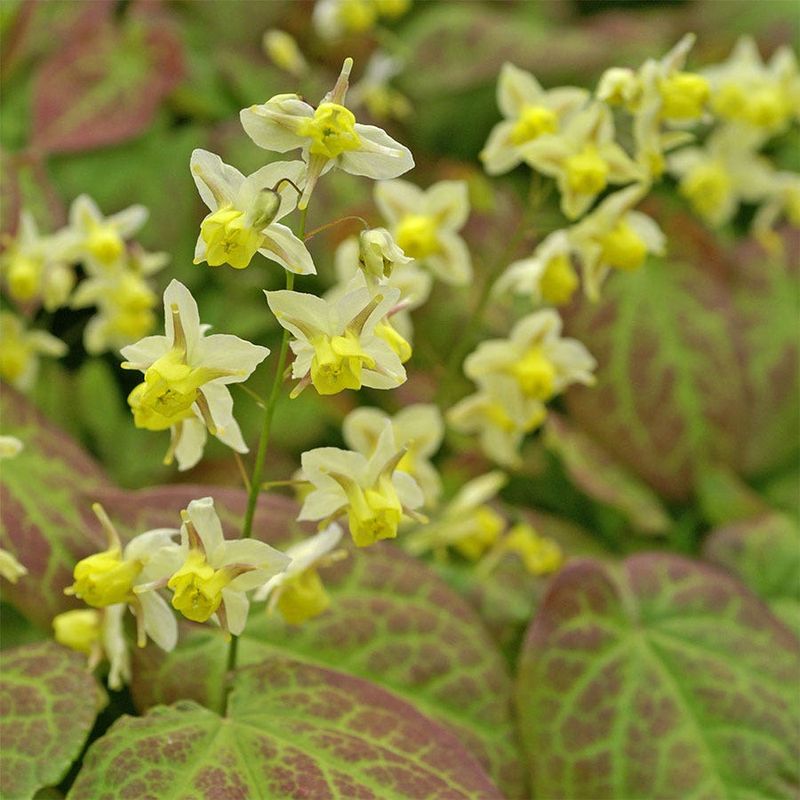
Dry shade is the toughest spot in any yard, and barrenwort laughs at it. Once it is established, this plant handles the parched soil right at the base of a big tree better than almost anything else.
Gardeners call it fairy wings because the small spring flowers look like tiny columbines floating above the leaves. Colors range from white and pink to red and yellow.
The heart-shaped leaves often show a red blush in spring. It spreads slowly, so be patient, and cut the old leaves down in late winter so the new flowers are easy to see.
6. Japanese Spurge (Pachysandra terminalis)
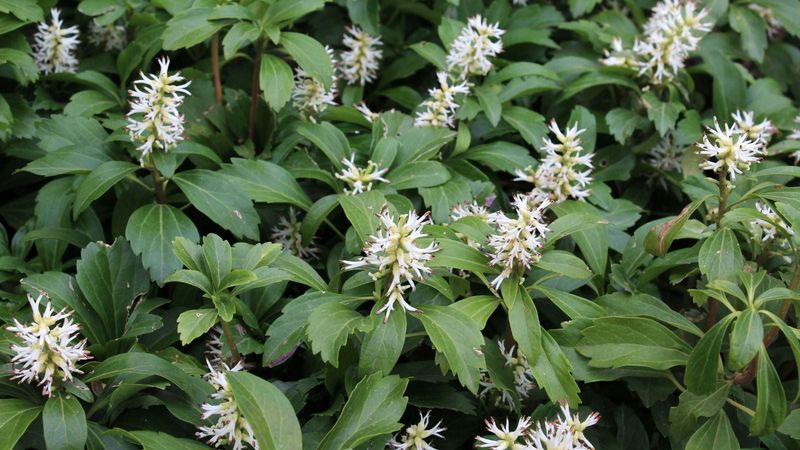
Walk through any older suburb and you will spot pachysandra sitting quietly under the trees. It is the dependable workhorse of shade ground covers.
The shiny evergreen leaves form a dense mat 6 to 12 inches tall, and small whitish flower spikes appear in spring. It handles poor soil, some drought, and deer and rabbits usually leave it alone.
If the leaves turn yellow, it is likely getting too much sun or winter wind. Keep in mind that it is considered invasive in some regions, which is why many gardeners now choose the native cousin up next.
7. Allegheny Spurge (Pachysandra procumbens)
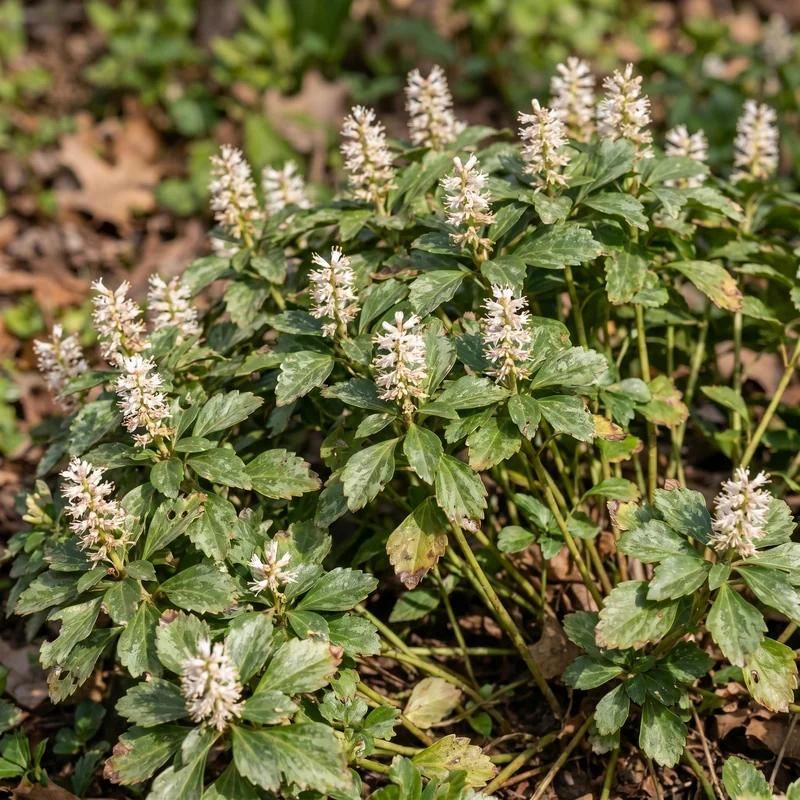
Here is the American version of pachysandra, and it brings its own charm. Fuzzy white flower spikes appear in late winter, often before anything else in the yard has woken up.
The leaves are a soft bluish-green, sometimes mottled, and stay semi-evergreen. It grows 12 to 15 inches tall in partial to full shade.
Compared to the Japanese type, it spreads more politely, holds up better in cold winters, and has fewer pest and disease troubles. Deer tend to pass it by, and it tolerates dry shade once rooted.
8. Sweet Woodruff (Galium odoratum)
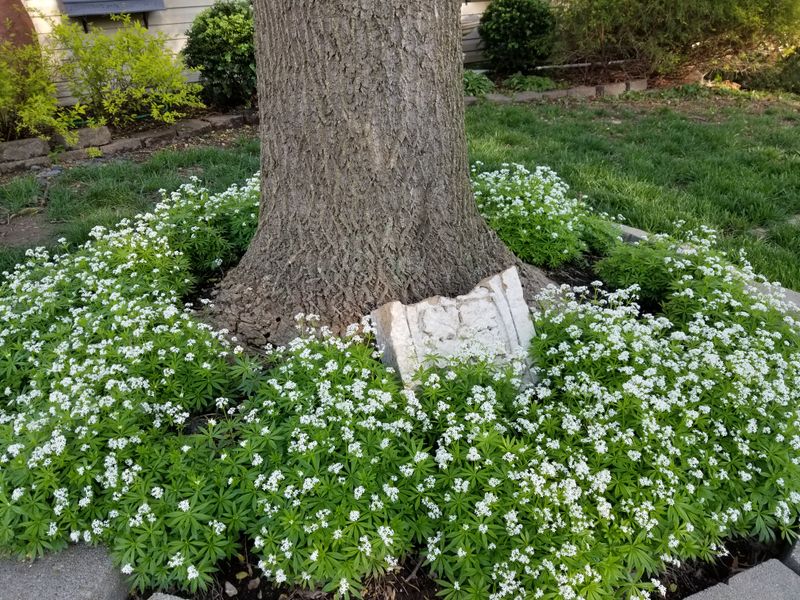
Crush a leaf and you will smell fresh hay with a hint of vanilla. In Germany, people have long used sweet woodruff to flavor a spring drink called May wine.
In the garden, it makes a frothy white carpet in spring, growing just 6 to 8 inches tall. The starry leaves grow in neat little whorls that look tidy even without flowers.
It spreads quickly around tree trunks and even on shady slopes. Deer and rabbits ignore it, and if it wanders too far, it pulls up easily by hand.
9. Foamflower (Tiarella cordifolia)
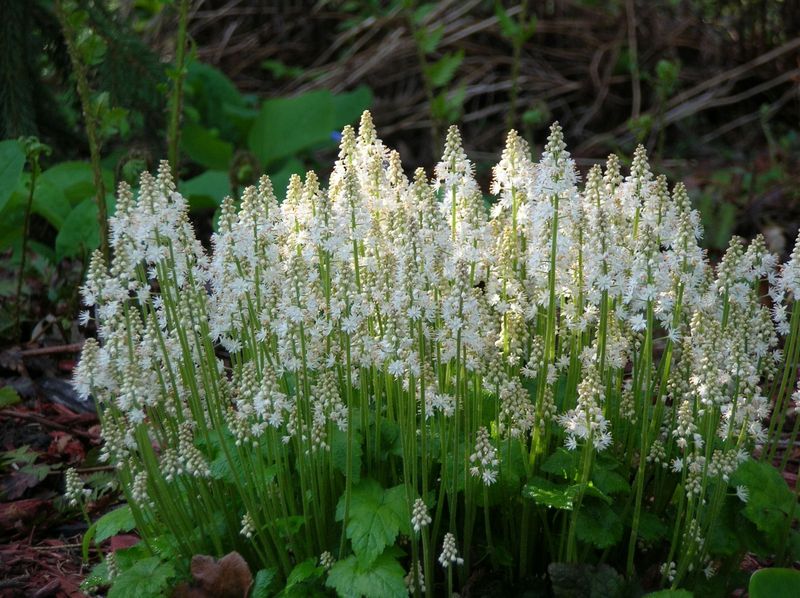
Spring in a shady yard can look like sea foam washed up on the ground, thanks to this native. Foamflower sends up fluffy white flower spikes that last for weeks.
The leaves are pretty on their own, often with dark veins or maple-like shapes. Plants spread by runners in shade or dappled light, filling gaps without becoming a bully.
The one thing that can kill it is soggy soil in winter. If your spot stays wet, plant it on a slight mound or mix in compost to help water drain away.
10. Lungwort (Pulmonaria)
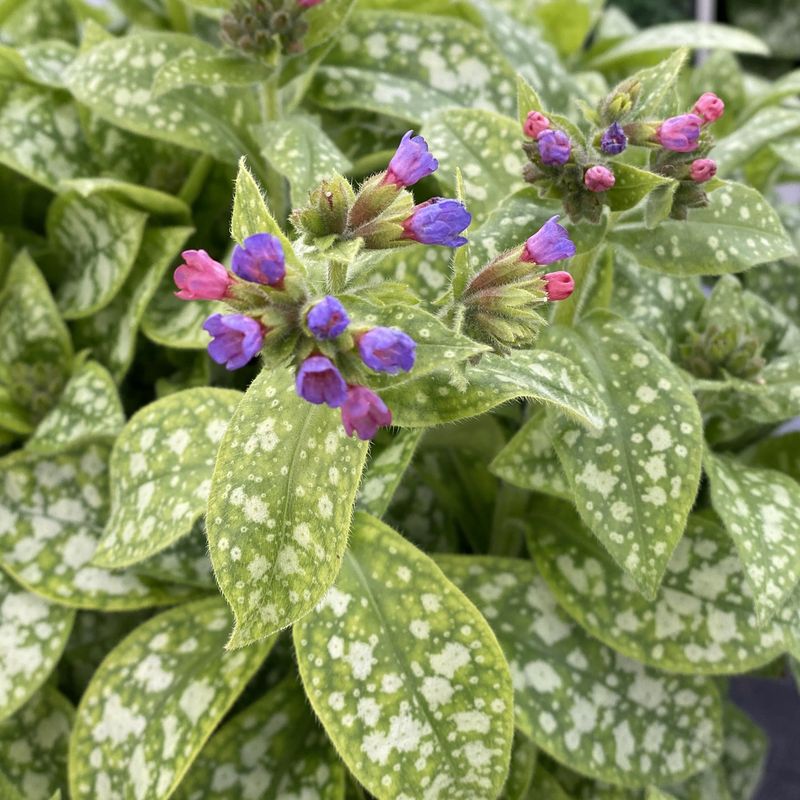
Old herbalists thought the spotted leaves looked like lungs, which is how this plant got its odd name. Today it is loved for something better: some of the earliest flowers of spring.
Clusters of bell-shaped blooms often open pink and fade to blue, so one plant can show both colors at once. White types are available too.
After flowering, the speckled silver leaves carry the show all summer. If you see white powdery spots on them, improve airflow and keep the soil evenly moist, which can reduce mildew.
11. Hardy Geranium (Cranesbill)
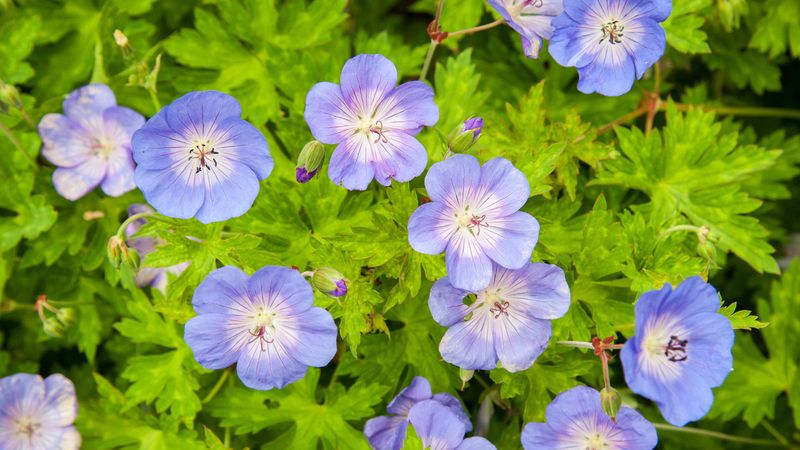
Love your potted geraniums but wish you had something like them for the shade? Meet their tough, perennial cousins, the cranesbills.
These hardy geraniums grow about 12 inches tall and bloom in white, pink, or purple. Butterflies visit often, and many types turn bright red and orange in fall.
They grow fast and can even take a little foot traffic. If blooms slow down in midsummer, cut the plants back hard, and many will reward you with fresh leaves and a second round of flowers.
12. Woodland Stonecrop (Sedum ternatum)
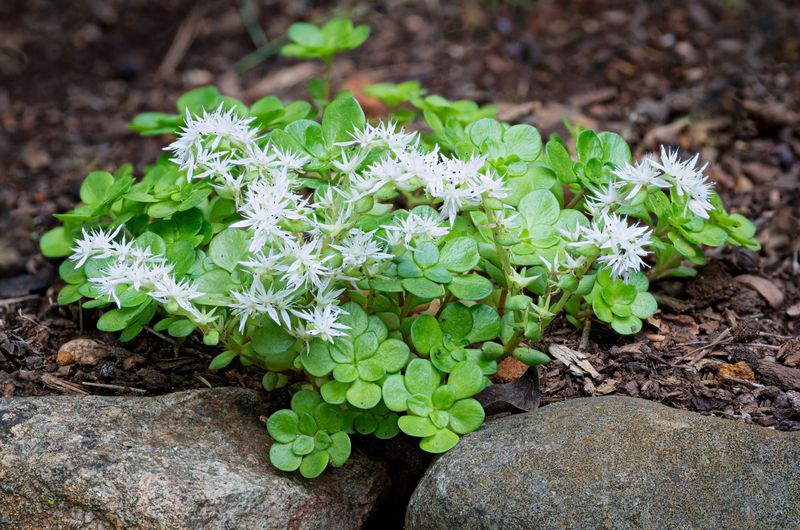
Most sedums want baking sun, so this one is a happy surprise. Woodland stonecrop is a native succulent that actually prefers shade.
It forms a low blue-green mat and covers itself in starry white flowers in spring. Every stem that touches the ground sends down roots, so it fills in on its own.
It looks great tucked between rocks or along the edge of a path. Snap off a few pieces, press them into moist soil, and you have new plants for free.
13. Lyreleaf Sage (Salvia lyrata)
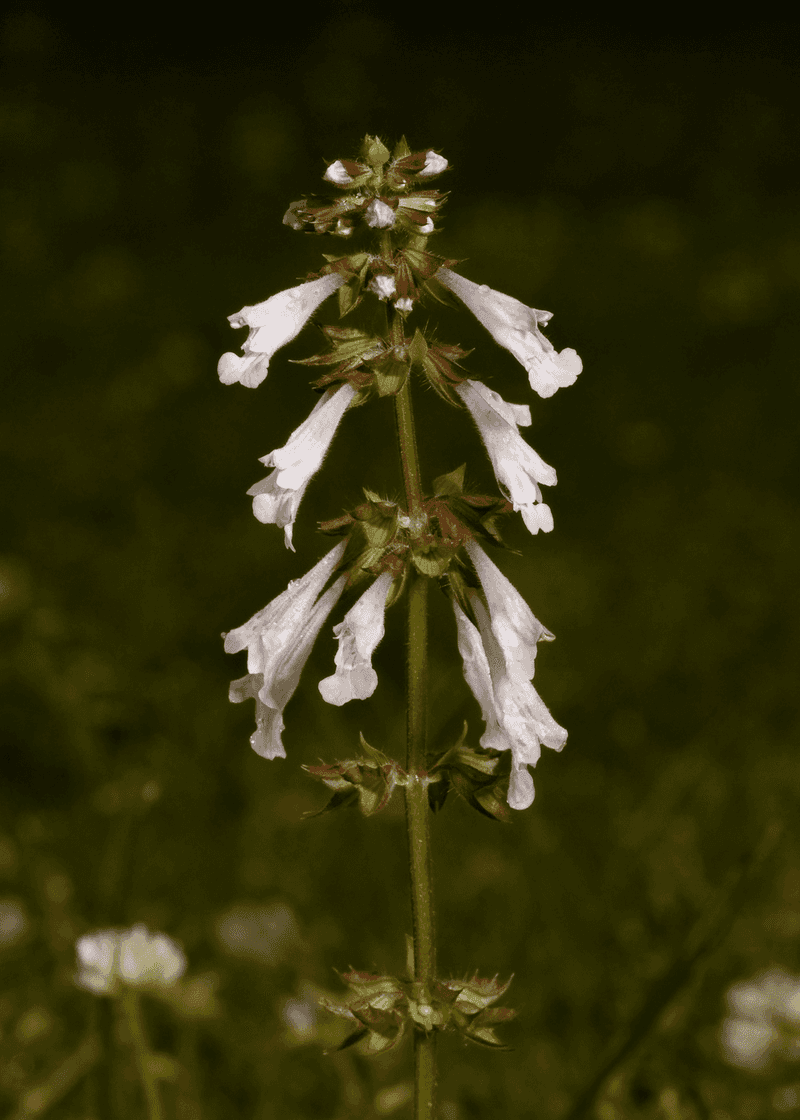
Few plants can say they handle drought and flooding, but lyreleaf sage can. This native shrugs off tough soil and still sends up purple flowers in spring.
The leaf rosettes stay low and often have purple veins. Bees and hummingbirds come for the blooms.
It does best at the bright edge of a tree’s shade rather than deep under it. Let some flowers go to seed and it will naturalize into a loose carpet over time.
14. Common Blue Violet (Viola sororia)
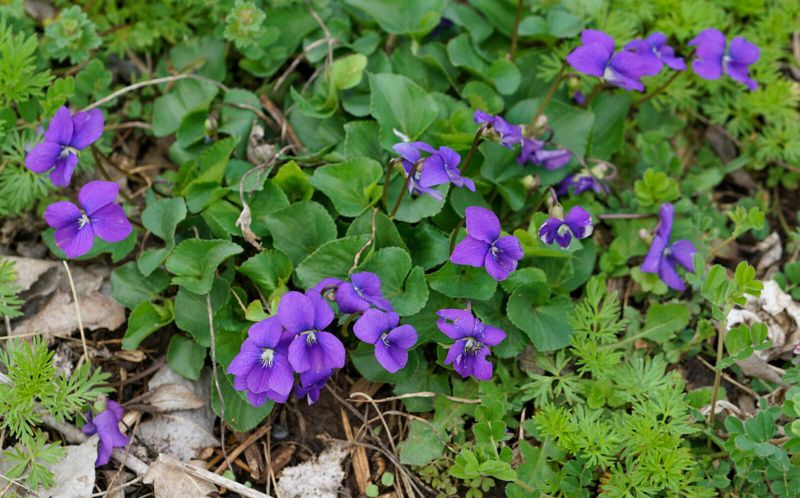
Some people pull violets as weeds, but in a bare shady spot they are a gift. They ask for almost nothing and come back every spring.
Purple flowers rise over heart-shaped leaves, and the plants work beautifully as an edging or massed under trees. They also feed fritillary butterfly caterpillars, so they help local wildlife too.
Fun fact: violets are the state flower of four US states, including Illinois and New Jersey. Let them spread where you want coverage, and simply pull extras where you do not.
15. White Wood Aster (Eurybia divaricata)
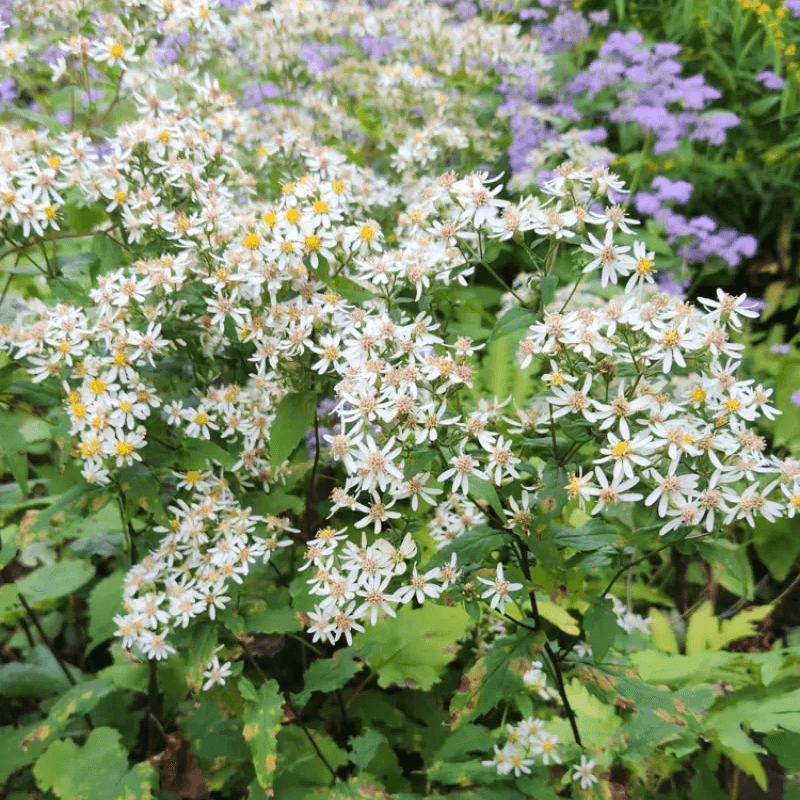
Late summer is when most shade gardens fade, and white wood aster steps up right on time. Clouds of tiny white daisies with yellow centers light up the shade until fall.
It handles both damp and dry spots in partial to full shade. Deer and rabbits usually leave it alone, while native bees and butterflies love it.
It spreads by seed and underground stems, forming loose mounds. If it flops over, trim it back by a third in early summer for a shorter, sturdier plant.
16. Green and Gold (Chrysogonum virginianum)
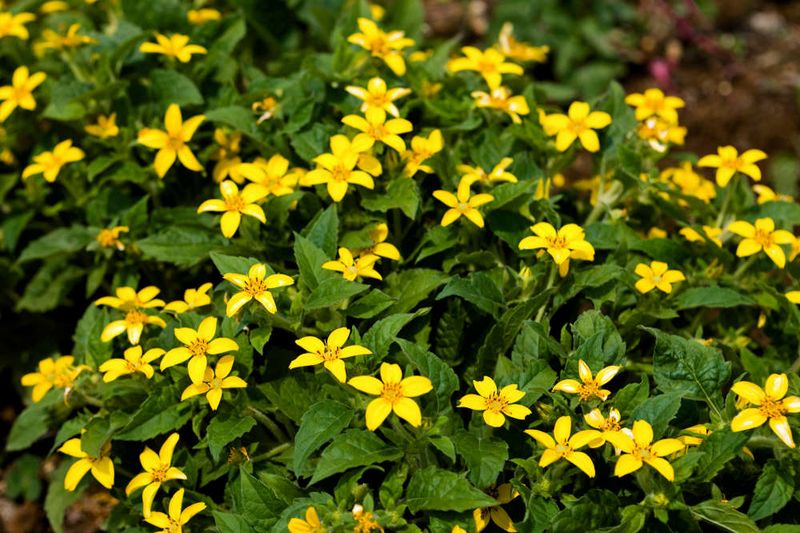
Want the longest bloom season on this list? Green and gold can flower from April all the way to the first frost.
Bright yellow star-shaped flowers sit on a low carpet of fuzzy green leaves. It is a native that spreads quickly in rich, shady soil.
Maintenance is close to zero. A thin layer of compost in spring is usually all it needs to keep the sunshine coming in your darkest corner.
17. Wild Ginger (Asarum canadense)
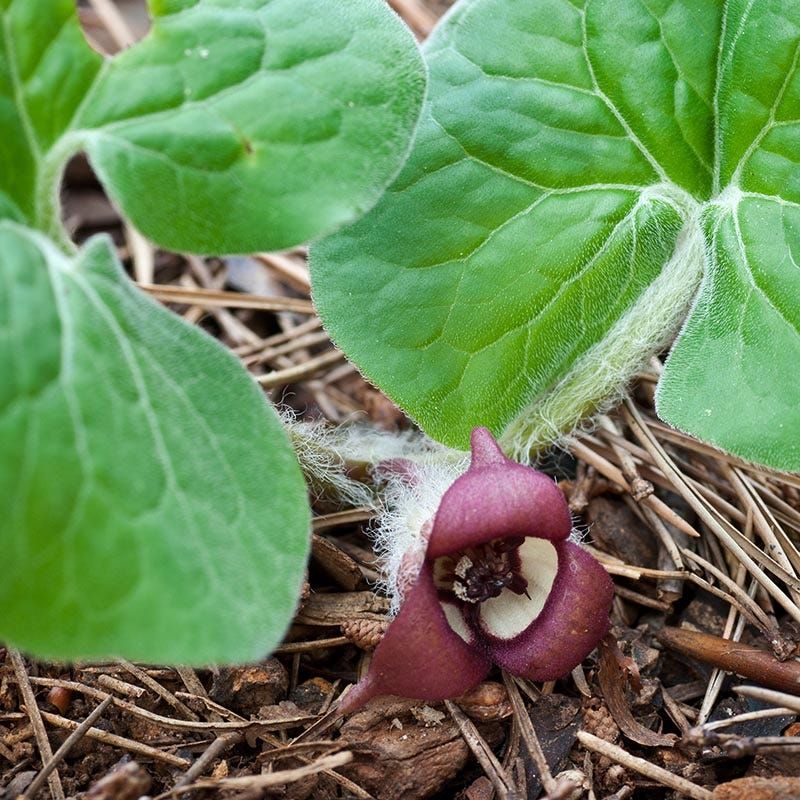
You will need to get on your knees to see these flowers. Wild ginger hides little maroon, jug-shaped blooms right at the soil line under its leaves in spring.
The real star is the foliage, a dense carpet of velvety heart-shaped leaves. Heartleaf ginger, a Southern relative, keeps its mottled leaves through much of winter.
Plant it in moist, damp shade where other plants rot or sulk. Deer avoid it, and it is not related to the ginger in your kitchen, though the roots do smell spicy.