
A Fresh Mole Ridge Snaking Across Your North Carolina Lawn Points To A Grub Problem Below
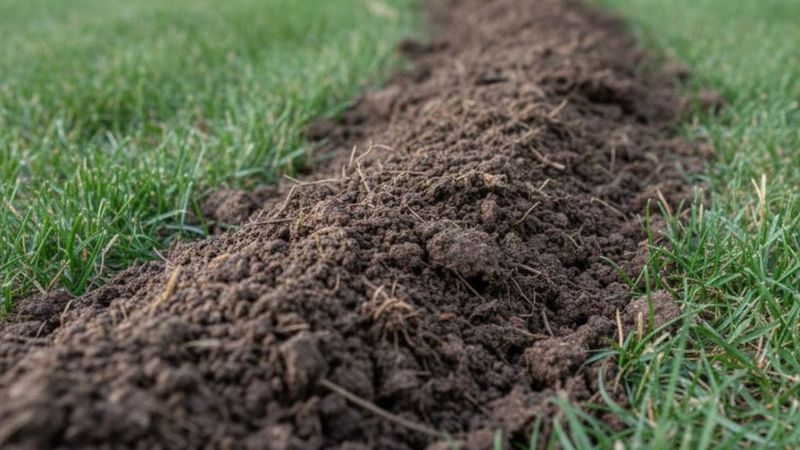
Spotting a raised ridge of soil winding across your yard can send a homeowner straight to the garden center for grub killer, but that reaction may be getting ahead of the evidence. A mole ridge tells you that something edible is living in your soil, and that something is not always grubs.
North Carolina moles eat earthworms, beetles, ants, and yes, white grubs too, so the ridge is a starting point for investigation rather than a diagnosis. Taking a few minutes to confirm the animal, check whether the tunnel is still active, and sample your soil in several spots will save you money and protect the birds, pollinators, and soil life that make your yard worth caring for.
The ridge is a clue to underground prey activity, not proof of grubs
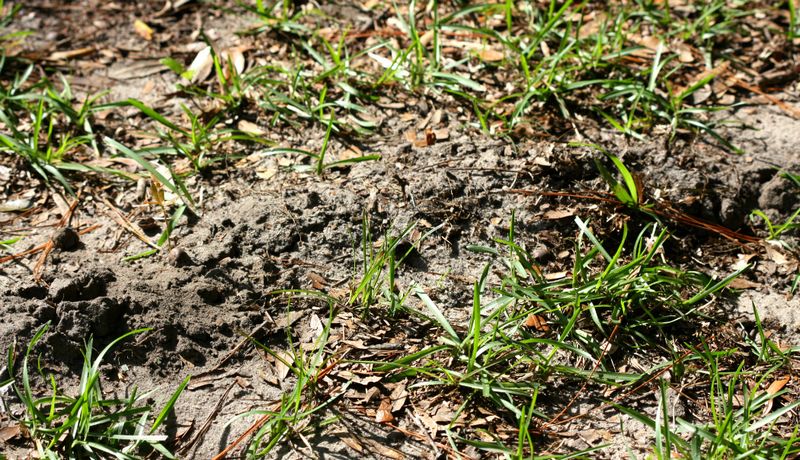
Raised ridges in a lawn carry real information, just not the information most homeowners assume. A fresh-looking mound of displaced soil winding through your grass is good evidence that a burrowing animal has been moving through the upper soil layer, but it does not tell you what that animal was eating when it passed through.
Before reaching any conclusion about grubs, a few quick checks will put you on much firmer ground.
North Carolina moles feed on a wide range of soil invertebrates. NC State Extension’s wildlife chapter describes their diet as consisting almost entirely of earthworms and insects, with white grubs being only one of several prey items alongside beetles, ants, and other underground creatures.
Because earthworms are often the preferred food, a mole can be very active in a lawn that has few grubs at all. University of Maryland Extension specifically cautions that mole activity alone is not a reliable way to diagnose a grub problem, for exactly this reason.
Moles are not rodents, and they have no interest in grass roots, bulbs, or tubers as food. What they do cause is mechanical disruption: the tunneling process lifts and loosens soil, separates shallow roots from moisture, and creates the ridges and occasional mounds you see at the surface.
That kind of indirect damage is worth watching, but it is a separate issue from root-feeding by grubs.
The most useful way to read a mole ridge is as a prompt to go look at the soil underneath. Penn State Extension reinforces that moles follow prey-rich, often moist and loosened soil, which may or may not mean grubs are present in damaging numbers.
Sampling the lawn in several spots is the only way to answer that question reliably.
Confirm the animal and whether the tunnel is active
Knowing you have a mole rather than a vole or a mole cricket matters a great deal before you decide on any response. Each animal leaves a different signature, and treating for the wrong one wastes time and money while leaving the real problem untouched.
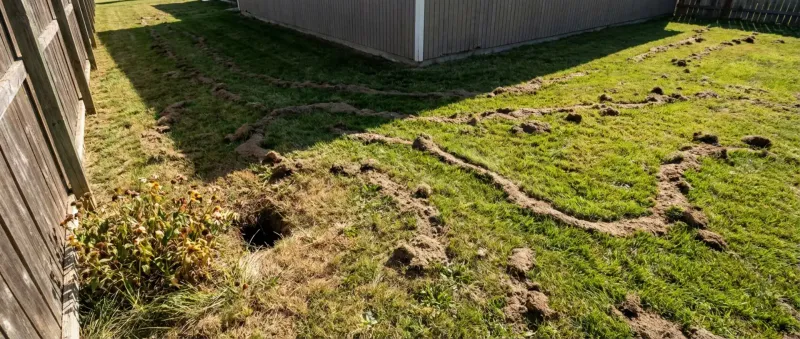
Moles produce two recognizable surface signs. Shallow feeding tunnels appear as raised, winding ridges just below the turf surface, sometimes only an inch or two deep.
Deeper permanent runways occasionally produce irregular soil mounds at the surface where excavated dirt has been pushed up. NC State Extension’s moles-in-turf guide recommends a simple activity test: press down a short section of the ridge with your foot and return in 24 to 48 hours.
If the soil has lifted again, the tunnel is active and in regular use. A ridge that stays flat after being pressed is likely an old, abandoned run.
Voles are rodents, and their signs look quite different. They eat plant material, including grass stems, bulbs, and bark, and they tend to leave narrow surface trails worn through the grass, small gnawed patches, and quarter-sized entry holes near the base of plants.
Vole runs do not produce the same raised, continuous ridge that a mole tunnel does. NC State’s wildlife handbook notes this distinction clearly: voles are plant-feeders, moles are insectivores, and the two require entirely different management approaches.
Mole crickets deserve a separate mention because their name causes genuine confusion. These are insects, not mammals, and they create their own shallow tunneling damage, particularly in the sandy soils of southeastern North Carolina’s Coastal Plain.
NC State’s turf arthropod guide covers mole crickets as a distinct pest with different scouting methods, treatment timing, and product options compared to true moles. Mixing them up leads to the wrong diagnosis every time.
Iowa State Extension similarly emphasizes confirming the animal before choosing any control strategy.
Sample several lawn areas to answer the grub question
Once you have confirmed an active mole tunnel, the next step is to go looking for grubs systematically rather than assuming they are present. The ridge shows you where the mole was traveling, but it does not tell you what it found there, or whether grubs exist in numbers that can actually harm your turf.
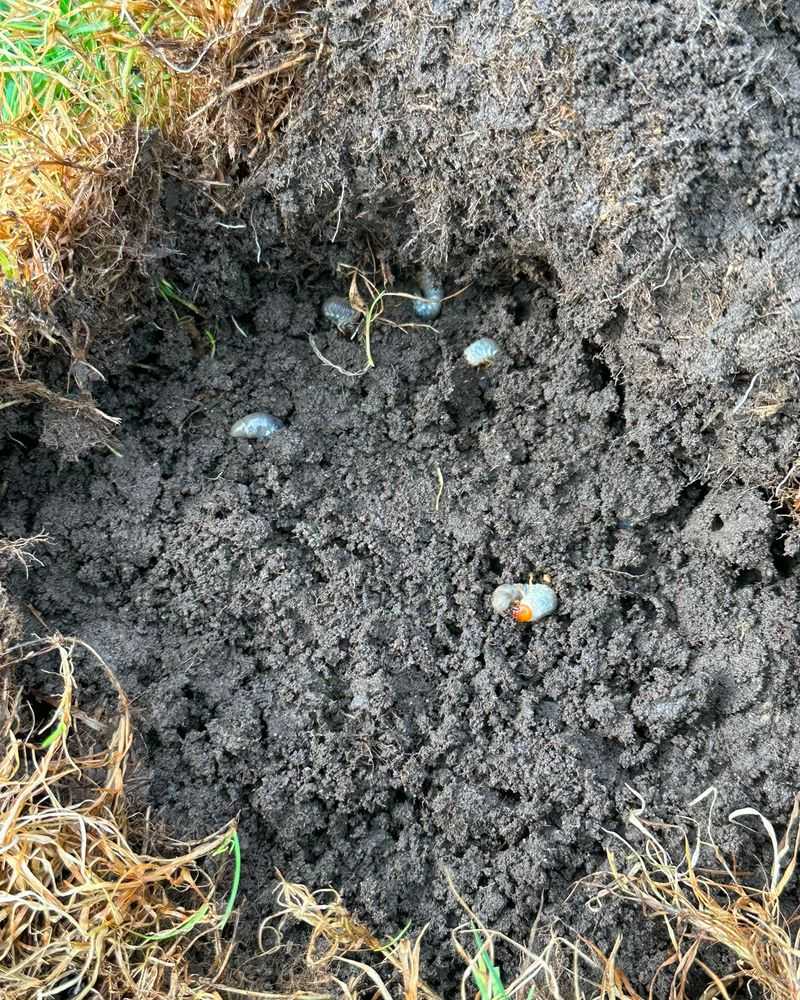
The scouting method recommended by Penn State Extension’s white grub guide is straightforward. Use a flat spade or soil knife to cut three sides of a roughly one-square-foot section of turf, fold it back like a flap, and examine the top three to four inches of soil beneath it.
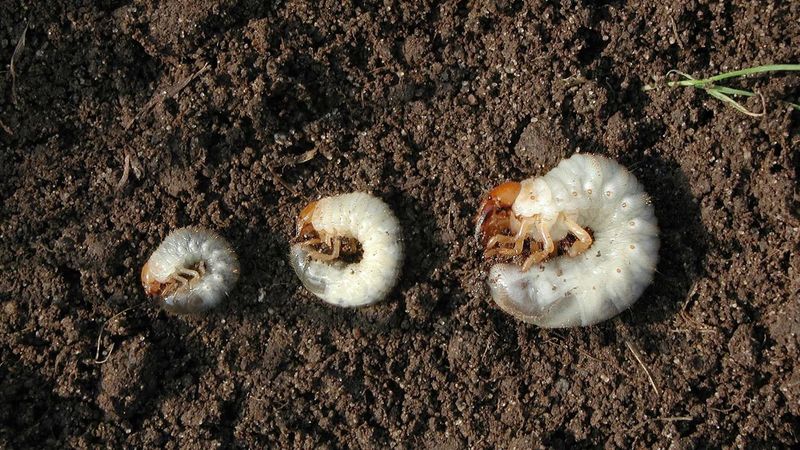
You are looking for C-shaped, cream-colored larvae with brown heads, damaged or severed grass roots, and soil that feels unusually loose or crumbles away from the roots easily. Yellowing or thinning turf nearby is another sign worth noting before you cut.
Do not sample only inside the tunnel system. The ridge marks a travel corridor, not necessarily the spot with the highest grub concentration.
NC State’s turf arthropod guide recommends checking several sites across the lawn, paying particular attention to areas where the grass looks stressed, thin, or off-color. Sample at the edge of any declining patch as well as a few spots in healthy-looking turf nearby to get a realistic picture of what is actually happening below the surface.
Aim for at least three to five sample sites spread across the yard. Count the grubs in each square-foot section and record the numbers separately rather than averaging them all together right away.
NC State Cooperative Extension’s grub guidance reminds homeowners that finding a grub or two in a sample is completely normal and does not mean the lawn is under attack. A damaging infestation requires a much higher count paired with visible root injury and turf decline.
Interpret grub counts alongside damage, timing, and turf condition
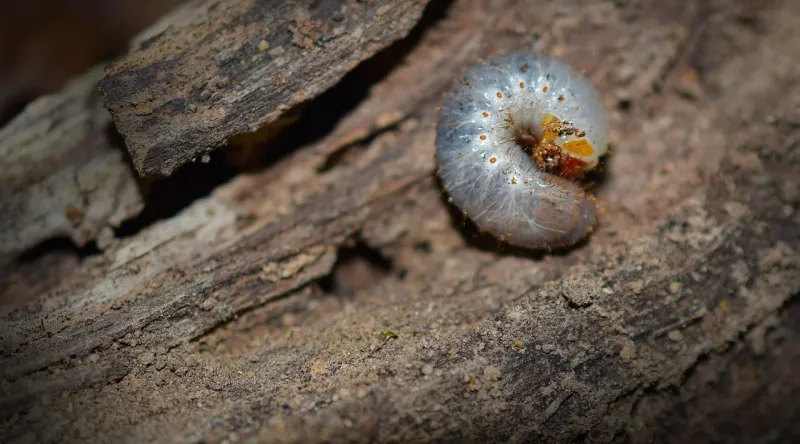
A number by itself rarely tells the whole story when it comes to grubs. The commonly cited range of 5 to 10 grubs per square foot is a useful starting point, but treating it as an automatic prescription ignores several factors that can push that threshold up or down depending on your specific lawn.
Penn State Extension’s white grub resource explains that the appropriate response to a grub count depends on which species is present, how healthy the turf already is, what time of year the sampling took place, and whether the roots are actually showing damage. A dense, well-rooted stand of tall fescue in the Piedmont may tolerate a count near the upper end of that range without showing visible stress, while a thin, drought-stressed bermudagrass lawn in the Coastal Plain might show damage at a lower count.
Turf condition, not just grub density, determines when treatment is genuinely needed.
Timing affects both the accuracy of your count and the effectiveness of any response. North Carolina’s white grub species generally complete a one-year life cycle, and larvae tend to feed near the surface during two windows: roughly August through September, when newly hatched grubs are small but actively feeding on roots, and again around April through early May, when overwintered grubs resume feeding before pupating.
NC State Cooperative Extension’s grub article identifies these periods as the most useful times for scouting and, when warranted, for applying curative treatments. A ridge spotted in June or January does not reliably indicate which life stage is active underground.
Regional differences also matter. Soil type, moisture levels, turf species, and local grub populations vary considerably between the Coastal Plain, Piedmont, and mountain regions of North Carolina.
NC State’s turf arthropod guide reflects those regional differences, and your county Cooperative Extension office can offer advice calibrated to your specific soil, climate, and common local grub species. Calling them before purchasing any product is a step that often saves both money and unnecessary chemical use.
NC State’s integrated pest management guidance consistently recommends local expertise over generic treatment calendars.
Treat confirmed turf damage, not every underground creature
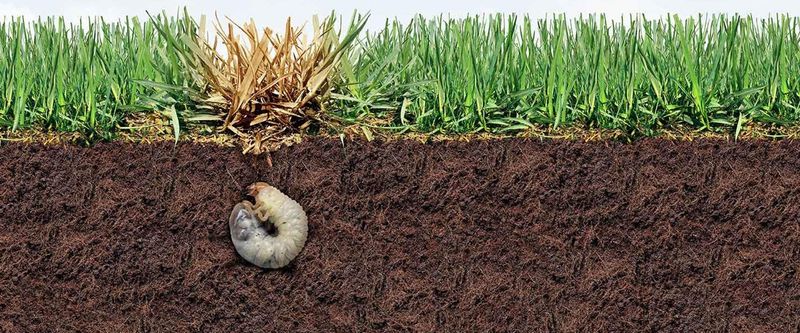
Healthy turf has a natural capacity to absorb some pest activity without showing meaningful damage. When your grub counts stay below the level associated with root injury and the grass itself looks dense and well-rooted, waiting and monitoring is a reasonable choice, and often the right one.
Treatment is warranted when grubs are damaging roots and the turf is showing it, not simply because grubs were found.
NC State Extension’s integrated pest management guide lays out the core principle clearly: confirm the pest, assess whether damage is genuinely unacceptable, target only the affected areas, and follow the product label precisely. Applying a grub insecticide across the entire lawn because a mole ridge appeared skips every one of those steps.
It also will not reliably drive the mole away, because earthworms and other prey species will still be present in the soil even after grubs are reduced.
The potential effects on non-target organisms are worth taking seriously. EPA lawn and garden guidance highlights the risk that lawn insecticides pose to earthworms, ground-feeding birds such as robins and starlings, native pollinators foraging near treated areas, household pets, and aquatic life in nearby streams and storm drains.
Many of the same invertebrates that make your yard attractive to birds and box turtles are vulnerable to broad-spectrum soil treatments.
Penn State Extension’s mole resource notes that blanket grub treatment can actually increase mole digging temporarily, as the animals search more widely for remaining food after a portion of their prey is eliminated. Treating only confirmed problem areas, keeping products well away from drainage channels, and watering them in according to label directions are the minimum steps for responsible use when treatment is genuinely justified.
Manage unacceptable mole tunneling directly
When grub sampling shows that root damage is not the real issue but the tunneling itself is tearing up your lawn, the management question shifts entirely. Mole damage is mechanical, caused by excavation rather than feeding, and it calls for a response aimed at the animal rather than its food supply.
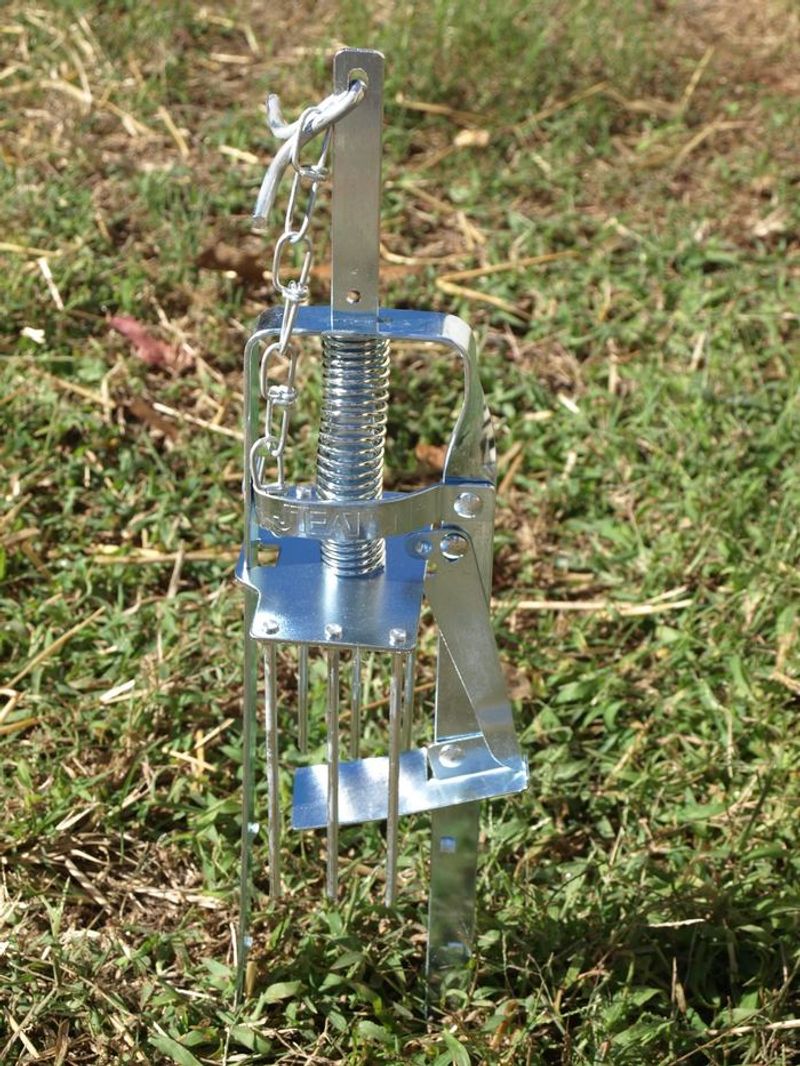
Trapping is widely regarded by extension authorities as the most reliable practical option for homeowners dealing with persistent mole activity. The key is placement.
University of Minnesota Extension’s trapping guide recommends setting traps on active, frequently reused runways rather than on every old or temporary ridge in the yard. Use the press-down test described earlier: mark the sections that re-lift within 24 to 48 hours, because those are the main travel corridors a mole returns to regularly.
Traps placed on abandoned runs rarely catch anything.
For small, high-value planting beds rather than the lawn as a whole, a physical barrier is sometimes worth the effort. NC State Extension’s moles-in-turf guide describes burying hardware cloth or sheet metal to a depth of about 12 inches, with the bottom edge bent outward underground at roughly a 90-degree angle to discourage burrowing underneath.
This approach is labor-intensive and not practical for protecting an entire lawn, but it can shield a raised bed or a section of garden that warrants the investment.
North Carolina has three mole species, and the legal picture is not the same for all of them. Eastern moles and hairy-tailed moles may be managed as residential turf pests when tunneling causes damage.
Star-nosed moles carry additional protection considerations under North Carolina wildlife rules, and NC State Extension’s wildlife handbook notes that killing one requires a permit from the North Carolina Wildlife Resources Commission. Before taking any lethal action, identify the species as best you can and consult the 2025 NC Agricultural Chemicals Manual animal-damage-control chapter alongside current Wildlife Resources Commission rules, which can change.
Methods such as placing bleach, broken glass, sharp objects, or chewing gum in tunnels are not effective and are not recommended by NC State.
Let verified damage determine the response
The path forward after spotting a mole ridge is straightforward when you follow it in order. First, press down a section of the ridge and check whether it re-lifts, then confirm the animal is a mole rather than a vole or mole cricket.
Second, sample multiple square-foot soil sections across the lawn, including stressed areas and spots near but not limited to the tunnel, and count the grubs you find. Third, weigh that count against visible root damage, turf condition, the time of year, and your local soil and grass type before deciding whether any treatment is warranted.
NC State’s turf arthropod guide and NC State’s IPM guidance both point toward the same conclusion: tolerate minor activity when the turf is holding up, and target only confirmed, substantial damage with the least harmful method available. Your county Cooperative Extension office can help you match that decision to your specific region, soil, and turf species.
NC State Extension’s wildlife handbook offers a good reminder that moles aerate and mix soil as they move through it, and a lawn that tolerates a modest amount of mole activity is often a lawn with genuinely healthy, life-filled soil underneath.