
Can an NC HOA Make You Rake? It Depends on Your Governing Documents and the Facts
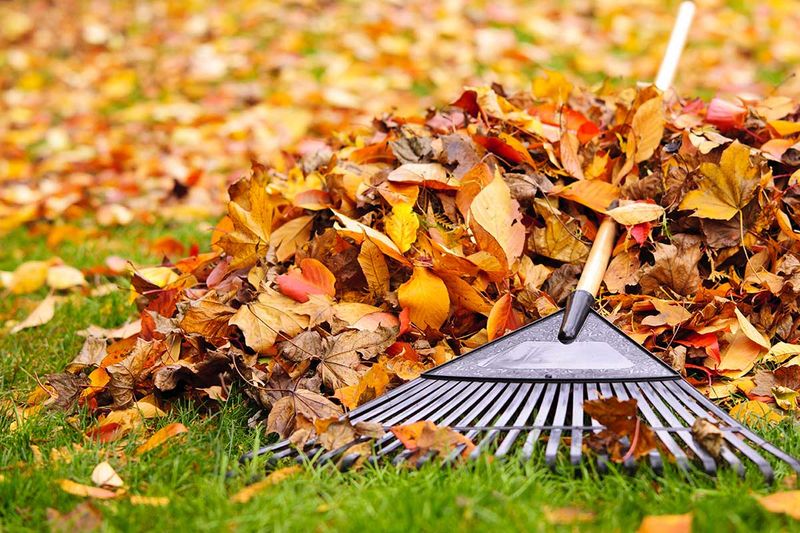
Fallen leaves make great winter shelter for insects, but they can also bring a letter from your HOA. Many North Carolina homeowners wonder if they can say no to the rake.
The honest answer depends on your community’s rules and your yard’s conditions. Here is how to read the situation, respond calmly, and offer a plan that helps wildlife and keeps the neighbors happy.
Whether an HOA can require leaf removal depends on the rules

Many people assume the law gives them a clear right to leave leaves where they fall. North Carolina has no blanket statewide right like that when an HOA objects.
The answer turns on your community’s governing documents and the specific facts of your yard.
State law gives associations real tools. Under G.S. 47F-3-102, a planned community association may enforce the declaration, bylaws, and rules, and may impose reasonable fines after notice and an opportunity to be heard.
So a leaf-cleanup demand can be enforceable if it rests on a valid provision that applies to your property.
Not every HOA is governed the same way, though. Chapter 47F’s applicability rules say it generally covers planned communities created on or after January 1, 1999, with exceptions, including certain communities with 20 or fewer lots.
Some provisions, such as association powers and fine procedures, also reach many older communities.
That means nobody can tell you from a headline which rules govern your street. Your recorded documents and the details of the complaint decide it.
Wildlife benefits are a good reason to ask for flexibility, but they are not a legal trump card.
The rest of this guide walks through how to check your documents, handle a notice, weigh yard conditions, and make a request the board can say yes to.
The governing documents define the yard-maintenance dispute

Start with the paperwork. Pull out the recorded declaration or covenants you received at closing, then ask the HOA for the current rules and any amendments.
Your county register of deeds can also supply recorded documents.
Look for language about yard maintenance, landscaping, lawn care, nuisances, or debris. Some communities have an express rule that names leaves or requires prompt removal.
Others only have a general standard, such as keeping lots neat and well maintained.
That difference matters. An express leaf rule is easier to read than a broad maintenance clause, which may leave room for discussion about what neat means in practice.
Avoid guessing how a board or court would read a particular provision, since that depends on the exact wording.
If you get a notice, write back and ask the HOA to identify the exact section it relies on. Also ask whether the rule has been applied to other lots.
Associations hold power to enforce their documents, and the fine process in Article 3 still has steps.
Keep photos, dates, and copies of every message. A calm, organized file makes any later conversation easier.
A violation notice is not the same as an immediate fine

A letter about leaves can feel alarming, but a notice is not a bill. The statute sets up a process before a fine lands.
Under G.S. 47F-3-107.1, unless the declaration provides a specific procedure, an owner must receive notice of the charge, a chance to be heard and present evidence, and notice of the decision before a fine is imposed.
In practice, that means you usually have room to respond. Read the letter for deadlines, the rule cited, and any hearing date.
Then check whether your declaration spells out its own steps for notice, hearings, or appeals, and follow those.
Respond in writing before any deadline. Say what you plan to do, such as moving leaves off the lawn and walkways, and ask to be heard if a hearing is offered.
Bring photos of your yard and any Extension guidance that supports your plan.
Keep copies of everything you send and receive. A tidy record helps if the matter continues.
One caution: a procedural step does not make the underlying rule go away. If the rule applies to your lot, the board may still require compliance.
The process simply gives you time and a voice to find a workable middle ground.
Leaf litter can support wildlife without deciding the legal question
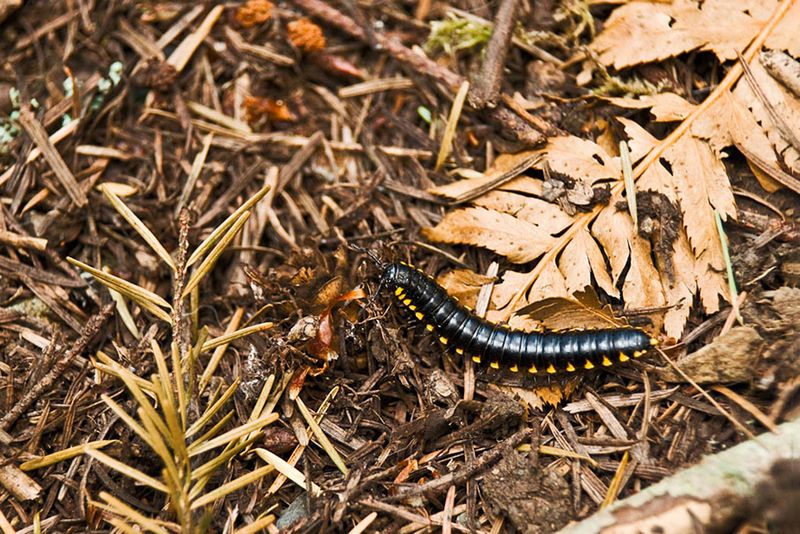
Here is why so many gardeners hold onto their leaves. NC Cooperative Extension explains in its leave-the-leaves guidance that undisturbed leaf litter gives pollinators and other beneficial insects a place to spend the winter.
Raking everything away removes that shelter.
Extension’s fall pollinator-garden advice makes a similar point and also warns that a thick layer on a lawn can damage turf. So the habitat value is real, but it comes with limits.
Keep the two questions separate. The ecological question asks what leaves do for the yard.
The legal question asks whether your HOA’s rules require removal. A strong answer to the first does not erase an applicable covenant on the second.
Where the habitat story helps is in a request. A board may be more open to a limited exception when you explain what you want to protect, where the leaves will stay, and how you will handle the rest.
Think of it as the reason behind your proposal, not a guarantee of approval.
It also helps to stay modest about claims. Stick to what Extension says about pollinators and beneficial insects, and avoid promising that leaves will bring in any particular animal.
Manage leaves to balance habitat with yard care
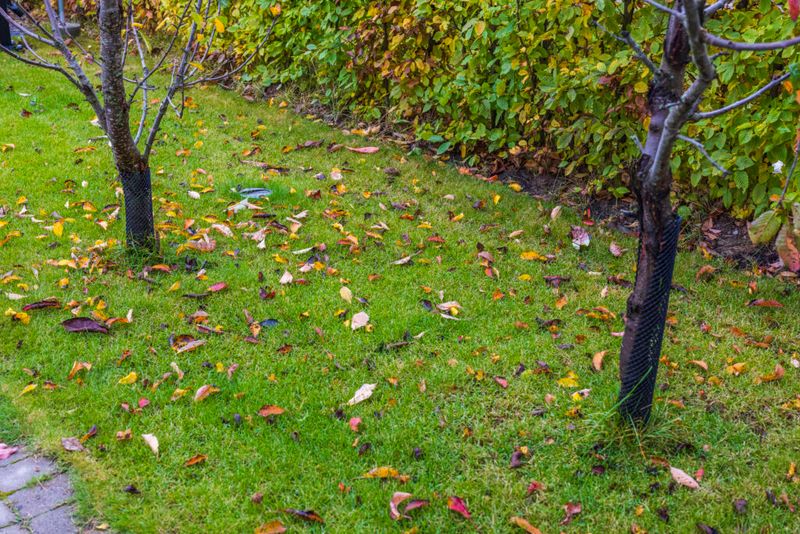
Leaf retention does not have to be all or nothing. A split plan often satisfies both a wildlife-minded owner and a neighborhood that wants a tidy look.
Keep undisturbed leaves in garden beds, under shrubs, or in a back corner, as Extension recommends for pollinators.
Turf needs different treatment. Extension in Burke County says sparse leaves can stay on a lawn, but a blanket that hides the grass should be managed.
Rake some away, then mulch or compost the rest. A mower with a mulching setup works well for this.
Watch for disease too. The same guidance advises removing leaves with significant foliar disease from the area, so look for spotted or blighted leaves under affected trees or shrubs and bag or compost them away from your beds.
Then think about where leaves can cause trouble. The City of Raleigh asks residents to keep leaves out of streets and storm drains, and its stormwater guidance explains why.
Sweep sidewalks, driveways, and curbs regularly so nobody slips and drains stay clear.
Check local rules where you live, since collection and drainage rules vary by town. A plan like this shows the board you are managing leaves, not ignoring them.
Keep leaves away from structures and treat tick advice cautiously
Some limits have nothing to do with the HOA. Leaves piled against a house can fuel a fire if embers land nearby.
The NC Forest Service recommends clearing debris from the home’s immediate five-foot zone and cleaning roofs and gutters at least annually. Decks and patios deserve the same attention.
That fits neatly into a compromise. You can keep a leafy habitat bed farther out in the yard while the area beside the foundation stays clear.
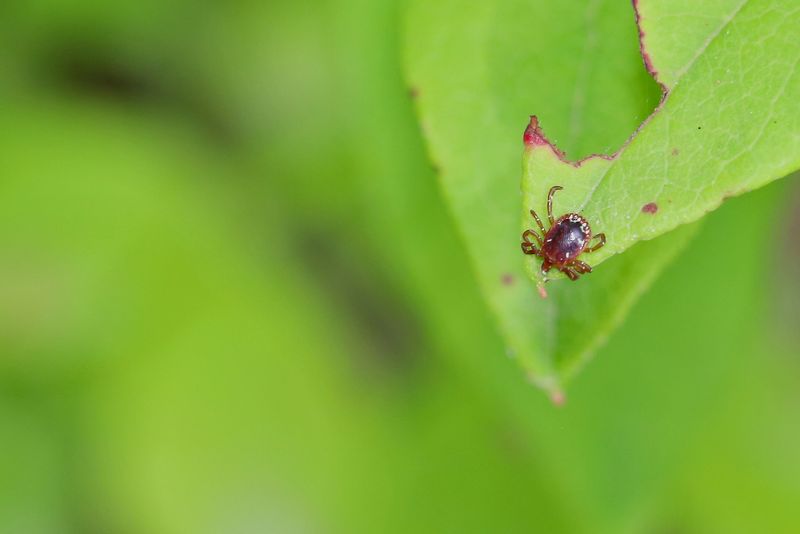
Ticks come up often in leaf debates, so handle the topic with care. NC State’s tick guide identifies the lone star tick as the most common tick that bites people in North Carolina, and advice built around blacklegged ticks may not fit it equally well.
Removing leaf litter near play areas and paths may make that part of a yard less hospitable to ticks, according to NC State News. It is a possible risk reducer, not a guarantee, and a leaf-free border does not make a yard tick-safe.
Pair any yard changes with the bite-prevention steps from the state health division, including tick checks after time outdoors.
HB 1212 has not created a current right to keep leaves

You may hear that a new law protects pollinator yards from HOAs. Check the record first.
The General Assembly’s bill page for HB 1212 showed, as of October 26, 2026, that the bill was referred to the House Rules Committee on May 5, 2026. It had not been enacted.
The bill is also narrower than a leaf rule. According to the bill text, it would restrict HOA limits on edible or pollinator gardens, among other provisions.
That is a different question from whether an association can require leaves to be removed from a lawn.
So HB 1212 does not give anyone a current right to leave leaves down. Even if a version passed later, you would need to read the final language to see what it covered.
For now, the practical takeaway is simple. Do not cite the bill to your board as if it were law.
If you want to support the idea, you can follow its progress and contact your legislators, but keep your HOA response grounded in your governing documents and a sensible yard plan.
Make a specific, documented case for the leaves you want to keep
Begin with the rule. Ask the HOA to name the provision it relies on, since associations may enforce their documents.
Then follow the notice and hearing steps, which Article 3 and your declaration lay out.
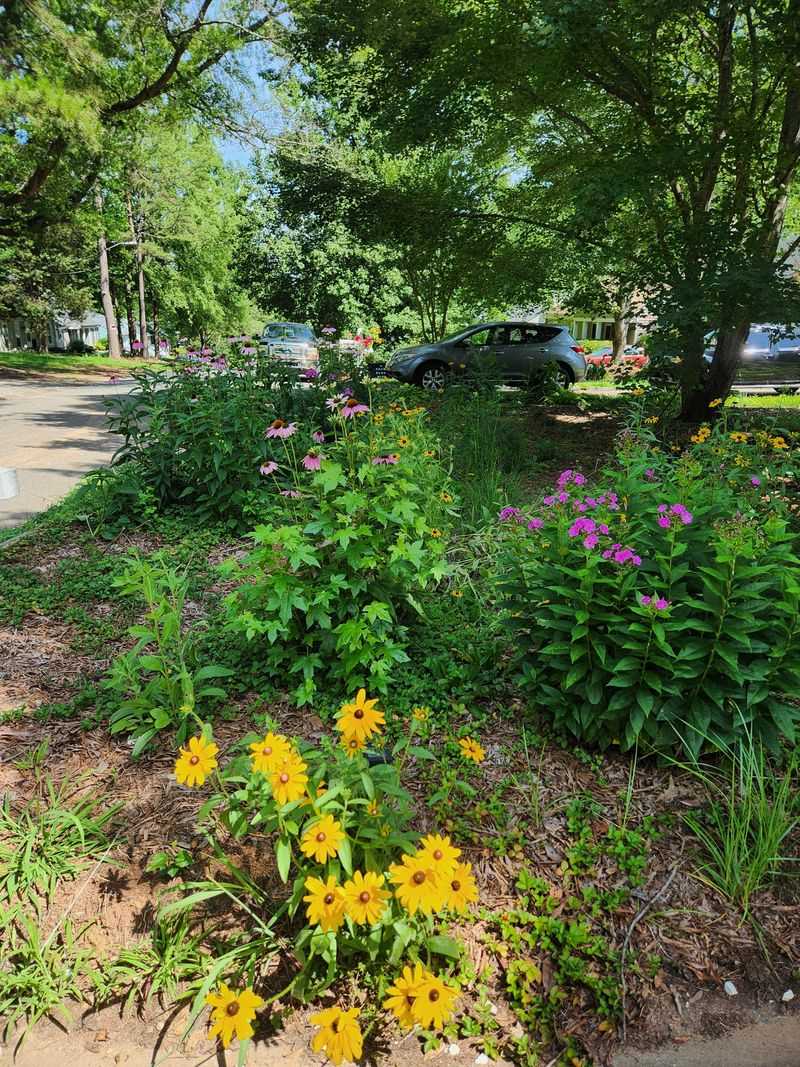
Next, propose something limited. Offer to keep leaves in defined beds as Extension suggests for pollinators, while you mulch the lawn, clear walkways and drains, and keep the foundation zone bare.
Add photos or a simple sketch.
Base your position on the documents and a practical plan, not a claim of blanket entitlement. Boards tend to answer a clear proposal better than a demand.
A yard can be both tidy and useful to wildlife when the leaves have a clear place to be.