
Cardboard Or Landscape Fabric In North Carolina And Which One Actually Smothers Weeds Through A Full Season
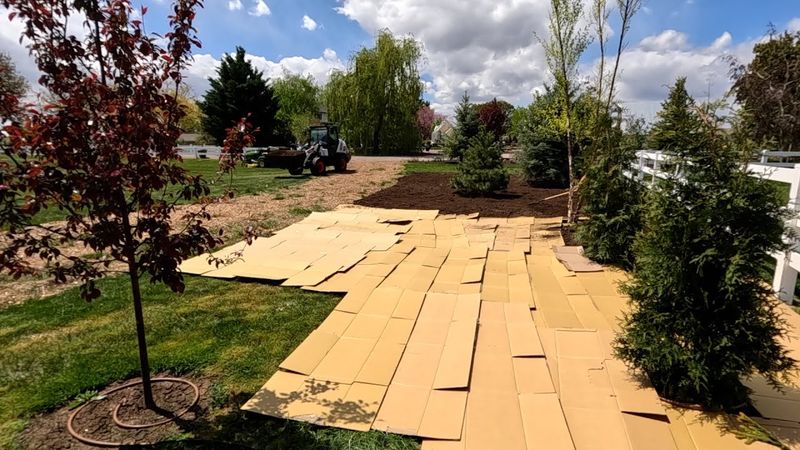
Keeping weeds out of a planting bed through a full North Carolina spring and summer is harder than it looks, especially when heat, heavy rain, and fast-growing grasses team up against you. Two popular options sit at the top of most homeowners’ lists: cardboard and landscape fabric.
Each one blocks light and discourages weeds, but they behave very differently once the season gets going. Knowing what each material can and cannot do will save you a lot of frustration and wasted work later.
What a North Carolina growing season can—and cannot—prove
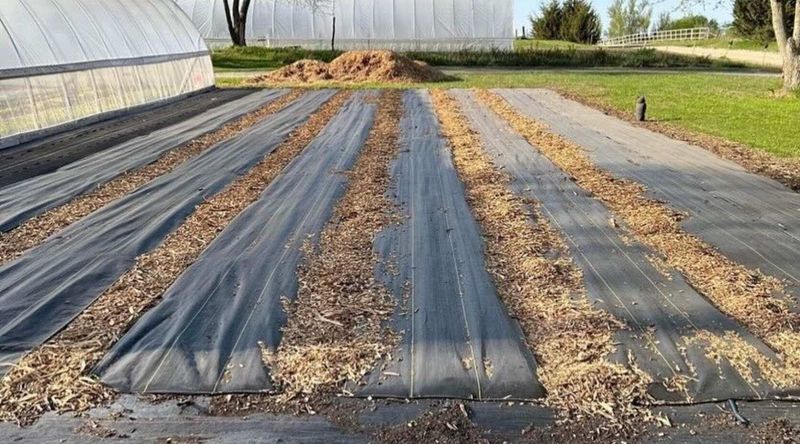
Picking a weed barrier for a North Carolina bed sounds simple until the season actually starts. Spring rains, summer heat, wind-blown seeds, and mulch that shifts or settles can all change what a barrier looks like by August compared to how it looked in March.
Judging either cardboard or landscape fabric fairly means tracking the whole arc, not just the first few weeks after installation.
Early performance and late-season performance tell different stories. Landscape fabric, when it is tightly overlapped and properly pinned, may cover the soil more completely at first.
Cardboard, once wetted and covered with organic mulch, creates a light-blocking layer that also sets the stage for what happens to the soil underneath as the season moves forward. NC State Extension guidance specifically recommends cardboard or newspaper beneath attractive mulch for excellent weed suppression, while noting that organic approaches support longer-term soil health.
No direct, season-long North Carolina head-to-head trial establishes a universal winner between these two materials. Performance depends on the weed species present, mulch depth, irrigation, soil type, installation quality, and whether the problem weeds are annual seedlings or established perennial grasses with deep root systems.
UC IPM’s landscape weed management guidance and NC Cooperative Extension’s review of landscape fabric use both make clear that neither barrier eliminates every weed under every condition.
The comparison that actually matters for a residential NC bed covers five areas: how well each material suppresses weeds through the season, how difficult installation is, what each one does to soil stewardship over time, how easily it can be removed when the bed needs work, and how it holds up when replanting becomes necessary. Those five criteria, not a single durability number, are what separate a good choice from a frustrating one.
How to use cardboard without treating it as a permanent barrier
Cardboard works by cutting off the light that weeds need to grow. Lay it over existing vegetation and most emerged annual weeds will die within weeks because photosynthesis stops.
Some perennial weeds with deep taproots or extensive rhizomes can survive longer, but for the average mixed-weed bed, blocking light is a genuinely effective first move.
Before you unroll a single sheet, mow or flatten whatever is already growing in the bed. Then choose plain, brown, corrugated cardboard and remove all packing tape, staples, printed labels, waxed sections, and any glossy panels.
EPA composting guidance lists shredded cardboard without wax, tape, or glue as an appropriate carbon material, and Oregon State University Extension’s sheet-mulching guide gives similar preparation advice for sheet mulching applications.
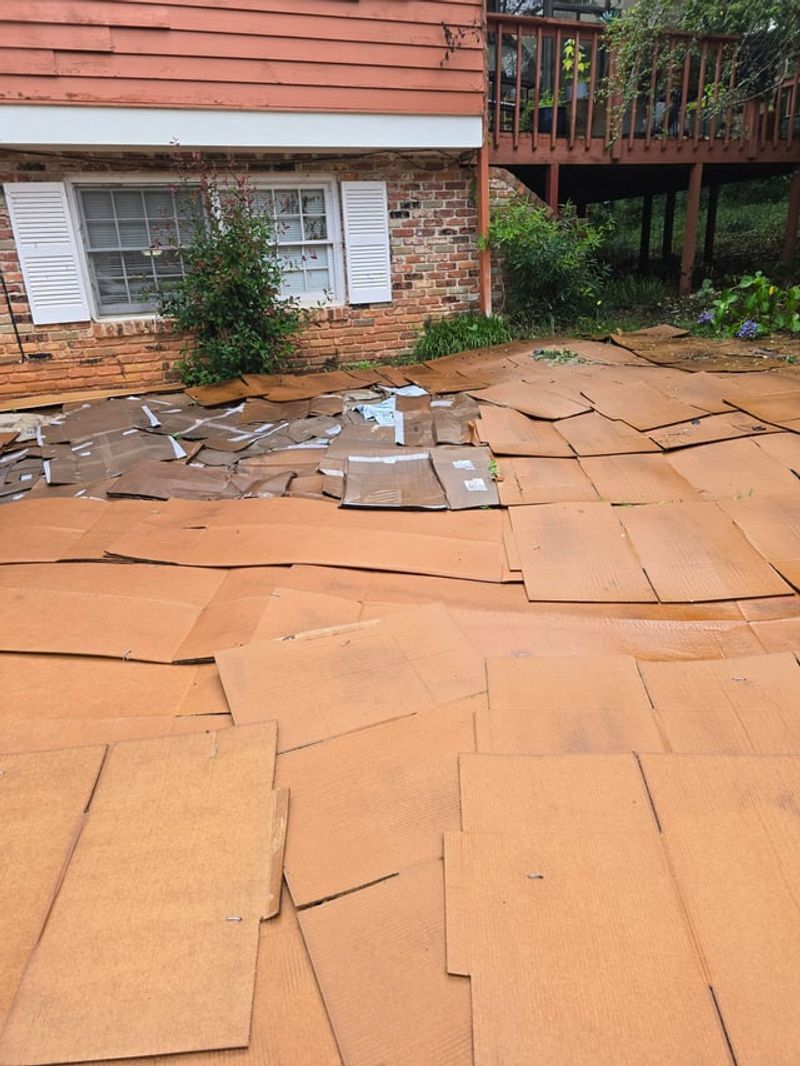
Overlap each sheet by roughly 8 to 10 inches so there are no open seams where light can sneak through. Penn State Extension’s sheet-mulching instructions recommend this overlap range, and one or two cardboard layers are generally sufficient.
Once the sheets are positioned, wet them thoroughly so they conform to the soil surface, stay put in wind, and begin the process of softening.
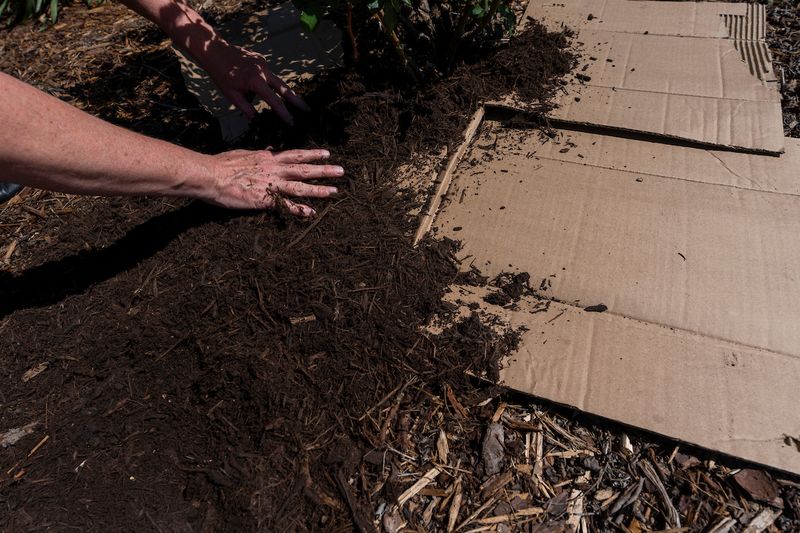
Cover the wet cardboard with organic mulch right away. NC State recommends roughly 3 to 4 inches of organic mulch for maximum weed-management benefit in most landscape settings, and Iowa State University Extension’s mulch guidance supports similar depths for weed suppression in garden beds.
The mulch protects the cardboard from drying out too fast and adds a second layer of light blockage.
If you can wait several months before planting, the vegetation underneath has more time to die completely. Penn State describes four to six months as usually sufficient for a new sheet-mulched bed.
When immediate planting is the plan, UC IPM’s sheet-mulching guidance advises cutting only appropriately sized openings rather than pulling back large sections, and monitoring soil moisture beneath the sheet carefully. A thick, intact cardboard layer can temporarily slow water and air movement, so avoid stacking excessive layers and watch established plants nearby for signs of stress.
How landscape fabric delivers early coverage and later complications
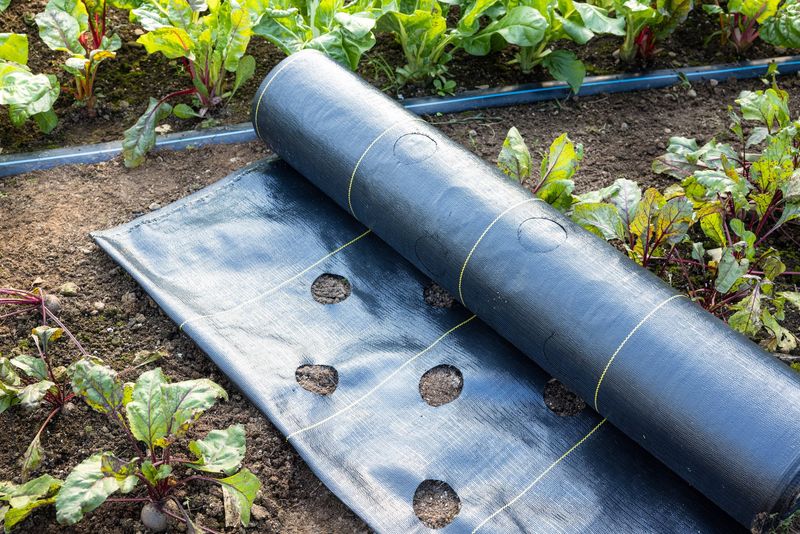
Landscape fabric is a permeable geotextile, not solid plastic sheeting. That distinction matters because permeable fabric initially allows some air and water to pass through, whereas solid plastic does not.
Even so, permeability can decline over time as soil particles and decomposed mulch clog the fabric’s pores, so the early advantage does not always hold through a full season.
Getting the most out of fabric starts with bare-soil preparation. Install it on clean, bare ground or immediately after planting, overlap sections by several inches, and pin them tightly so the edges do not lift.
Gaps and loose seams are the most common entry points for weeds, and even a small opening can let light reach the soil below. NC Cooperative Extension’s review of landscape fabric and UC IPM’s landscape weed management resource both emphasize that tight installation is the main factor separating adequate early coverage from rapid failure.
When cutting openings for plants, use an X shape rather than removing a full section. Fold the flaps back over the soil and enlarge the opening gradually as woody plants grow, because fabric that presses against stems or trunks can restrict them.
A shallow layer of mulch over the fabric helps protect it from ultraviolet degradation; NC State’s woody ornamentals guidance suggests approximately 2 inches of organic mulch when used with geotextile fabric, though the right depth depends on mulch type and bed conditions.
Fabric’s early advantage is real. University of New Hampshire Extension and UC IPM note that fabric under mulch can provide greater initial weed control than mulch alone, with performance varying by fabric construction.
The complications tend to arrive later: weed seeds land in the mulch above the fabric, germinate, and root into the fabric itself. NC State’s woody ornamentals chapter specifically identifies sedges and some grasses as plants that can grow through landscape fabric, and UC IPM warns that yellow nutsedge can penetrate most geotextiles.
Once roots weave into the fabric, weeding becomes far more difficult than it would be in a simple mulched bed.
Fabric is most sensible in limited-use situations: unplanted paths, rock areas, or erosion-control slopes where replanting and soil amendment are not priorities. For frequently replanted beds where soil access matters, its complications tend to outweigh its early benefits.
Why related paper research does not predict cardboard’s exact lifespan
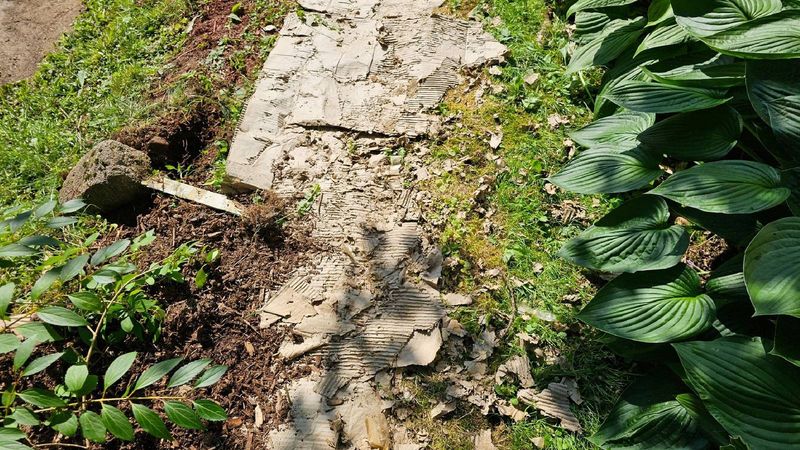
One of the most common mistakes homeowners make with cardboard is expecting it to behave the same way in every bed, every season. Breakdown rate depends on moisture, soil biology, cardboard thickness, whether the bed is shaded or exposed, local climate, and how much foot traffic crosses the area.
A moist, biologically active Piedmont bed in a wet spring can break cardboard down faster than a drier mountain slope where decomposition slows.
Oregon State University Extension’s sheet-mulching guide describes cardboard breaking down over several months under mulch, with the organic mulch continuing the weed-control work as the cardboard softens. That process can contribute carbon and organic matter to the soil over time, which is part of why extension guidance favors cardboard in beds where future soil health matters.
However, intact or excessive cardboard layers can temporarily restrict water and air movement before decomposition is underway, so the soil-health benefit is not immediate.
A figure that circulates in gardening discussions is the idea that paper mulch suppresses weeds for up to 16 weeks. That number comes from a paper-mulch vegetable study published in Acta Horticulturae, which evaluated paper mulch in a vegetable production context over four seasons.
It is not a lifespan estimate or a performance forecast for corrugated cardboard in a North Carolina residential planting bed. The material, the setting, and the goals are different enough that applying that figure directly to a home landscape bed would be misleading.
Landscape fabric, by contrast, does not decompose. It remains physically present for years, which sounds like an advantage until the weeds above it become established.
UC IPM notes that as organic mulch accumulates above fabric and decomposes, it creates a growing medium where weed seeds can germinate and root into the fabric surface. The fabric stays in the ground, but its practical weed-control value can decline significantly while the physical removal problem grows.
Cardboard, once it decomposes, simply becomes part of the soil system. NC State’s organic gardening guidance frames that kind of integration as consistent with good soil stewardship, even if the timeline for decomposition varies by site.
Maintenance determines whether either barrier earns its place
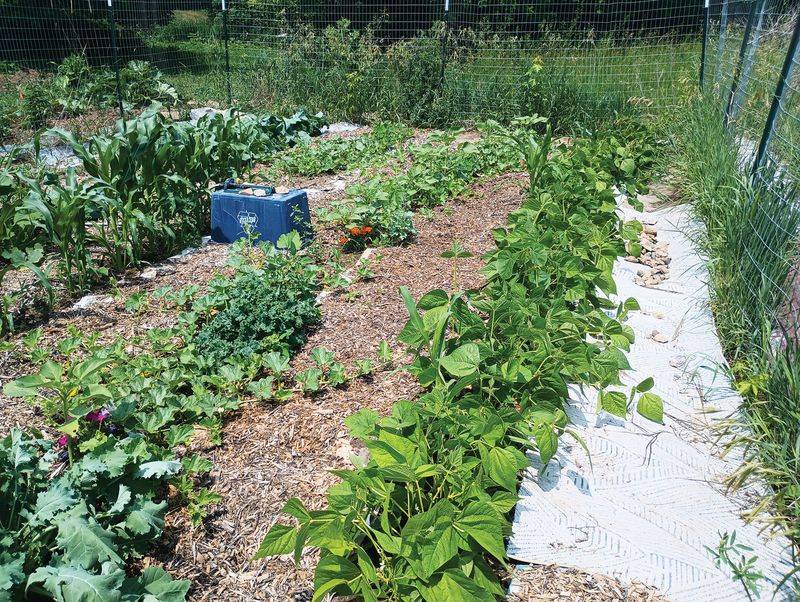
Neither cardboard nor landscape fabric runs itself after installation. The beds that perform best through a full North Carolina season are the ones that get regular attention at the edges, seams, planting holes, and mulch surface from spring through late summer.
Skipping those checks is the fastest way to lose whatever advantage the barrier provided at the start.
Weeds that germinate in mulch sitting above a barrier are a different problem from weeds that survive beneath cardboard or push through fabric. The first type is a mulch-management issue: seeds blow in, land on the organic layer, and sprout without ever touching the barrier below.
The second type reflects a gap in the barrier itself or a weed with enough energy to penetrate it. Telling these two situations apart helps you respond correctly rather than assuming the barrier has failed entirely.
Remove weeds while they are small. A seedling pulled in May takes seconds; the same plant rooted through landscape fabric by July may require cutting the fabric to get it out.
UC IPM’s weed management guidance and UC IPM’s sheet-mulching resource both emphasize early removal as central to keeping either system functional. NC Cooperative Extension’s landscape management guidance reinforces that integrated weed management, not complete eradication, is the realistic goal for most residential beds.
Renew or redistribute organic mulch as it settles and decomposes through the season. NC State’s preemergence weed control resource supports maintaining adequate mulch depth as part of an ongoing landscape weed program.
As the mulch layer thins, light reaches the barrier surface and weed pressure at the edges increases.
Two habits protect plants and soil health at the same time. First, keep mulch away from plant stems and trunks.
NC State’s woody ornamentals chapter recommends keeping mulch roughly 6 inches back from stems and trunks to reduce bark decay, vole damage, and moisture-related problems. Second, avoid piling extra cardboard or mulch to compensate for weed pressure: excessive material can restrict water and air movement, push roots up into the mulch layer, and create a new germination zone right where you least want one.
NC State’s organic gardening guidance notes that maximum weed-management benefit comes at roughly 3 to 4 inches of organic mulch, and that excessive depth brings its own problems.
Match the material to the bed’s purpose and North Carolina conditions
North Carolina’s geography makes statewide generalizations unreliable. NC Cooperative Extension’s soil guidance for the Piedmont highlights how clay-heavy soils there can hold moisture and compact differently than the sandy Coastal Plain soils that drain quickly and warm fast.
Mountain beds on slopes face different challenges again: steep terrain, cooler temperatures, and storm runoff that can shift mulch and expose edges faster than flat Piedmont beds experience.
Cardboard fits naturally into beds that are being reclaimed from lawn or heavily weeded ground. Oregon State University Extension’s sheet-mulching guide describes this conversion use as one of cardboard’s strongest applications.
NC State also recommends cardboard and composted leaves or mulch for eliminating unwanted turf before planting native plants. When the plan includes future soil amendments, new plantings, or expanding the bed over time, cardboard is easier to work with because it either decomposes or can be moved without leaving a synthetic layer behind.
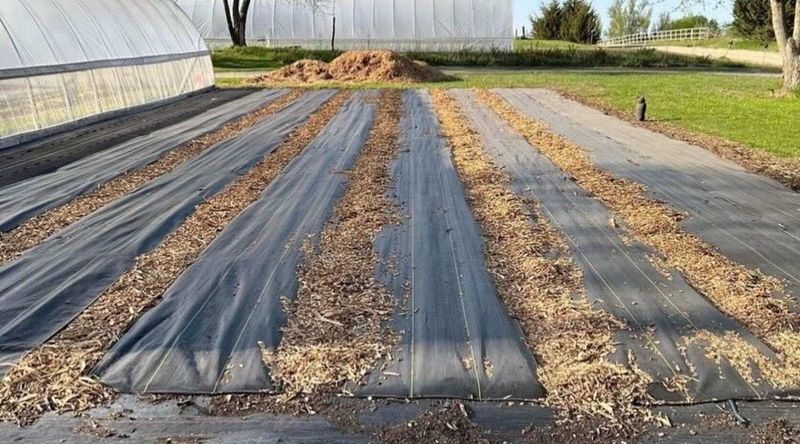
Landscape fabric makes more sense in a narrower set of situations. NC Cooperative Extension’s review of fabric use and UC IPM’s landscape weed guidance both recognize it as a defensible option for limited-use paths, rock areas, or erosion-control situations where replanting and regular soil access are not priorities.
If the bed will not be turned, amended, or replanted for years, and the weed species are manageable annuals rather than sedges or spreading grasses, fabric’s longer physical presence can be an asset rather than a liability.
Stewardship framing matters here too. Organic mulch supports soil processes as it decomposes, and choosing materials that do not leave synthetic debris behind aligns with keeping the bed accessible for future work.
NC State’s wildlife-friendly landscape guidance frames soil health and reduced synthetic material as part of responsible yard stewardship. On tick management, NC Cooperative Extension’s tick guidance for Henderson County focuses on mowed grass, cleared paths, pruned vegetation, and mulch borders between lawns and surrounding woods as the core strategies.
The reviewed sources do not establish that cardboard or landscape fabric alone provides a superior tick barrier, so that should not be the deciding factor between the two materials.
Cardboard usually offers the better residential trade-off
Landscape fabric can deliver stronger early physical coverage and remain intact in the ground for years. For a homeowner who wants the most durable initial barrier and is working in a bed that will not be replanted or amended, that durability has real value.
The catch is that practical weed control often declines before the fabric itself does, and removal becomes progressively harder as roots weave into the material. NC Cooperative Extension’s landscape fabric review makes that trade-off clear.
For most North Carolina residential planting beds, cardboard offers a better balance across the full season. It blocks light adequately, can decompose over time and become part of the organic-matter system beneath the mulch, and leaves the bed easier to work with when replanting or soil management comes around.
NC State’s organic gardening guidance supports cardboard beneath organic mulch as an approach that combines weed suppression with longer-term soil stewardship. UC IPM’s weed management resource reinforces that no barrier eliminates every weed, and that installation quality and ongoing maintenance shape results more than material choice alone.
Correct installation, appropriate mulch depth, prompt small-weed removal, and seasonal inspection matter more than treating either material as a permanent fix. The best choice for your bed depends on its purpose, the weed species present, your site conditions, and how much management you are willing to do afterward.
Choosing wisely at the start is easier than undoing a poor fit two seasons later.