
Do These 6 Things To Your Roses This Fall And They’ll Bloom Harder Next Spring
Your roses are winding down for the year, but their work is far from over. What you do in the next few weeks decides how strong the roots, canes, and buds will be when spring rolls around.
Skip fall care, and you may see weak growth, black spot, or winter-killed canes. Get it right, and your roses can come back fuller and packed with blooms.
1. Water Deeply Until the Ground Freezes
Picture a rose heading into winter thirsty. Dry roots freeze faster and crack more easily, and that damage shows up in spring as slow, patchy growth.
A well-watered root system, on the other hand, holds heat better and stays alive through cold snaps.
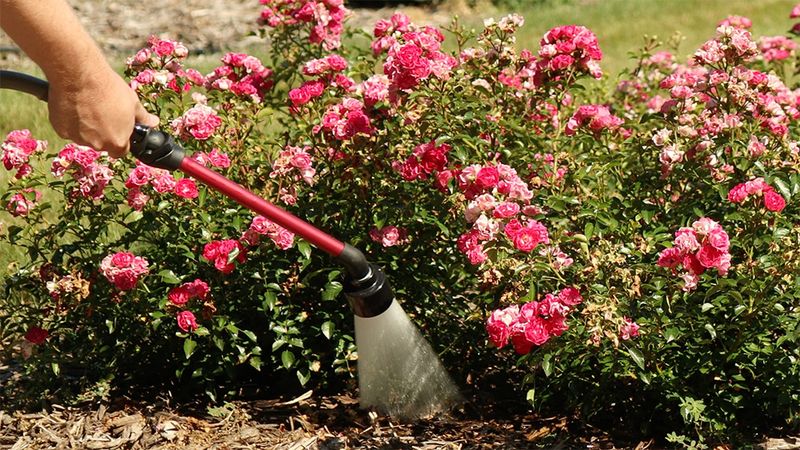
Give each bush a deep, slow soak at the base about once a week during dry fall spells. Aim for water that reaches 12 inches down, not a quick sprinkle that wets the top inch.
As temperatures drop, you can space out watering, but keep the soil moist rather than soggy.
Water in the morning and keep the leaves dry. Wet foliage overnight is an open invitation to fungal problems.
Keep going until the ground freezes solid, then you can finally put the hose away.
2. Stop Fertilizing 6 to 8 Weeks Before Frost
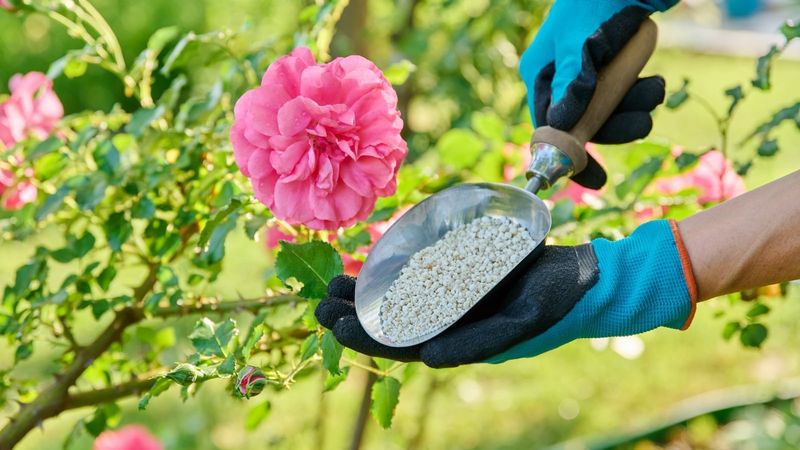
Feeding your roses feels like kindness, but late-season fertilizer can backfire badly. Nitrogen pushes out soft, tender shoots right when the first frost is on its way.
Those new stems turn black and mushy after one cold night, and the plant wastes energy it needed for winter.
Look up your average first frost date and count back 6 to 8 weeks. That is your last day for regular rose food.
After that, let the plant slow down on its own.
If you want to give roots a boost in early fall, a little bone meal or a low-nitrogen, higher-potassium blend can help support hardiness without forcing leafy growth. Think of it as packing a lunch for winter, not throwing a party.
3. Prune Lightly and Let Rose Hips Form
Here is a chore you can mostly skip, and your roses will thank you. Heavy fall pruning wakes a plant up and tells it to grow, which is the last thing you want before winter.
Save big cuts for late winter or early spring.
Fall trimming should be light cleanup only. Cut out any dead, damaged, or diseased canes whenever you spot them.
If some canes are taller than about 4 or 5 feet, shorten them so winter winds do not whip them around and snap them.
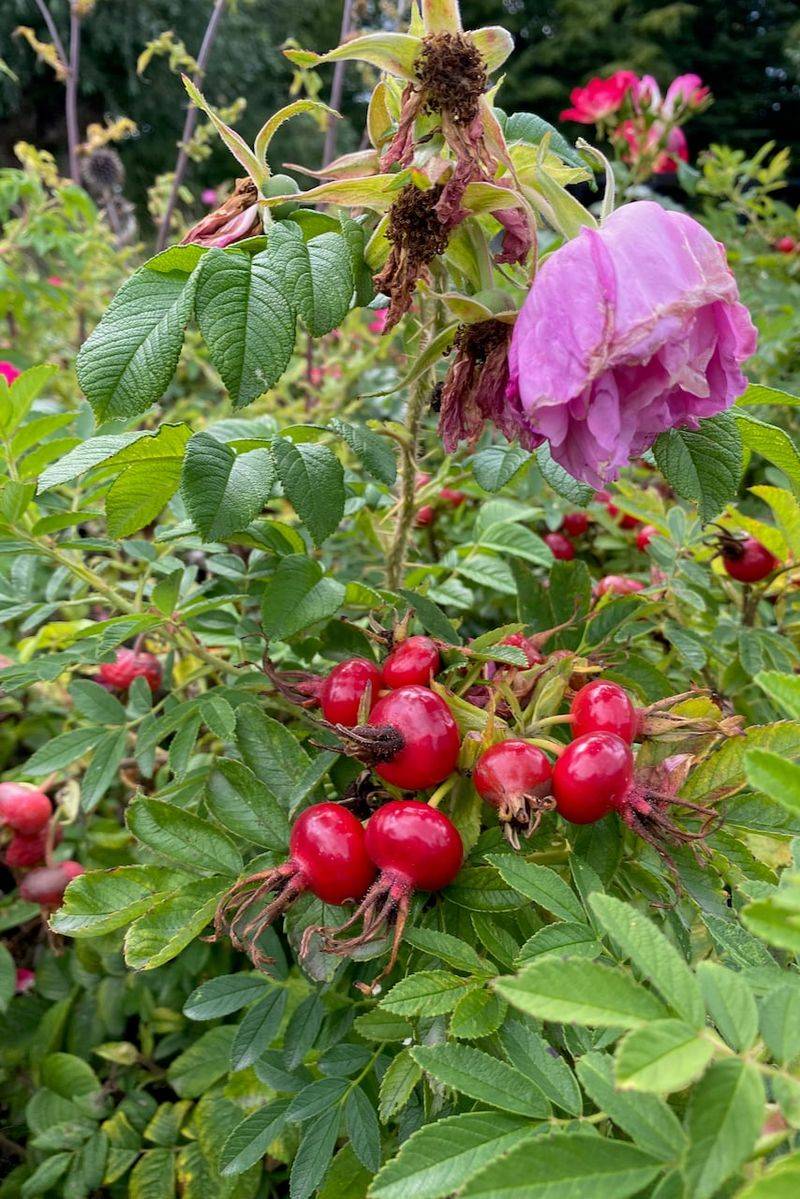
Around 6 to 8 weeks before frost, stop deadheading. Leaving spent flowers lets rose hips form, and those little seed pods signal the plant to slow down and go dormant.
Bonus: rose hips add a pop of red color to a bare fall garden, and birds love them.
4. Rake Up Fallen Leaves and Debris
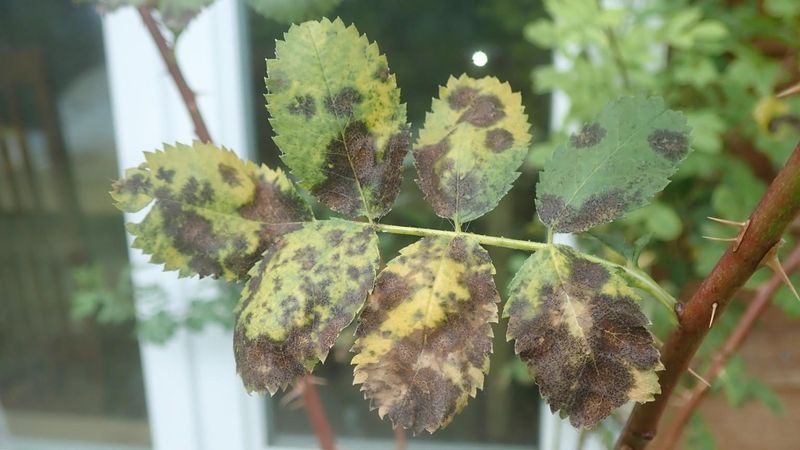
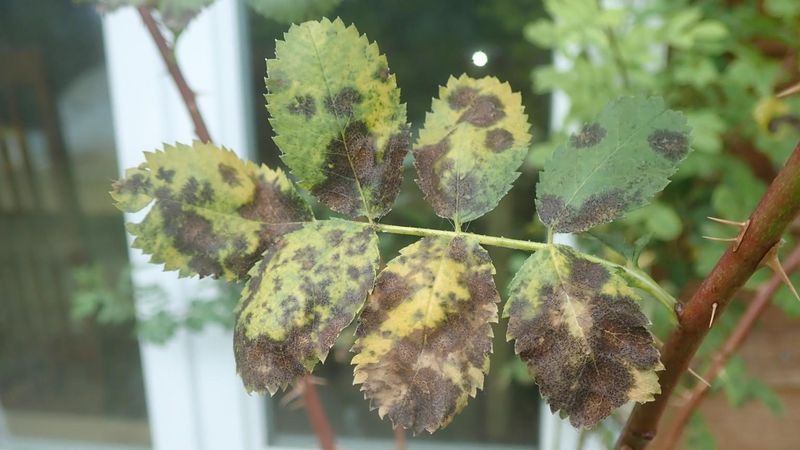
Those spotted yellow leaves piling up under your roses are not harmless. Black spot and powdery mildew spores can spend the whole winter hiding in that litter.
When spring rain splashes them back onto fresh leaves, the cycle starts all over again.
A quick rake around each bush can break that cycle. Clear out fallen leaves, old petals, and any twigs down to bare soil.
Pull off any obviously diseased leaves still clinging to the canes too.
Bag the mess and toss it in the trash, not the compost pile. Most home compost does not get hot enough to kill fungal spores.
Ten minutes of raking now may save you weeks of fighting spots next June.
5. Mulch and Mound to Protect the Roots
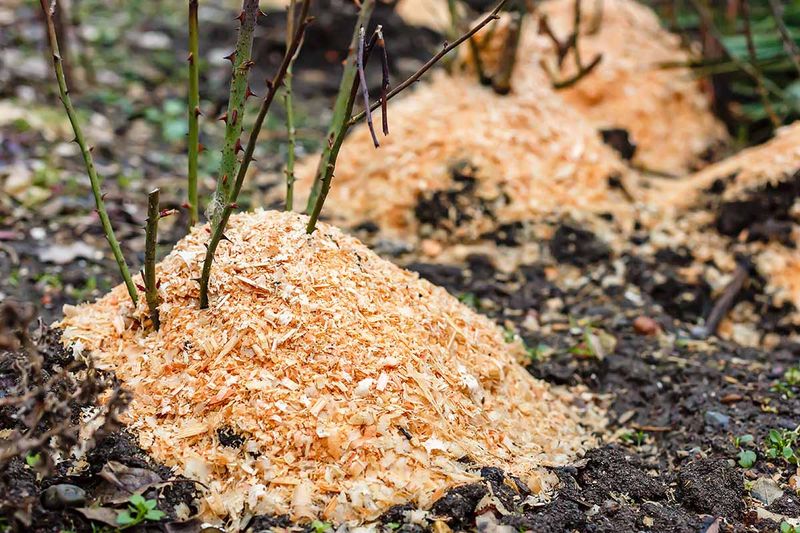
Cold alone rarely kills a rose. The real troublemaker is the freeze-thaw cycle, where soil freezes, thaws, and refreezes, heaving roots and tearing tiny feeder roots apart.
A good blanket of mulch keeps soil temperatures steady.
Spread 2 to 3 inches of wood chips, shredded leaves, or compost around the base. In colder areas, roughly USDA Zone 7 and below, go further and mound soil or compost 6 to 12 inches high around the plant after the first hard frost.
Make sure the bud union, that knobby spot where canes meet the rootstock on grafted roses, is covered.
Keep a small gap between mulch and the crown so moisture does not sit against the stems and cause rot. In spring, gently pull the mound away once hard freezes are over.
6. Head Off Pests and Disease Before Winter

Aphids and spider mites do not always pack up when the weather cools. Some hang around on your roses into fall, and others leave eggs tucked into bark and bud crevices.
Checking now is your last easy shot at them this year.
Walk your roses once a week and look under leaves. A strong spray of water from the hose can knock off dust, mites, and aphids without any chemicals.
Once plants are fully dormant after a few hard frosts, a dormant spray such as horticultural oil or lime sulfur may help reduce overwintering pests and fungal spores. Always follow the label and spray on a calm day above freezing.
It will not guarantee a spotless season, but it can lower the disease pressure your roses face when they wake up hungry to bloom.