
Don’t Buy A Pricey Grow Light Before Moving Your Leggy Houseplants To This Window First
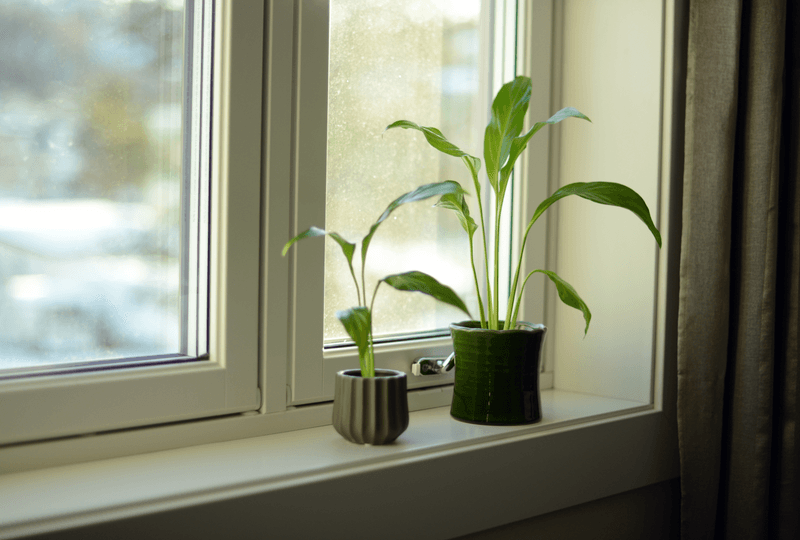
Your pothos has stretched out like it is reaching for the door, and the leaves look a little tired. Fall is when many of us notice this, because the sun sits lower and the days get shorter.
Before you spend money or give up on the plant, there is a simple, no-cost test worth trying. Here is how to check your light, move a plant safely, and know when extra light makes sense.
Leggy growth can point to too little light
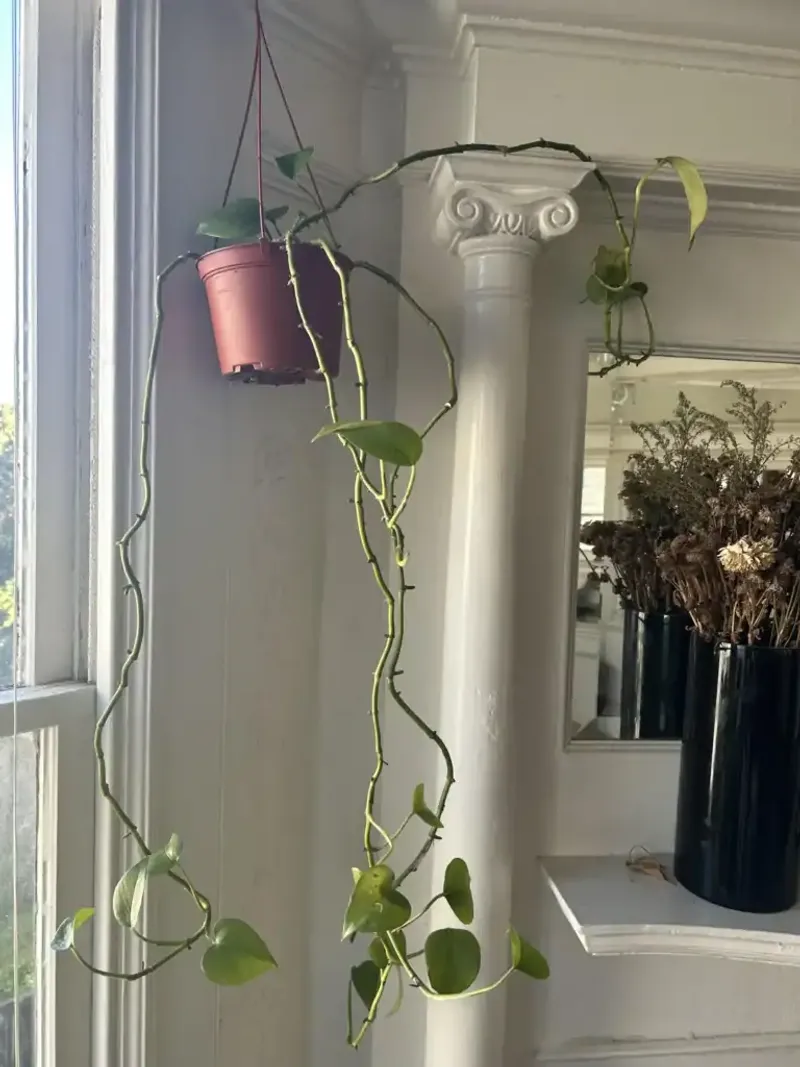
Picture your pothos or jade plant with long, bare stems and leaves spaced far apart. That stretched look is commonly linked to inadequate light, and Iowa State Extension suggests moving the plant to a brighter spot or adding supplemental light.
Think of it as a clue, not a final diagnosis.
Other signs can back up the light theory. Fading foliage, slow growth, and poor flowering can also show up when a plant is not getting enough light.
If you see several of these together, checking the light is a smart first step.
Pale or yellow leaves are a different story. On their own, they do not prove your plant wants more light.
Root problems, nutrient issues, pests, too much light, and other conditions can cause similar symptoms, and UC IPM lists many possible causes for houseplant trouble.
So the goal here is not to blame every struggling plant on light. Look at the whole plant.
Long stems with small leaves leaning toward the glass tell a very different story than a single yellow leaf at the bottom.
If the stretched look matches what you see, you have a good reason to test a better location. It costs nothing, and it tells you a lot about what your plant needs.
The right window depends on the plant and the room
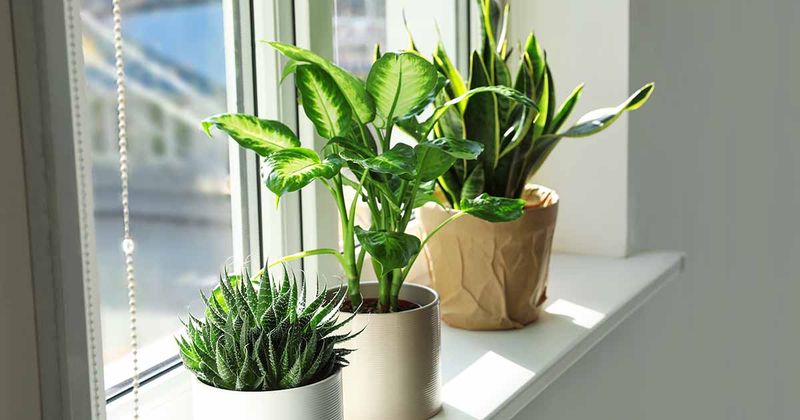
Start with the plant itself. A snake plant, a fiddle leaf fig, and a geranium all want different amounts of light, so look up what yours prefers before you move anything.
Then compare the spots you have, including ones simply closer to a window.
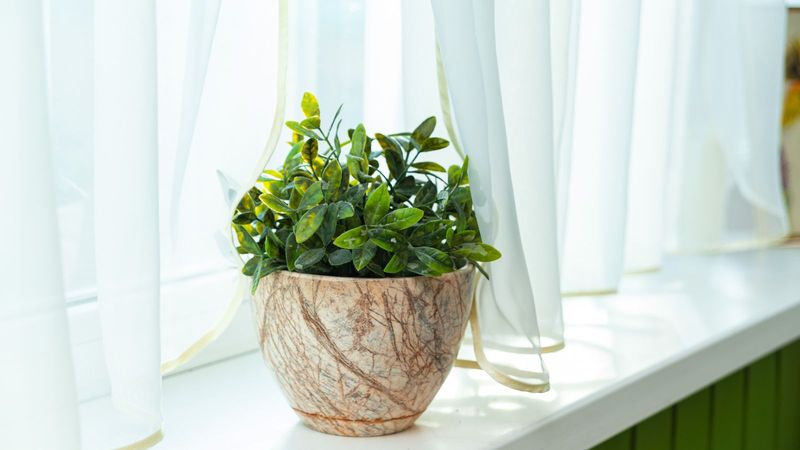
Distance matters more than most people expect. According to University of Maryland Extension, light drops off quickly as you move away from the glass, and curtains, trees, buildings, weather, window type, and season all change how much reaches the leaves.
That is why there is no single best window. A south-facing window can be shaded by a porch roof or a neighbor’s maple, while an east window with nothing in the way may be brighter than you would guess.
Compass direction is a starting point, not a rule.
If you like numbers, a phone light-meter app can help you compare two spots. University of Florida guidance describes foot-candle readings as useful for comparing locations, while phone readings are only approximate.
Treat them as a rough comparison, not a diagnosis.
Try checking at a few times of day, since fall sun moves lower and shifts through the room. Pick the spot that best fits your plant’s needs and that you can keep it in for a few weeks.
Move the plant toward better light without shocking it
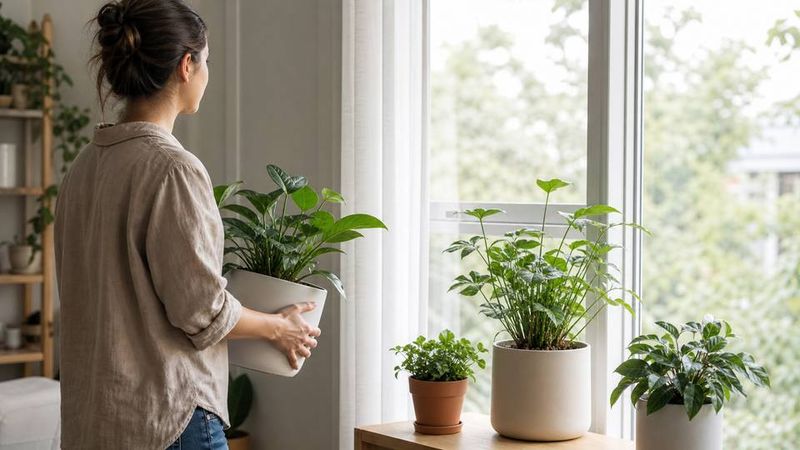
Once you have picked a better-matched spot, make the move a gentle one. If the new location is much brighter than the old one, shift the plant in steps over a week or two instead of all at once.
Watch how the leaves respond.
Gradual change matters because a plant used to dim light can be damaged by sudden strong sun. Iowa State Extension notes that abrupt exposure to intense direct sun can bleach or scorch foliage.
Brown crispy patches or washed-out leaves after a move are your signal to pull back.
Fall adds its own risks. Windowsills can be colder than the rest of the room, and glass can get chilly on a cold night.
Avoid trapping a plant between a curtain and a cold windowpane.
Check for drafts too, such as a leaky frame or a door that opens often nearby. Keep plants away from heat vents, which can dry leaves out fast.
A simple fix is to set the plant a few inches back from the glass, or pull it into the room at night. That way you gain light without creating a temperature problem.
The move is a test, so be ready to adjust if the plant does not like the new spot.
Rotation evens out exposure, but it cannot replace enough light
Ever notice your plant leaning toward the window like it is eavesdropping? That happens when one side gets more light than the other.
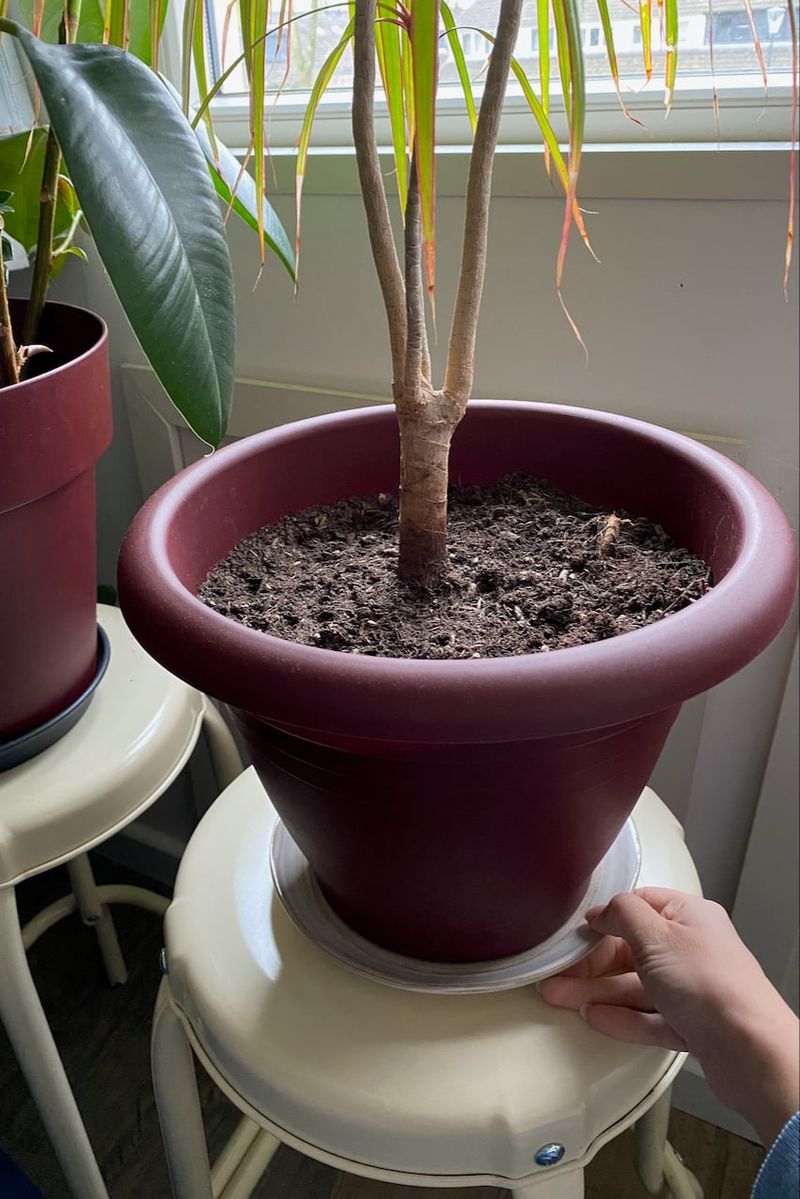
Turning the pot can even things out.
Missouri Extension says that turning plants once a week can help prevent one-sided growth. That is one practical option, and a quarter turn each time you water is an easy habit to remember.
Now the honest limit. Rotation moves the light around, but it does not add any.
If the whole spot is too dim, every side of the plant will still be underfed, just more evenly.
It also will not undo stems that have already stretched. Those will stay long even if the plant now grows more symmetrically from here on.
Think of rotation as a helper for a good location, not a rescue by itself. Pair it with a better-matched window, and you give the plant the best shot at balanced, fuller growth.
New growth shows whether the change is helping
Patience is part of this test. Plants do not bounce back overnight, so give the new spot a few weeks and then look at what is growing, not what already grew.
Iowa State Extension explains that once the cause is addressed, new growth will generally look better, but stems that have already stretched will remain spindly. Look for tighter spacing between leaves, sturdier stems, and fuller color on the newest leaves.
You can trim leggy stems if you like a neater shape, and many plants will branch from there. That is a style choice, not a requirement.
If nothing improves, do not assume the answer is simply more light. Pale or yellow leaves in particular can come from several causes, and UC IPM lists problems like pests, watering troubles, and root issues that can look alike.
Check the soil moisture, look under the leaves for pests, and think about recent changes in watering or temperature. If the plant is still stretching in the new spot, that points back toward light as the likely limit.
When the window is not enough, supplemental light is reasonable
Sometimes you try the better window and the plant still stretches. That does not mean the test failed.
It means your home may not have a spot that gives that plant enough light.
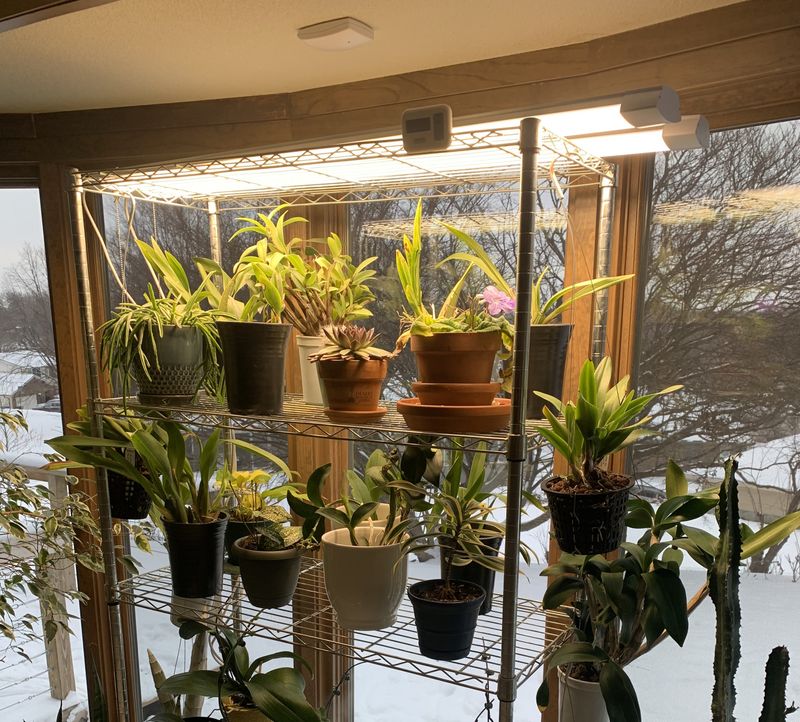
Iowa State Extension advises that when no window offers enough light, supplemental light is worth considering. It is a conditional tool, used when the plant’s needs and your available light do not match.
If you go that route, plan it with care. Iowa State also outlines important considerations for supplemental lighting, so read up before choosing a fixture and setting it up.
Results depend on the plant, the fixture, and how you use it, so no outcome is guaranteed. Watch new growth, just as you did with the window test.
The decision rule is simple: try a suitable window if you have one, then let your plant’s needs and response tell you whether to add light. A plant that grows compact and steady is the best review you will get.