
Don’t Haul In A Truckload Of New Soil Before Trying This Simple Fix For Your Compacted Vegetable Bed
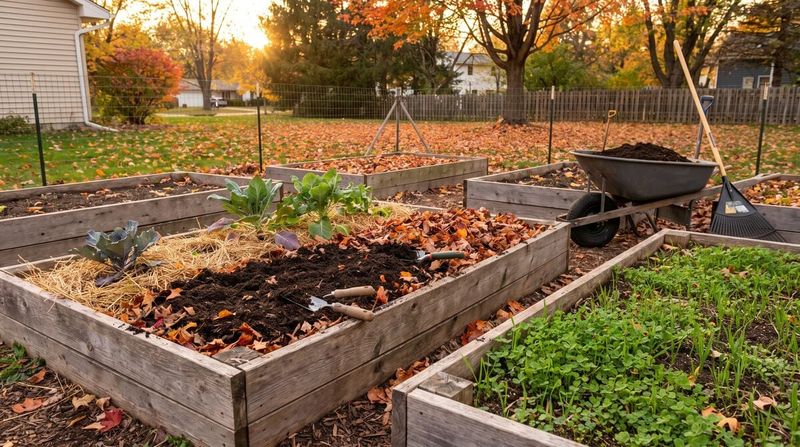
After a long summer of watering, rain, and harvesting, your vegetable bed may feel hard as a sidewalk. Before you order a truckload of soil, it helps to figure out what is really going on.
A crusty top layer and a squeezed-down layer below it are different problems. Fall gives you a low-cost chance to protect the bed and slowly build it up.
A crusted surface does not automatically mean the bed needs new soil
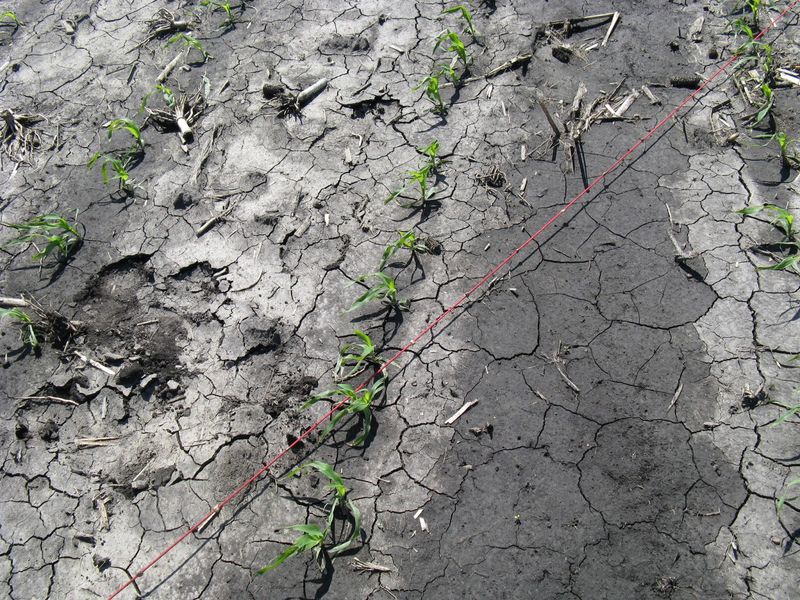
Poke at that hard patch before you decide anything. A thin crust that forms after pounding rain is not the same thing as a squeezed, dense layer deeper down.
University of Minnesota Extension describes raindrop crusting as often less than half an inch deep, while true compaction sits lower and affects roots and water movement.
The difference matters because each problem shows up in its own way. A surface crust can keep small seeds, like carrots or lettuce, from pushing through.
Deeper compaction can leave roots stunted and cause water to sit or run off instead of soaking in.
Two simple checks can help you investigate. Push a shovel into the bed when the soil is damp but not soggy, lift out a slice, and look for a thin crust, a flat dense layer, or roots turning sideways.
You can also try a water-infiltration test, pouring water onto the bed and watching how fast it drains, a method that fits with the testing ideas in this Minnesota soil testing guide.
Neither check gives a final answer on its own. Slow drainage, a crusted top, and poor rooting can have different causes.
Treat what you find as clues, and match the remedy to what you see.
Leaves protect the surface while living roots build below it
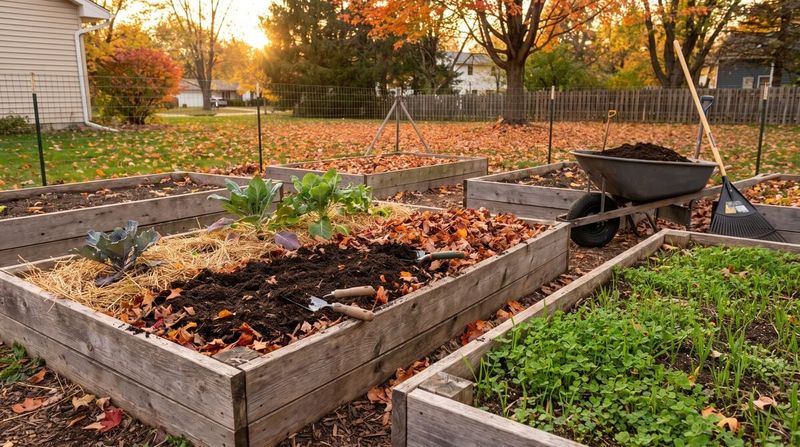
Think of this pair as a team with two jobs. Shredded leaves cover the top of the bed, softening the hit of raindrops and slowing erosion.
As they break down, they add organic matter, a benefit described in Illinois Extension’s guide to garden mulches.
A cover crop works from the other direction. Its roots push into the soil, leave channels behind when they die, and add organic matter over time.
Penn State Extension says cover crops are one part of compaction management, not the whole answer.
That is worth keeping in mind as you plan. Illinois Extension also cautions that cover crops may not be an instant fix.
Soil structure changes slowly, often over several seasons.
So expect a bed that is better protected this winter and perhaps a bit easier to work later. Do not expect leaves and roots to repair a deeply squeezed layer by spring.
Think of it as a low-cost step in a longer project.
Shred the leaves and leave seed room to make contact
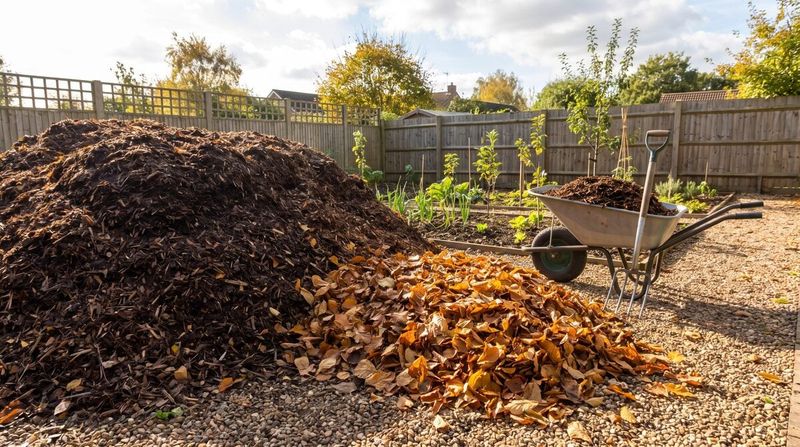
Order matters when you combine leaves and seed. Start by running a mower over fallen leaves or chopping them in a bin.
Whole leaves tend to mat together and can block water from reaching the soil, as Illinois Extension explains.
Next, clear spent plants and lightly rough up only the top of the bed when the soil is not wet. Scatter your cover crop seed and rake it in so it touches the soil.
Seed that sits on top of old debris has a harder time sprouting, and young plants also need steady moisture, a point stressed in Illinois Extension’s cover crop guide.
Only after seeding should you add shredded leaves, and keep that layer light. A thick blanket piled over fresh seed can smother it.
Some gardeners spread leaves on paths or on bed edges first and add more once seedlings are up.
Water the bed if fall turns dry. A thin, loose cover of chopped leaves can help hold moisture and protect the surface, much like the mulches covered in this mulch overview.
More is not always better.
Choose a cover crop for your local fall window
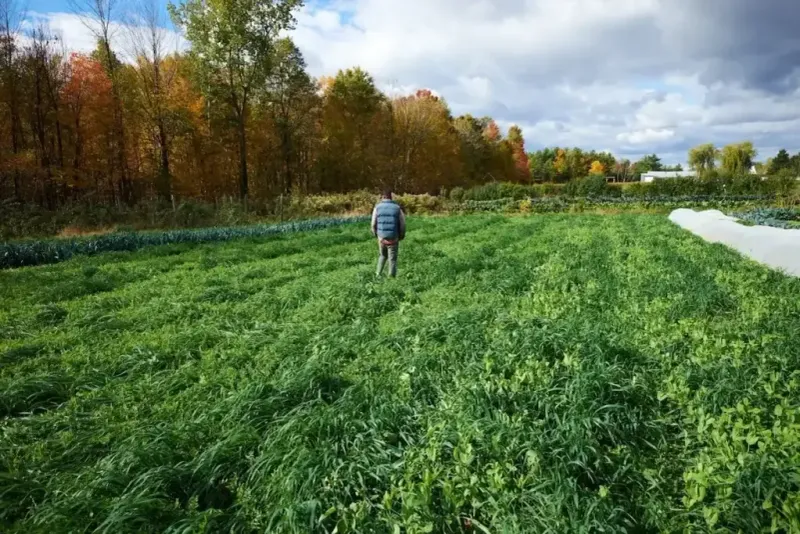
Timing is local. A planting date that works in Illinois can be too early or too late where you live, so check with your county or state Extension office for dates and species suited to your area.
The first hard freeze in your region is a big part of the picture.
One useful way to sort options is by what happens in winter. Oats and field peas may winter-kill, which means the plants die in the cold and are often easier to handle in spring.
Winter rye survives the cold and needs a spring management plan, as Illinois Extension notes.
Think ahead to spring when you choose. If you want to plant early and do not want extra work, a winter-killed crop may suit you better.
If you can manage rye in spring, it offers living roots for more of the cool season. The Illinois Extension cover crop guide covers these trade-offs for home gardens.
You can also look at what a cover crop contributes beyond roots. Utah State’s overview of organic nutrient sources is a reminder that cover crop choices and regional practices vary.
Use a regional chart or a local Extension office, and plant only what fits your window.
Plan the cover crop’s exit before spring planting
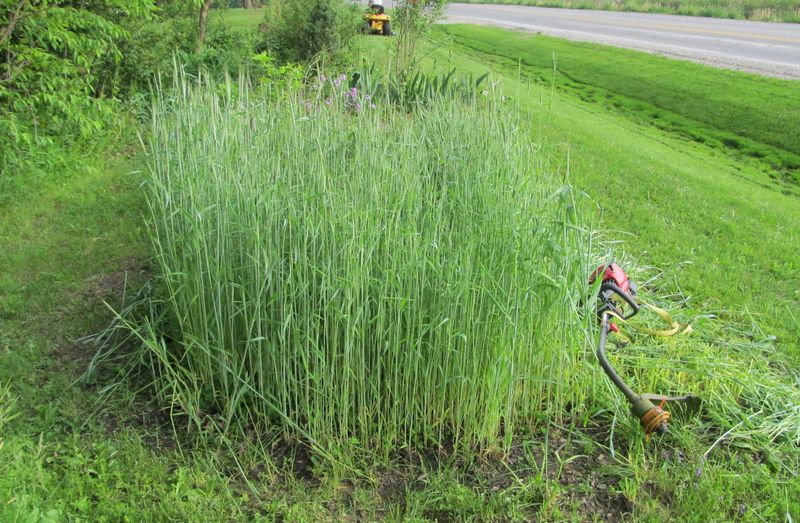
Sowing in fall creates a job for spring. A cover crop is a plant, and it needs an exit plan before your tomatoes, peppers, or beans go in the ground.
Winter rye is the one to watch. It must be terminated before it sets seed, and the leftover plant material may need time to break down before you plant, as described by Illinois Extension.
Cutting it low, turning it in or leaving it as surface residue are options, and its cover crop guide explains spring management for home beds.
Wait for soil that is not soggy before working the bed. Marking a date on the calendar helps, since rye grows fast once spring warms up.
Crop families matter too. A brassica cover crop, such as mustard or radish, may be a poor choice ahead of a vegetable in the same family, like kale or broccoli, according to University of Minnesota Extension.
Plan next year’s layout before you pick seed.
Deep or persistent compaction may need more than a surface cover
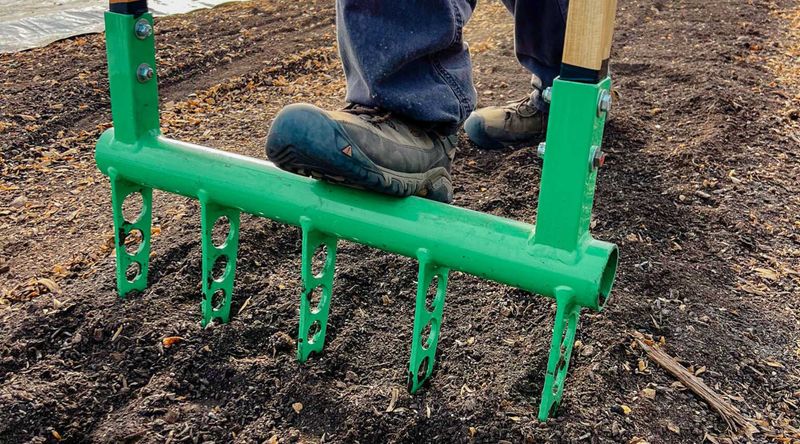
Sometimes your inspection points to a dense layer below the surface, or the bed stays hard after a season of care. In that case, spreading leaves alone may not address the cause.
Penn State Extension describes cover crops as one part of managing compaction, along with other steps.
Start with foot traffic. Mark paths and stay off the planting area, since walking on soil is a common source of squeezing.
Living roots can then improve structure over time.
Targeted loosening may be right in some cases, such as using a garden fork to ease a dense layer. It works best once you understand where the compacted zone is and what the soil conditions are, an idea explained in this NRCS soil tech note.
Keep away from wet soil. Minnesota Extension notes that wet soil is especially vulnerable to compaction, and the NRCS cover crop overview also warns against tillage in wet conditions.
Deep tillage on its own is not a permanent fix either, because the soil can settle back down.
There are cases when adding new soil makes sense
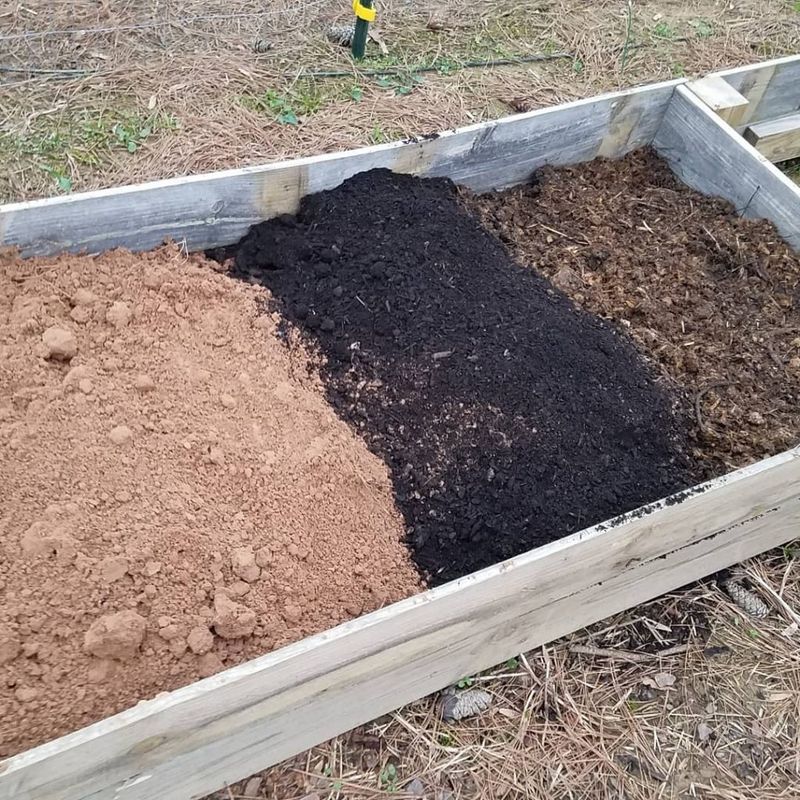
Restraint is not the same as never buying soil. A hard or crusted bed is not a reason to replace everything, but some situations do call for new material.
A raised bed is a common example. Over time the soil in it settles and drops below the frame, and topping it off may be reasonable.
Penn State Extension’s raised bed guidance covers soil health in these beds.
A soil test can point to a separate problem, such as poor fertility or contamination, that leaves and roots will not solve. Your state Extension service can explain how to collect a sample, and Illinois Extension’s soil testing page is one example of what to expect.
Use the bed’s condition and your test results to decide. If the soil is simply tight but otherwise healthy, gradual building may be enough.
If the soil itself is the trouble, replacing some of it may be the sensible move.
Treat fall cover as a first step, not a guaranteed cure
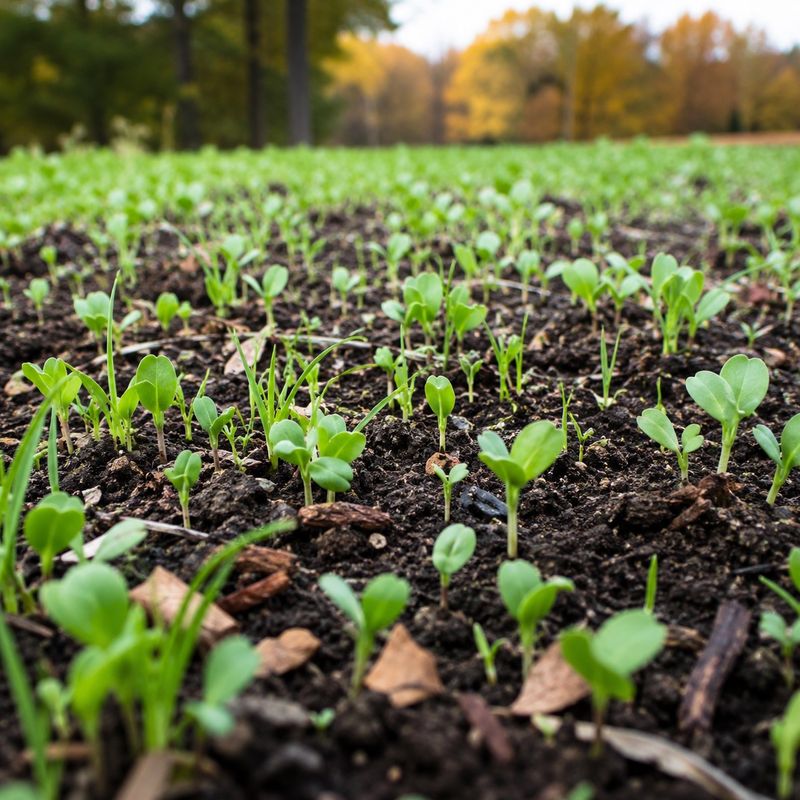
Look first, then act. Check whether you have a crust or a deeper layer, stay off wet soil, and consider shredded leaves with a cover crop suited to your area.
Both Penn State and Illinois Extension describe this as slow work, not a one-season cure.
Save new soil or targeted loosening for a problem you have actually identified. Soil rarely changes overnight, but a protected bed with living roots has a better chance of improving.
Patience is the cheapest tool you own.