
Eastern Purple Coneflower May Draw American Goldfinches to Your North Carolina Yard Through Fall and Into Winter
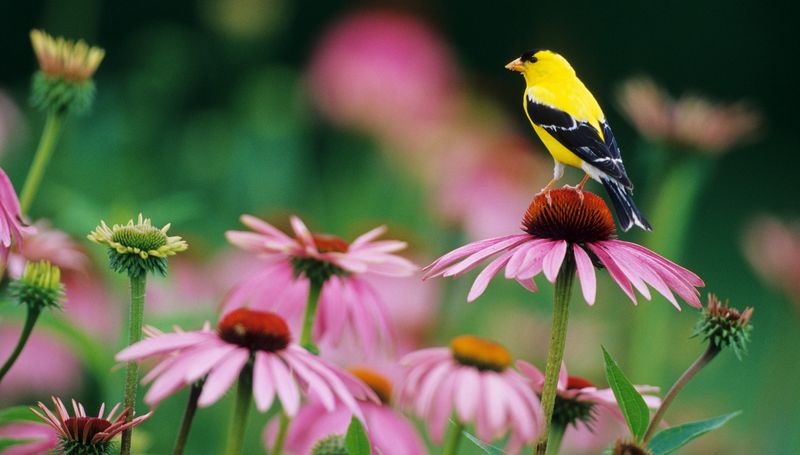
Every fall, North Carolina homeowners start noticing small yellow birds clinging to dried flower heads in gardens and meadow edges. Those birds are almost always American Goldfinches, and one native perennial keeps showing up in conversations about feeding them naturally: eastern purple coneflower, known scientifically as Echinacea purpurea.
Planting it will not guarantee a parade of goldfinches, but leaving its seed heads standing after bloom can offer real food value during a season when birds need it most. Here is what you actually need to know before you buy a plant and start hoping for visitors.
Meet the American Goldfinch and the Recommended Plant
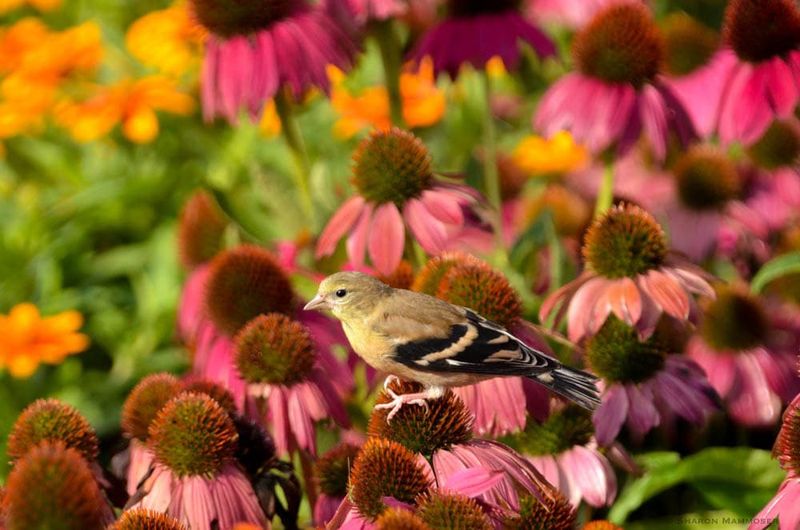
American Goldfinches (Spinus tristis) are familiar backyard visitors across North Carolina, showing up in suburbs, open woodlands, weedy fields, and yards where seed-producing plants grow near shrubs or trees for cover. Cornell Lab of Ornithology’s life history account for the American Goldfinch describes the species as almost entirely seed-eating, with a natural diet that draws heavily from plants in the Asteraceae family, including thistles, sunflowers, and asters, as well as grasses and tree seeds.
That seed-focused diet is the reason coneflowers come up so often in conversations about supporting these birds.
One thing that trips up even attentive gardeners is plumage variation. Bright lemon-yellow males with black wings are hard to miss from spring through summer, but females wear a softer olive-yellow and lack the bold contrast.
By fall and winter, both sexes fade to duller tones, and the American Goldfinch overview at All About Birds notes that winter birds can look so different from their breeding plumage that casual observers sometimes overlook them entirely or mistake them for a different species. If you think goldfinches have stopped visiting your yard in October, look again at the dull-colored birds working through your garden beds.
Eastern purple coneflower (Echinacea purpurea) is the plant this article recommends for North Carolina homeowners who want to support goldfinches with a native perennial. NC State Extension’s plant profile for Echinacea purpurea lists the species as native across the state’s Coastal Plain, Piedmont, and Mountains, and specifically identifies its seeds as food for songbirds, including American Goldfinches.
It is one useful option among many native seed producers, not the single plant goldfinches require or prefer above all others.
Why Mature Coneflower Heads Can Attract Goldfinches
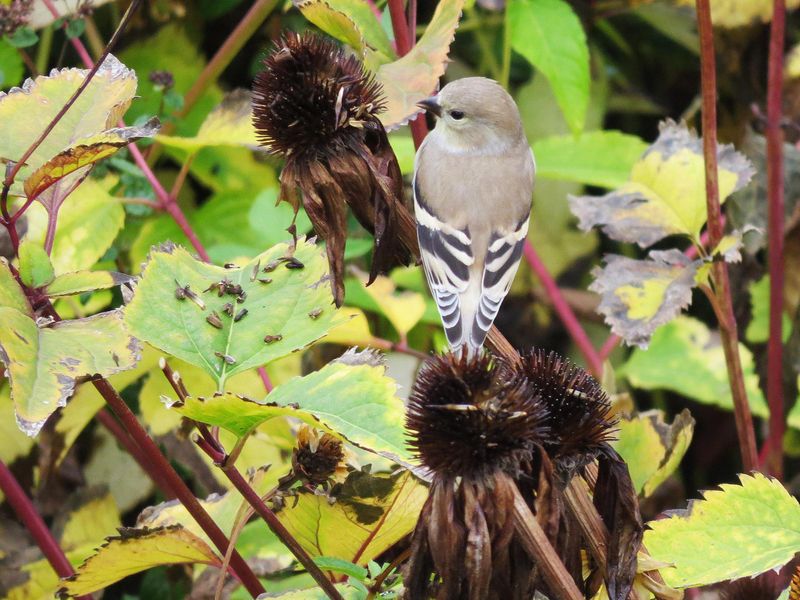
Goldfinches do not eat coneflower petals or nectar. What draws them is the seed inside each mature seed head, and that seed only becomes accessible after the flowers fade and the central cone dries.
A gardener who cuts plants back the moment blooms drop is removing the very structure the birds would come back for. Leaving the heads standing is the single most practical thing you can do to make a coneflower useful to goldfinches after summer ends.
The window when seed heads are available can stretch from late summer or early fall well into winter, depending on how much seed the plant produced, how quickly visiting birds or other wildlife consume it, and whether heavy rain or ice degrades the heads before the season is out. Audubon’s guide to plants for a bird-friendly yard includes coneflower among species worth leaving standing specifically because the dried heads hold food value for seed-eating birds into the colder months.
That is a directionally accurate picture, but no source can pin down an exact number of weeks or months for any given plant in any given yard.
Coneflower is also far from the only plant goldfinches will visit. Cornell Lab’s life history data shows goldfinches using sunflowers, native thistles, asters, grasses, and tree seeds throughout the year.
A yard with only one coneflower may attract a brief visit; a yard with several native seed producers spread across bloom times gives birds more reason to return and linger. Echinacea purpurea belongs in that mix, but it works better as part of a diverse planting than as a stand-alone solution.
Visitation also depends on local bird populations, nearby food competition, and habitat features like shrubs for cover, none of which a single plant can provide on its own.
Shop for Echinacea purpurea by Scientific Name
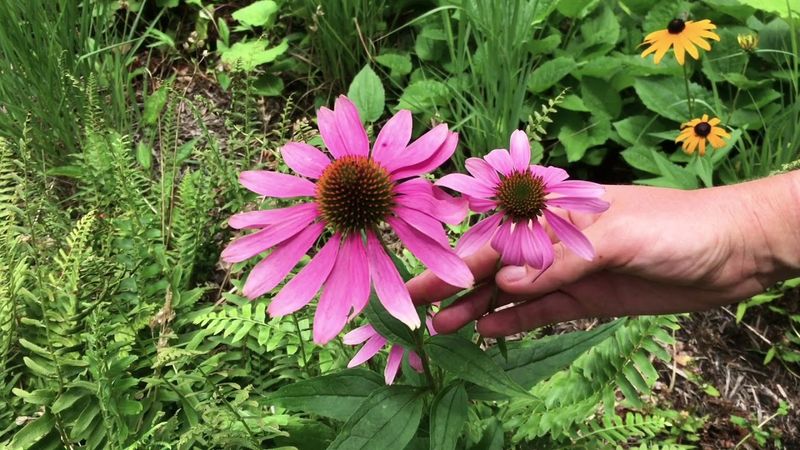
Walk into almost any North Carolina garden center in late summer or fall and you will find plants labeled “purple coneflower.” The problem is that common name covers more than one species, and not all of them carry the same native status or the same value to local wildlife. Checking the scientific name on the tag before you buy is a simple habit that makes a real difference.
The plant you want is Echinacea purpurea. NC State Extension lists Echinacea purpurea as native across all three of North Carolina’s major regions, the Coastal Plain, the Piedmont, and the Mountains, and ties its seed production directly to songbird feeding.
By contrast, NC State’s profile for Echinacea simulata describes that species as native to the central Midwest, not to North Carolina. Both plants may appear at nurseries under the purple coneflower label, but only E. purpurea has documented native status across the state.
If a tag says only “purple coneflower” and lists no scientific name, ask a staff member or skip it.
Cultivars add another layer of complexity. Breeders have developed Echinacea purpurea selections in orange, red, white, and various pinks, and some carry double or highly ruffled flowers that look very different from the straight species.
Audubon’s guidance on creating a bird-friendly yard cautions that heavily modified cultivars can differ in seed production and overall wildlife value compared to straight-species plants. A double-flowered form may produce fewer accessible seeds or fewer seeds altogether.
For goldfinch support, the straight species or a lightly modified cultivar with a single-row of petals and a visible central cone is the safer bet. When in doubt, choose a plant whose flower looks like a classic coneflower: one ring of petals around a prominent, spiny brown center.
Use Fall to Establish the Plant Before Summer Heat
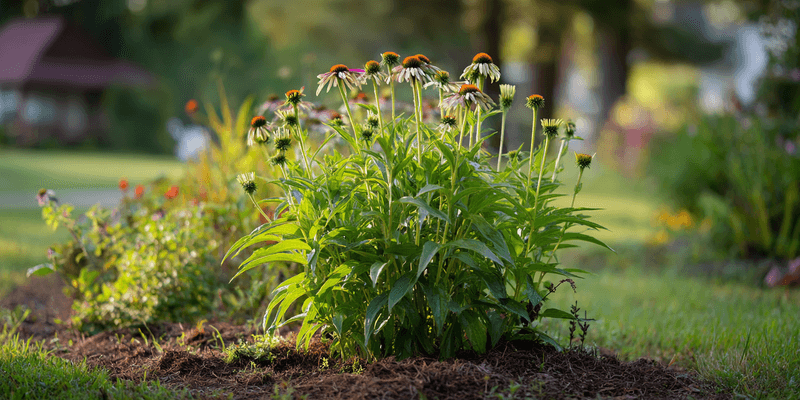
Fall is one of the better times to put a new perennial in the ground in North Carolina, and eastern purple coneflower is no exception. NC Cooperative Extension’s fall native planting guide explains that cooler air temperatures reduce stress on newly installed plants while soil temperatures remain warm enough to encourage root growth before winter sets in.
Add the improved rainfall that many parts of the state receive in autumn and you have conditions that give a young perennial a genuine head start before summer heat arrives.
Site selection matters more than timing. Echinacea purpurea performs best in full sun, though it tolerates partial shade, and it needs well-drained soil.
Planting in a low spot that holds water after rain is one of the most common reasons coneflowers fail or struggle. NC State Extension’s plant profile lists mature plants at roughly 3 to 4 feet tall and 1 to 2 feet wide, so follow your nursery’s spacing recommendation and leave enough room for air circulation, which helps reduce the leaf-spot problems the plant can occasionally develop.
Watering after installation is not optional, even for a plant that becomes drought-tolerant once established. NC State Extension’s native plants handbook chapter is clear that native status does not eliminate the need for establishment irrigation; water requirements depend on the species, the soil, and the microclimate.
Water thoroughly at planting, then continue checking soil moisture and watering as needed through fall and into any dry spells during the first growing season.
One expectation to set before you leave the nursery: a plant installed in fall may not flower until the following summer, and a young or small transplant may not produce a substantial seed crop until its second or third year in the ground. Fall planting is an investment in future seasons, not a shortcut to goldfinches this winter.
The roots you build now are what make next year’s seed heads possible.
Leave the Seed Heads and Stems Through Winter
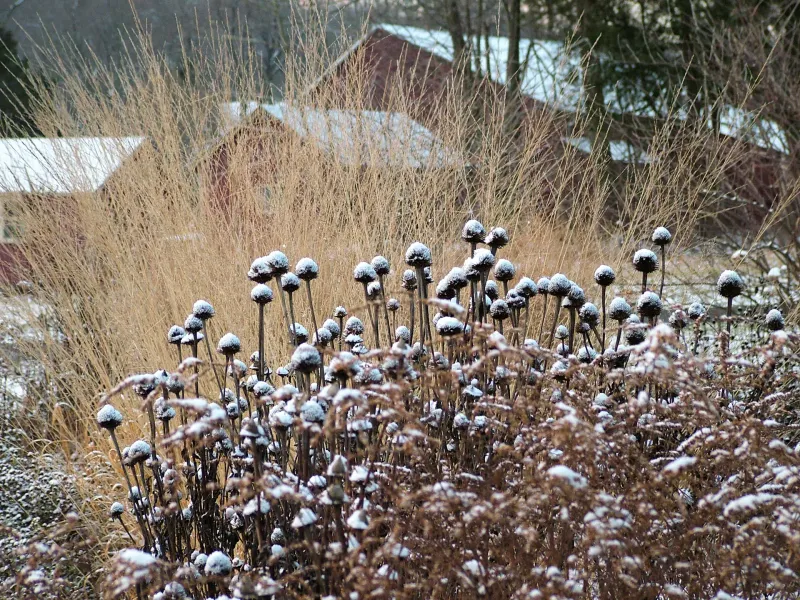
Once your coneflowers have finished blooming and petals have dropped, resist the urge to tidy everything up. The spiny brown seed heads that remain are exactly what goldfinches and other seed-eating birds are looking for during fall and winter, and cutting them off removes the food source before birds have a chance to use it.
Leaving the heads standing is the simplest, most effective management step you can take for wildlife value.
NC State Extension specifically recommends leaving coneflower heads in place for seed-eating birds and adds a second reason to hold off on cleanup: stem-nesting bees may use the hollow or pithy stems left after the plant dies back. The guidance suggests leaving dead stems standing at roughly 12 to 24 inches above ground rather than cutting to the soil line.
That height supports both the seed heads and potential nesting habitat through winter.
Audubon’s plant list for bird-friendly yards reinforces the value of standing seed heads as a winter food source for seed-eating birds. Whether goldfinches actually visit yours will depend on how much seed the plant produced, what other food is available nearby, local bird abundance, and weather conditions that affect both the birds and the seed heads themselves.
A yard with mature, productive coneflowers in a sunny spot near shrubby cover gives birds more reason to stop than a young plant in a shaded corner.
Spring cleanup can happen once you are confident the seed is gone and nesting season is approaching. Cutting back in late winter or very early spring, before new growth begins, is a reasonable compromise between garden tidiness and wildlife support.
That choice is yours to make, and it does not determine whether birds will visit the following season.
Build a Diverse and Safer Goldfinch Yard
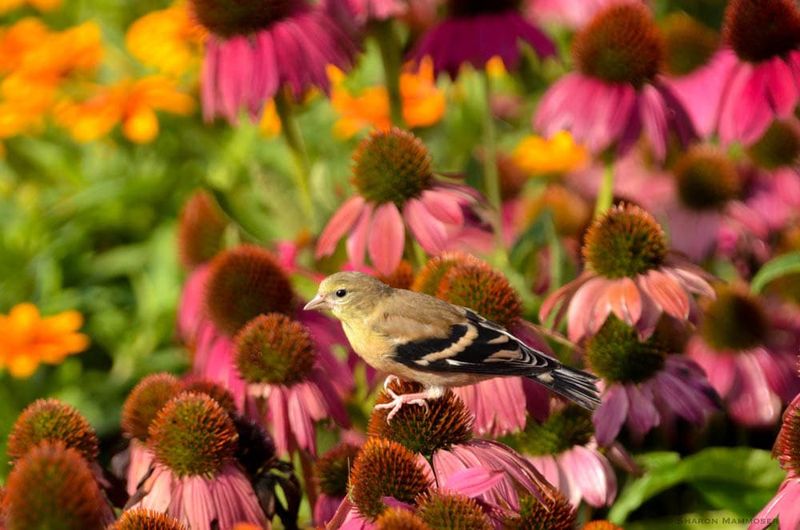
A single coneflower does useful work, but a yard with several native seed producers spread across the season gives American Goldfinches more reasons to stay and return. Native sunflowers, asters, goldenrods, and other coneflower species can extend the seed supply from midsummer through winter, filling gaps before and after Echinacea purpurea peaks.
Cornell Lab’s goldfinch overview confirms that the species uses a wide range of seed-producing plants, so diversifying your planting is simply matching what the birds already do in the wild.
Pesticide use deserves attention in any yard where you are trying to support wildlife. Audubon’s bird-friendly plants FAQ recommends asking nurseries whether plants were treated with systemic insecticides before purchase, because treated plants can expose birds and beneficial insects to chemicals even after they are installed in your yard.
Audubon’s broader yard-friendly guide also encourages reducing routine pesticide applications, since insects are food for many bird species and a chemically managed lawn or garden bed offers less overall habitat value.
On the feeder side, goldfinches readily take sunflower seeds and Nyjer. A word on Nyjer: it is commonly sold as “thistle seed,” but Audubon’s explainer on Nyjer makes clear that it is actually Guizotia abyssinica, an imported seed crop from Africa and Asia, not the prickly native thistles goldfinches use in the wild.
The name is a marketing shorthand, not a botanical description. Cornell Lab’s seed guide confirms goldfinches take Nyjer readily at feeders, so it is a practical supplement, just not a wild plant you can grow.
Speaking of thistles, avoid planting any thistle you cannot identify to species. Some non-native thistles are invasive in North Carolina and legally controlled; recommending an unidentified thistle simply because goldfinches eat thistle seed is poor stewardship.
Stick with correctly identified native plants or established seed sources sold at reputable nurseries. And keep feeders clean: Audubon’s feeder hygiene guidance recommends regular cleaning, keeping seed dry, and removing spilled seed and droppings promptly.
Moldy or wet seed can spread disease, and a dirty feeder does birds more harm than good.
Set Expectations for a Future Visit
Planting eastern purple coneflower (Echinacea purpurea) in fall gives the plant its best shot at developing a strong root system before North Carolina summers arrive. NC Cooperative Extension’s fall planting guidance supports that timing for hardy perennials, and the NC State plant profile confirms the species is suited to all three of the state’s major regions.
Water it through establishment, pick a sunny spot with good drainage, and resist cutting the plant back after it blooms in future seasons.
What fall planting will not do is bring goldfinches to your yard this winter. A newly installed transplant may not flower until its first or second full growing season, and a young plant that does flower may not produce enough seed to attract sustained bird attention right away.
Goldfinch feeding behavior is also shaped by local bird population density, the availability of competing food sources, nearby habitat features like shrubs and trees, and weather conditions that affect both birds and seed heads. None of those variables are in your control.
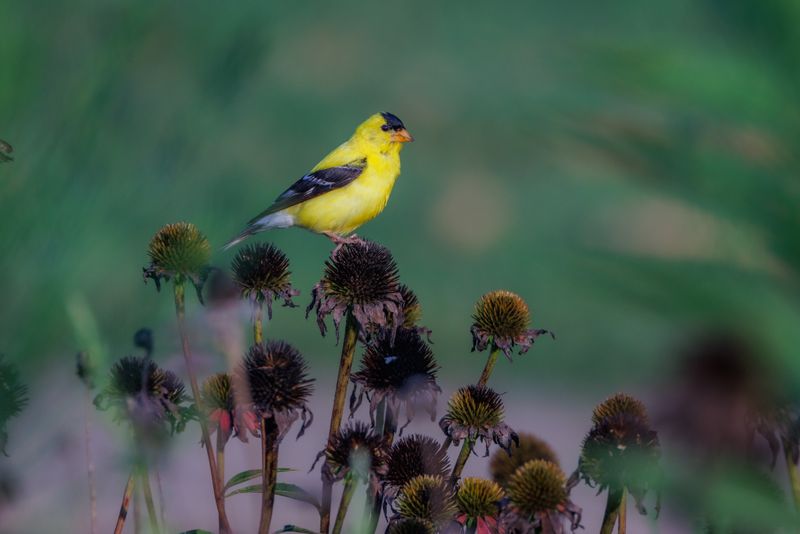
Over time, as the plant matures and your yard fills in with other native seed producers, the conditions for a goldfinch visit improve. You may spot the bright yellow of a male in summer, or you may notice a quieter, duller bird working through the dried heads on a gray November morning and realize, only after a second look, that it was there all along.
That second look is often the reward for planting with patience.