
Every Inch Of Rain On Your Roof Sends 623 Gallons Down The Gutter – Here’s Why Your Garden Wants It Instead
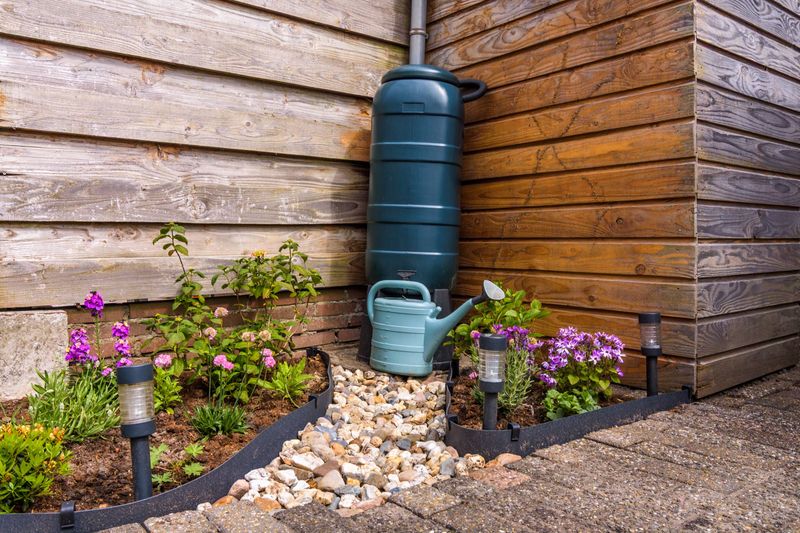
Picture a 1,000-square-foot roof on a rainy afternoon. One inch of rain landing on it adds up to about 623 gallons of water, enough to fill a lot of watering cans.
Most of it rushes toward the storm drain while your hydrangeas and tomatoes wait for a drink. Here is what that number really means, and how to catch some of it safely.
The 623-gallon estimate assumes a 1,000-square-foot roof
Here is the math behind the big number. One inch of rain over one square foot of flat surface equals about 0.623 gallons, according to Utah State University Extension.
Multiply that by 1,000 square feet and you land on 623 gallons.
The formula you can use at home is simple: roof footprint in square feet x rainfall in inches x 0.623 = theoretical gallons. Measure the footprint, meaning the area the roof covers when viewed from above, not the sloped surface.
A 600-square-foot roof section getting half an inch of rain works out to about 187 gallons.
So the headline figure does not describe every roof. It applies to a roof footprint of 1,000 square feet, and a bigger or smaller roof gives a different result.
A small shed and a two-story house will not come close to each other.
The number is also a ceiling, not a forecast. It shows potential runoff before any collection losses, and it does not promise that this much will flow down your gutter or end up in a barrel.
Oregon State University Extension notes that collection losses vary with roofing material, and other factors such as overflow and barrel size trim the total further. Think of 623 gallons as the amount of rain that falls on the roof, and your barrel as a cup held out to catch part of it.
Rainwater can add to your garden supply, but it is not always better
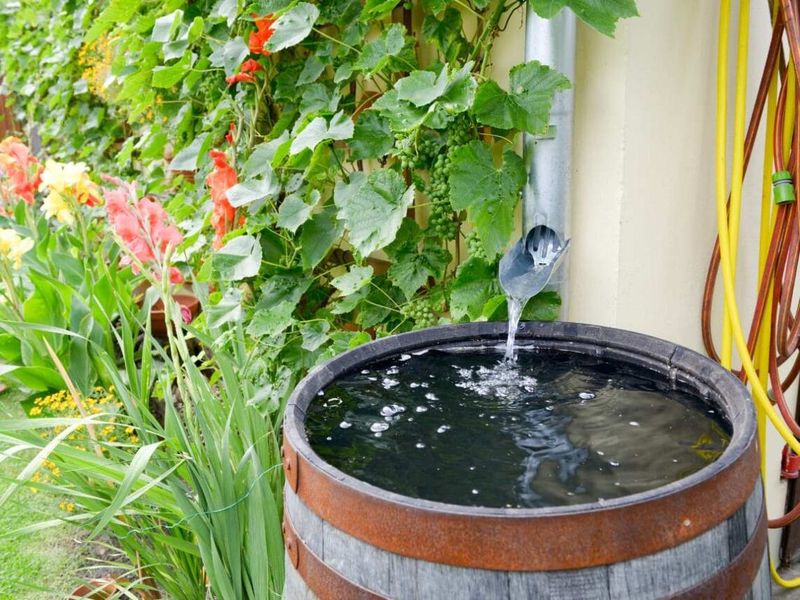
Catching roof runoff gives you one more source of irrigation water and keeps some of that rush of water from leaving your yard. That is a real, practical benefit, especially in a dry stretch when your geraniums and hydrangeas start to droop.
Where people go wrong is assuming plants prefer rain over the tap. Rainwater may contain fewer salts, which can help plants that are sensitive to salt buildup, as described by Oregon State University Extension.
But tap water chemistry varies from town to town, so the difference is not the same everywhere.
Ordinary tap water is usually fine for plants. University of Missouri Extension says tap or well water is generally satisfactory and that chlorine and fluoride typically do not harm plants.
So the lack of chlorine in a barrel is not a big win on its own.
Roof runoff can also pick up debris, bird droppings, and particles that settle on shingles. Untreated does not mean clean.
A University of Maine Extension answer says the better choice depends on your plants and circumstances. If your tomato plants look fine on tap water, there is no need to switch.
Use the barrel as a bonus supply, not a cure.
Set up a barrel to catch some roof flow
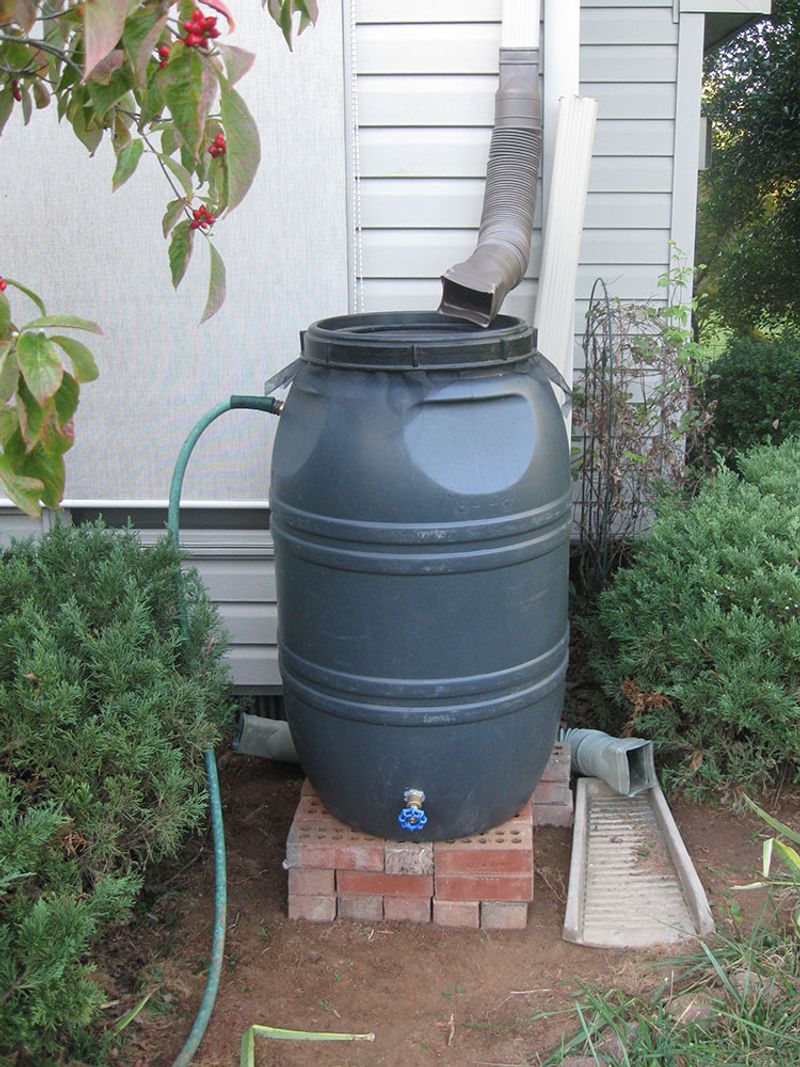
A basic system is easier than it sounds. Direct a downspout into a barrel that has a tight cover, so leaves, insects, and curious kids stay out.
Add a screen over the inlet to catch debris, and fit an overflow outlet so extra water has somewhere to go.
Send that overflow away from the house, since pooled water near the foundation causes its own problems. The University of Minnesota Extension covers these setup basics, including covers, screens, and overflow routing.
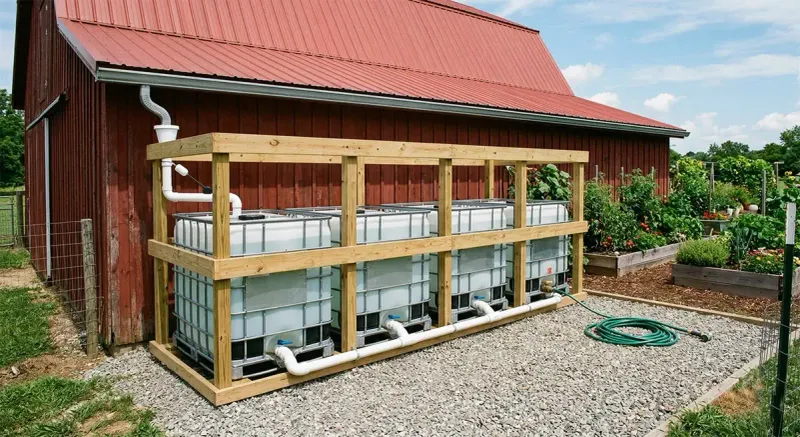
Do not expect the barrel to swallow the full 623 gallons. A typical barrel holds far less, often around 50 gallons, and once it is full, the rest flows out the overflow.
Roof material and other losses reduce the amount that reaches the barrel in the first place, as Oregon State University Extension points out.
Some people add a first-flush diverter, which sends the first bit of runoff, usually the dirtiest, away from the barrel. It can improve runoff quality.
A 2024 roof-runoff study found better overall water quality with first-flush diversion in the systems it tested, and also flagged possible pollutant buildup in soil under heavily loaded downspouts.
That result belongs to those test systems, not every roof or barrel. A diverter does not make the water safe to drink or free of contaminants.
Keep it as a helpful extra, and treat the stored water as non-potable.
Use stored rainwater cautiously in the garden
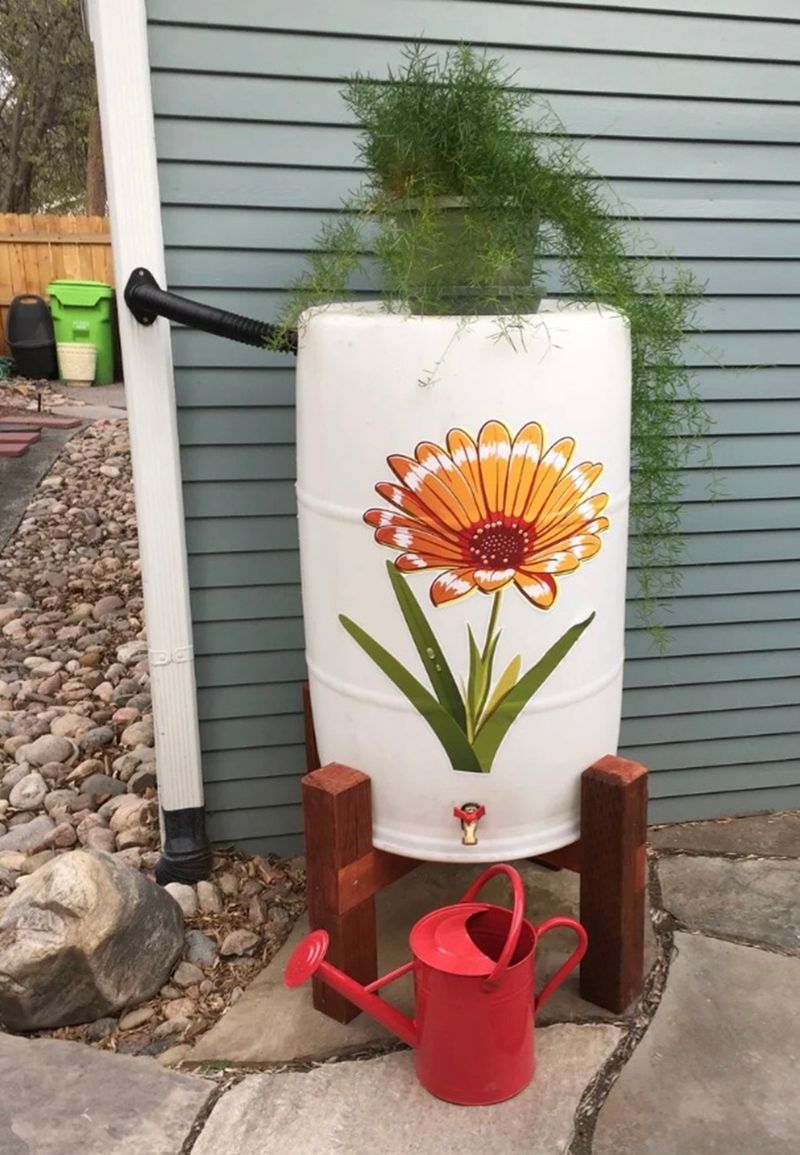
Barrel water is non-potable. Do not drink it, cook with it, or fill a pet bowl from it, and remember that screens and diverters do not change that.
The CDC explains that collected rainwater can carry germs and chemicals.
The safest general focus is ornamental plants. Your hydrangeas, petunias, geraniums, and clematis are good candidates for a barrel refill.
Water at the soil level with a watering can, or use a drip line or soaker hose, rather than spraying overhead.
Watering at the base also helps plants in another way. Dry foliage tends to stay healthier, and less water is wasted on leaves.
Vegetables need extra care. For plants you plan to eat, the CDC recommends tap or bottled water rather than rainwater, so that is the safest general rule for your tomatoes.
University of Minnesota Extension offers a narrower approach, allowing some edible crops to be watered with barrel water only if it does not touch the edible portion.
Never use barrel water to rinse produce. Rinse harvested vegetables with tap water instead.
For more on barrel use, Penn State Extension has a helpful guide.
Keep the barrel clean and protect it from freezing
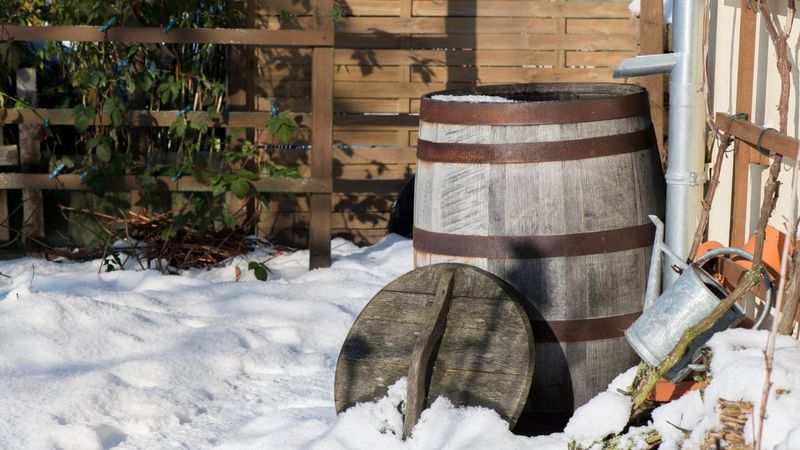
A barrel works best with regular upkeep. Clear leaves and grit from the screen and gutters, since clogs send water over the side instead of into the barrel.
After a stretch of heavy storms, take a quick look at the inlet.
Every so often, empty the barrel and scrub out the sludge that settles on the bottom. Rinse well and check the cover for gaps.
Penn State Extension offers guidance on barrel care. Cleaning keeps the system flowing, but it does not make the water drinkable.
Check the overflow too. On a rainy day, watch where the extra water goes.
If it pools near the foundation or runs toward a basement window, reroute the hose or extend the pipe.
Winter calls for a different job. Water that freezes can crack a barrel, spigot, or fittings.
The University of Minnesota Extension advises draining the barrel and disconnecting it in freezing weather.
Do this in fall, before the first hard freeze. Drain the barrel, reconnect the downspout to its usual path, and store the barrel upside down or tilted so it cannot collect ice.
In spring, give it a quick cleaning and reconnect.
Treat the estimate as potential, not a guarantee
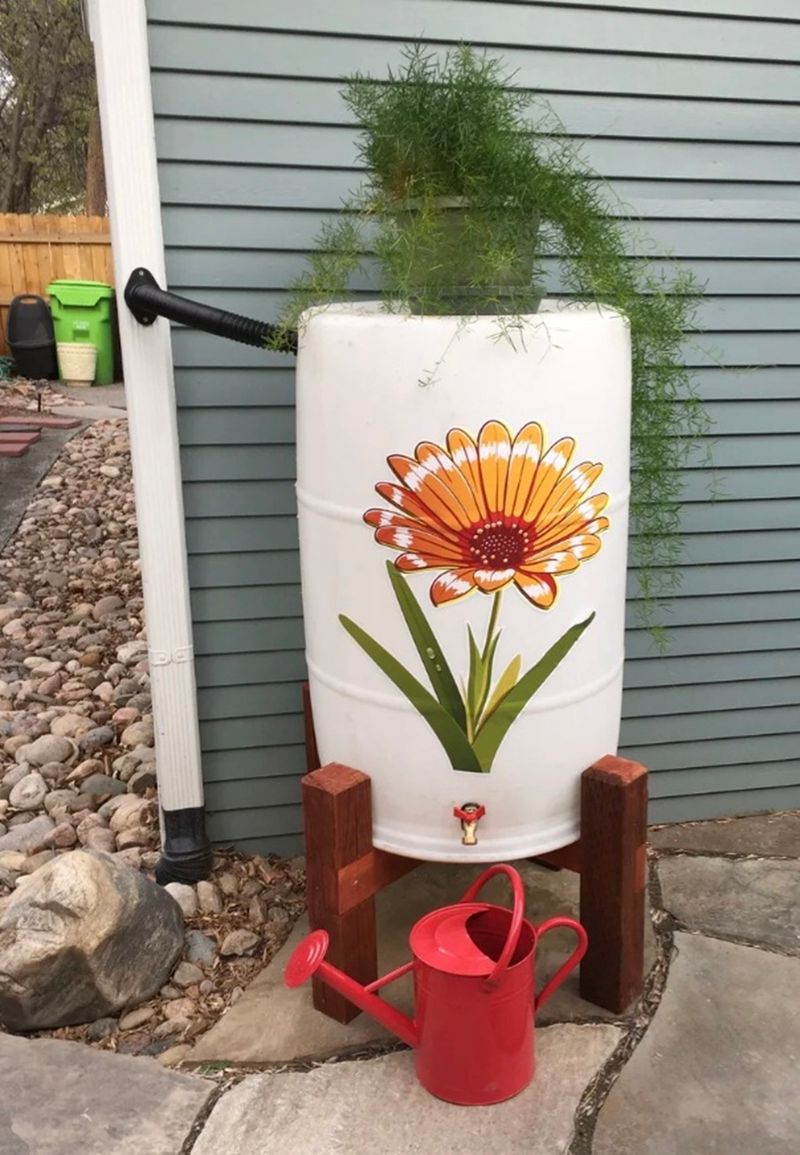
Each inch of rain over a 1,000-square-foot roof footprint represents about 623 gallons of theoretical runoff, and a barrel will capture only a share of it, as Utah State University Extension math shows. Collect what your system can handle and use it on ornamentals, at the soil, with care.
Do not assume it beats tap water or is safe to drink, since the CDC treats collected rainwater as a health concern.
A full barrel is a small, steady bonus, and that is plenty.