
Firewood Can Bring Insects Indoors, but Not One Guaranteed Pest
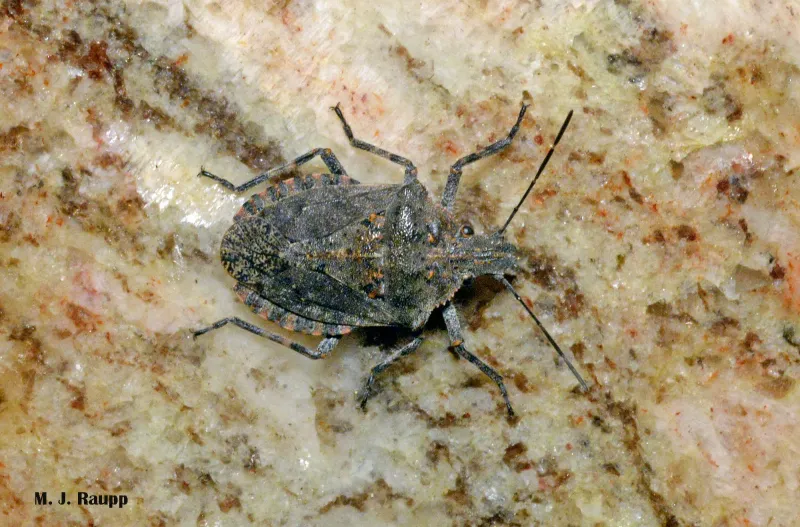
Picture yourself grabbing an armload of logs from the stack by the back door. Tucked in the bark or the cracks, something small might be along for the ride.
What it is, and whether it matters, depends on the insect and on where you carry it. Here is what North Carolina homeowners can know for sure, and what to do about it.
Firewood can carry different hitchhikers
Carrying in firewood feels like the simplest chore of the season. The title of this article promises one sneaky pest in every armload, but that is not how it works.
Firewood can carry many different insects and other small animals, and plenty of loads carry none at all.
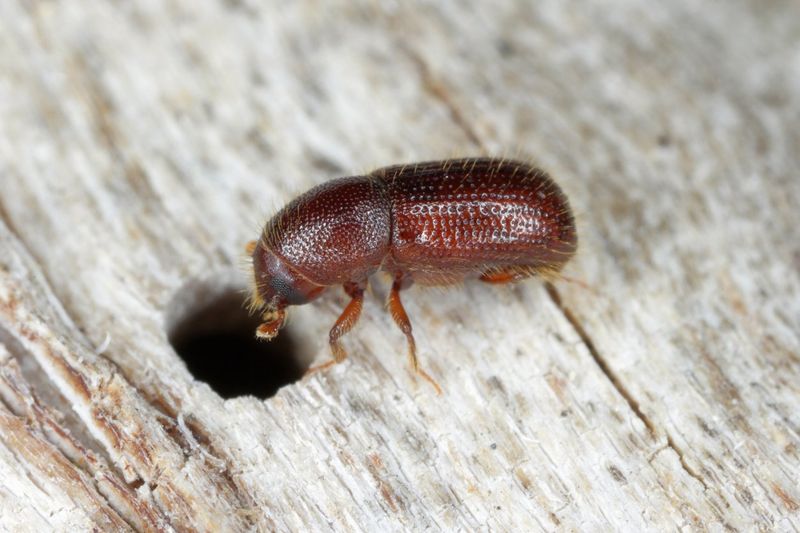
Some creatures actually live in the wood. NC State Extension notes that firewood can hide wood-boring and bark beetles, and it can also hold ants and termites.
Others just tuck themselves under loose bark for shelter. A few are simply walking across the log when you pick it up.
That difference matters. A spider resting under bark is not eating the wood, and a beetle larva tunneling inside it is doing something very different.
University of Illinois Extension describes this mix of insects and spiders, only some of which feed on the wood itself. So finding a bug on a log does not tell you it came from inside the log.
Researchers have tested how often live insects show up. In a 2012 study, scientists watched 419 retail firewood bundles from four western states for up to 18 months.
Live insects emerged from 47 percent of them. That result shows firewood can move insects around.
It is not a North Carolina estimate, and it does not mean every armload carries a pest.
What happens when a log warms indoors
A log that sat in a cold stack for weeks may seem lifeless. Bring it into a warm living room and things can change fast.
Illinois Extension explains that warmth can wake some firewood insects and prompt them to become active or crawl out.
For most households, that means a few wandering bugs near the hearth. University of Maine Extension treats most of these insects as nuisances, not threats to people or to the structure of your home.
They tend to be short-lived indoors, since they are far from what they need to survive.
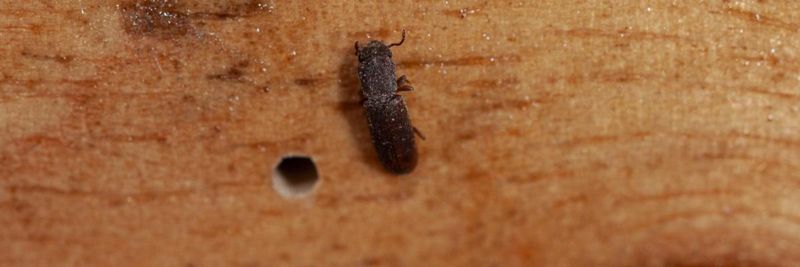
Nuisance does not mean harmless in every case. Powderpost beetles can damage seasoned wood, and carpenter ants can matter when they nest in damp or damaged timber.
If you spot fine powdery dust or ants that keep returning, take a closer look.
Here is the key distinction. One beetle crawling out of a log is not proof that your house is infested.
An infestation means insects are living and breeding in the wood of the home, such as framing, furniture, or flooring.
A practical clue is where the activity happens. Bugs that appear only near the woodpile or hearth, and stop after the log is burned, point to the log itself.
Repeated sightings far from the firewood, or fresh sawdust piles on a wall or floor, are worth a professional opinion.
The brown marmorated stink bug seeks shelter
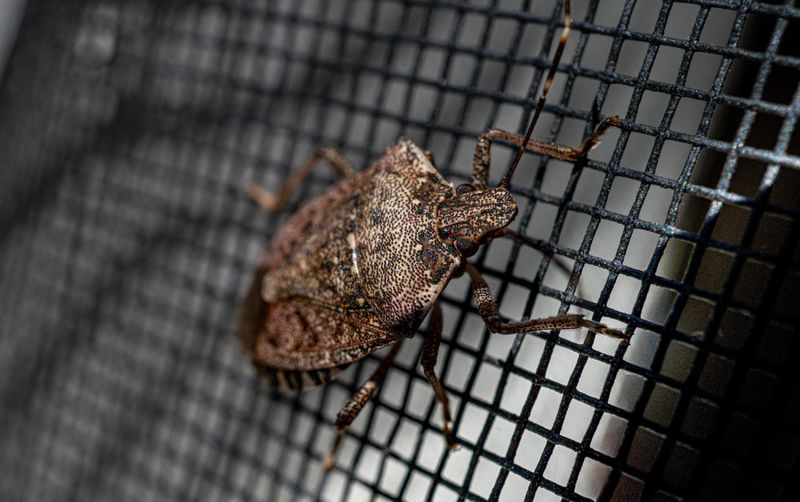
Many readers who hear about an overwintering pest in the house are probably thinking of the brown marmorated stink bug. It is a real North Carolina problem, and it does spend winter in sheltered spots.
Still, blaming firewood for it goes too far.
NC State Extension Entomology describes these bugs moving in fall into buildings, dead trees, and other shelters. As of March 2026, the species had been confirmed in 80 of North Carolina’s 100 counties.
It is more common in the Piedmont and mountains and less common in the Coastal Plain.
Notice what is missing from that picture. The sources reviewed describe the bug searching for sheltered places, including buildings, and they do not name firewood as its usual way into homes.
The NC State FAQ on the species does not list firewood as a route. A stink bug on a log may simply have landed there.
Also, not every stink bug in your house is this invader. North Carolina has native stink bugs, and some look quite similar.
Before you label a bug as the brown marmorated stink bug, compare it with photos from a reliable extension source or ask your county extension office to confirm it.
Store firewood to limit indoor encounters
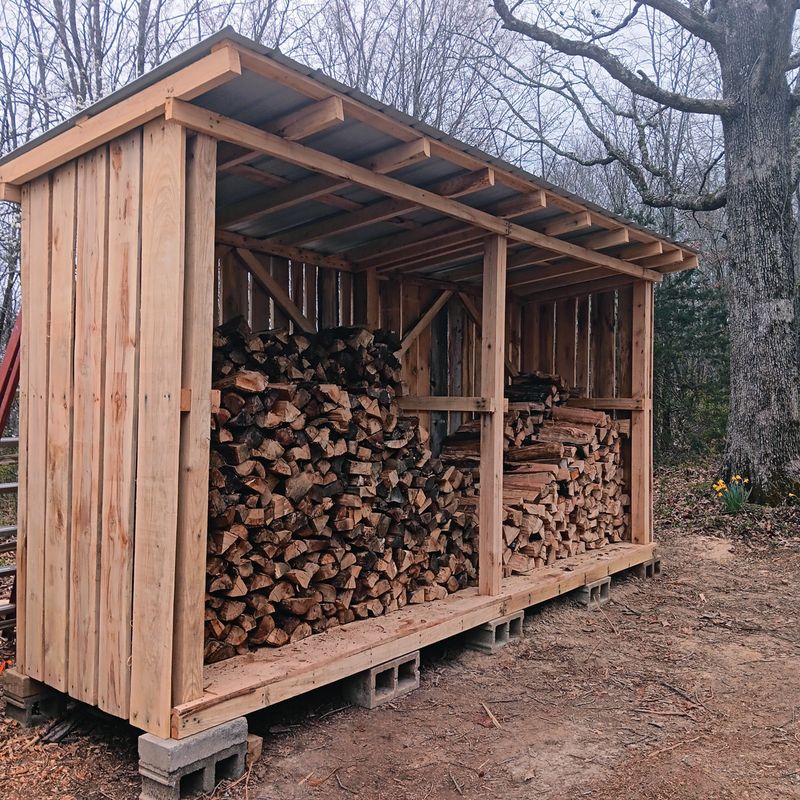
The easiest way to cut down on indoor surprises is to keep most of your wood outside. Stack it off the ground on a rack or pallets so air can move through it.
Illinois Extension suggests keeping the stack at least 3 feet from any structure.
Maine’s extension service points toward a dry, well-ventilated woodshed. Dry wood in good airflow is less inviting to many insects than damp wood sitting on soil.
Your yard benefits too, since a stack tight against the siding can give pests a bridge to the house.
Inside, bring only what you plan to burn soon. Illinois recommends a day or two of supply.
Maine Extension allows up to about two weeks. The numbers differ, but the idea is shared: do not keep a big pile indoors for a long time.
A small basket by the hearth works well. Refill it from the outdoor stack each day or two, and give each log a quick look and a shake before it comes in.
Resist the urge to spray the pile with insecticide. Sprays may not reach insects inside the wood, and residues or fumes can become a hazard when the logs burn.
Both extension sources advise against it, which makes careful storage a far better tool than chemicals.
Use local firewood to protect trees
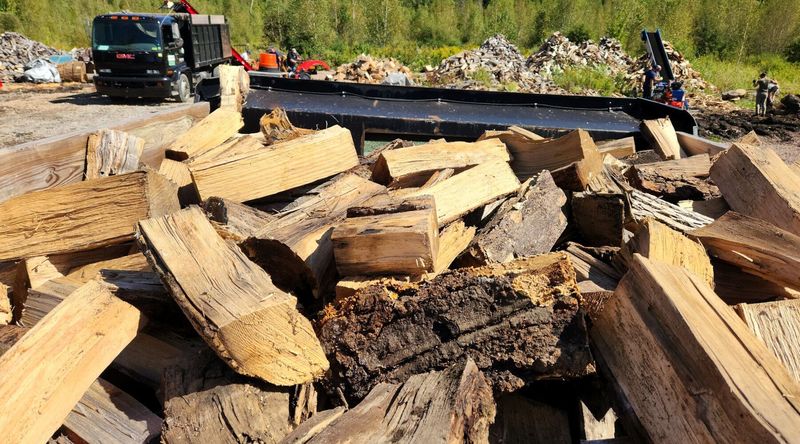
Moving firewood is mostly a tree problem, not a house problem. A pest hidden in or on a log can ride to a new county or state and start feeding on trees there.
That is an ecological risk, and it is separate from whether a bug ever bothers your living room.
The NC Forest Service asks people to buy and burn local firewood. Its rule of thumb is to burn wood within 50 miles of where it came from.
That distance is a guideline, not a blanket legal limit.
The same agency advises against bringing firewood into North Carolina from another state unless it has been treated, inspected, or certified pest-free. This is where camping trips and mountain cabin weekends matter.
Leave leftover wood behind rather than hauling it home to the Piedmont or coast.
Rules can change. NC State Extension covers quarantine and movement guidance, and requirements can vary by place and over time.
Before you move wood, check current restrictions with the NC Forest Service or your county extension office.
A backyard full of oaks, maples, and dogwoods is worth protecting. Buying wood close to where you burn it is a small habit that keeps those trees safer.
Capture suspected stink bugs without crushing them
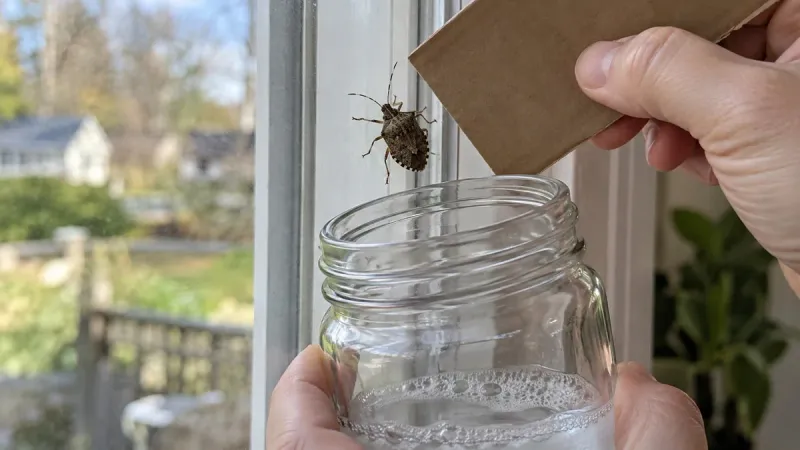
Spotted a suspected brown marmorated stink bug on the curtains? Stay calm and reach for a jar.
NC State Extension recommends capturing the bugs in a jar and freezing them. A container of soapy water also works.
Skip the swat or the tissue squeeze. Crushing the bug makes the odor worse, and that smell can linger on fabric and walls.
Slide a card under the jar, seal it, and deal with it once you are away from the room.
Prevention works better than chasing bugs all winter. Before fall, look for likely gaps around doors, windows, pipes, and vents.
Seal them with caulk or weatherstripping so there are fewer ways in when the bugs start looking for shelter.
This job has nothing to do with your woodpile. Sealing the house targets bugs that arrive on their own from outside, while firewood habits target hitchhikers on logs.
Treat them as two separate chores.
The best time to act is early autumn, before the first cool snap sends insects searching for cracks. Walk the outside of the house with a flashlight and a caulk gun, and you may skip a lot of jar duty later.
A tight house and a tidy woodpile make a quiet winter.