
Fix Shallow Low Spots in Your Lawn With a Rake, Shovel, and Topsoil Before You Rent a Roller
A lawn that feels like a bumpy road can twist ankles, scalp your mower, and make the whole yard look tired. Before you spend money on rented equipment, it helps to know that a few shallow dips can often be fixed with a rake, a shovel, and the right soil.
The trick is knowing which kind of bumpy you have and how much soil your grass can handle. Here is how to sort that out and fix what a simple repair can fix.
First identify what is making the lawn uneven
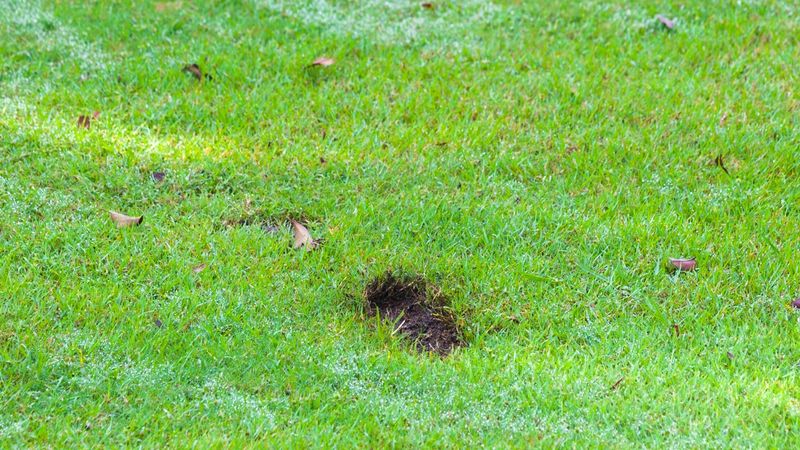
Walk your yard slowly before you grab a shovel. Bumpy lawns come from several different causes, and only one of them is a good match for a pile of soil.
Shallow low spots, the kind where the ground has settled a bit, are the main job for topdressing.
Other causes need other answers. Iowa State Extension points to thin turf, freeze-thaw heaving, and earthworm castings as common reasons a lawn feels rough.
Thin grass often needs help getting denser, not more soil on top. Earthworms are actually helpful for your soil, so the goal is not to get rid of them.
Try a simple test. Lay a straight board across the problem area and look for gaps underneath.
A gap of a fraction of an inch to an inch or so suggests a shallow depression. Lumps that pop up after winter point to heaving.
Small mounds of crumbly soil point to worms.
Be honest about what you find. A few shallow dips in established turf are a reasonable project for basic tools.
Deeper dips may call for lifting the sod, as Michigan State Extension describes. Repeated passes may also be needed, so plan for more than one weekend and a bit of extra cost.
Work when your grass is actively growing
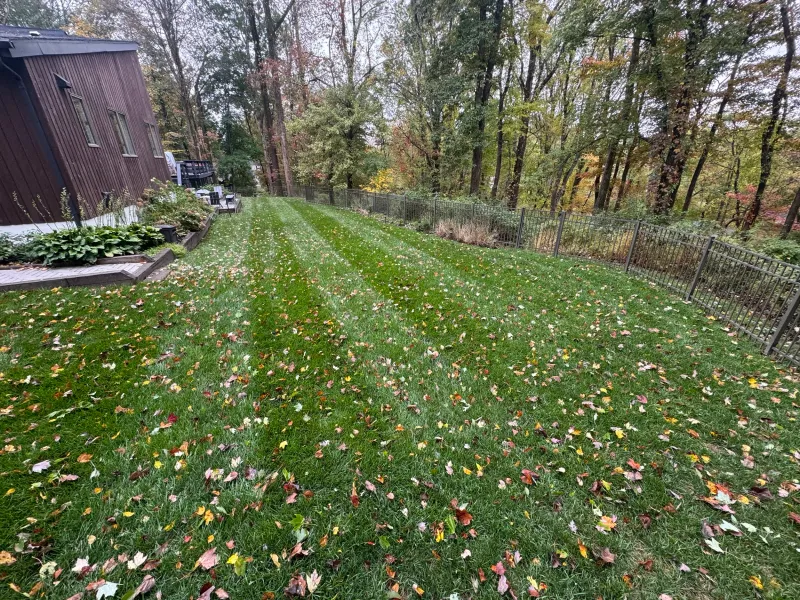
Grass fills in soil best when it is actively growing. That is why timing matters more than the calendar page.
Soil spread over dormant or slowing grass sits there while the turf cannot grow up through it.
For cool-season lawns, such as Kentucky bluegrass, fescue, and ryegrass, fall is often a good fit. The University of Minnesota lawn care calendar places many lawn recovery jobs in early fall, when days are mild and the grass is pushing out new growth.
Warm-season lawns tell a different story. Bermudagrass, centipedegrass, and zoysiagrass may be slowing toward dormancy as fall settles in, which is covered in UGA Extension guidance.
If you have one of these, late spring into early summer is often when the grass is growing strongly.
Not sure which grass you have or when it peaks where you live? Call or check the website of your local Extension office.
They know your climate, and a quick question can save you from a patch that never recovers.
Choose fill that suits the soil beneath the grass
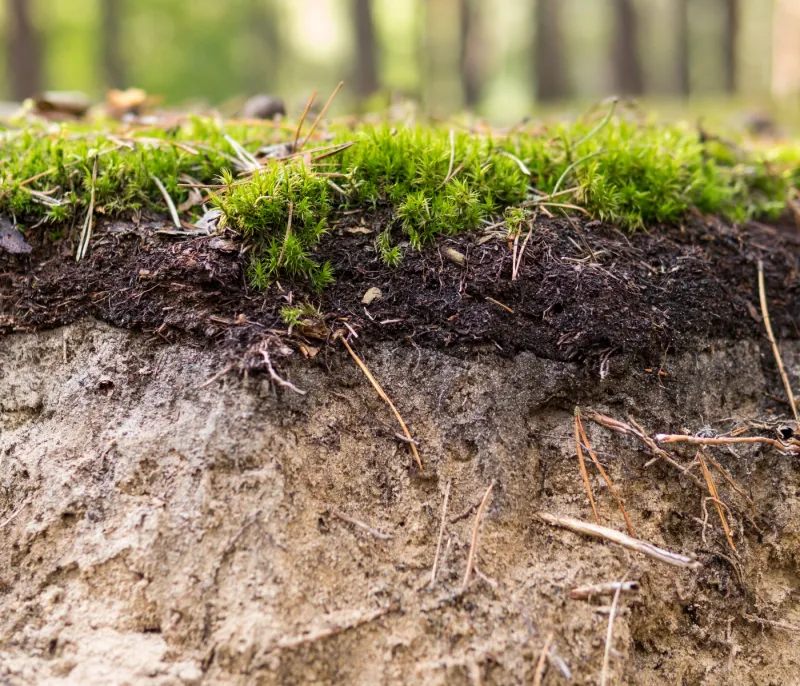
Grab a handful of the soil under your lawn and look at it. Is it sandy, sticky clay, or something in between?
Your fill should look and feel as close to that as you can get.
The reason is water. Wisconsin Extension warns that a layer of mismatched material can interfere with drainage.
Water may stall where the layers meet, which can leave you with new trouble in the very spot you just fixed.
Sand is not a magic leveler. Michigan State Extension says sand generally belongs on lawns whose underlying soil is already sandy.
On clay, it can cause more problems than it solves.
Look for screened topsoil or a topsoil and compost blend that resembles your yard. Skip fill full of rocks, clumps, or weed seeds.
If you are unsure, buy a small amount first and compare it with your soil.
Remember what fill can and cannot do. It raises the surface of a low spot.
It does not cure a soggy area, compacted ground, or a slope that sends water the wrong way.
Build up shallow dips a little at a time
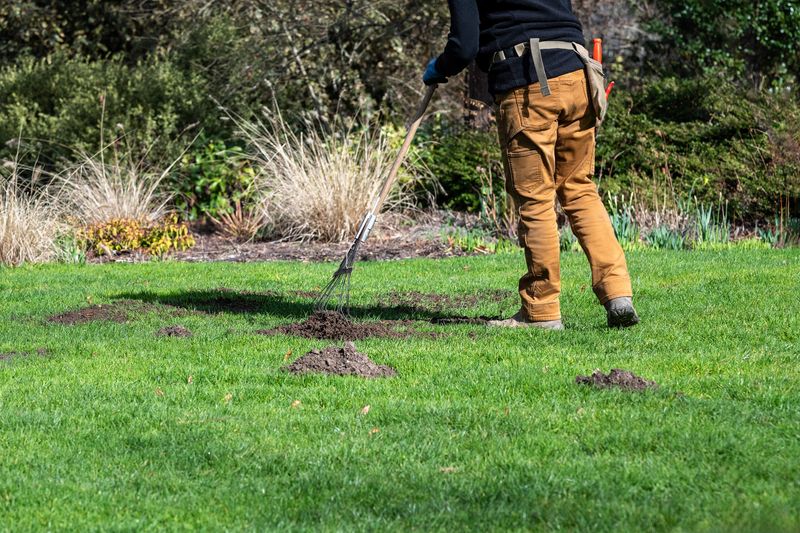
Patience is the whole technique here. Mow the lawn a little short first, and clear thatch or debris so soil can reach the ground.
Then shovel a small amount of your matched soil onto the dip.
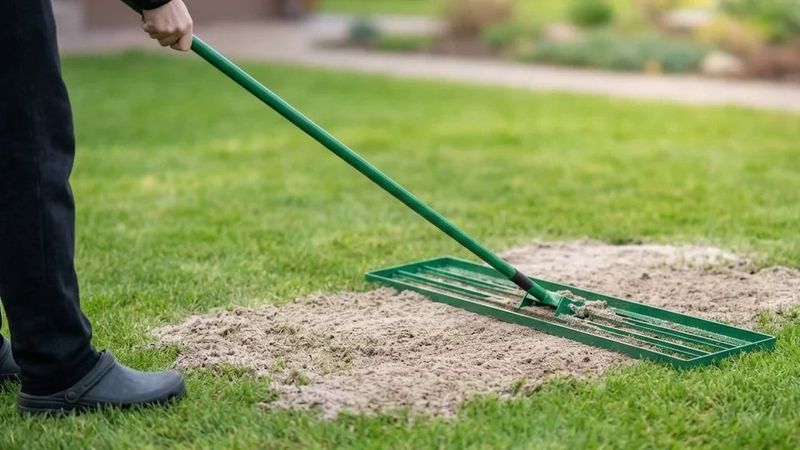
Spread it thin with the back of a rake, working it down between the grass blades. You should still see most of the grass standing above the soil.
Missouri Extension recommends leaving at least three-fourths of the grass plant exposed, because burying it can smother the turf.
How thick is thin? Wisconsin Extension describes layers of roughly one-quarter to one-half inch, and an expert at Ask Extension suggests about one-quarter inch per application.
Water the spot lightly afterward. Then wait until the grass grows up through the soil before adding another layer.
That may take a few weeks of growth.
Do not try to level the dip in one pass. Piling on soil until it looks flat is the fastest way to kill the grass underneath.
Expect two, three, or more rounds for a dip that is a couple of inches deep, and be ready to switch methods if the grass struggles.
Lift sod to correct a deeper localized dip
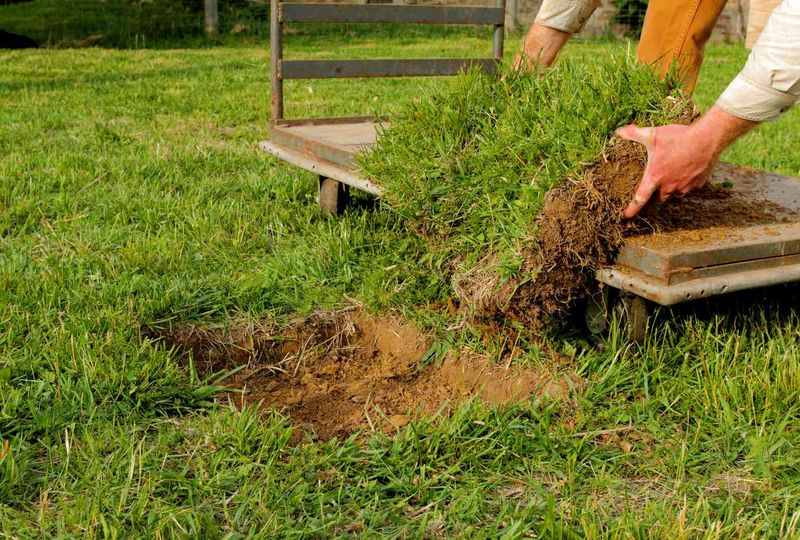
Some dips are too deep for the thin-layer method. If a hollow is several inches down but only covers a small area, the better move is to lift the turf, fix the base, and put the grass back.
Before any shovel goes in the ground, contact 811 so underground utility lines get marked. Call 811 promotes this step before any digging project, and it is free and quick.
Do it a few days ahead.
Then follow the approach Michigan State Extension describes. Cut the turf into strips with a flat spade and peel each strip back like a rug.
Add matching soil to raise the base, firm it gently, and lay the sod back in place. Press the edges together and water well.
Aim to set the sod just slightly above surrounding grade, since it settles a bit. Keep it moist for the next few weeks.
What if soil has already buried the grass completely? Do not count on it growing through.
In that case, plan to reseed the area, keep the seedbed damp, and give it time to fill in. This repair takes more effort than a light topdressing, but it solves a deeper problem properly.
A roller is not a general fix for a rough lawn
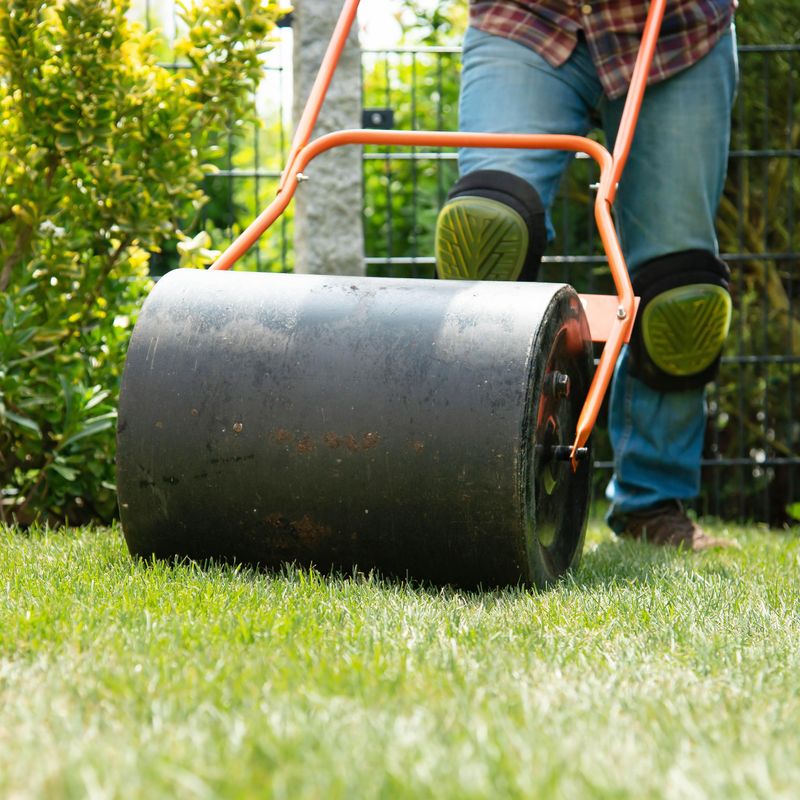
Renting a big roller sounds like a shortcut. Push it across the yard, flatten the bumps, done.
Unfortunately, the lawn does not work that way.
Routine heavy rolling squeezes soil particles together. Iowa State Extension advises against it because it compacts soil and can damage turf.
Compacted soil makes it harder for roots to get air, water, and room to grow, and it does nothing to fill a hollow.
That said, rollers are not forbidden tools. Some guidance allows limited uses for specific conditions.
Michigan State Extension discusses rolling in certain situations, and Missouri Extension also touches on it. Pressing down mole tunnels or plants lifted by frost are examples, though advice on conditions and timing varies.
So the practical takeaway is narrow. A roller is not a substitute for filling low spots, and it should not be a yearly habit.
If you think your situation is one of the special cases, check with your local Extension office first, and use a light touch.
Know when a spot repair is not enough
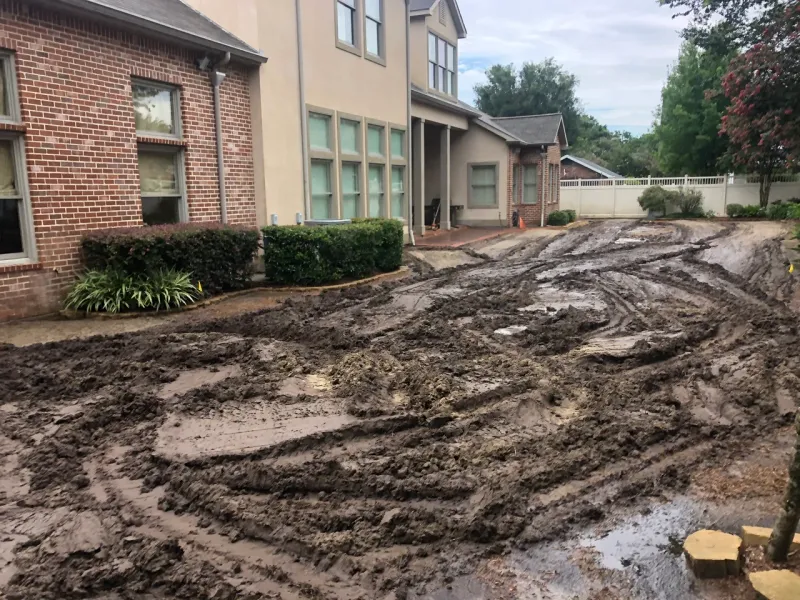
Some yards need more than a rake and a shovel. If the dips are deep, numerous, or spread across the whole lawn, you are probably looking at a grading issue.
Standing water that lingers after rain points the same way.
Those are bigger site problems. Penn State Extension treats grading and drainage as part of broad site preparation, noting that final grading should let surface water flow away from buildings.
Never add soil in a way that sends water toward your house.
Trees deserve care too. Maryland Extension cautions against regrading over tree roots, so skip piling soil there.
By comparison, Wisconsin Extension frames topdressing as a targeted option for selected areas. For anything bigger, a landscape professional or your local Extension office can help.
Small hollows are a weekend-sized chore. A yard that slopes the wrong way deserves a real plan.