
Forcing Paperwhites in a Pebble Bowl: About Six Weeks to Bloom in a Bright, Cool Spot
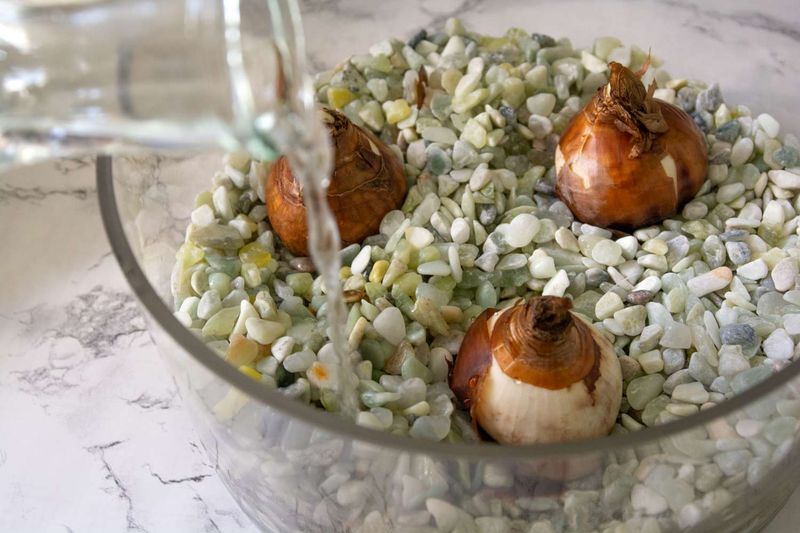
Paperwhites are one of the easiest bulbs to grow indoors, and you do not need any soil. A bowl of pebbles, some water, and a bit of patience can lead to clusters of white, fragrant flowers.
The trick is giving them the right spot and the right amount of water so the bulbs stay healthy and the stems stay sturdy. Here is how to set up a bowl that has a good chance of paying off.
How long do paperwhites take to bloom?
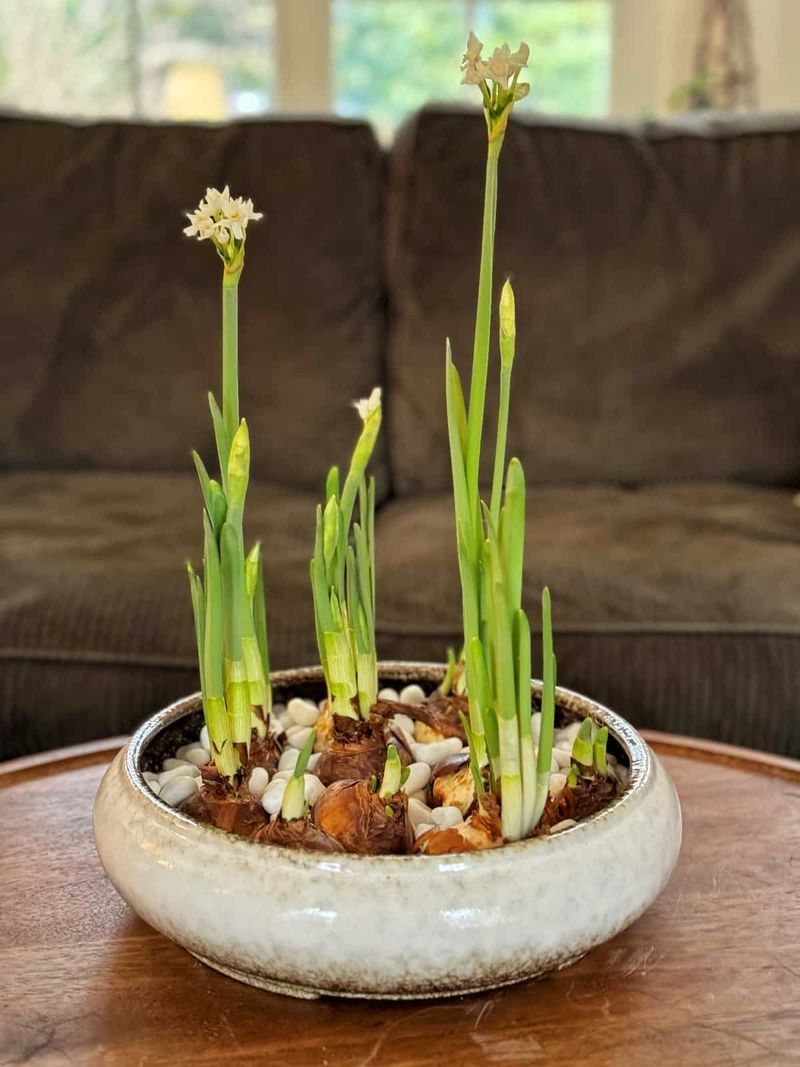
Plan on a window of time, not a single date. Paperwhites do not need the chilling period that many other forced bulbs require, so you can start them right away.
Published guidance gives different estimates, though. Illinois Extension suggests allowing four to six weeks, while Virginia Tech describes three to four weeks in its setup.
Purdue Extension says about six weeks at 60 to 70 degrees F, and notes that temperature affects both growth and timing. In other words, a cooler room may slow things down, and a warmer one may speed them up.
Your own spot will set the pace.
If you start your bulbs on October 19, 2026, six weeks later lands on November 30, 2026. Treat that as a planning estimate only.
Your flowers could open earlier or later, so it is best not to count on a particular holiday.
Build a shallow pebble bowl
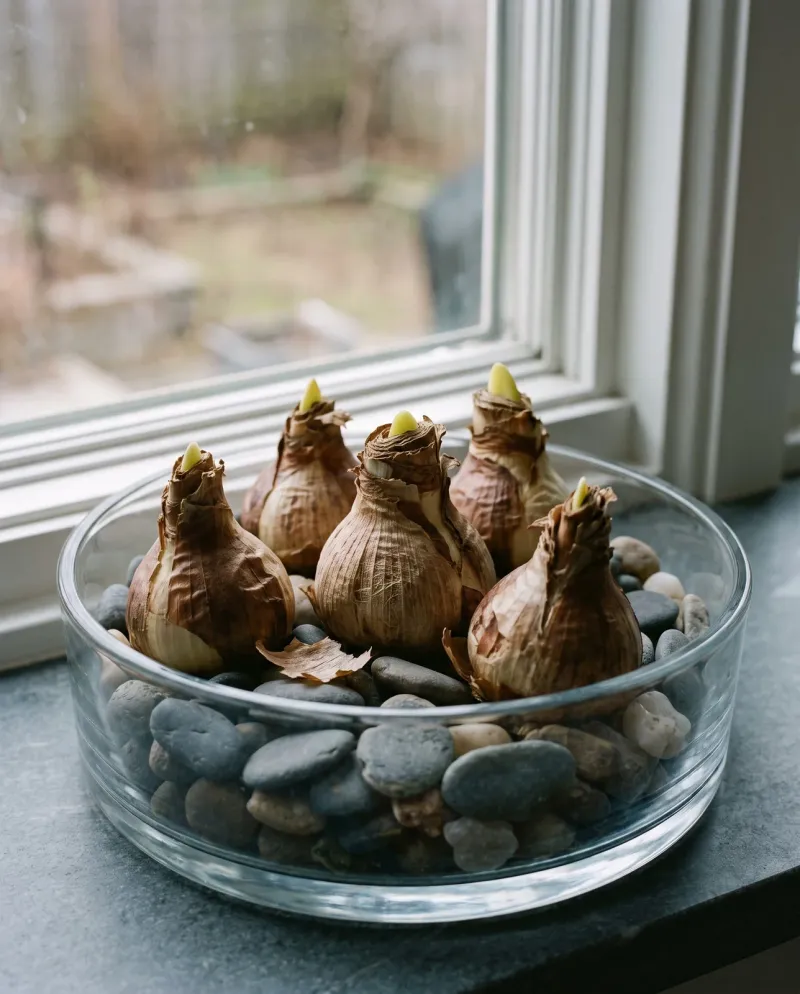
Grab a shallow bowl, a bag of pebbles or gravel, and your bulbs. Any similar material that can hold bulbs in place will work.
Add a layer of stones to the bottom of the bowl first, since this gives the roots something to grip.
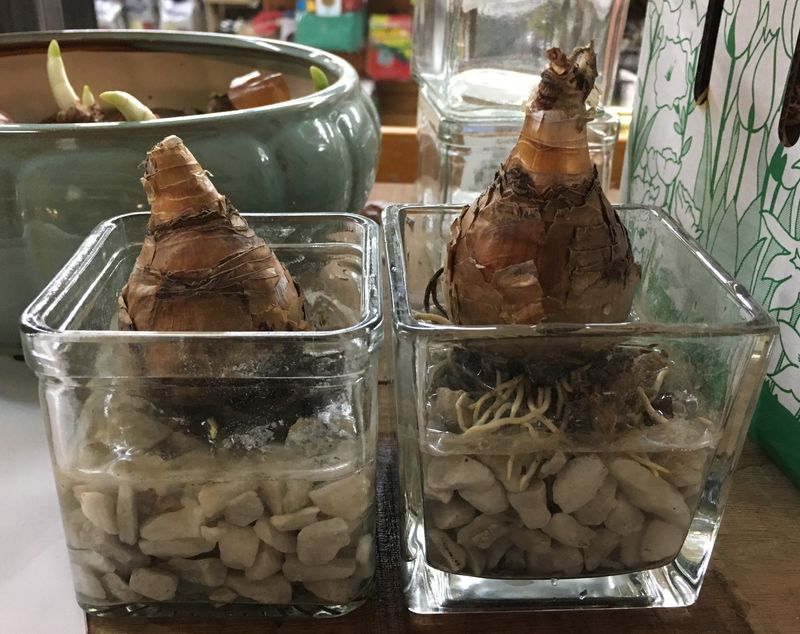
Set each bulb flat end down, with the pointed tip facing up. Snug the bulbs close together, then tuck more pebbles around their sides until they stand upright on their own.
University of Wisconsin-Madison Extension describes this same pebble-and-water approach for forcing bulbs.
The stones do one job: they anchor the bulbs while the roots reach down toward water. Think of them as a support for the base, not for the future stems.
Tall leaves and flower stalks can still lean or flop later, so the bowl alone is not a fix for that.
As for the water, Purdue Extension covers the details of keeping the level right. Pick a bowl with no drainage hole so it can hold water.
Keep water below the bulb bases
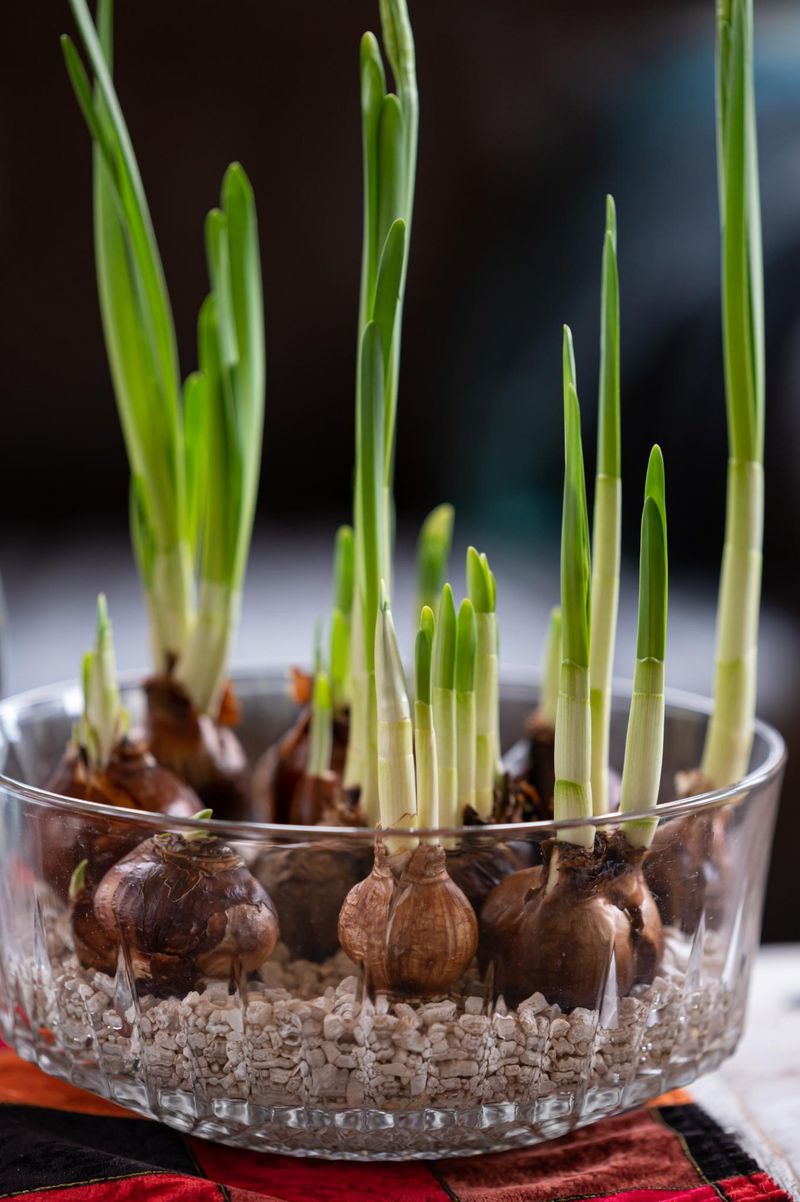
Once the bulbs are in place, pour in water until it reaches the bottom of the bulbs or sits just below them. The roots will grow down and find it.
Guidance from Wisconsin Extension and Purdue agrees on this point.
Do not cover the bulbs with water. Bulbs that sit submerged can rot, and a soft, mushy, or smelly bulb is the sign to watch for.
If you see one, lift it out and drain some water.
Roots drink steadily, so check the bowl every few days and top it off when the level drops. A quick glance through a clear bowl or a poke of your finger between pebbles will tell you.
Add water slowly and stop when it is just under the bulbs.
You may notice advice differing on where to begin. Illinois Extension and other sources describe different starting setups, with some suggesting a cool, dim place for rooting and others a bright window from day one.
Neither is the one right answer. What every source shares is the same: keep the bulbs from sitting in water, watch the level, and adjust the temperature if you want to change the timing.
Choose a bright, relatively cool spot
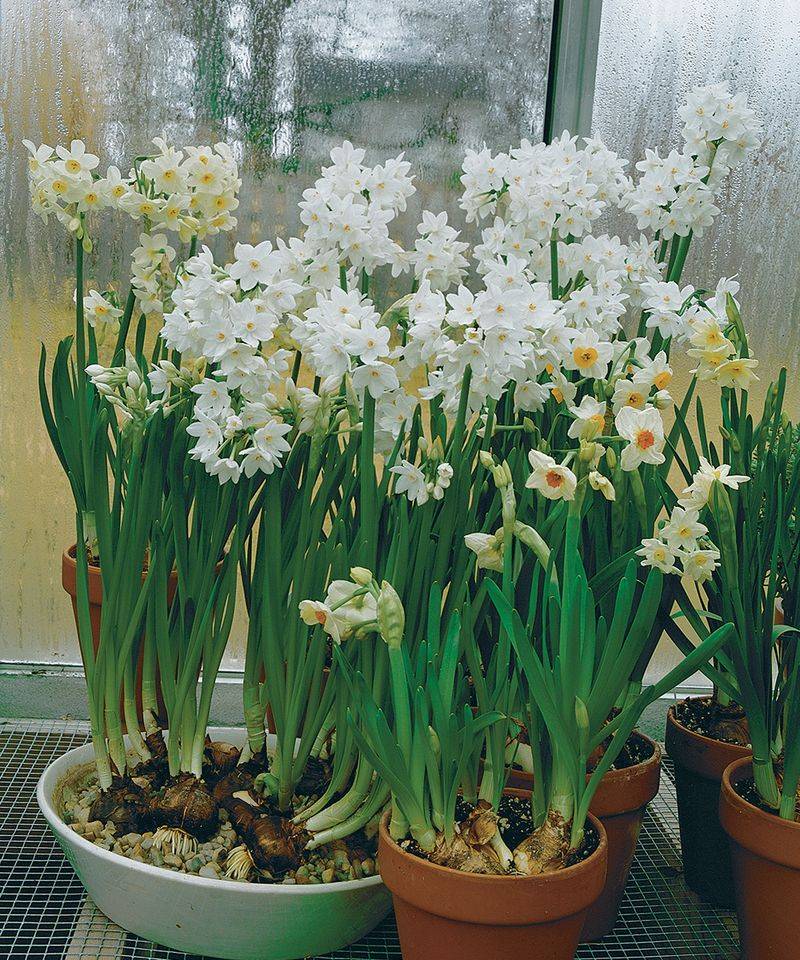
Where you put the bowl shapes how the plants grow. Purdue and UConn Extension both point to relatively cool conditions, around 60 degrees F.
UConn adds that warmth, low light, or both can make plants leggy.
So if your stems stretch tall and thin, take a look at the spot. A dim corner or a warm room is a likely clue.
A bright location with cooler air is the better bet for sturdier growth.
That does not mean the kitchen counter is the answer. Many counters sit away from windows, near the stove, or beside a warm appliance.
A sunny entryway, a cool sunroom, or a bright windowsill away from heat vents may suit the bowl better.
Keep in mind that this is general growth advice. A cooler room may slow blooming a bit compared with a warmer one, so it does not give you a firm bloom date.
Aim for the best light and temperature you can offer, and let the plants set the schedule.
What to do if stems stretch
If stems start leaning, the simplest answer is a stake. Wisconsin Extension notes that floppy stems can be staked.
A few slim stakes and a loose loop of twine around the group can hold everything upright.
There is also an optional method based on research. In a Cornell study published in HortTechnology, diluted ethanol reduced leaf and flower-stem growth in ‘Ziva’ paperwhites grown in pebbles.
The test covered that one variety, so results with others may differ.
Cornell’s practical guidance gives this order. First, start the bulbs in plain water.
After about a week, when roots are established and green shoots are one to two inches tall, replace the water with a 4 to 6 percent alcohol solution.
For 40 percent spirits, Cornell’s example is one part spirits to seven parts water, which works out to about 5 percent. Never pour in undiluted alcohol or guess at the mix.
Beer and wine were not suitable in the research.
Strength matters. In the study, concentrations of 10 percent or higher caused toxicity, while 1 to 5 percent was effective without visible root injury.
Even at the right dilution, the method does not guarantee upright stems, so keep a few stakes handy.
Keep paperwhites away from pets
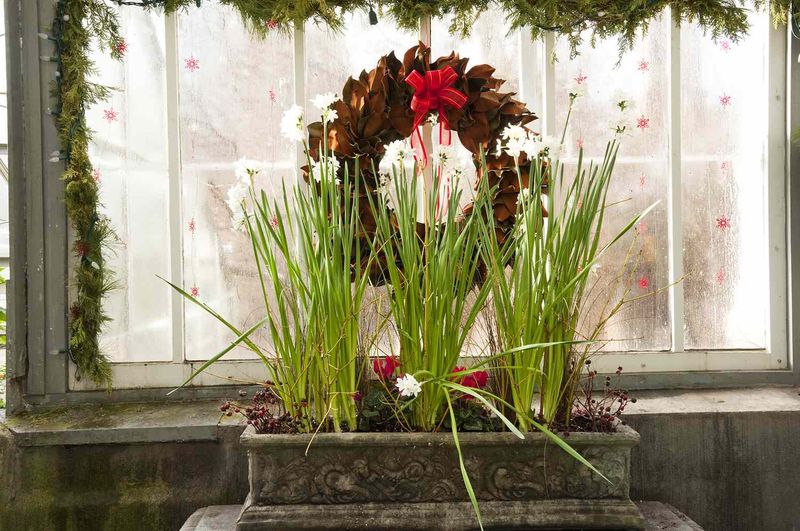
Before you pick a spot, think about who else lives in your home. Narcissus, which includes paperwhites, is toxic to cats and dogs, and the ASPCA lists the bulb as the most poisonous part.
A bowl of loose bulbs in pebbles is easy for a curious paw or nose to reach.
Keep both the bulbs and the plants well away from pets. A high shelf, a closed room, or a spot behind a gate can all work.
If your pet chews on any part, call your veterinarian or a pet poison hotline.
Fragrance is the other thing to plan for. Virginia Tech cautions that the scent can be potent, and not everyone enjoys it.
A bowl in a small bedroom or right beside the dinner table may feel like too much.
A bright hallway or a roomy sunroom can let the scent drift without taking over. Once the blooms fade, the story is simple: a little planning keeps both the flowers and the household happy.