
Got Tomato Plants Still Hanging On Before a Killing Freeze? Pull Them and Ripen Suitable Green Tomatoes Indoors
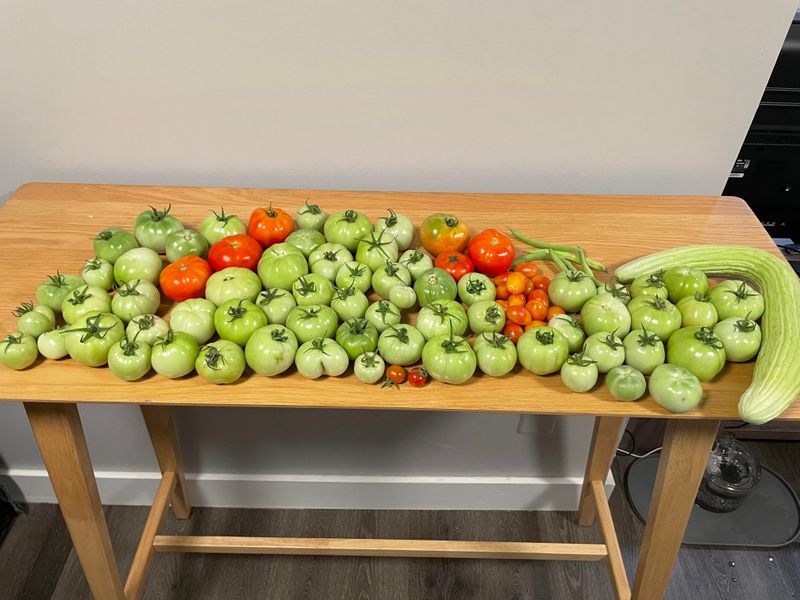
Your tomato plants are still loaded with green fruit, and the forecast just turned chilly. Many gardeners watch that last crop and wonder if a cold night will wipe it out.
You do not have to give up on those tomatoes. With a few simple steps and no special gear, you can save the fruit that is ready to ripen and learn which ones to let go.
Does a frost warning mean the vine must come out now?
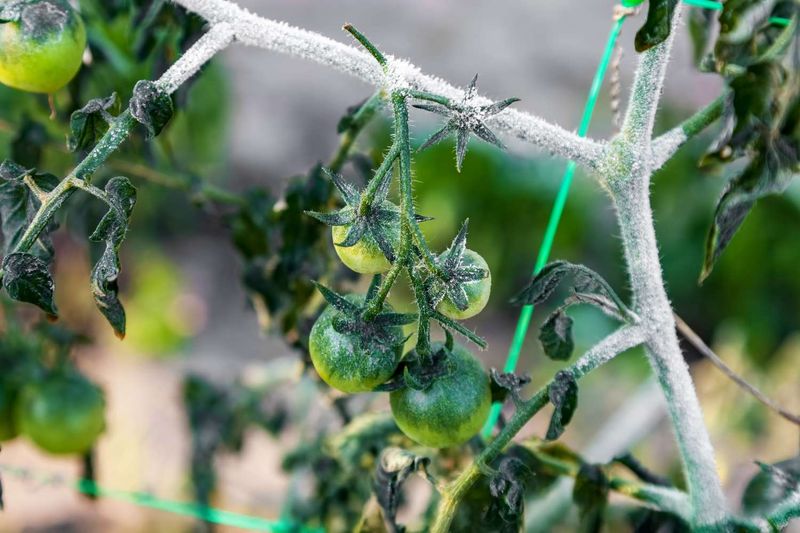
Not every frost warning is a death sentence for your tomato plants. A frost advisory only says that cold air might reach your yard, and a light frost may nip a few leaves without finishing the vines.
The date that really matters is the night a killing freeze arrives.
Check your local forecast and think about your own yard. Low spots, open ground, and spots away from walls and fences tend to get colder than sheltered corners.
If the low looks like it will stay just above freezing, you may get a few more days of ripening on the vine.
The goal is to bring in suitable fruit before a killing freeze reaches the plants. Illinois Extension advises gathering mature green tomatoes the day before a killing freeze.
Alaska Extension likewise says to pick before the vines are killed.
So a frost warning is your cue to start paying attention, not to rip everything out tonight. Watch the forecast, decide which method you want to use, and get ready to act when a hard freeze looks likely.
Which green tomatoes are worth saving?
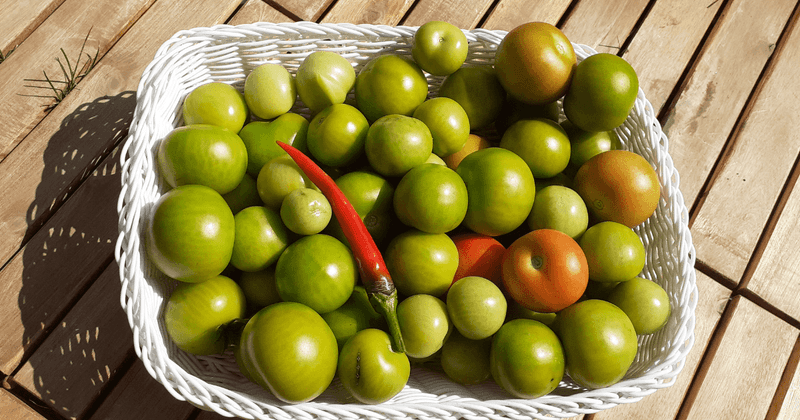
Green does not always mean ready. A tomato that is mature green has finished growing and has the potential to ripen off the vine.
A truly immature one has not, and it will likely disappoint you.
Look for fruit that is firm, healthy, and nearly full size. Colorado State Extension describes mature-green tomatoes as shiny, while immature fruit looks matte.
Some sources also point to a whitish-green color and a pale star or streak at the blossom end as clues.
Partly colored fruit is an even better bet. A tomato that has started to blush pink or yellow has already begun the ripening process, so it is the easiest to finish indoors.
Small, hard, dark green tomatoes are a different story. They may shrivel, stay hard, or ripen with poor color and texture.
Alaska Extension notes that fruit with soft white seeds that cut easily is too immature to count on.
If you are unsure, slice one test tomato. Firm flesh and seeds that are not soft and white are encouraging.
Do not expect every green tomato on the vine to make it, and feel free to toss the tiny ones in the compost.
Hanging the uprooted plant can extend the harvest
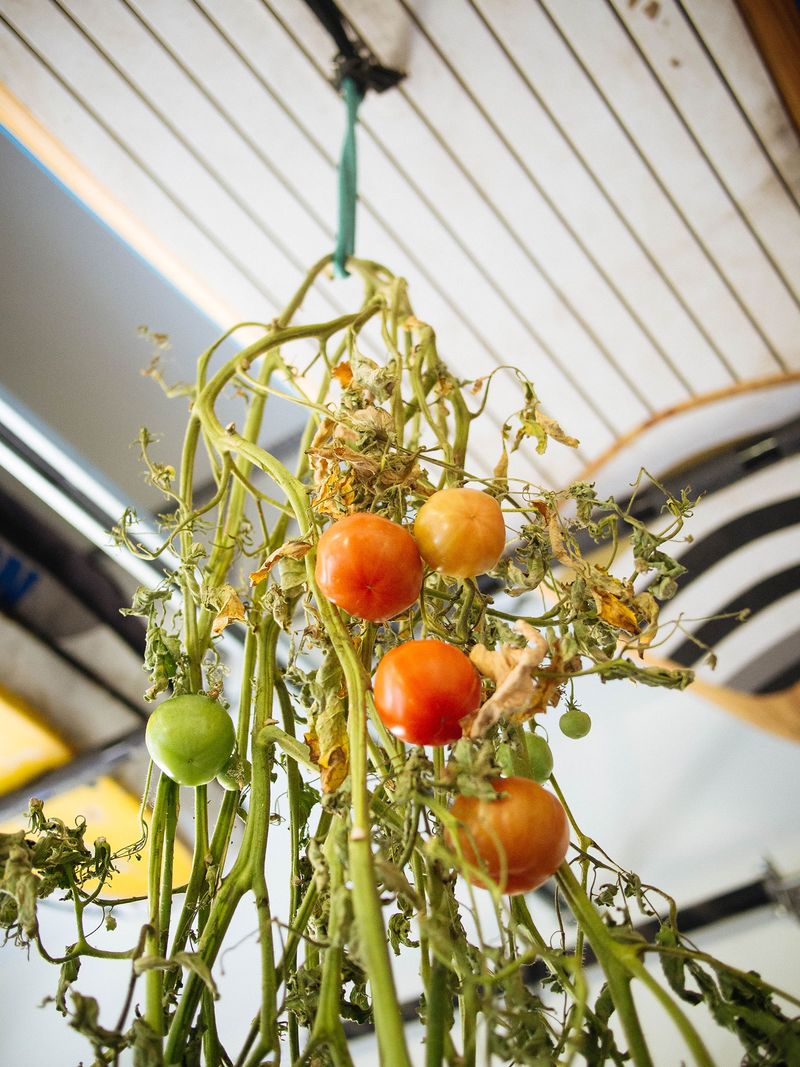
If you like the idea of leaving fruit on the vine, try the whole-plant method. Pull the plant out by its roots before frost reaches it, shake off the loose soil, and carry it to a sheltered spot.
Then hang it upside down.
A garage or crawl space works well. Alaska Extension suggests keeping the plant where it stays at 50°F or warmer, and says fruit will ripen over an extended period.
Illinois Extension also describes hanging uprooted plants in a sheltered location.
Choose a sturdy hook or rafter, since a full plant can be heavy. Hang it where it will not get rained on or bumped, and where you can walk by often.
Ripening happens gradually, and no one can promise how many tomatoes will color up or how fast. Some fruit may soften and ripen while smaller ones stay green.
This is one option, not a required step. If hanging a whole plant sounds awkward, picking the fruit and ripening it in a box is just as valid.
Picked fruit fits in a box, tray, or paper bag
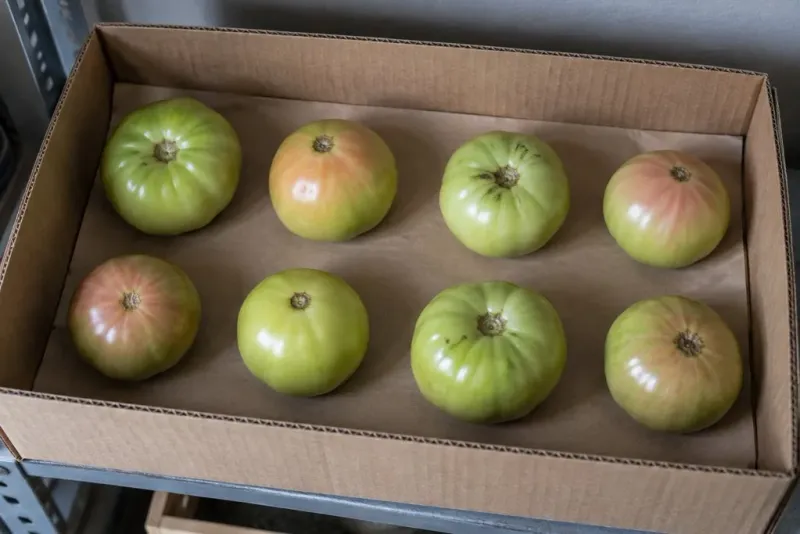
Prefer to keep things simple? Pick the tomatoes themselves and skip the whole-plant hanging.
This works well when your vines are tall, tangled, or hard to move.
Choose firm, healthy fruit that is mature green or just starting to blush. Leave behind anything cracked, spotted, or soft, since damaged tomatoes tend to rot before they ripen.
Wipe off dirt gently instead of scrubbing.
For storage, a ventilated paper bag, a box, or a shallow tray will do. Illinois Extension recommends a paper bag with air holes, and UConn Extension suggests a box or tray no more than two layers deep.
Deep piles cause trouble. Fruit at the bottom gets squished, and one rotting tomato can spoil its neighbors.
A single layer is easiest to check, and two layers is the limit.
Some gardeners wrap each tomato in newspaper, but loose placement lets you see problems quickly. Pick whichever you can keep up with.
Colorado State Extension also confirms that mature-green and partly colored fruit are the best candidates to bring inside.
Choose a shaded, ventilated spot—not a sunny windowsill
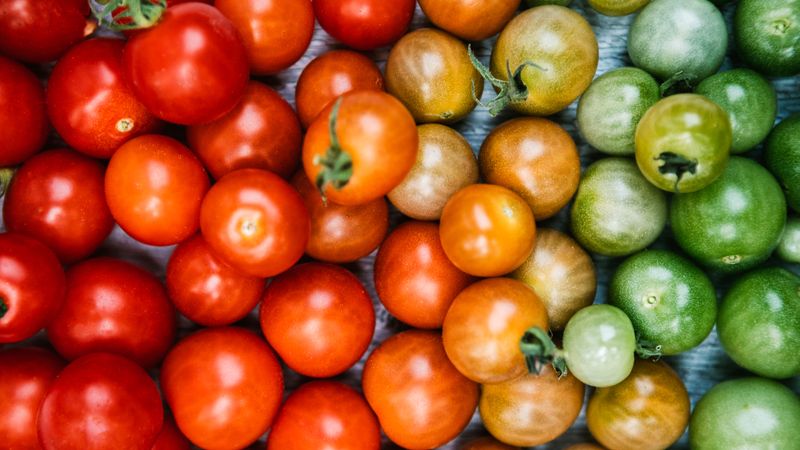
A sunny windowsill seems like the natural home for ripening tomatoes, but harvested fruit does not need light. Alaska Extension says light is not required, and South Dakota State University Extension says direct sun after harvest does not help.
Strong sun can also overheat the fruit.
Aim for a shaded spot with some airflow, such as a pantry shelf, a spare room, or a cabinet you leave slightly open. Fresh air helps prevent mold and moisture buildup.
On temperature, the sources do not agree exactly. Colorado State Extension gives a range of 55 to 70°F.
UConn Extension describes faster ripening around 65 to 70°F and slower ripening in cooler conditions.
In practice, a spot near the warm end of that range will move things along faster, while a cooler spot slows them down. Pick a place you can keep fairly steady, and do not worry about hitting an exact number.
Skip the refrigerator for unripe tomatoes. Very cold air is outside the ranges the extension sources describe.
Check the fruit regularly as it ripens
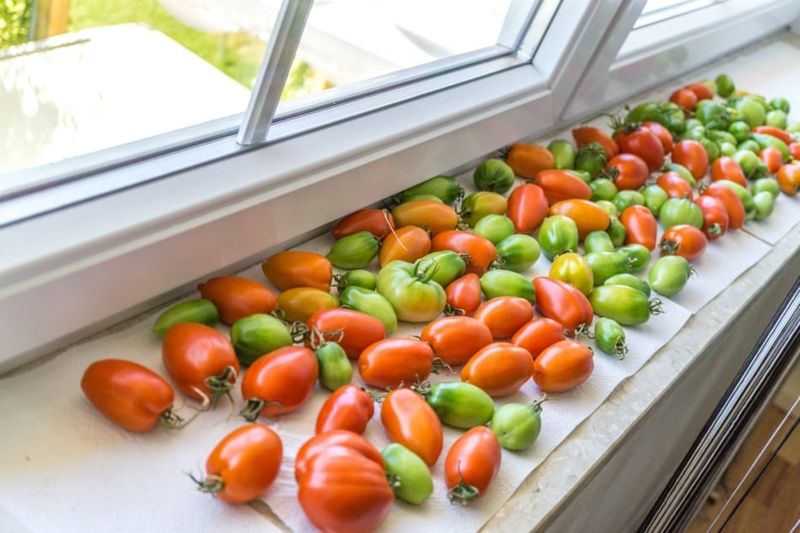
Once your tomatoes are tucked away, plan to look in on them often. A quick check every couple of days is plenty, and you do not need a strict schedule.
Think of it as a short stroll past the pantry, not a chore.
Pull out any tomato that has fully ripened and enjoy it. Also remove anything that is soft, leaking, moldy, or shriveled.
One bad tomato can spread trouble to the rest, so catching it early protects your haul.
As you check, turn fruit that has a sore spot and move tomatoes at different stages to different spots. Those that are close to ripe can go on the counter, while greener ones stay where they are.
If you want to nudge things along, add a ripe tomato or a banana to the box or bag. Colorado State Extension and UConn Extension both note that these fruits give off ethylene, a natural gas that can speed ripening.
Treat this as an optional boost, not a guarantee. Some tomatoes will color up quickly, some will take their time, and a few may never get there.
A rescued tomato is a bonus, not a flavor guarantee
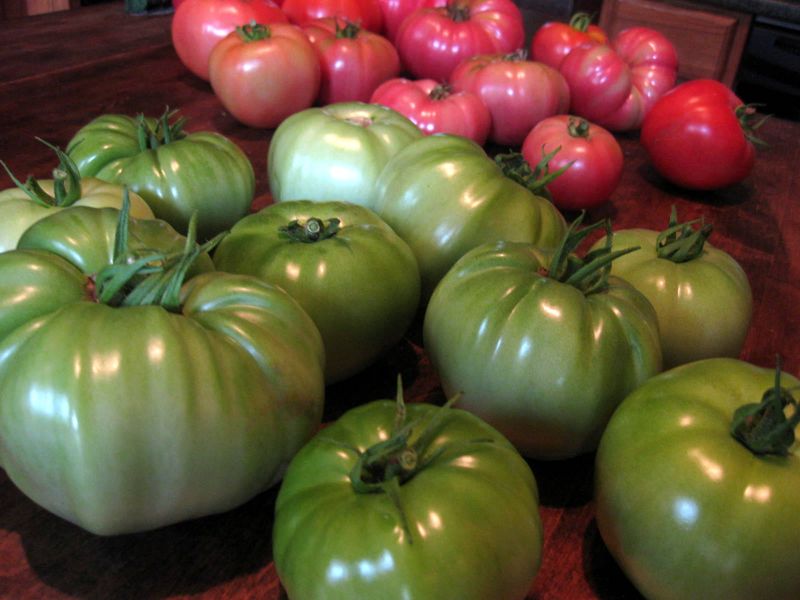
Go in with fair expectations. Colorado State Extension says mature-green fruit can ripen indoors but may not fully develop its flavor.
UConn Extension cautions that late-season results can be disappointing.
These tomatoes are great for sandwiches, sauces, and salsas where other flavors help out. They just may not taste like a warm August tomato picked fresh from the vine.
One safety point matters if you are thinking about canning. Fruit gathered before frost is not the same as fruit left on dead or frost-killed vines.
The National Center for Home Food Preservation says not to can tomatoes from dead or frost-killed vines.
When you do can tomatoes, follow tested procedures and the required acidification steps, such as those in this guide to acidifying tomatoes. Looking fine is not enough to make a tomato safe to can.
Save the fruit that is truly suitable, and treat each tomato that ripens as a small bonus. The rest of that vine has already given you a good season.