
Horsetail in Your Yard Belongs to an Ancient Plant Lineage That Predates the Dinosaurs
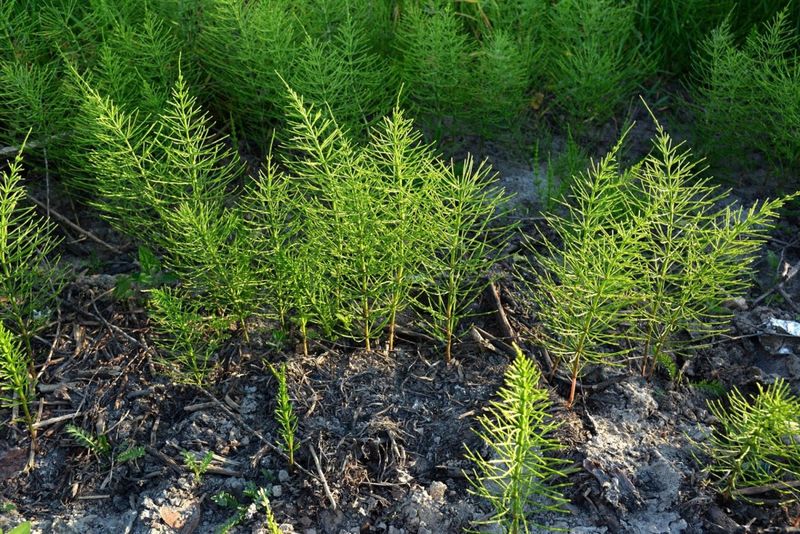
Pull up a stubborn green shoot with jointed stems and bottlebrush branches, and you may be holding a member of one of the oldest plant families on Earth. Horsetails have relatives in the fossil record going back about 300 million years, long before dinosaurs showed up.
That ancient story is fun, but it does not mean your yard weed is unchanged from back then. Here is what the history really tells us, what actually makes horsetail so hard to shake, and how to manage it with patience.
An ancient lineage, not an unchanged yard weed
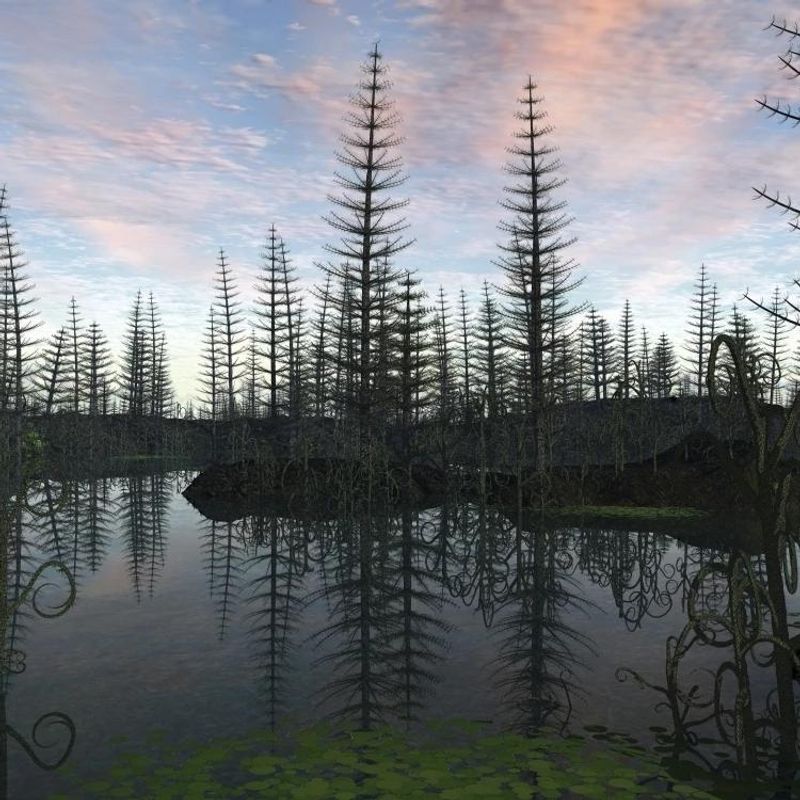
Few plants in your yard can claim a family tree that stretches back to the Carboniferous period, roughly 300 million years ago. Horsetails can.
A botanical paper on horsetail classification describes a nearly continuous fossil record for the group as a whole, which is unusual among plants.
Here is the catch. That record belongs to the horsetail lineage, not to the particular plant poking up beside your patio.
Nothing in the evidence shows that modern field horsetail is the same species unchanged since then. Think of it like saying your family name goes back centuries without claiming you look like your great-great-grandparents.
The fossil relatives also looked very different from what you pull out of a flower bed. Some were tree-sized, with trunks that rose high above the swampy ground.
The University of Puget Sound museum separates those giants from the familiar modern horsetails, which are small, herbaceous plants that die back instead of building woody trunks.
So the awe is real, but it should be aimed at the right target. The group has an extraordinary long history, and today’s yard plant is one modern member of it.
Keeping that straight helps you stop treating horsetail like an unbeatable monster and start treating it like a plant with specific habits you can work around.
The rest of this article moves from the deep past to the practical present: what is in those stems, what is going on underground, and what to do about it based on how big your patch is.
What silica-rich stems can—and cannot—explain
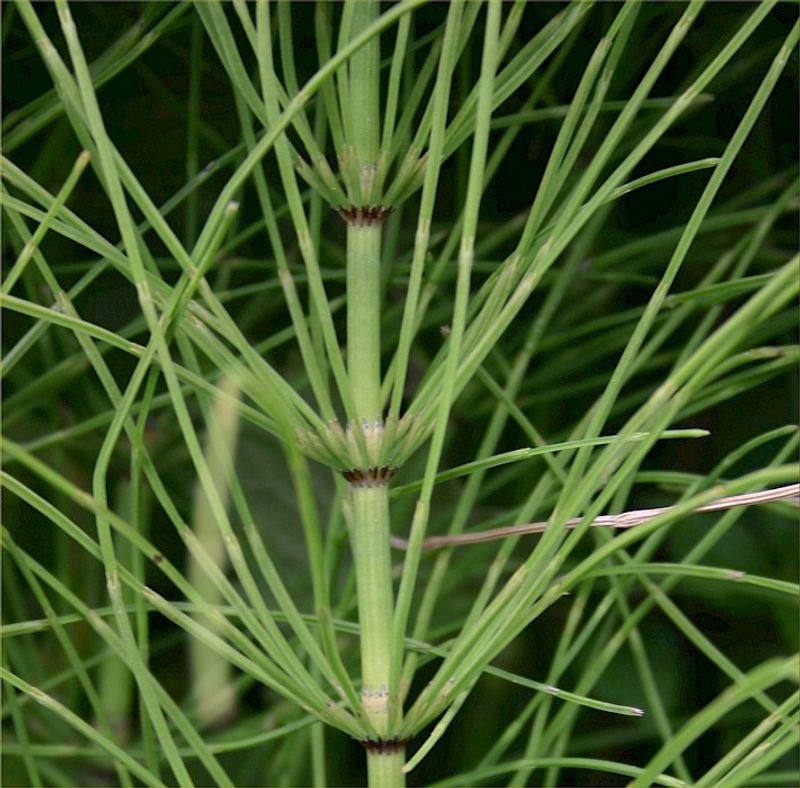
Run your fingers along a horsetail stem and you will notice it feels a bit rough and segmented. The stems are hollow and jointed, and they contain high concentrations of silica, according to Penn State Extension’s field horsetail profile.
That mineral is a documented trait, not a rumor.
It is tempting to call silica the plant’s armor and credit it for surviving 300 million years. The sources reviewed do not back that up.
Silica is a real feature of the stems, but nobody has shown it is the reason the horsetail lineage lasted through geological time.
Where silica does come up is with sprays. Purdue Extension says the siliceous stem may inhibit herbicide uptake, and that word may matters.
It is a possible contributor, not a proven single cause.
The bigger picture comes from Iowa State Extension, which stresses that established patches are not controlled by any single tactic and that many herbicide options have limited activity. In other words, a failed spray does not mean you did something wrong, and it does not mean silica alone is to blame.
A practical takeaway: do not expect a tougher stem to be the whole story. If your horsetail keeps coming back after you knock the tops down, look below the soil line, which is where the next section heads.
The comeback starts underground
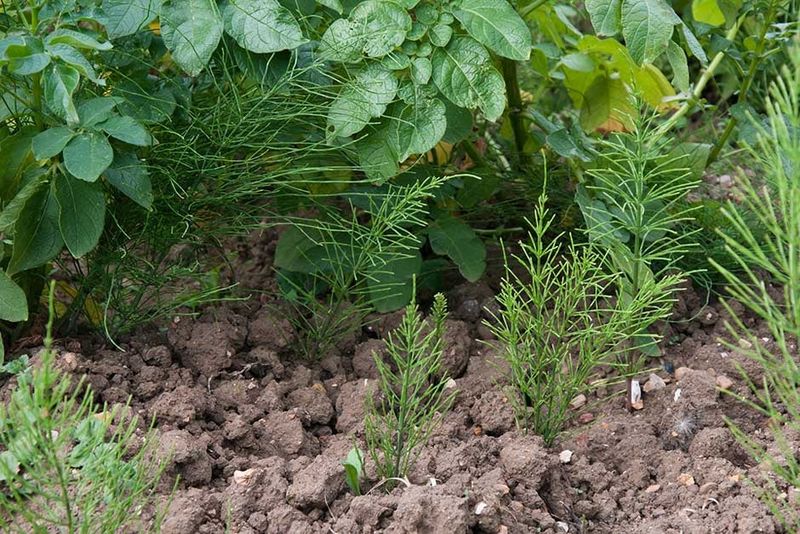
Horsetail that vanishes in June and reappears in July is not being sneaky. It is drawing on an extensive system of underground rhizomes, with small tubers attached, that keep the plant supplied while the tops are cut back.
Depth is where stories get exaggerated. A field study by Williams in Weed Research found half the rhizome dry weight in the upper 25 cm of soil, with some extending much deeper.
So plenty of it sits fairly close to the surface, but you will not get all of it with a trowel.
The other piece is regeneration. In a laboratory study of tubers and rhizome fragments, rhizome pieces produced new plants.
That is a good reason to be thoughtful about how you disturb the ground.
Iowa State Extension, in its horsetail management guide, also supports caution about breaking and spreading underground material through digging or tilling. That does not mean every dig makes things worse.
It means a rototiller run through a big patch can chop and scatter pieces, while careful removal in a small spot is a different situation.
A handy clue: if new shoots pop up in a line or a widening ring around where you worked, fragments were likely left behind. That tells you to slow down and pick a method that fits the patch size.
Identify the horsetail before choosing a method
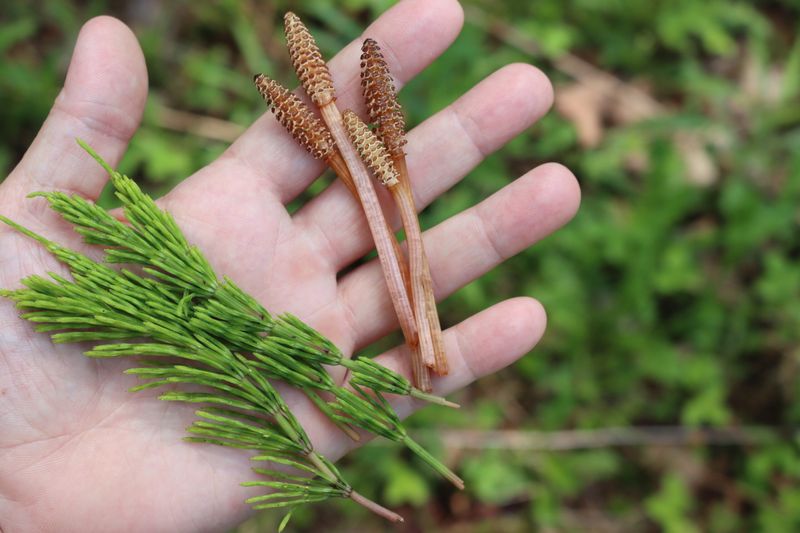
Two plants often get called horsetail, and they are not the same. Field horsetail (Equisetum arvense) and scouring rush (E. hyemale) are distinct species, and Iowa State Extension notes that common names are sometimes used interchangeably.
That matters because advice written for one may not fit the other. Before you pick a method, take a few photos and figure out what you actually have.
Field horsetail has hollow, jointed stems, and Penn State Extension describes it as reproducing by spores and by an extensive rhizome system with tubers. Those two traits help explain why it shows up in new spots even when you have not seen it nearby.
For a firm identification, use a reliable resource rather than guessing from a snapshot. Your local county extension office can usually identify a sample, and university plant ID pages like Penn State’s are a solid starting point.
Bring a whole shoot, including the base, if you can.
Once you know which plant it is, species-specific advice becomes much more useful. Until then, hold off on buying products or tearing up beds.
A few minutes of checking now can save a season of working on the wrong problem.
For a small patch, repeatedly cut new growth
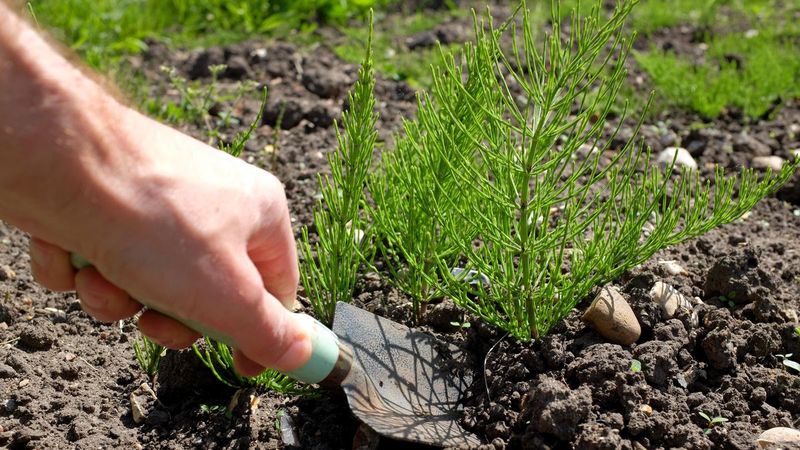
When horsetail is only a modest patch, repeated cutting is a cautious place to start. The aim is to keep the tops from replenishing the underground reserves, so the plant slowly runs low on stored energy.
Iowa State Extension advises removing regrowth before it exceeds about 8 to 10 inches. The same source says the best frequency and duration have not been established for horsetail specifically, so treat that number as a guide, not a guarantee.
A weekly or biweekly walk-through during the growing season is a reasonable habit to try.
Maine Extension, in its advice on getting rid of field horsetail, cautions that control may take multiple seasons. Expect gradual progress and look for thinner, shorter, slower regrowth as a sign it is working.
What about pulling? It is not useless.
UNH Extension says repeated pulling or digging may work for small populations. The risk is that tilling or pulling can leave regenerative pieces, as shown in the rhizome fragment study.
If you pull, go slowly, loosen the soil first, and remove as much of the underground stem as you can. Bag the pieces instead of tossing them in a compost pile or back in the bed.
Skip digging near prized perennials, where you could damage roots, and cut there instead.
For a large patch, plan for sustained management
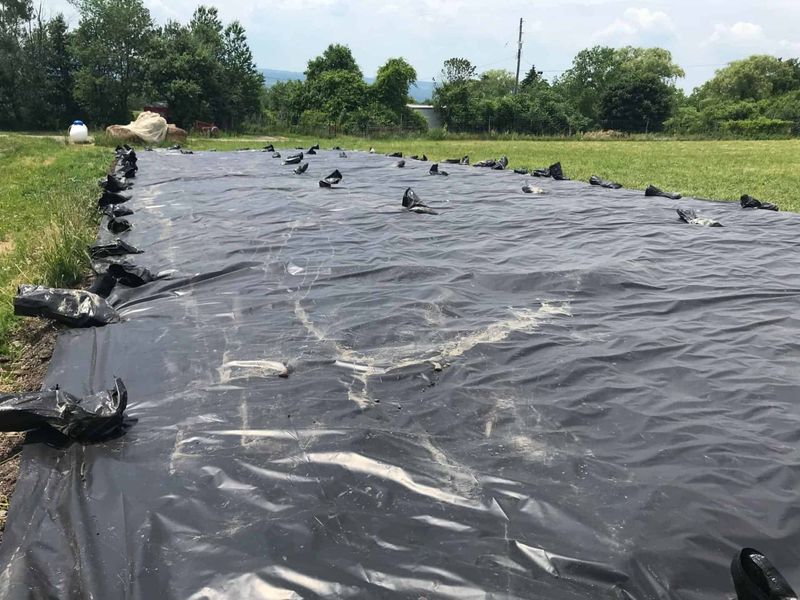
A big, established patch calls for a longer game. One option from UNH Extension is to cut the shoots, then smother the area with black plastic, landscape fabric, or heavy cardboard topped with mulch, left in place for at least a year.
It is labor-intensive, and it is not a guaranteed or quick eradication. Plan to check the edges, where shoots may push out sideways, and to patch any gaps or tears.
Patience is the theme. Maine Extension warns that control may take multiple seasons, and Iowa State Extension says established patches are not controlled by any single tactic.
Combining smothering, cutting any escapees, and steady follow-up tends to be more realistic than hunting for one fix.
Herbicides are part of the conversation for some people, but they are not a sure thing. Iowa State notes many options have limited activity, and Purdue Extension points to the stem as a possible barrier.
Any product you consider must be used according to its current label, including site restrictions, nearby desirable plants, and water limits. Do not borrow agricultural rates or products for a home bed.
Drainage changes are not a universal cure either, since horsetail can creep into better-drained ground through its underground growth. Livestock owners have one added concern: horsetail can be toxic to horses, especially in contaminated forage, so keep animals away from it.
Frustrating as it is, this weed rewards the gardener who keeps showing up.