
How Layered Foundation Planting May Help A Tall, Steep-Roofed House Feel Cozier From The Street
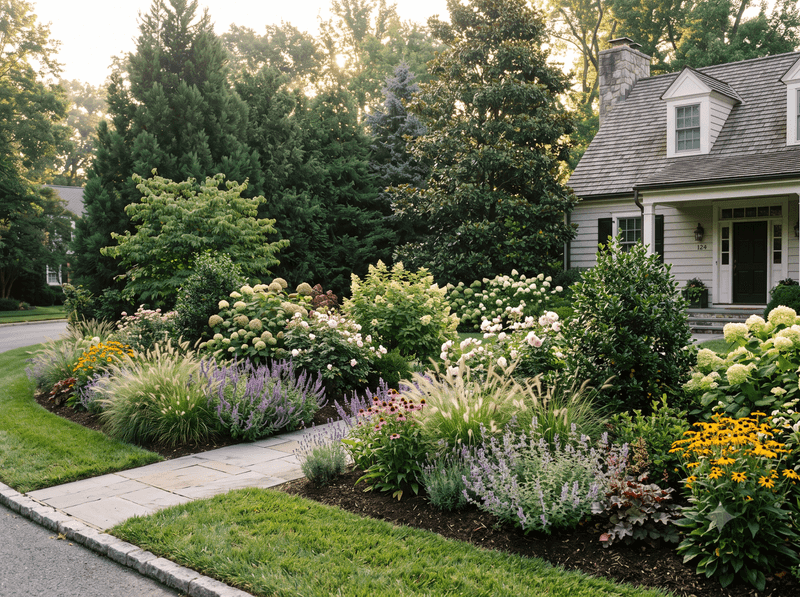
A tall house with a steep roof can look like it is standing apart from its yard instead of belonging to it. The strip of ground where the walls meet the lawn is often where that feeling starts.
Planting that area with layers of shrubs, leafy perennials, and grasses may help the house look more connected to the ground around it. Here is how to plan a bed that suits your house and your site.
Foundation planting can visually anchor a tall facade
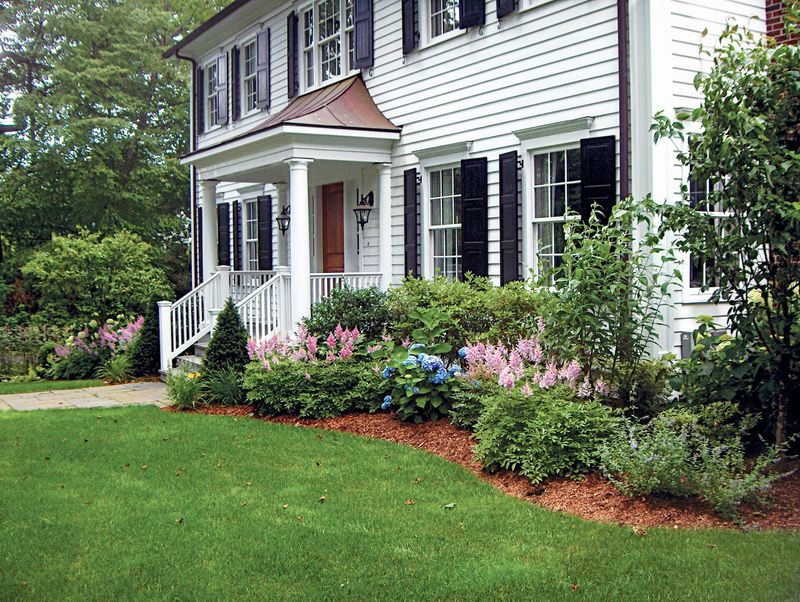
Picture a tall house with bare siding running straight down to a strip of mulch or lawn. The walls seem to rise out of nowhere.
Plants at the base can change that picture, and Virginia Tech Extension describes foundation shrubs as an anchor that links the house to the landscape and softens the spot where house meets ground.
Plant heights can also shift how the proportions read. A University of Kentucky Extension guide explains that arranging plants to stress horizontal lines can make a boxy two-story house look longer.
Wide, rounded shapes at the base may pull the eye sideways instead of up the wall and roofline.
Keep your expectations realistic. These are design principles, not guarantees, and no study shows that one plant combination will make every tall, steep-roofed house look lower or cozier.
The result depends on your house, your layout, and the plants that actually grow well in your yard.
Think of the bed as a composition rather than a wall of greenery. A few thoughtful groupings, with different heights and textures, can look calm and intentional.
A solid row of identical shrubs rarely does. The next sections walk through how to plan that kind of bed step by step.
Assess the house and site before choosing plants
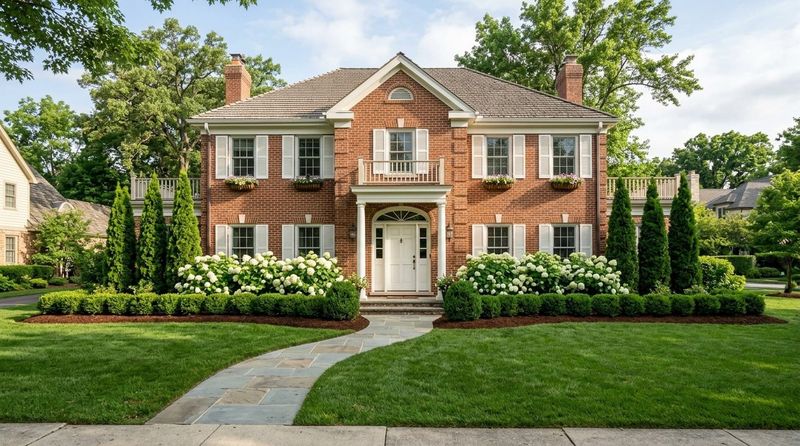
Before you buy a single plant, walk around the house with a notepad. Look at how tall the walls are, where the windows sit, and where the entry is.
Measure how deep the bed can be from the wall to the lawn or walkway, because that number limits how big your plants can grow.
Next, check the conditions. Virginia Tech Extension recommends assessing sun, soil moisture, drainage, and mature plant size before choosing foundation shrubs.
Notice how long each side of the house gets direct sun, and whether the soil stays soggy or dries out fast after rain.
Conditions often change from one wall to the next. The north side may stay shady and damp, while the west side bakes in afternoon sun.
One house can easily need two or three different plant lists.
A tall, steep roof does not tell you which plants to buy. It only tells you that scale matters.
NC State Extension suggests weighing mature height, spread, texture, color, and the number of plants, so use those as your checklist.
Sketch the wall on paper and note each factor. That sketch becomes a site-specific plan instead of a fixed shopping list.
Arrange the bed to balance the facade
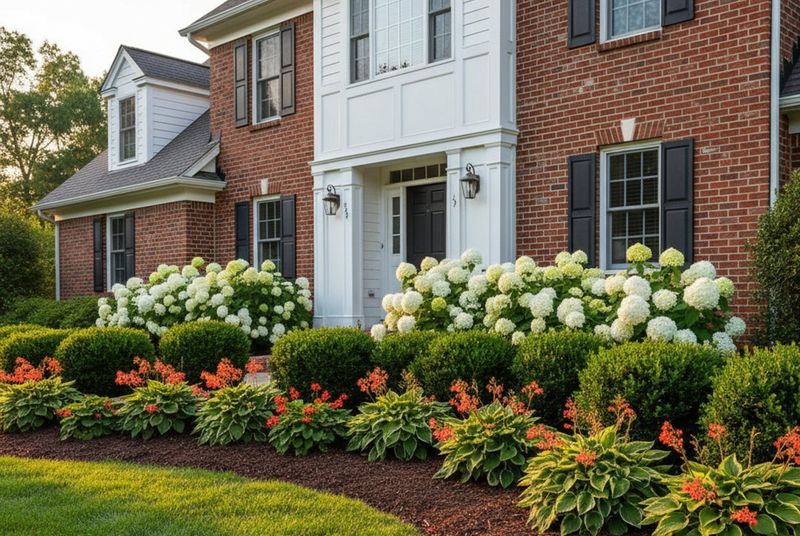
Now for the fun part: arranging. Think in layers, with lower plants near the front edge, medium plants in the middle, and the tallest plants toward the wall or in the corners.
Group plants in odd numbers or drifts rather than lining them up like soldiers.
Wider groupings can stress horizontal lines. A gently curved bed edge and plants that spread sideways may help the eye travel across the yard instead of straight up the facade.
Remember that it is a possibility, not a promise.
Be careful beside the front door. The Kentucky guide warns that tall, conical plants flanking an entrance can stress vertical lines and make a house look taller and narrower.
Lower, rounded shapes near the steps are usually a safer choice.
A layered bed is not a continuous shrub wall. NC State Extension notes that modern foundations often do not need dense screening, so leave some wall showing between groupings.
Repeating a few plants and mixing textures also helps. NC State guidance on native plant design supports layering for visual interest and seasonal coverage, which keeps the bed looking good through the year.
Use smooth hydrangea where its conditions fit
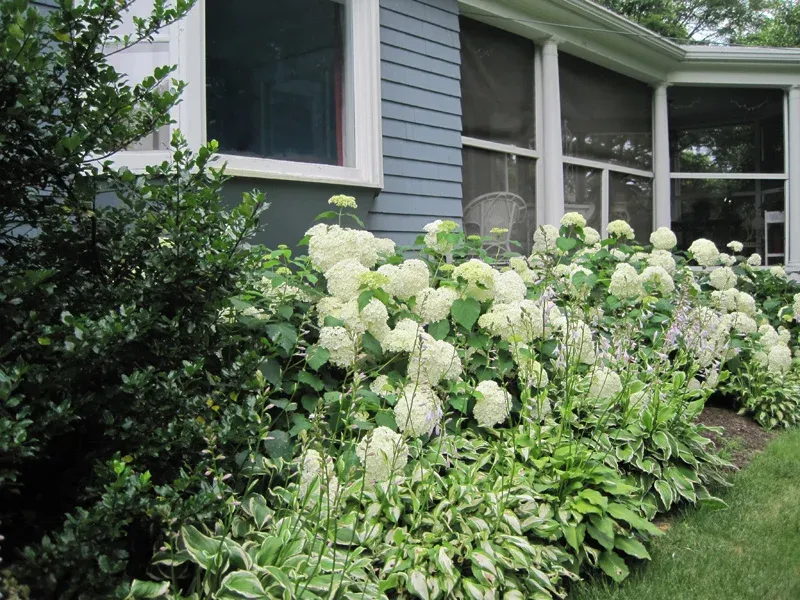
Hydrangeas are a favorite for a reason, but they are not interchangeable. Here, the example is smooth hydrangea (Hydrangea arborescens), and what follows applies to that species only, not to every hydrangea in the garden center.
Illinois Extension lists smooth hydrangea at a typical mature size of 3 to 5 feet tall and wide. It does best in partial to full shade with moist, well-drained soil, and full sun may work if you water regularly.
That size makes it a possible mid-layer plant. Its rounded shape can add a soft, horizontal mass under windows, with lower plants tucked in front.
Leave room for the full 3 to 5 foot spread so it does not crowd the siding or the walkway.
If your bed is hot, dry, and sunny all day, smooth hydrangea may struggle, and a different shrub may suit you better. If you love bigleaf or panicle types, look up their mature dimensions and needs separately before planting.
The takeaway is simple. Pick the hydrangea by its mature dimensions and your site conditions, not by how it looked in a pot at the store.
Place hostas and grasses according to their needs
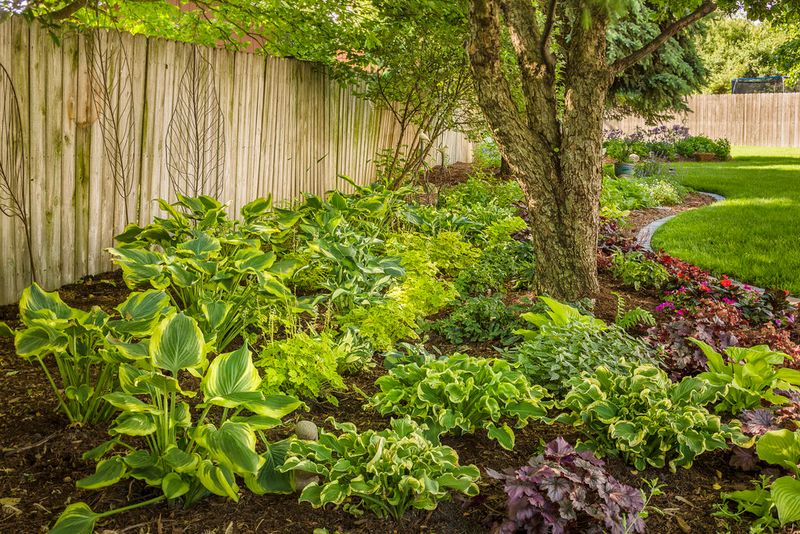
Hostas and ornamental grasses add very different looks, and they rarely share the same spot. Hostas bring broad, bold leaves that fill the front edge of a shady bed with a cool, layered texture.
Grasses bring fine, upright blades that move in the breeze.
Hostas generally suit shadier places and like rich, moist but well-drained soil. University of Minnesota Extension notes that brown or scorched leaf edges can point to too much sun, and that hostas in sunny or dry shade may need extra water.
If your leaves look crispy, that is a clue to move them or add water.
Grasses vary a lot. Illinois Extension describes native grasses as adding vertical form, and notes that some are tall or spread.
So do not assume that grass means a small foreground plant.
Choose a species and cultivar whose mature height and habit fit your bed. A compact type may work near a walkway, while a tall one could cover a window.
Finally, check your region. Local Extension offices or a regional plant database can confirm hardiness and suitability before you commit to exact varieties.
Keep windows, the entrance, and maintenance access clear
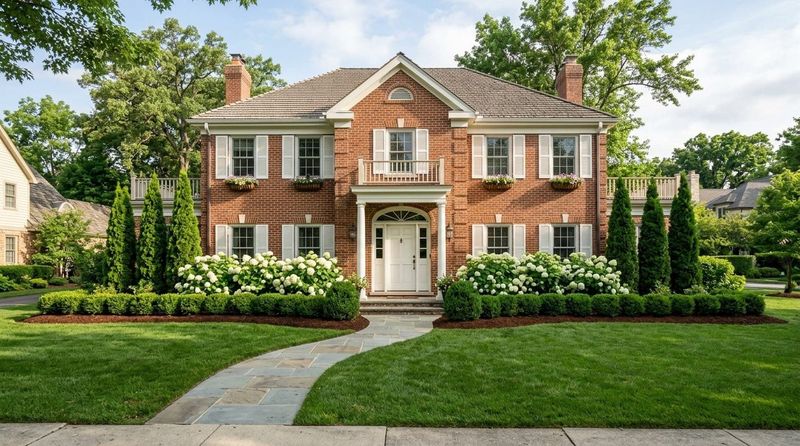
More plants do not automatically mean a more welcoming house. A bed packed to the windowsills can hide the very features that make a home feel friendly.
Keep views from windows open, and keep the path to the front door easy to see and walk.
Clemson Extension warns against overplanting and against choosing plants tall enough to cover windows. Check each plant tag for its mature height and set it against the window sill height on your sketch.
Spacing matters too. North Carolina Cooperative Extension describes problems from overgrown foundation plantings, such as less airflow, branches rubbing siding, blocked views, and harder home maintenance.
A helpful rule is to plant by mature spread, not by how big the plant is today. A small shrub that will spread 4 feet needs room for that width, so a young plant may look sparse at first.
Leave a walkable gap behind or beside larger plants. You will want to reach the siding, gutters, and spigots for painting, cleaning, and repairs.
Keep planting design separate from drainage
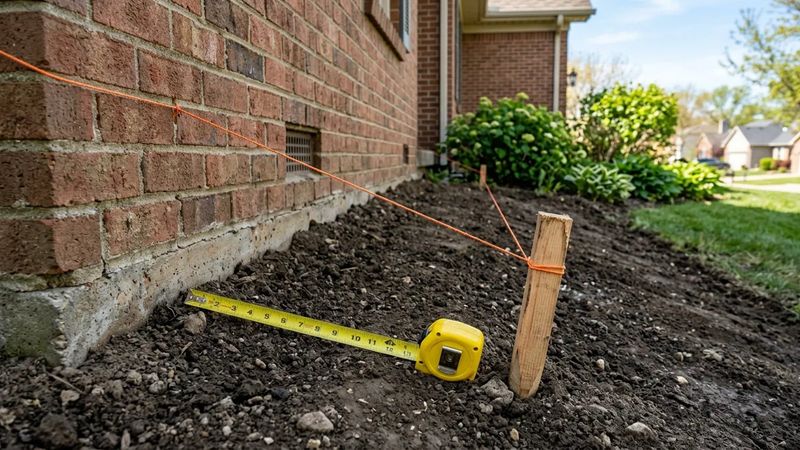
A pretty bed cannot fix a wet foundation. Plants are for looks, while moving water away from the house is a job for grading and roof-water systems.
Keep those two jobs separate when you plan.
Penn State Extension says grading should direct surface water away from building foundations. Check that the ground slopes down and away from the wall before adding any new bed.
Do not pile soil or mulch against siding to make a bed look raised. Added soil near the house must not send water toward the foundation or bury the lower wall.
University of Minnesota Extension describes correcting ground slope and gutter or downspout problems as basement moisture measures. Make sure downspouts empty well away from the bed.
If you see damp basement walls, pooling water, or cracks, get qualified help. A landscape or drainage professional can look at the whole picture, and then your plants can go in on top of a sound setup.
Aim for a grounded look, not a guaranteed transformation
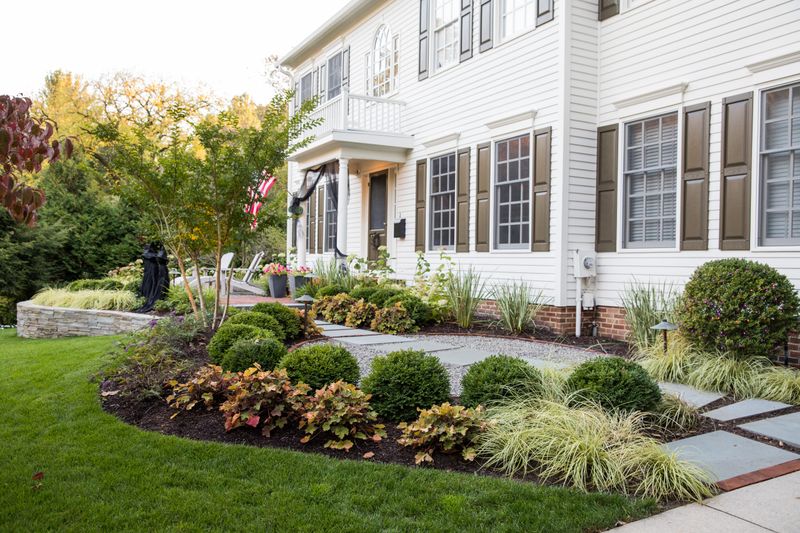
Start with the site, choose plants that fit it, arrange them in layers that relate to the facade, and keep the windows, entry, and walls accessible. Virginia Tech Extension’s anchor idea is a helpful guide, though the outcome depends on your house.
Thoughtful planting may help a tall home feel more connected to its yard, and that is a worthy goal. A house does not need to look shorter to look settled.
Sometimes the cozy feeling comes from a plant bed that simply looks like it belongs.