
How To Identify Japanese Stiltgrass In Your North Carolina Yard: Early Signs To Scout For
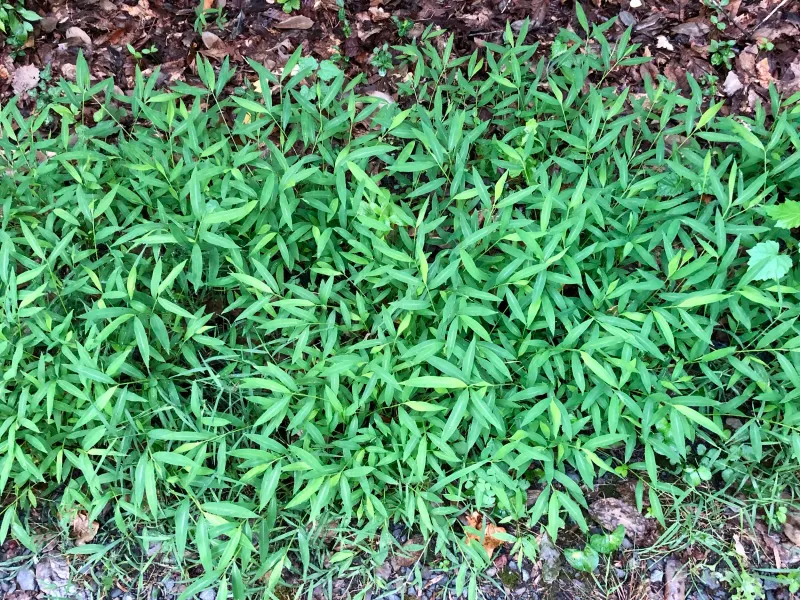
Japanese stiltgrass is an invasive grass that can show up in North Carolina yards, especially in shady or disturbed spots. Learning a few simple clues makes it much easier to tell from the grasses you already know.
Catching it early matters because the plant reproduces by seed, and a small patch is far easier to handle than a big one. Here is how to scout your own yard with a calm, careful eye.
The silver stripe is the first clue to check
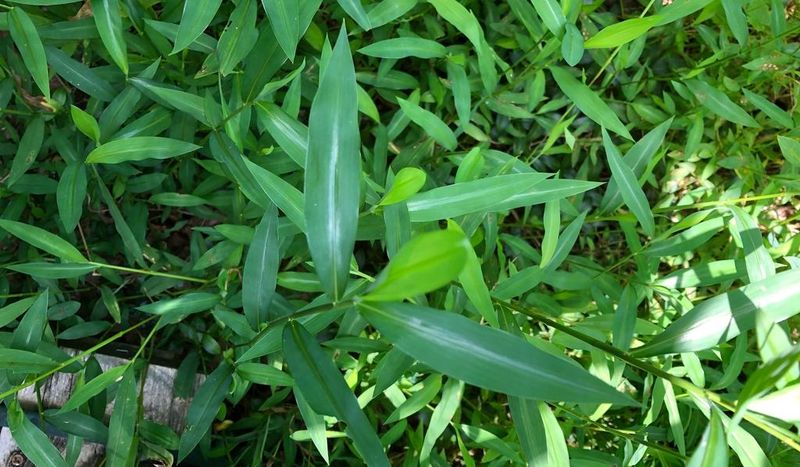
Pick one leaf and hold it up to the light. Japanese stiltgrass has a silvery-white stripe along the midrib, and the stripe sits slightly off-center instead of running straight down the middle.
Once you know to look for it, the pale line is often easy to spot against the green blade.
Next, look at the leaf shape. According to the NC State Extension Plant Toolbox, the leaves are lance-shaped, and they tend to be shorter and broader than the blades of many common lawn and roadside grasses.
A leaf that is both short and fairly wide, with that off-center stripe, is a strong reason to look closer.
Treat the stripe as your best first check, not a final verdict. Plenty of plants can look a bit like stiltgrass from a distance, so one feature alone should not settle the question.
Compare the leaf with the stems and the place where it is growing, and use the stripe to decide what deserves a second look.
If you are still unsure, look at a few plants from the same patch rather than a single blade. A NC State wetland plant guide entry for Microstegium vimineum is a handy reference for comparing photos and descriptions side by side.
Take clear pictures of the leaves and stems, and check them against trusted sources before you pull anything.
Look for spreading stems and patches at yard edges
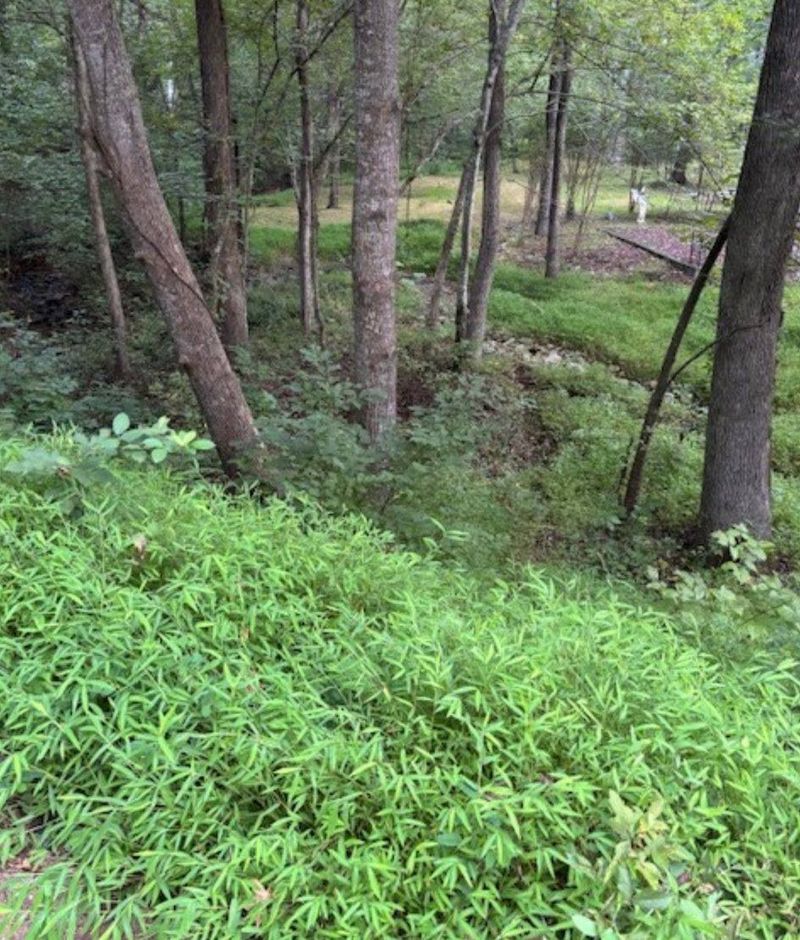
After checking the leaves, look at how the plant grows. Stiltgrass has slender, branching stems that often lie along the ground before turning upward.
The NC State Plant Toolbox notes that lower stems can root where their nodes touch soil, which helps the plant form thick, low patches.
That rooting habit is only part of the story. Seed is the main way the plant reproduces, and it is the main concern when you plan your response.
A reclining stem is not automatically a brand new plant, so keep your attention on stopping seed.
Now think about where to scout. Stiltgrass likes moist, shaded, or disturbed ground.
Good places to check include path margins, landscape beds, ditch banks, low-maintenance turf, and woodland edges at the back of your lot. Bare soil left by digging or erosion is worth a look too.
Location in the state matters a little. NC State Extension says it is most common in southeastern woodlands of the Piedmont and mountains and less common in the Coastal Plain.
Less common does not mean absent, so Coastal Plain homeowners should still check shady, damp corners.
Plenty of yards will have none of it. The goal is simply to know what a suspicious patch looks like when you come across one.
Fall is a warning window, not a reason to wait
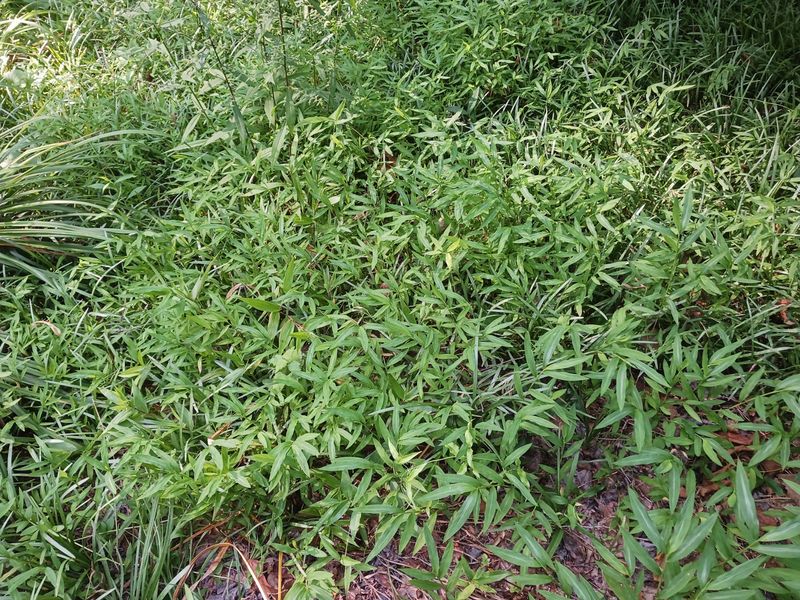
Japanese stiltgrass is a summer annual, which means each plant lives one season and depends on seed to come back. That makes late summer and fall the time to pay closest attention.
In central North Carolina, NC State Extension describes flowering and seed production from mid-September through October.
Treat those dates as a rough guide. Weather, elevation, and shade can all nudge the timing earlier or later, so a yard in the mountains may not match one near Raleigh.
Here is the tricky part. The flowers can be small and easy to miss, and some florets can produce seed before the flowers even open.
Waiting until seedheads look obvious can mean the seed is already forming.
A better habit is to scout earlier in the season and act while plants are still green and pre-flowering. If you notice a patch only in fall, that is still a good time to act, but handle it with care and keep seed in mind.
You will see descriptions of the flower spikes as branched, and that is worth remembering. Do not rely on the shape or posture of a seedhead to confirm what you have.
Use the leaf stripe and growth habit instead.
Pull small patches before they flower
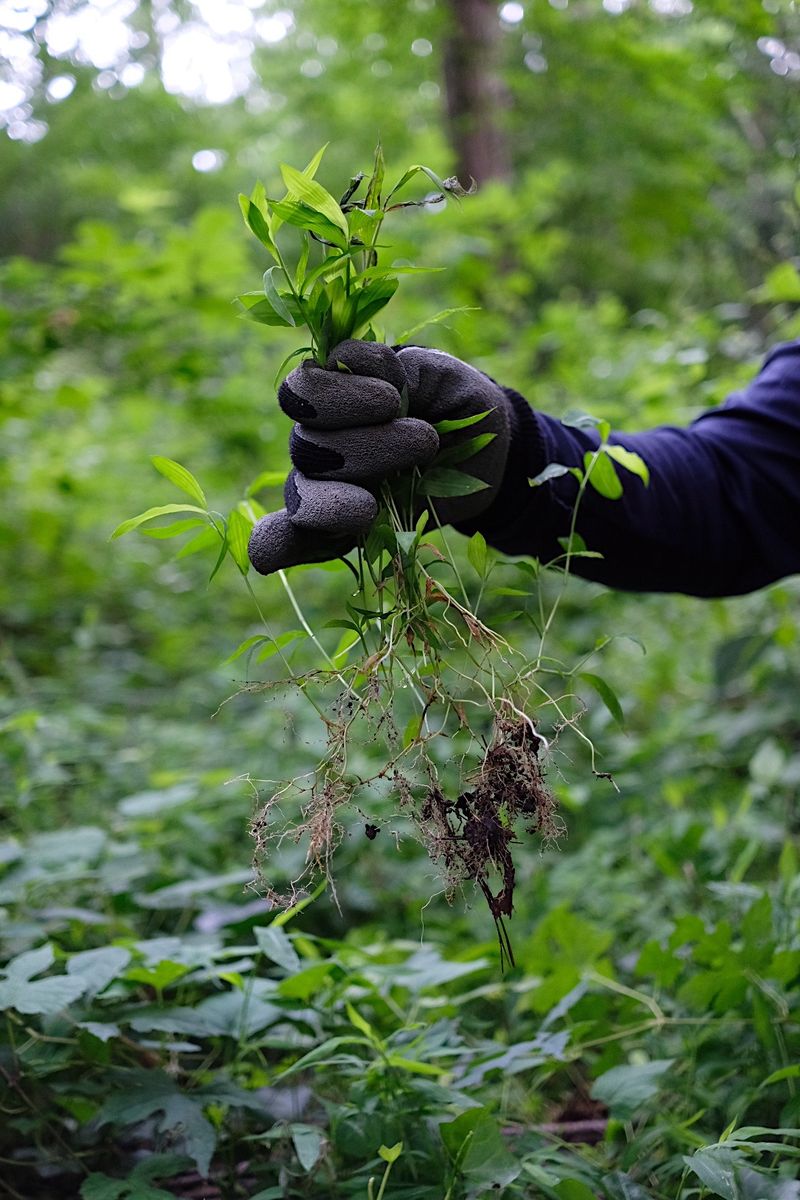
For a small patch, your hands are the best tool. Stiltgrass has shallow roots, so plants usually slide out of moist soil without much effort.
NC State Extension recommends preventing flowering, which makes pre-flowering plants the ideal target.
Pull after a rain if you can, when the ground is soft. Work steadily across the patch and check the edges, where a few stragglers often hide.
Wearing gloves keeps the job comfortable.
Plants that already carry flowers are a different case. Seed can still mature after flowering plants are pulled or mowed, so do not toss them on the ground where they landed.
Bag them and remove them from the area, as University of Maryland Extension also advises for plants that have reached that stage.
Skip the compost pile for plants that may hold seed unless you have reliable local disposal guidance. The point is to keep seed from ending up back in your soil.
For large areas, pulling may not be practical, and herbicide labels come with site-specific rules. Hand removal is the simplest place to begin for small yard patches.
Plan to revisit the patch
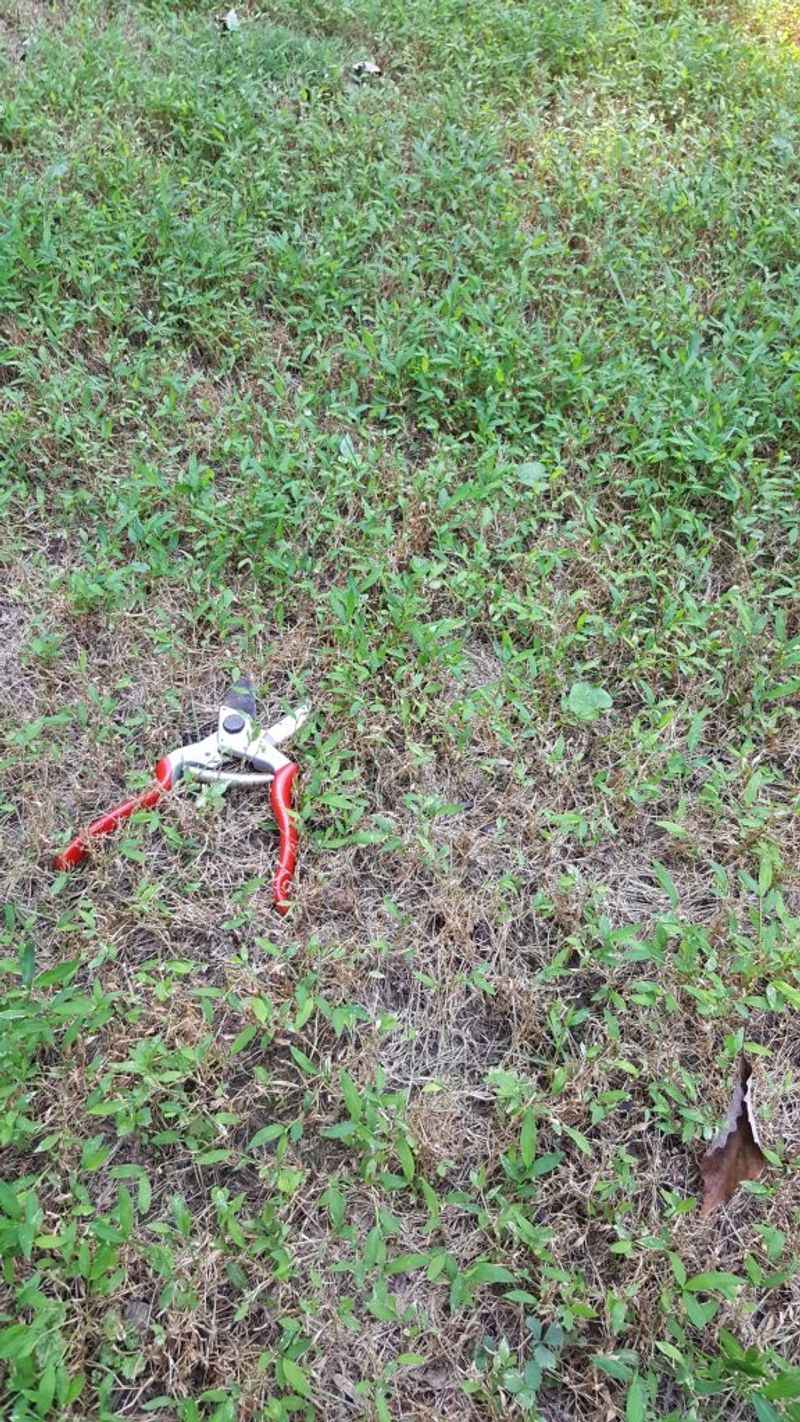
One cleanup rarely ends the story. Soil under a patch usually holds seed from earlier years, and some of it can sprout after you pull the plants.
NC State Extension reports seed viability of less than seven years, which is why follow-up across several growing seasons makes sense. That figure is not a promise that your yard will be clear by a certain date.
Timing can also affect regrowth. A Penn State Extension source suggests delaying mechanical control until June to reduce the chance of a second flush.
That is Pennsylvania guidance, not a North Carolina calendar rule, so the takeaway for your yard is simply to go back and look.
Mowing can help cut down seed production, but it is not a one-time fix. Plants can flower low, below mower height, and they may slip past the blades.
A University of Maryland Ask Extension answer discusses this limit of mowing.
If you mow, keep checking the area for regrowth and seedheads. On small patches, pulling can remove more of the plant, as the University of Maryland Extension guidance notes.
A simple routine works well. Walk the treated spot every few weeks through the growing season, pull new seedlings, and repeat the next year.
Make a quick check part of yard care
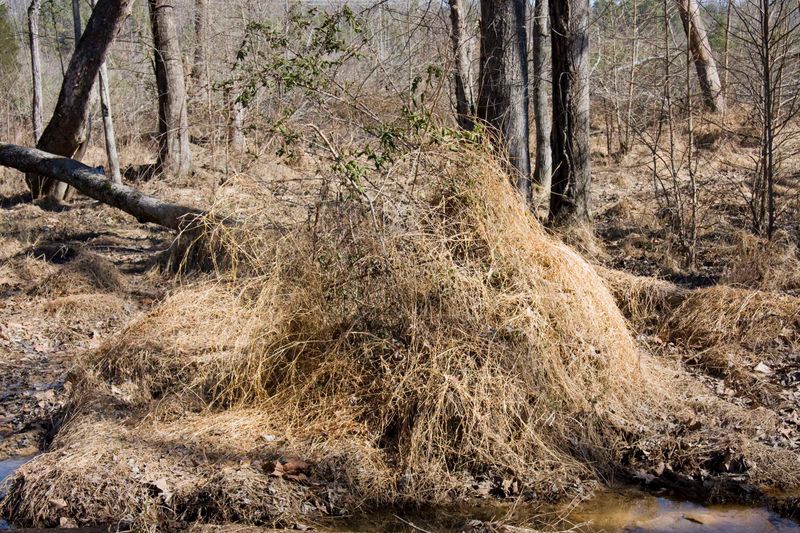
A quick look while you do other chores is usually enough. Check odd-looking leaves for the off-center silver stripe, then confirm with the stems and the spot where the plant is growing.
Shady paths, beds, and woodland edges deserve the most attention.
Act before flowering when you can, and bag plants that are already in flower. Revisit cleared spots later, since NC State Extension points to long-term follow-up.
A yard stays healthiest when small problems get noticed while they are still small.